TL;DR

Get cleaning gear delivered free with Prime
- Fast, free delivery on millions of items
- Prime Video, Amazon Music and more included
- Member-only deals all year
Hunker describes a DIY project shared by TikTok user johndolechek that turns one secondhand board into doors for open bathroom shelving. The approach can create a continuous wood-grain look, but the board size, shelf layout and hinge support must be planned for the specific niche.
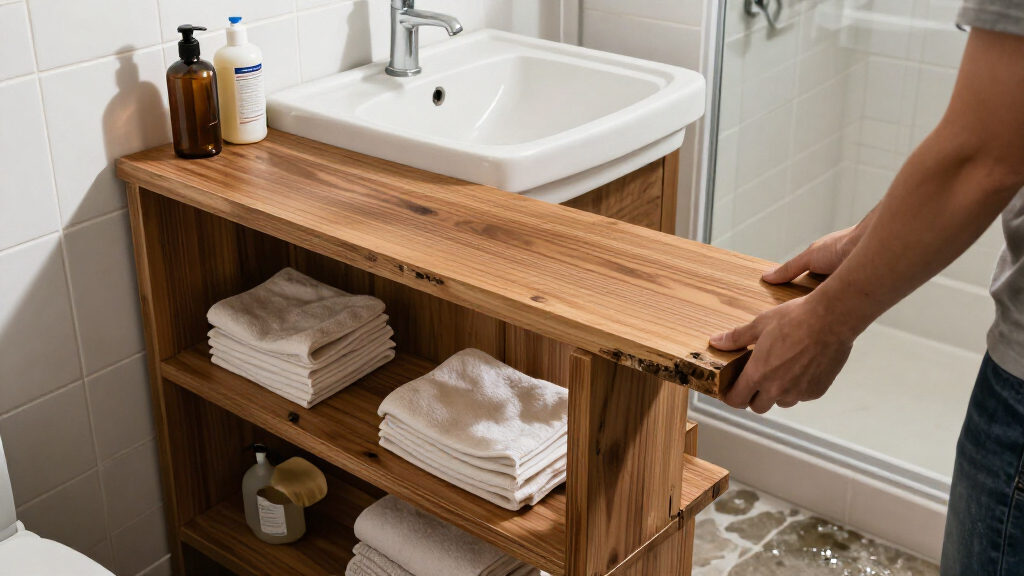
A DIY project shared by TikTok user johndolechek shows how one piece of secondhand wood can be turned into matching doors for open bathroom shelves, giving homeowners a way to conceal storage without commissioning a custom cabinet door. Hunker reported that the maker used a long board, fitted it over the shelving as one panel, then cut it into separate doors while keeping the wood grain aligned.
The project starts with a board sized to cover the shelving opening, sourced from an architectural salvage store, a Habitat for Humanity retail store, Facebook Marketplace or leftover lumber from another job. Hunker says the board shown appears to be roughly a 1-by-16-inch board about six feet long; that is an estimate from the report, not a universal size recommendation. Measure the actual opening before buying wood, since standard lumber labels do not give the board’s exact finished dimensions.
The design can be adapted to the shelves. A homeowner may fit one door to each cubby, combine several sections behind a wider door, or use one tall panel across the entire niche. For a stained finish, the report recommends marking the hinge positions and planned cuts on the full board first. Installing and cutting in this order can help preserve a continuous grain pattern across the closed doors. Those choosing paint can mark and cut the panels before proceeding with the finish.
The reported materials include a pair of soft-close European hinges for each door, plus stain or paint, optional handles and edge banding. The maker drilled hinge cup holes with a 35-millimeter Forstner bit or a concealed-hinge jig. Hunker describes attaching the hinges and mounting the full panel before marking the horizontal cuts, then removing the panel to cut it into individual doors. After cutting, the edges are sanded and covered with iron-on banding before the finish is applied.
A Lower-Cost Alternative to Custom Doors
The idea offers a way to cover everyday bathroom supplies while avoiding the exposed, mixed appearance of open cubbies. Using one board for multiple panels can also create a coordinated wood-grain effect that separate pieces of lumber may not provide. The finished look depends on the board selected, the accuracy of the cuts and how the doors fit the particular shelving.
This is a DIY option, not a guaranteed cost-saving calculation: the source does not provide a full project budget, and hinges, tools, finishing materials and any needed adjustments add to the price. Still, reusing a suitable board may make the approach attractive to people who already have lumber or can find an appropriate secondhand piece. A painted finish can blend the doors with trim or walls; stain can leave the grain visible.
soft-close European hinges for cabinets
As an affiliate, we earn on qualifying purchases.
As an affiliate, we earn on qualifying purchases.
How the One-Board Door Plan Works
Hunker frames the project as a response to a practical drawback of open bathroom storage: shelves that look orderly in staged images can hold toilet paper, first-aid supplies and personal-care products in daily use. The reported solution adds doors to a niche that was previously open. It does not require converting the shelving into a full cabinet, though the installation depends on having a suitable surface to support the hinges.
One key detail is the difference between a lumber size label and its actual dimensions. Hunker gives the example that a nominal 1-by-16 board measures about 0.75 inches thick by 15.25 inches wide. The example helps explain why checking the physical board against the opening matters; dimensions vary, and a board that sounds wide enough by its label may leave part of the niche exposed.
The report also emphasizes planning the installation before finishing stained wood. Mounting the panel first allows the maker to mark where cuts will fall and align the grain across separate sections. It describes mounting into the niche’s inner frame where available, or locating the vertical stud used to frame the opening for hinge support.
“The board appears to be roughly a 1-by-16-inch board and about six feet long.”
— Hunker, describing the board shown in the TikTok project
reclaimed wood for DIY cabinet doors
As an affiliate, we earn on qualifying purchases.
As an affiliate, we earn on qualifying purchases.
Fit and Support Depend on the Niche
The source does not give the finished doors’ exact measurements, the board species, the total project cost or a full materials list. Its estimate of the example board’s size should not be treated as a template: bathroom niches differ, and the report does not establish that every shelf frame can support this type of hinged panel.
It is also unclear from the supplied report how the doors perform over time or whether the TikTok maker encountered issues after installation. The advice assumes the user can identify a suitable mounting frame or stud and work accurately with hinge holes and saw cuts. The project’s result may vary with the condition of secondhand wood, the number and height of panels, and the precision of the installation.
concealed hinge jig for woodworking
As an affiliate, we earn on qualifying purchases.
As an affiliate, we earn on qualifying purchases.
Measure Before Cutting the Board
For anyone considering the project, the next step is to measure the full opening and decide how many doors the shelving needs. Check the secondhand board’s actual width and length against those measurements, then plan hinge locations and cuts before applying stain. If mounting the panel, confirm that the niche frame or a stud can support the hinges, and follow the tool maker’s safety instructions when drilling or cutting. Hunker’s report offers a project method, but it does not provide a follow-up on the creator’s finished installation or a standardized plan for other shelf layouts.
iron-on edge banding for wood panels
As an affiliate, we earn on qualifying purchases.
As an affiliate, we earn on qualifying purchases.
Key Questions
How much wood is needed to cover bathroom shelves?
It depends on the opening. Hunker estimates the board in the reported project was about six feet long and roughly 1 by 16 inches, but recommends measuring the niche and checking the board’s actual dimensions before purchase.
Can one board make several cabinet doors?
Yes. In the reported approach, the maker mounted a larger panel and cut it into separate sections, with the aim of keeping the grain aligned. The number and size of doors depend on the shelf layout.
What hinges does the project use?
Hunker describes using soft-close European hinges, with a pair for each door and an additional hinge for taller doors that need more support. The correct setup depends on the dimensions and weight of the panels.
Does the wood need to be secondhand?
No. The report presents reclaimed wood as an option from salvage stores, Habitat for Humanity retail stores, online marketplaces or leftover project materials. Any suitable board must still be large enough and in usable condition.
When should the board be stained or painted?
For a stained finish, Hunker recommends planning the hinge installation and cuts on the full board first, then finishing the individual doors after cutting and applying edge banding. The report says people painting the doors can cut the panels before proceeding with the finish.
Source: rss
Fall Picks
fall essentials
As an affiliate, we earn on qualifying purchases.