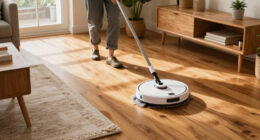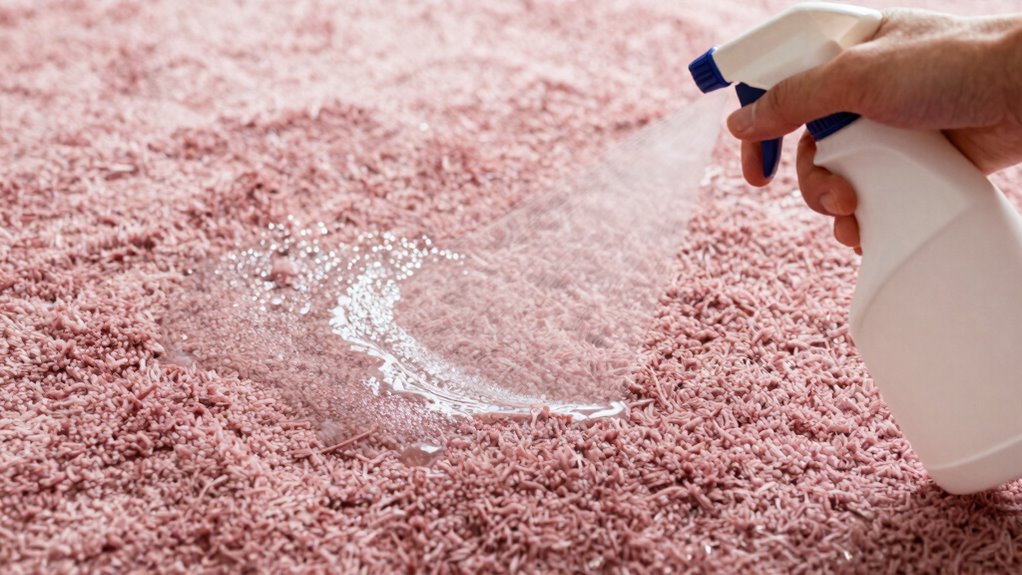
If your carpet cleaner leaves a sticky residue, it’s likely due to using too much solution or not rinsing properly. Make sure you follow the manufacturer’s instructions carefully, measure solutions accurately, and avoid over-saturating the carpet. Using excessive cleaner or skipping rinsing can leave behind residue that dulls your carpet’s appearance. To prevent this, carefully manage your cleaning process—more tips on handling residue properly are just below.

Get cleaning gear delivered free with Prime
- Fast, free delivery on millions of items
- Prime Video, Amazon Music and more included
- Member-only deals all year
Key Takeaways
- Overuse of cleaning solution can leave sticky residues on the carpet surface.
- Always measure and dilute carpet cleaners according to manufacturer instructions.
- Using too concentrated formulas or applying excessive amounts causes residue buildup.
- Proper rinsing with water and blotting help remove leftover cleaning solution.
- Conduct small test areas first to determine the correct amount and prevent residue issues.
carpet cleaning solution measuring cup
As an affiliate, we earn on qualifying purchases.
As an affiliate, we earn on qualifying purchases.
Why Your Carpet Cleaner Leaves a Sticky Residue
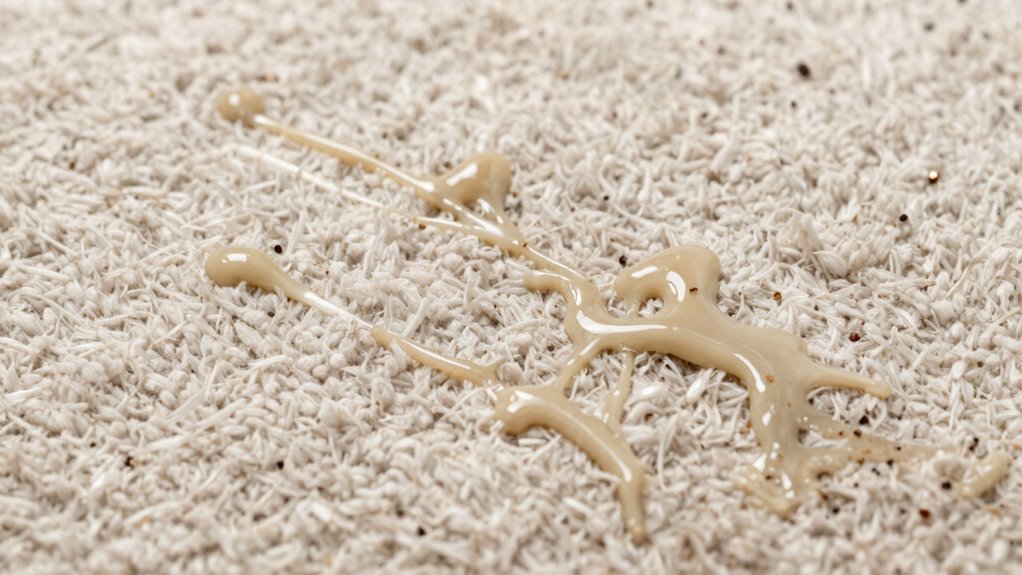
If your carpet cleaner leaves a sticky residue, it’s often because the cleaning solution wasn’t rinsed out properly or the formula used is too concentrated. When cleaning equipment dispenses an overly strong solution, chemical reactions can occur on the carpet fibers, leaving behind a sticky film. These reactions can be caused by incompatible ingredients or insufficient rinsing, which traps residues rather than removing them. Using the wrong cleaning equipment or not maintaining it properly can also contribute, as clogged or malfunctioning tools may deliver uneven amounts of solution. Proper equipment maintenance is essential to prevent uneven application and buildup of residues. Additionally, correct dilution ensures that the cleaning solution is used at an optimal strength to avoid residue buildup. Regularly inspecting and calibrating your equipment can help maintain proper solution flow and prevent excess residue. Maintaining cleaning solutions in accordance with manufacturer specifications can also help reduce the risk of sticky buildup. As a result, residues build up, making your carpet feel sticky and attracting dirt. To prevent this, make certain your equipment is clean, and follow the manufacturer’s instructions for dilution and rinsing. Proper maintenance and understanding of modern cleaning technology can help ensure a thorough and residue-free clean.
professional carpet cleaning machine
As an affiliate, we earn on qualifying purchases.
As an affiliate, we earn on qualifying purchases.
How to Measure and Mix Carpet Cleaning Solutions Correctly
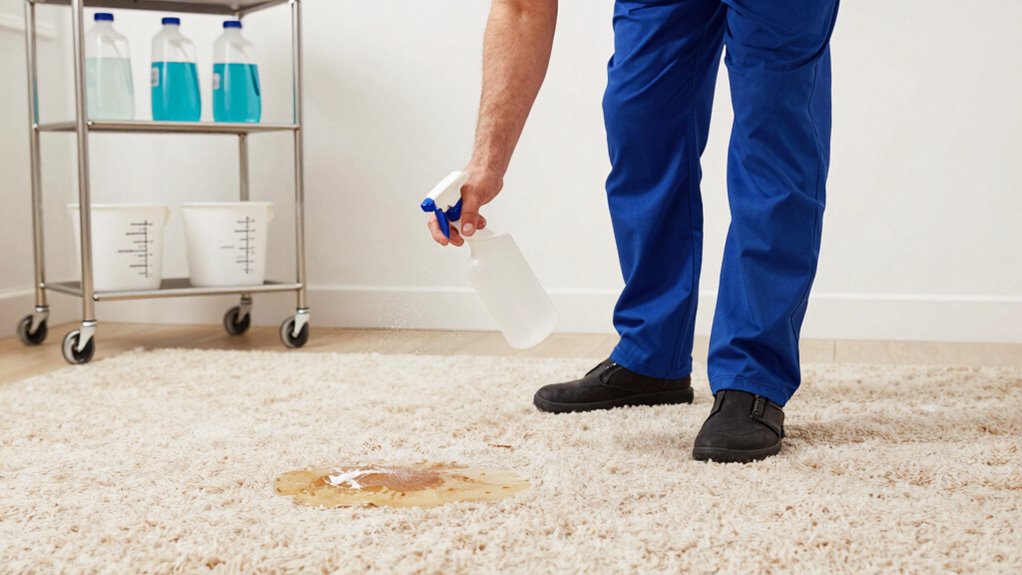
To guarantee your carpet gets thoroughly cleaned without leaving a sticky residue, it’s essential to measure and mix your cleaning solutions accurately. Proper solution measurements ensure you’re using the right amount of cleaning agent without overdoing it, which can cause residues. Always follow the manufacturer’s instructions for dilution ratios. When mixing solutions, use a clean measuring cup or bottle for precision. Avoid eyeballing measurements, as this can lead to inconsistent results. Mixing techniques matter: add water first, then the cleaner, and stir gently to prevent foaming or uneven distribution. Double-check your measurements before applying. Accurate measurement of solutions is a critical step in effective carpet cleaning. Precise solution measurements and proper dilution ratios can greatly improve your results and prevent damaging your carpet or leaving unwanted residues. Additionally, understanding solution concentration helps ensure you are using the optimal amount of cleaning agents for each job. Being aware of water temperature can also influence how well the cleaner works and how residues are left behind.
As an affiliate, we earn on qualifying purchases.
How to Recognize if You’re Using Too Much or Too Little Cleaner
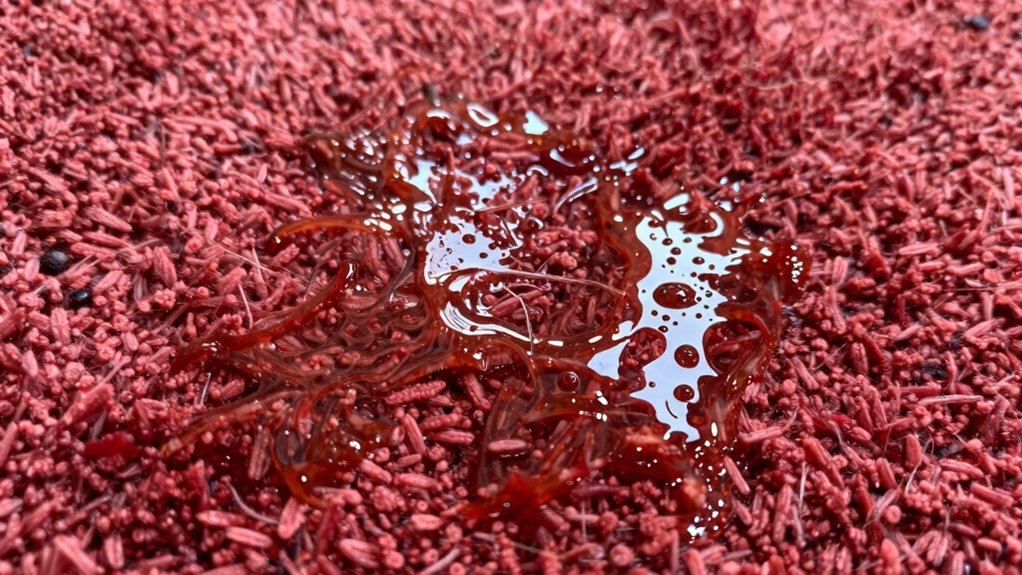
Recognizing whether you’re using too much or too little cleaner is key to achieving a spotless, residue-free carpet. With DIY methods, overusing cleaner can lead to excess residue, while too little may not remove dirt effectively. Pay attention to chemical reactions during cleaning—foaming or bubbling can indicate you’re applying too much cleaner, which may not fully rinse out. If your carpet feels sticky or looks damp for hours, you’re likely using too much. Conversely, if the carpet appears dull or doesn’t lift stains well, you might be using too little. Properly balancing the amount ensures the cleaner reacts correctly with dirt without leaving residue. Monitoring these signs helps you avoid sticky buildups and achieve a cleaner, fresher carpet. Additionally, understanding carpet cleaning products can help you select the right cleaner for your specific needs and prevent residue issues. Knowing how professional services approach cleaning can also offer insights into achieving optimal results without residue buildup, including the importance of proper cleaning techniques and equipment.
carpet cleaning solution dilution kit
As an affiliate, we earn on qualifying purchases.
As an affiliate, we earn on qualifying purchases.
Tips for Using the Right Amount of Cleaner for Residue-Free Carpets
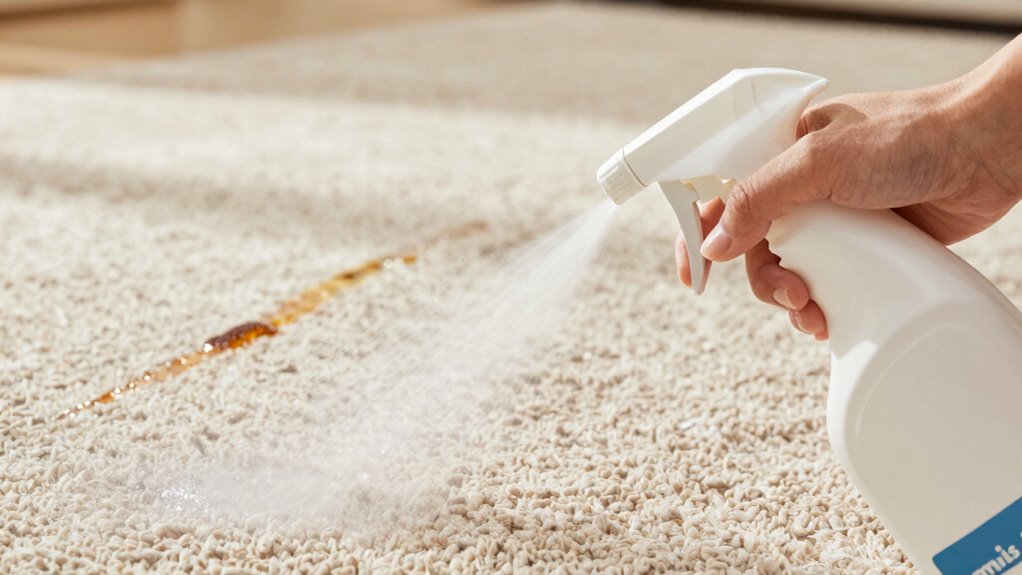
Using the right amount of cleaner is key to preventing sticky residue and ensuring your carpet looks fresh. When doing DIY cleaning, measure your cleaning solution carefully rather than estimating. Follow the manufacturer’s instructions for dilution, or opt for eco-friendly solutions that are safe and effective. Too much cleaner can leave residues, while too little won’t clean thoroughly. Use a spray bottle or a measuring cup to control the amount you apply. Always test a small area first to see how your carpet reacts. Remember, less is often more—using the correct dosage saves you from excessive rinsing and residue buildup. Properly dosed DIY cleaning keeps your carpets cleaner longer and reduces the need for professional interventions later.
How to Fix Residue Issues and When to Call a Professional
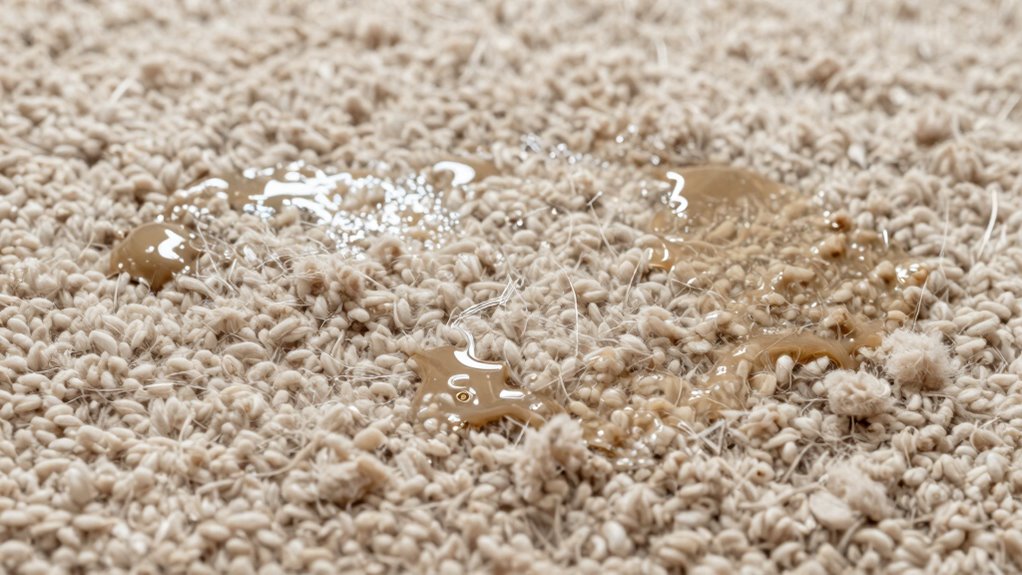
If your carpet still feels sticky after cleaning, addressing the residue promptly can restore its appearance and feel. Start with DIY tricks like blotting with a mixture of vinegar and water or using a damp cloth to lift leftover cleaner. If these don’t work, consider professional help to guarantee thorough removal. Recognize when to call in experts if the residue persists despite multiple attempts or if you notice a strong chemical smell.
- Use a vinegar-water solution to break down residue
- Rinse with clean water and blot thoroughly
- Avoid over-wetting the carpet to prevent deeper issues
- Seek professional help if DIY tricks fail or the residue worsens
Knowing when to escalate to professionals ensures your carpet gets properly cleaned without damage.
Frequently Asked Questions
Can Different Carpet Types Require Different Cleaning Solution Dosages?
Yes, different carpet types require different cleaning solution dosages because fiber sensitivity varies. For delicate fibers like wool or silk, use a milder solution with less concentration to prevent damage. For more durable fibers, you can increase the dosage for effective cleaning. Also, consider your cleaning frequency; less frequent cleaning might need stronger solutions, but always follow manufacturer guidelines to avoid sticky residue or fiber damage.
How Often Should I Deep Clean My Carpet to Prevent Residue Buildup?
Think of your carpet as a garden that needs regular tending. You should deep clean it every 6 to 12 months to prevent residue buildup, just as you’d weed your garden. Regular vacuuming, about once a week, helps with stain prevention and keeps dirt from settling deep. By maintaining this routine, you guarantee your carpet stays fresh and clean, avoiding sticky residues and preserving its beauty.
Are There Natural or Eco-Friendly Cleaners Less Likely to Leave Residue?
Yes, eco-friendly options with natural ingredients are less likely to leave sticky residue. Look for cleaners made from plant-based ingredients like vinegar, baking soda, or essential oils. These natural options break down dirt without harsh chemicals, reducing residue buildup. Always follow the recommended dosage and instructions to prevent extra residue. Using eco-friendly cleaners not only keeps your carpet clean but also benefits your indoor air quality and the environment.
What Are Signs That Residue Is Harming My Carpet’s Fibers?
You might notice your carpet’s fibers looking frayed or losing their luster, which signals potential fiber damage. Persistent odors can also hint that residue is lingering and affecting your carpet’s health. If you see fibers breaking or smell mustiness despite cleaning, it’s a sign that leftover residue is harming your carpet and causing odor issues. Addressing these signs early can help preserve your carpet’s appearance and freshness.
How Can I Test if My Cleaning Solution Is Properly Diluted?
To test if your cleaning solution is properly diluted, start with solution testing by applying a small amount to a hidden carpet area. Check for any sticky residue or uneven cleaning, which indicates dilution inaccuracies. If the solution cleans effectively without residue, your dilution accuracy is good. Always follow manufacturer instructions carefully and adjust the mixture if you notice any issues, ensuring ideal cleaning without damaging fibers.
Conclusion
Think of your carpet as a garden—you need just the right amount of water to flourish. Using too much cleaner is like overwatering; it leaves residue and harms your carpet’s health. By measuring carefully and following instructions, you guarantee your carpet stays fresh and vibrant, not muddy and sticky. When in doubt, don’t hesitate to call a professional—sometimes, expert hands are the pruning shears that keep your home beautiful and residue-free.
Halloween Picks
halloween
As an affiliate, we earn on qualifying purchases.