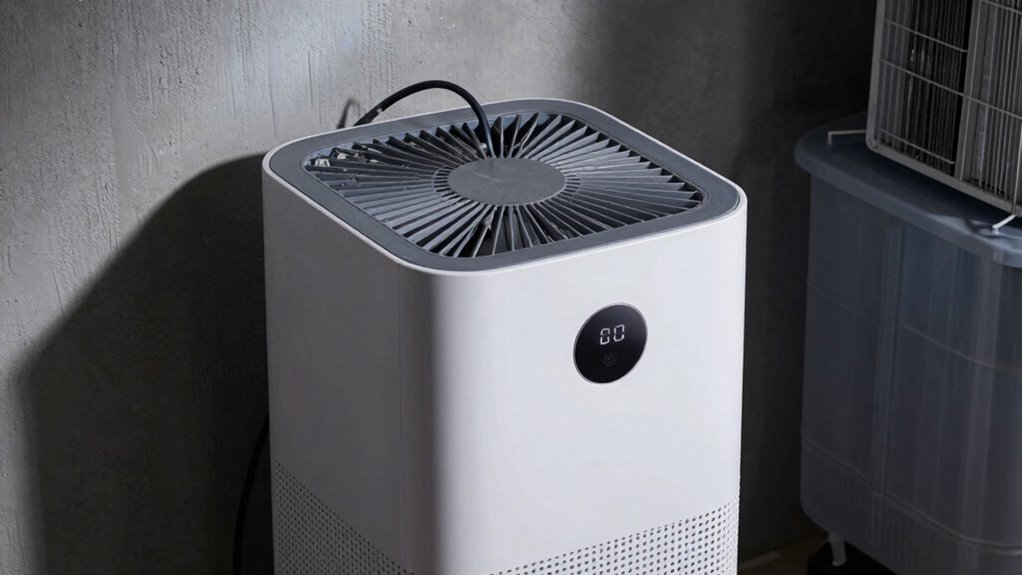

If your dehumidifier isn’t collecting water, check if the collection bucket is full, misaligned, or blocked, as these prevent proper operation. Confirm the filters and coils are clean to allow airflow and effective condensation. Also, verify that the humidistat and sensors are working correctly, since faulty parts can send incorrect signals. Finally, look at the drain hose for blockages or disconnections. Continuing further will help you find detailed solutions to get your dehumidifier working properly.

Get cleaning gear delivered free — and shop member deals
- Fast, free delivery on millions of items
- Access to Prime Big Deal Days deals on October 6–7
- Prime Video, Amazon Music and more included
Key Takeaways
- The collection bucket may be full, misaligned, or blocked, preventing water detection and stopping collection.
- Dirty filters or coils reduce airflow, impairing condensation and water collection efficiency.
- Faulty sensors or humidistat malfunctions send incorrect signals, halting water gathering.
- Blocked or disconnected drain hoses cause water backup and prevent proper drainage.
- Refrigerant leaks or compressor issues impair cooling, reducing condensation and water output.
dehumidifier water collection bucket
As an affiliate, we earn on qualifying purchases.
As an affiliate, we earn on qualifying purchases.
How Does a Dehumidifier Collect Water and Why Might It Stop?
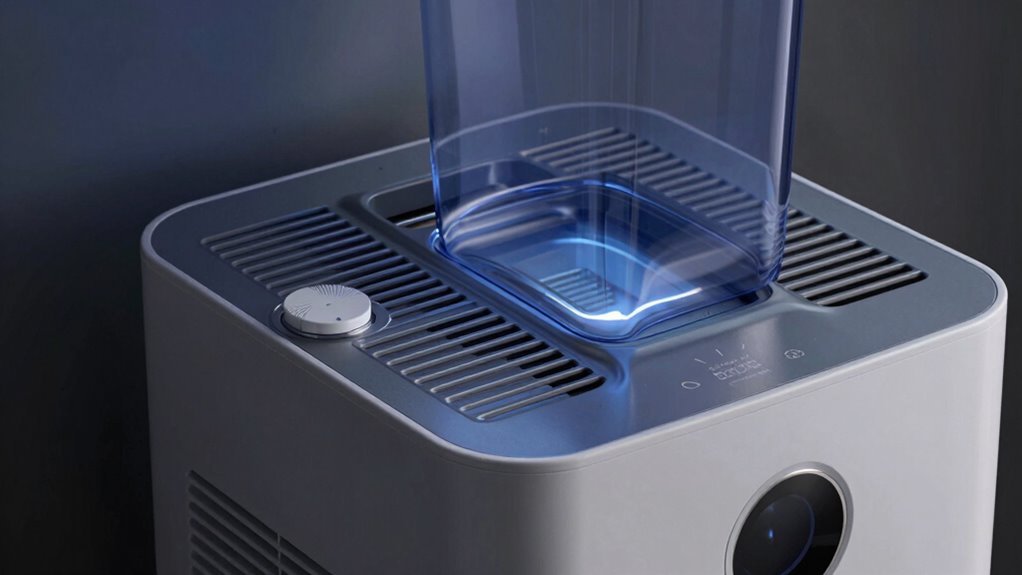
Have you ever wondered how a dehumidifier actually removes water from the air? It works by drawing moist air over cooled coils, causing water to condense—this water then drips into a collection bucket or drain. Proper dehumidifier maintenance ensures this process runs smoothly; if filters or coils are dirty, airflow decreases, and water condensation drops. When your dehumidifier stops collecting water, it could be due to reduced airflow, a refrigerant leak, or a faulty compressor. Sometimes, dirt buildup or neglecting maintenance can impair its ability to generate enough cooling, preventing effective water condensation. Regular cleaning of filters and coils helps maintain ideal performance, and ensuring the refrigeration cycle functions correctly is essential for proper operation. A high-quality compressor is essential for consistent operation and effective dehumidification. If your unit isn’t collecting water, it’s often a sign that maintenance is overdue or something’s blocking the process.
As an affiliate, we earn on qualifying purchases.
Is the Water Collection Bucket Full, Misaligned, or Blocked?
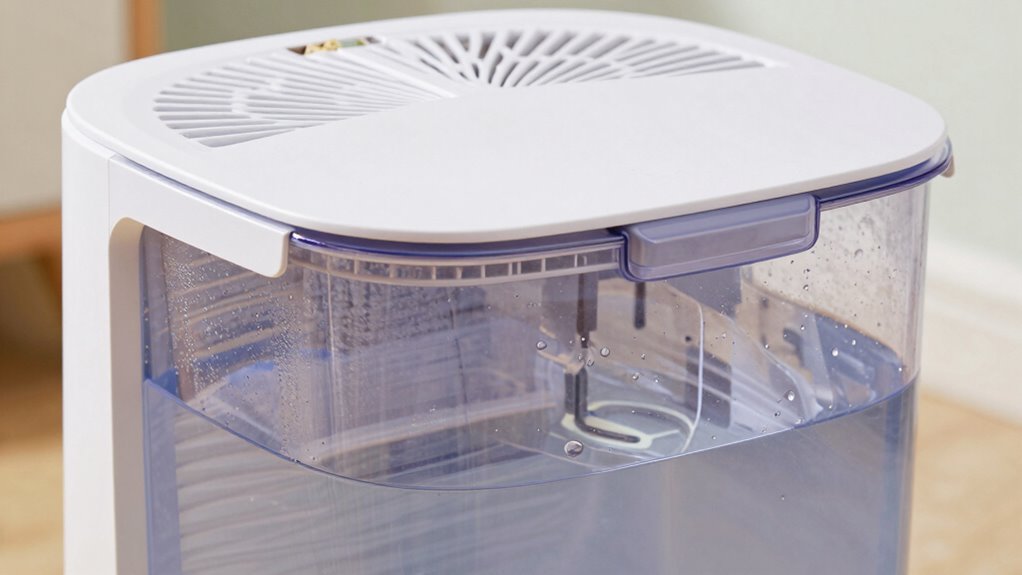
A common reason your dehumidifier stops collecting water is that the collection bucket is full, misaligned, or blocked. When water evaporation from the air occurs, the bucket accumulates moisture, but if it’s full, the dehumidifier will stop functioning until you empty it. Misalignment can prevent the sensor from detecting the water level correctly, causing the unit to shut off. Blockages, such as debris or overflow, can also hinder proper water collection. Additionally, high humidity levels increase water evaporation, filling the bucket more quickly. If the bucket isn’t seated properly, the device may not recognize it as in place, preventing water collection. Regularly check that the bucket is empty, correctly positioned, and free of obstructions to keep your dehumidifier working efficiently. Proper maintenance and awareness of sensor functionality can help prevent collection issues. Ensuring the drain system is clear and operational can also reduce water collection problems. Being aware of air humidity levels can help you anticipate when the bucket might fill faster and needs attention. Moreover, regular cleaning of the dehumidifier’s components can prevent dust and debris buildup that might interfere with proper operation. Paying attention to factory settings can also help ensure optimal performance and prevent false shut-offs.
As an affiliate, we earn on qualifying purchases.
Are the Filters and Coils Clean and Unclogged?

Dirty or clogged filters and coils can substantially reduce your dehumidifier’s ability to collect water. Regular air filter maintenance is essential; if the filter is dirty, airflow diminishes, making it harder for the unit to operate efficiently. Check your filters and clean or replace them as needed. Additionally, coil cleaning procedures are crucial to prevent dust and debris buildup that impairs heat exchange. Turn off the dehumidifier, then gently vacuum or wipe the coils with a soft brush or cloth. Maintaining clean filters and coils ensures ideal airflow and heat transfer, which directly impacts water collection. Proper filtration and coil maintenance are key to maximizing your dehumidifier’s efficiency. Neglecting these components can cause the unit to run inefficiently or stop collecting water altogether. Regular maintenance routines help keep your dehumidifier operating at peak performance and prevent issues like water collection failure. An often overlooked aspect is ensuring that the airflow pathway remains unobstructed, which is vital for optimal operation. Consistently checking for potential blockages and removing debris can further improve performance. Additionally, ensuring proper humidity levels in the environment helps the dehumidifier function effectively and collect more water. Keep up with routine cleaning to ensure your dehumidifier functions properly.
As an affiliate, we earn on qualifying purchases.
Are the Humidistat or Sensors Working Properly?
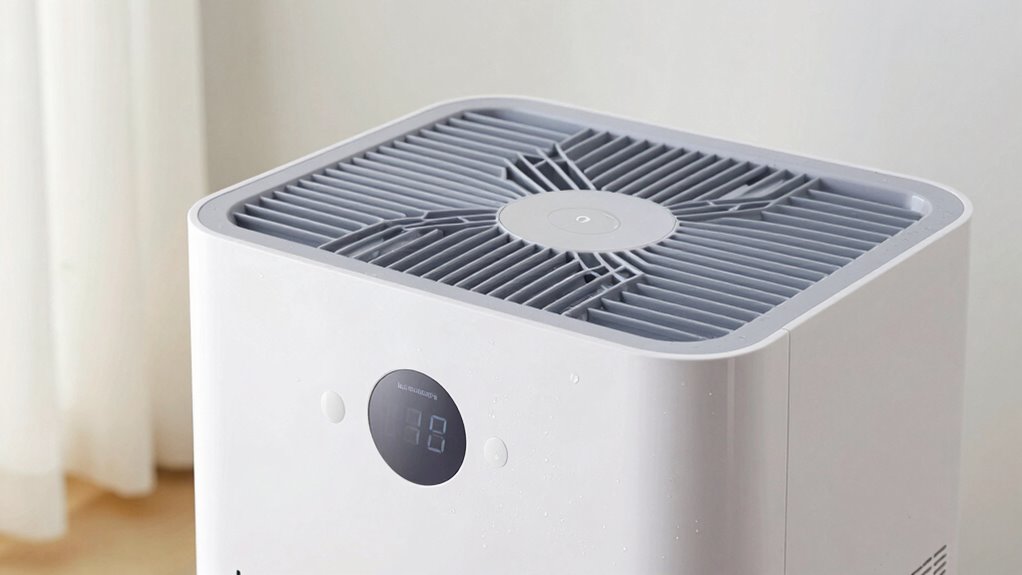
If your dehumidifier isn’t collecting water despite clean filters and coils, the problem might lie with the humidistat or sensors. Faulty sensors or a malfunctioning humidistat can send incorrect signals, causing the unit to stop dehumidifying. You should check for:
Faulty sensors or humidistat issues can prevent your dehumidifier from collecting water properly.
- Sensor malfunction caused by dirt, damage, or electrical issues
- Improper calibration of the humidistat
- Electrical problems disrupting sensor communication
These issues can prevent the dehumidifier from detecting the humidity level accurately, so it won’t activate the compressor or fan. Make sure the sensors are clean, properly connected, and free of damage. Additionally, sensor accuracy can be affected by environmental factors or aging components, leading to faulty readings. Improper sensor calibration can also cause incorrect humidity readings, resulting in ineffective dehumidification. If you notice signs of electrical issues, like flickering lights or inconsistent operation, consider replacing or repairing the faulty components. Proper functioning sensors are essential for maximum dehumidifier performance, especially when electrical components are involved. Regular maintenance and understanding of sensor function can help prevent these issues and ensure your dehumidifier operates efficiently.
Is the Drain Hose Clear and Connected Correctly?
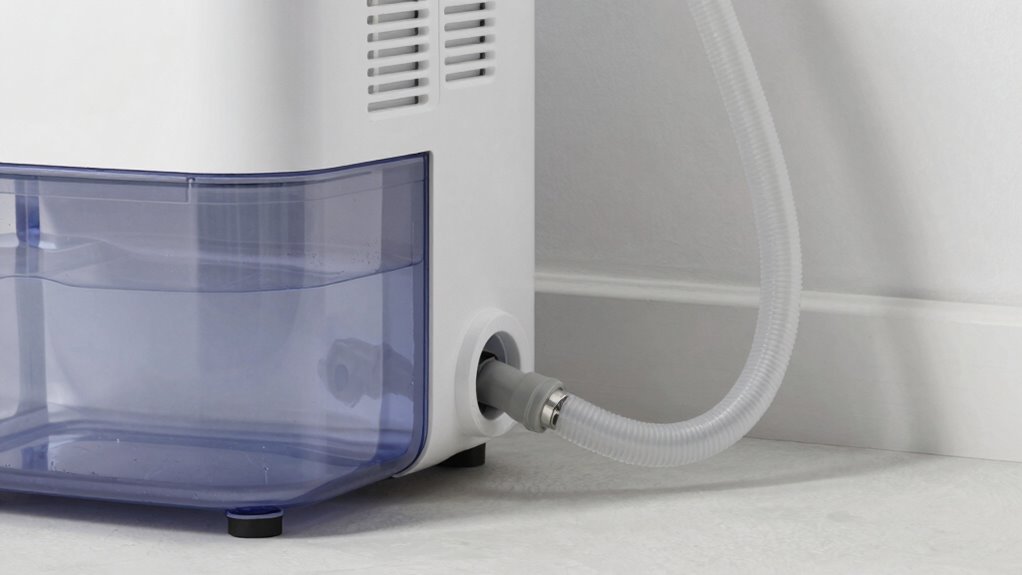
Even if your sensors and humidistat are functioning correctly, a blocked or disconnected drain hose can still prevent water from collecting properly. You should perform a connection check to verify the drain hose is securely attached and free of kinks or clogs. A clogged drain hose can cause water to back up, reducing the amount collected in the dehumidifier’s tank. Inspect the hose for any debris or buildup and clear it if necessary. Make sure the hose is connected tightly at both ends, especially if it’s a drain that leads outside or to a drain bucket. Proper connection and clear passage are essential for continuous water flow, preventing overflow or water collection issues. Regularly drain maintenance ensures optimal dehumidifier performance and can often resolve collection problems quickly. Additionally, ensuring the drain hose alignment promotes smooth water flow and reduces the risk of blockages. Checking the drain hose material periodically can help identify signs of wear or cracks that may cause leaks or disconnections.
Frequently Asked Questions
Can a Faulty Compressor Prevent Water Collection in a Dehumidifier?
Yes, a faulty compressor can prevent water collection in your dehumidifier. If the compressor malfunctions or there’s a refrigerant leak, the unit won’t cool the air properly, which stops condensation from forming. Without proper cooling, water won’t collect in the tank. You should check for signs of a compressor malfunction or refrigerant leak, and consider professional repair to restore your dehumidifier’s water collection ability.
Does Ambient Temperature Affect a Dehumidifier’s Water Collection Ability?
Yes, ambient temperature influences your dehumidifier’s water collection ability. When temperatures are too low, humidity levels drop, making it harder for the unit to extract moisture from the air. Poor air circulation can also reduce efficiency, causing less water to collect. To improve performance, guarantee your room stays warm enough and maintains good air flow, which helps your dehumidifier work effectively and gather more water.
How Often Should I Service or Replace Dehumidifier Parts?
You should service your dehumidifier at least once every six months to guarantee ideal performance. Follow the manufacturer’s maintenance schedule, including cleaning filters and coils regularly. Replacement intervals for parts like filters or moisture sensors depend on usage, but typically, filters need replacing every 3-6 months. Keep an eye on performance; if your unit isn’t working efficiently, it might be time to replace worn-out parts sooner.
Is Electrical Wiring a Common Cause of Dehumidifier Failure?
Electrical wiring faults and issues with electrical wiring are common causes of dehumidifier failure. If you notice the device isn’t powering on or keeps shutting off unexpectedly, faulty wiring might be the culprit. You should inspect the wiring for signs of damage, loose connections, or burnt components. Always unplug the unit before examining the wiring, and consider calling a professional if you’re unsure about handling electrical repairs safely.
Can a Dehumidifier Operate Without a Functioning Fan?
Your dehumidifier can’t operate without a functioning fan because, without it, airflow is severely restricted—like trying to breathe through a clogged straw. A fan malfunction halts the circulation of air, which is essential for moisture extraction. If the fan isn’t working, the device won’t collect water effectively, and it might even overheat. Fixing or replacing the fan is vital to get your dehumidifier back to full power.
Conclusion
When your dehumidifier stops collecting water, think of it as a busy river running dry—clogged filters, full buckets, or misaligned parts block the flow. By checking each cause like opening a door to a well-oiled machine, you can restore the stream of moisture. Once all parts are working smoothly, your dehumidifier will flow like a gentle mountain stream again, keeping your space dry and comfortable.
Fall Picks
fall essentials
As an affiliate, we earn on qualifying purchases.