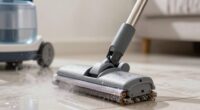
During allergy season, start by deep cleaning your carpets, rugs, and upholstery with a HEPA vacuum to remove trapped allergens. Follow up with damp mopping hard floors to prevent dust from becoming airborne. Using steam cleaning on carpets can also kill dust mites and loosen dirt. Additionally, consider air purifiers and proper ventilation to improve air quality further. Stay committed to regular cleaning, and you’ll find more tips to create a healthier home.
Key Takeaways
- Prioritize thorough vacuuming of carpets, rugs, and upholstery using HEPA filters to remove trapped allergens effectively.
- Focus on damp mopping hard floors to prevent dust and allergen particles from becoming airborne during cleaning.
- Schedule regular deep cleaning, including steam cleaning carpets and rugs, to eliminate dust mites and embedded dirt.
- Reduce clutter and dust-collecting items to minimize allergen accumulation on floors and surrounding surfaces.
- Incorporate air purifiers alongside cleaning routines to enhance indoor air quality and capture airborne allergens.
Are your floors contributing to allergy symptoms this season? If you’re noticing increased sneezing, congestion, or itchy eyes at home, your flooring might be harboring more allergens than you realize. During allergy season, prioritizing floor cleaning can substantially reduce indoor allergens like dust mites, pet dander, and pollen. One effective way to improve your home’s air quality is by understanding the air purifier benefits—these devices can trap airborne particles that settle into your floors and become airborne again when disturbed. Combining the use of an air purifier with deep cleaning techniques ensures you’re tackling allergens at their source, minimizing their presence and your symptoms.
Prioritize floor cleaning and air purifiers to reduce allergens and improve indoor air quality.
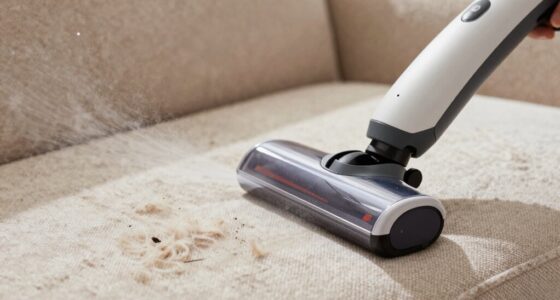
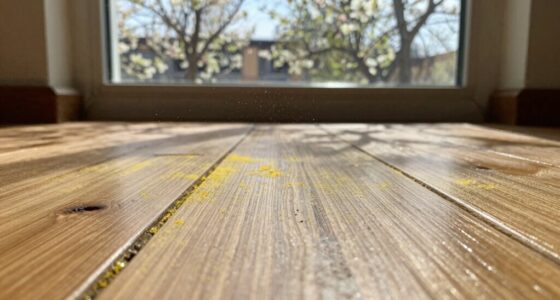
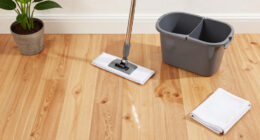
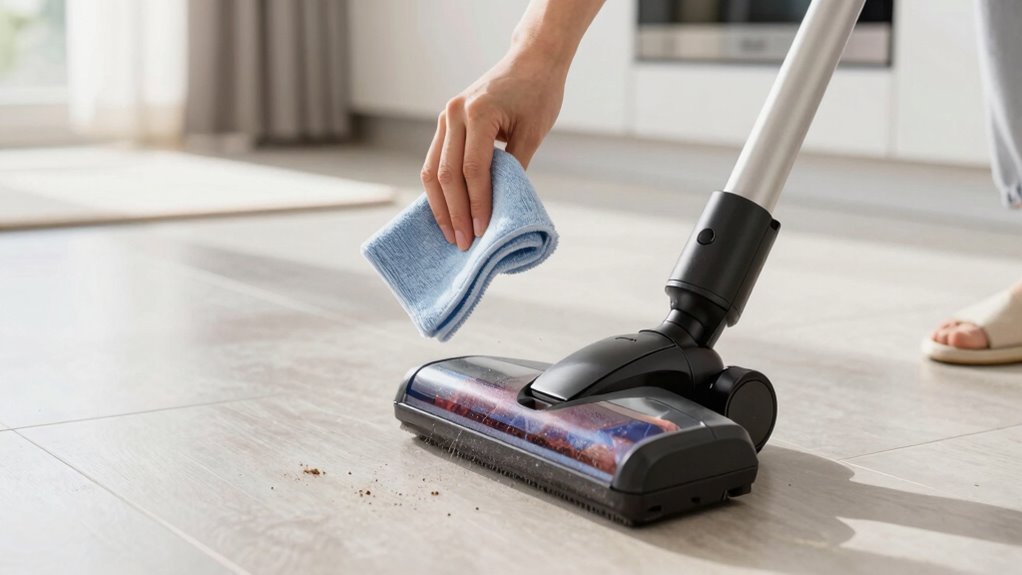
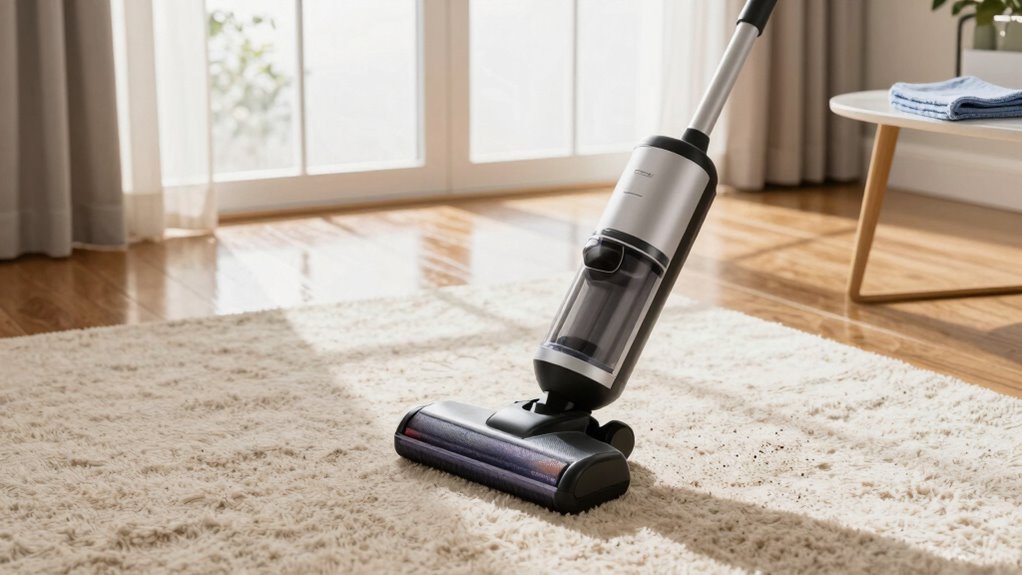
Start with a thorough vacuuming session using a high-efficiency particulate air (HEPA) filter vacuum. These vacuums are designed to trap tiny particles that standard vacuums might recirculate into the air. Pay special attention to carpets, rugs, and upholstery, which tend to trap allergens more than hard floors. For hard surfaces like hardwood, tile, or laminate, a damp mop is your best friend. Dry mopping can stir up dust and allergens, worsening allergy symptoms, so opt for damp cleaning to trap and remove particles instead of just spreading them around.
Deep cleaning techniques are essential at this point. Consider steam cleaning carpets or rugs, as the high temperature can kill dust mites and loosen embedded dirt and allergens. Regularly washing throw rugs and cushion covers also helps reduce allergen build-up. Remember, consistency is key—cleaning your floors weekly or more during peak allergy seasons minimizes the accumulation of irritants. Using non-toxic, allergen-free cleaning solutions can further prevent introducing new irritants into your environment.
While deep cleaning is necessary, don’t forget to maintain a clean environment by reducing clutter and dust-collecting items that can trap allergens. Incorporate an air purifier into your space to enhance your cleaning efforts. Its benefits include continuously filtering airborne particles, helping to keep your indoor air fresher and less allergenic. Keep windows open when weather permits to increase ventilation, which complements your cleaning efforts and helps reduce indoor allergens.
Prioritizing your floors during allergy season isn’t just about cleanliness; it’s about creating a healthier living space. Combining deep cleaning techniques with the strategic use of air purifiers can dramatically lower airborne allergens. This approach not only alleviates allergy symptoms but also promotes better overall indoor air quality. So, take these steps seriously—your respiratory health will thank you, and your home will feel fresher and more comfortable throughout the season.

Bissell Pet Hair Eraser Allergen Lift-Off, HEPA, 39883
- Powerful Suction: Removes dirt, fur, and dust effectively
- Lift-Off Detachable Pod: Easy cleaning in hard-to-reach areas
- HEPA Sealed Allergen System: Traps allergens inside for cleaner air
As an affiliate, we earn on qualifying purchases.
As an affiliate, we earn on qualifying purchases.
Frequently Asked Questions
How Often Should I Deep Clean My Floors During Allergy Season?
During allergy season, you should deep clean your floors at least once a week. Make sure to vacuum frequently, ideally every 2-3 days, to remove dust and allergens. Follow up with mopping on your regular schedule, such as twice a week, using a damp mop to pick up remaining particles. This routine helps reduce airborne allergens and keeps your home cleaner and healthier.
Are Natural Cleaning Products Better for Allergy Sufferers?
Natural cleaning products are often better for allergy sufferers because they focus on allergen reduction and safer ingredient safety. Think of them as gentle rain washing away irritants without adding harsh chemicals to your home. By choosing natural options, you help reduce airborne allergens and avoid synthetic fragrances or toxins, creating a healthier environment. This way, your floors stay clean and safe, giving you relief during allergy season’s storm.
Should I Replace Old Rugs or Carpets During Allergy Season?
You should prioritize rug replacement or a carpet upgrade during allergy season. Old rugs and carpets trap dust, pollen, and allergens, making symptoms worse. Replacing them with low-pile or hard flooring options reduces allergen buildup and makes cleaning easier. If replacing isn’t an option, thoroughly clean and vacuum existing rugs regularly. Upgrading to hypoallergenic or washable rugs also helps minimize allergens and improve indoor air quality during allergy season.
How Can I Reduce Dust Mites on Floors Effectively?
Think of your floors as battlegrounds against dust mites. To win, vacuum thoroughly using proper techniques, overlapping passes, and slow movements. Use HEPA filters to trap allergens effectively. Install dust mite barriers like allergen-proof covers on carpets and rugs, and wash bedding regularly to prevent mites from thriving. This approach keeps your floors cleaner and reduces allergy symptoms, creating a healthier home environment.
Is It Necessary to Hire Professional Cleaners During Allergy Season?
You don’t need to hire professional cleaners during allergy season if you follow DIY tips like vacuuming with HEPA filters and mopping regularly. This approach is budget-friendly and effective at reducing allergens. Focus on high-traffic areas and your floors first, and wear a mask if you’re sensitive. Staying consistent with these practices helps manage allergies without the added expense of professional services.

Starrybot Portable Carpet Cleaner with Steam, 18Kpa Spot Cleaner(Gray)
- Powerful Suction: 18,000 PA for deep stain removal
- Multiple Cleaning Modes: Cold, Warm, Steam, Sanitization
- Versatile Cleaning Tools: Includes hand, wide, crevice, and steam brushes
As an affiliate, we earn on qualifying purchases.
As an affiliate, we earn on qualifying purchases.
Conclusion
So, there you have it—your noble quest to conquer allergy season starts with the humble floor. Forget about fancy air purifiers or herbal remedies; a good sweep and mop are your real heroes. After all, who needs allergy meds when you can just drown those pesky pollen intruders beneath a layer of disinfectant? Just remember, in the battle of dust versus dignity, your floors are the frontline. Suit up, clean on, and breathe a little easier—until next season’s pollen invasion.

LEVOIT Air Purifier for Home Allergies and Pets Hair Smokers in Bedroom, H13 True HEPA Filter, 24db Filtration System Cleaner Odor Eliminators, Remove 99.97% Dust Smoke Mold Pollen, Core 300, White
- AHAM Verified for Performance: Independently tested for quality and efficiency
- Powerful Filtration System: 56W motor with 143 CFM CADR
- Effective Air Cleaning: Removes 99.97% dust, smoke, mold, pollen
As an affiliate, we earn on qualifying purchases.
As an affiliate, we earn on qualifying purchases.

CLEANHOME Mops for Floor Cleaning for Hardwood, Marble, Tile Floor Mopping
- Reusable Microfiber Mop Pads: Includes 3 washable refill pads
- High Water Absorption: Chenille microfiber quickly absorbs water
- Effective Dust Removal: Twist microfiber pad removes dust and dirt
As an affiliate, we earn on qualifying purchases.
As an affiliate, we earn on qualifying purchases.