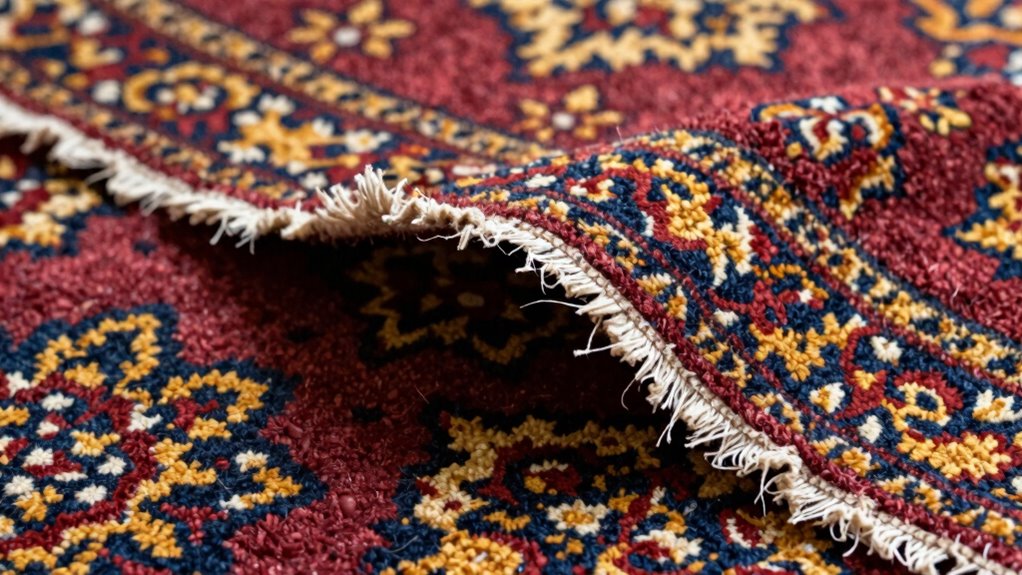
If your rug corners are curling, act quickly to prevent safety hazards. First, inspect for signs of damage or moisture. Try household fixes like placing ice cubes on the curled edges or using heavy objects and tape to flatten them. If the curling persists or worsens, consider professional repair for a safe, long-lasting fix. To keep your rug safe and flat, explore simple solutions and prevention tips that can help you maintain its appearance and safety over time.

Get cleaning gear delivered free with Prime
- Fast, free delivery on millions of items
- Prime Video, Amazon Music and more included
- Member-only deals all year
Key Takeaways
- Regularly inspect rug edges for curling, fraying, or lifted corners to catch issues early.
- Use household items like heavy books, weights, or double-sided tape to flatten curled corners temporarily.
- Apply water-based stiffeners or glue to edges, then press flat and secure until dry for a DIY fix.
- Improve stability by installing rug grippers and padding to prevent future curling and shifting.
- Seek professional repair if curling persists, poses safety risks, or involves damaged backing or fibers.
As an affiliate, we earn on qualifying purchases.
How to Recognize Curling Rug Corners That Need Fixing
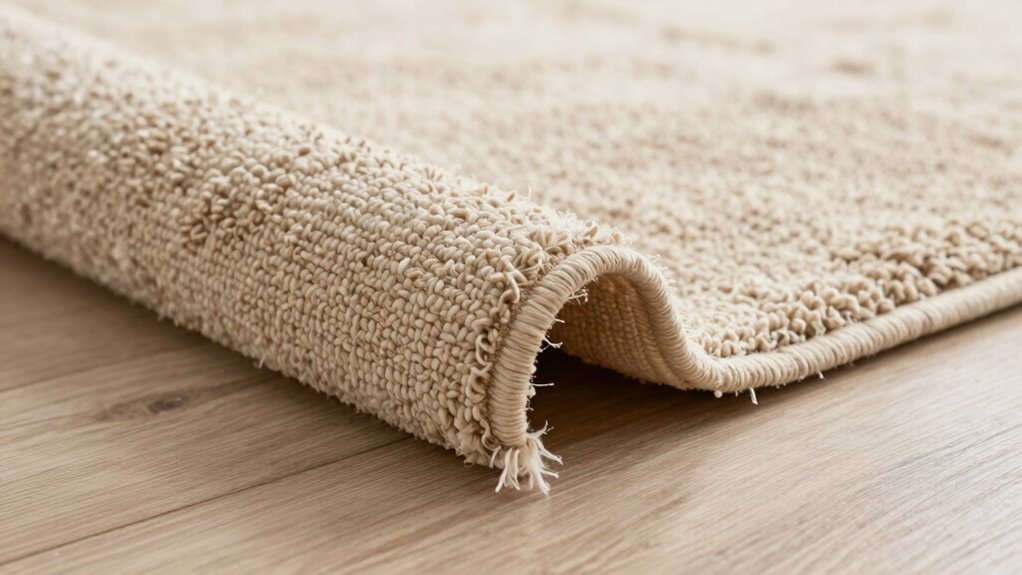
To spot curling rug corners that need fixing, start by inspecting the edges closely. Look for signs of material degradation, such as fraying or thinning fibers, which weaken the rug’s structure. Moisture issues often cause the backing to loosen or warp, leading to curling edges. If you notice areas where the rug appears warped or bubbled, it’s likely due to trapped moisture or deterioration of the backing material. Pay attention to any musty odors or damp spots, as these indicate ongoing moisture problems. These issues compromise the rug’s stability, making corners prone to curling. Regularly checking for these signs ensures you catch problems before they worsen, keeping your rug flat, safe, and visually appealing. Additionally, understanding how water damage affects rug backing can help you take preventive measures. Recognizing early moisture-related issues can save you from costly repairs and replacements in the future, especially since proper maintenance can extend the lifespan of your rug significantly. Being aware of environmental factors such as humidity and temperature fluctuations can also help prevent curling and damage over time.
As an affiliate, we earn on qualifying purchases.
Common Causes of Rug Corner Curling
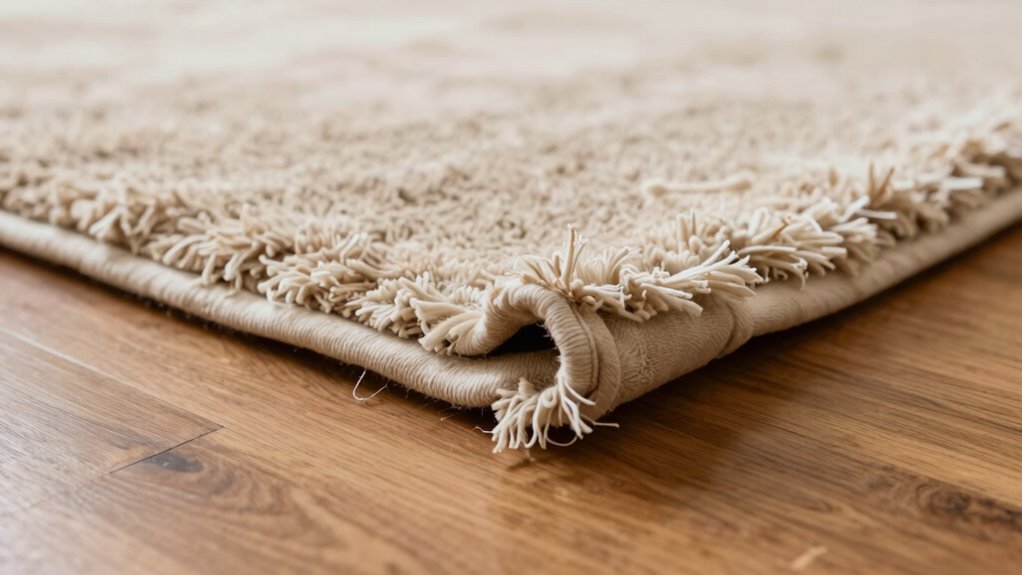
Several factors can cause rug corners to curl over time, often stemming from issues with moisture, wear, or improper installation. The rug material plays a significant role; natural fibers like wool may absorb moisture, leading to curling, while synthetic fibers are more resistant. Rug size also matters—larger rugs are more prone to curling at the edges due to uneven wear or shifting. If a rug isn’t properly stretched or secured during installation, corners can lift and curl. Excess humidity or spills can weaken the backing or fibers, causing edges to lift. Additionally, frequent foot traffic wears down the edges unevenly, intensifying curling. Understanding these common causes helps you identify why your rug corners curl and take appropriate steps to fix the issue before it worsens.
As an affiliate, we earn on qualifying purchases.
Why Curling Rug Corners Are a Safety Hazard
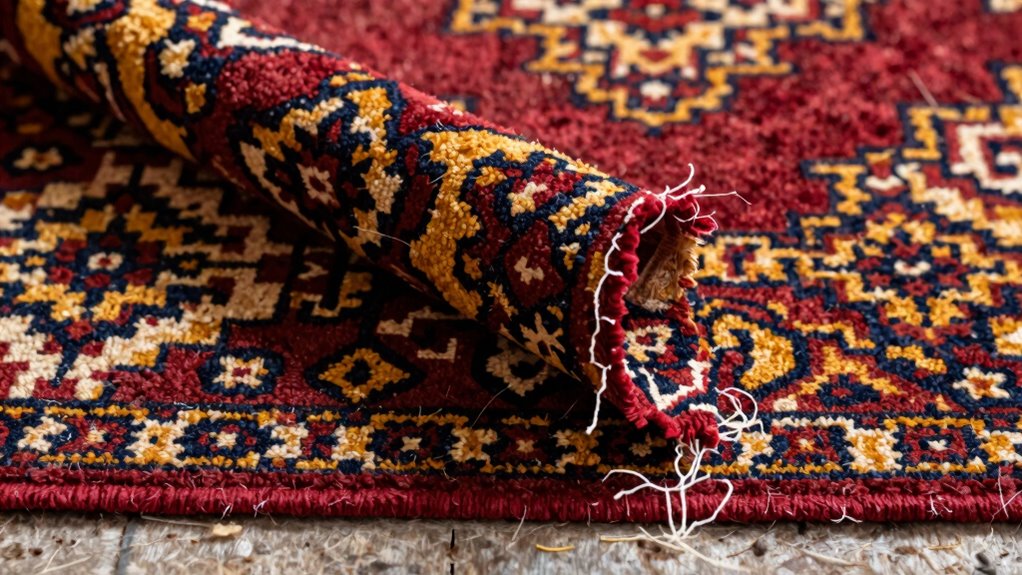
Curling rug corners aren’t just a cosmetic issue—they can also pose serious safety risks. When corners lift or curl, they create uneven surfaces that can cause you to trip or stumble, especially in high-traffic areas. These curled edges can also trap dirt and debris, making rug cleaning more difficult and reducing indoor air quality. Over time, trapped dust and allergens can accumulate, aggravating allergy symptoms or respiratory issues. Additionally, loose corners may catch on footwear or furniture, increasing the risk of falls. Addressing curling early not only improves the appearance of your rug but also maintains a safer environment. Regular rug cleaning helps identify curling issues promptly, allowing you to take action before they become a hazard. Properly maintaining your rug’s filtration system can prevent the buildup of dust and allergens that contribute to curling and deterioration. Using smart cleaning tools can also help detect and address issues more efficiently. Maintaining a consistent cleaning routine can also prevent further damage, and incorporating proper rug care practices can extend the life of your rug and help keep it flat and safe.
As an affiliate, we earn on qualifying purchases.
DIY Fixes to Straighten Curling Rug Corners
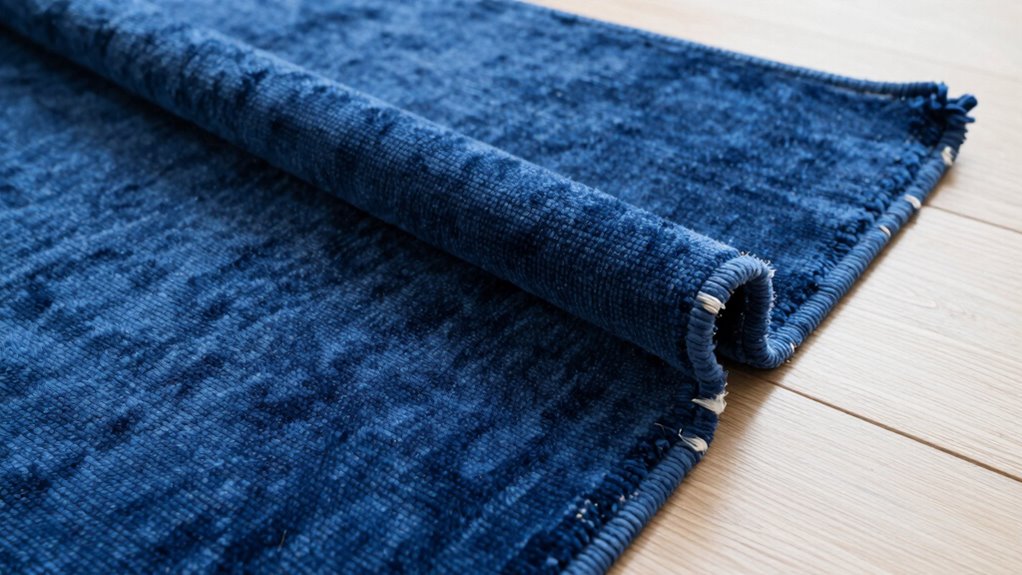
If your rug corners are curling, you don’t need to call a professional to fix them; many simple DIY methods can help straighten and secure the edges. Start by flipping the rug and applying a mixture of equal parts water and fabric stiffener or glue to the curled edges. Press the corners flat and secure them with heavy books or weights until they dry. Choose materials with good durability to ensure the fix lasts longer, especially if your rug sees a lot of foot traffic. Keep aesthetic considerations in mind by selecting glue or stiffeners that won’t stain or damage the rug’s fabric. Regular maintenance, like reapplying the fix as needed, can help keep your rug looking neat and prevent curling from becoming a trip hazard. Additionally, using energy-efficient solutions can help maintain your home’s safety and sustainability. To prevent future curling, consider proper rug placement and regular cleaning, which can reduce wear and tear.
How to Use Household Items to Fix Curling Rug Corners
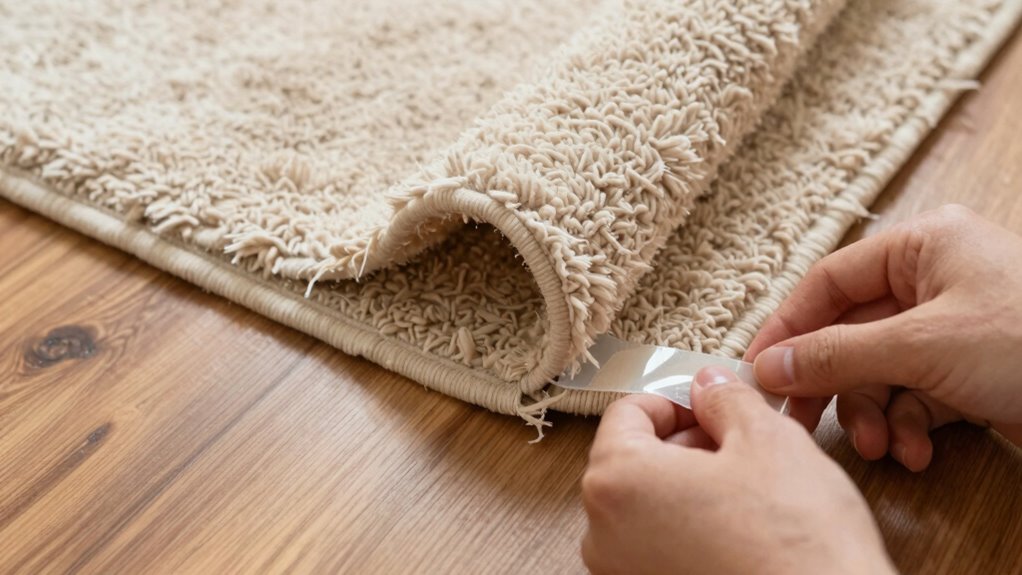
You can use simple household items to fix curling rug corners quickly. Applying ice helps flatten the edges, while tape keeps them in place temporarily. Placing heavy objects on the corners offers a longer-lasting fix, ensuring your rug stays flat. For a more professional result, consider using voiceover techniques, which can help you better understand how to deliver your message effectively if you choose to explain this process to others.
Flatten Edges With Ice
To straighten curled rug corners using household items, applying ice is an effective and simple method. Start by placing a few ice cubes in a plastic bag and pressing it gently onto the curled edge. The cold will cause the rug material, especially if it’s natural fibers like wool or cotton, to become more pliable. As the rug cools, the fibers will relax and lay flat. Be mindful of room humidity, as high humidity can counteract this process by making fibers more prone to curling again. Keep the ice in place for about 15-20 minutes, then carefully lift the edges and press them flat. This method works best for small, localized curls and can help restore your rug’s smooth shape quickly. Additionally, using a vacuum cleaner with strong suction power can help secure the fibers in place once they have been flattened.
Secure Corners With Tape
Securing curled rug corners with tape offers a quick and effective fix using household items. To reinforce the rug corner and improve tape adhesion, start by cleaning the area thoroughly to remove dust and grease. Then, cut small strips of double-sided or strong duct tape. Carefully lift the curled edge and press the tape firmly underneath, ensuring good contact with the floor and rug. For added stability, apply additional strips along the edge. Using tape correctly can prevent further curling and reduce trip hazards. Remember, effective rug corner reinforcement depends on proper tape adhesion techniques, so pressing firmly and smoothing out air bubbles is key. This simple method keeps your rug flat and safe without needing tools or professional help. Incorporating sound healing science principles, such as calming vibrations, can also contribute to a more relaxed home environment.
Use Heavy Objects
Applying heavy household objects is an easy way to straighten curled rug corners. Place items like books, bricks, or heavy boxes on the edges of the rug, ensuring they press down evenly. This method helps the rug lie flat and prevents further curling, especially after rug cleaning or replacing worn carpet padding. Keep the objects in place for several hours or overnight for best results. If your rug has been subjected to moisture or cleaning, this technique encourages the fibers to settle flat. Be cautious not to place excessive weight that could damage the rug or underlying flooring. Using household objects is a simple, cost-effective method to fix curling corners and maintain a safe, even surface in your home.
When to Call a Professional for Rug Repairs
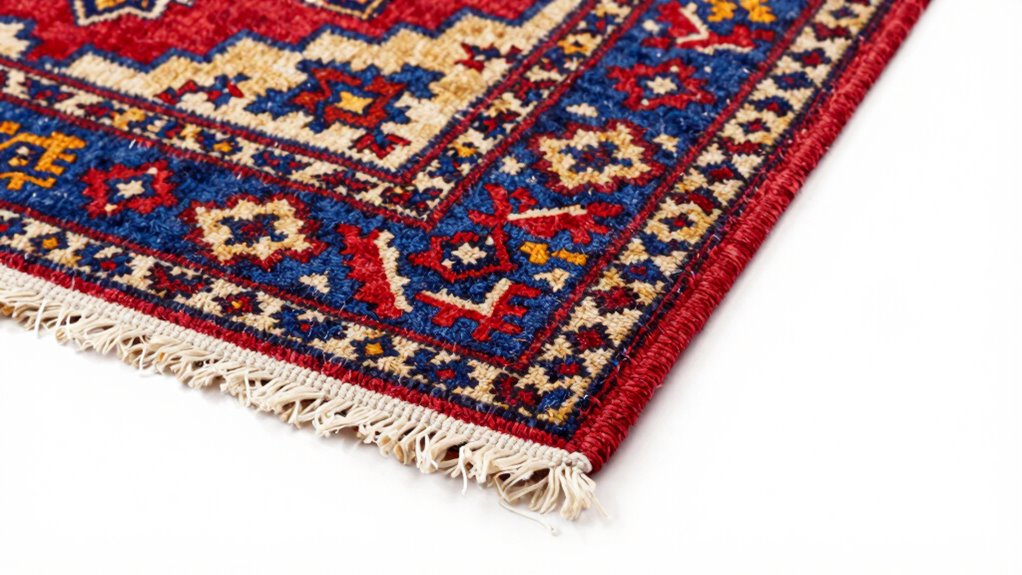
Sometimes, rug corners curl so severely that DIY fixes just won’t do the job. When this happens, it’s time to call a professional. You should consider expert help if you notice:
Severely curled rug corners may require professional repair to prevent further damage or safety hazards.
- Persistent curling despite your efforts
- Frayed or damaged edges affecting safety
- Unusual wear that might indicate underlying issues
- Rugs made from delicate or specialty materials where incorrect repairs could cause more harm
A professional can assess your rug’s material selection and aesthetic considerations, ensuring repairs preserve its beauty and integrity. They can re-stretch, re-sew, or re-glue with precision, preventing further damage or trip hazards. Additionally, safety checklists can help you recognize when professional intervention is needed before accidents occur. Recognizing proper repair techniques is essential to avoid worsening the problem; when in doubt, seek expert advice to keep your rug safe, beautiful, and functional. Moreover, understanding rug maintenance practices can extend the lifespan of your rug and reduce the likelihood of future curling issues. Regular inspections and proper cleaning techniques are key components of effective preventative care that can minimize the need for repairs.
How to Prevent Rug Corners From Curling in the Future
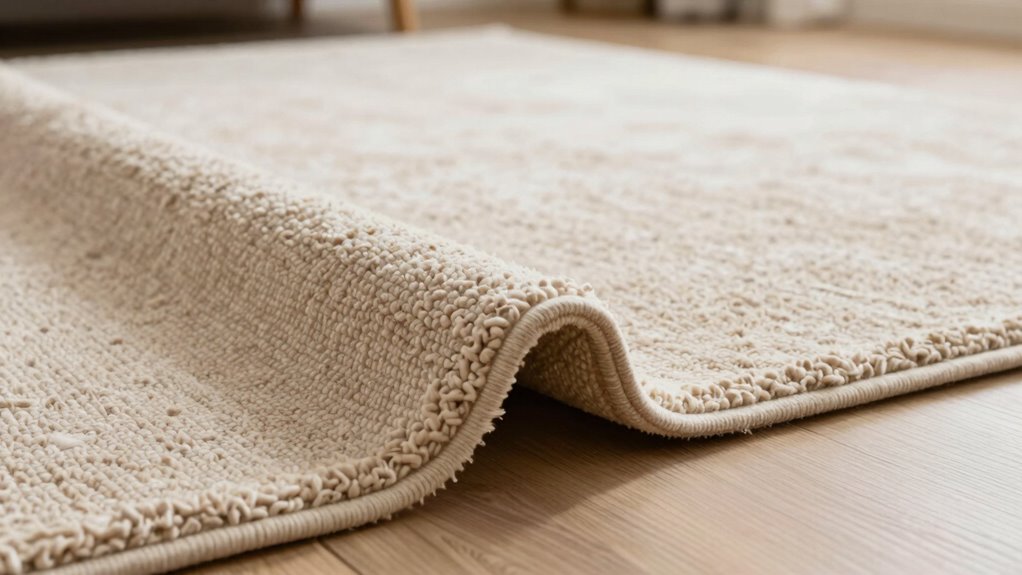
To keep your rug corners flat, start by using rug grippers correctly to hold them in place. Adding the right rug padding can also prevent curling and provide extra stability. Remember to regularly adjust and maintain your rug to keep corners smooth and secure over time. Incorporating proper rug installation techniques can further enhance the longevity and appearance of your rug, preventing curling issues before they start. Ensuring proper rug placement and anchoring helps maintain flat corners and reduces the likelihood of curling developing.
Use Rug Grippers Effectively
Using rug grippers effectively is one of the best ways to keep your rug corners flat and prevent curling over time. Properly chosen rug pads enhance grip, providing a stable base and supporting corner reinforcement. When installing grippers, focus on the edges and corners to ensure they stay flat and secure. Make sure to select a rug pad that matches your rug size for ideal support. Attach grippers evenly around the perimeter, pressing firmly to eliminate gaps. Visualize the rug firmly gripping the floor, with corners lying flat, preventing any curling or slipping. Additionally, choosing the right rug pad material can significantly improve adhesion and longevity. Firmly press grippers into place, especially at corners. Use a rug pad that offers good adhesion and cushioning. Regularly check and reapply grippers if needed. Reinforce corners with extra adhesive or double-sided tape. Proper installation and maintenance can help prevent rug curling and extend the lifespan of your rug. To further ensure long-term flatness, consider using specialized rug adhesives designed for high-traffic areas and frequent cleaning, which can provide extra hold and stability. Incorporating proper cleaning techniques can also help maintain the grip and prevent the rug from loosening over time.
Apply Rug Padding Strategically
Applying rug padding strategically is essential for preventing corners from curling over time. Start by placing rug padding beneath the edges and corners of your rug, especially in high-traffic areas. This provides additional grip and support, reducing the likelihood of curling. When doing curling detection, check for signs of lifting or uneven edges regularly. Proper padding distributes weight evenly and keeps the rug flat against the floor. Use a high-quality, non-slip rug padding that adheres firmly without shifting. Avoid using too little padding, which can lead to instability, or too much, which might cause the rug to bunch. Consistent use of rug padding in key spots helps maintain your rug’s shape and prevents future curling, keeping your space safe and looking neat.
Regularly Adjust and Maintain
Regularly adjusting and maintaining your rug is key to preventing corners from curling over time. Consistent care keeps the edges flat and prolongs your rug’s lifespan. To do this effectively, consider the rug’s material types during cleaning and maintenance. For example, natural fibers like wool may require gentle handling, while synthetic rugs can often withstand more vigorous cleaning. Regularly vacuum and flip the rug to distribute wear evenly. Use weights or furniture on the edges temporarily after cleaning to help corners lay flat. Keep the rug clean to prevent dirt buildup that can cause curling. Also, check and tighten any loose edges. These simple steps help maintain your rug’s shape and avoid future curling issues.
Frequently Asked Questions
How Long Does It Typically Take to Fix Curling Rug Corners?
Fixing curling rug corners usually takes about 15-30 minutes, depending on the method you choose. You can quickly flatten the rug by applying heat with an iron or using rug flattening sprays, which helps with curling prevention. For stubborn corners, weigh them down with heavy objects overnight. Regular rug flattening and proper maintenance guarantee your rug stays flat and safe, preventing trips and falls.
Are There Specific Rug Materials More Prone to Curling?
Did you know that nylon rugs have a 30% higher curling propensity compared to wool? You’ll find that synthetic rug materials, like nylon and polyester, are more prone to curling because they’re less flexible and more affected by humidity changes. To prevent curling, choose natural fibers like wool or cotton, which are more stable. Knowing your rug material helps you take better care and avoid trip hazards.
Can Outdoor Rugs Develop Curling Issues Faster?
Yes, outdoor rugs can develop curling issues faster due to exposure to weather elements. Constant outdoor durability challenges like rain, sunlight, and temperature fluctuations can weaken rug fibers and backing, leading to curling. To prevent this, focus on regular rug maintenance, such as cleaning and repositioning, and choose outdoor-specific materials designed for durability. Proper care helps keep your rug flat, safe, and looking great over time.
What Safety Precautions Should I Take When Repairing Rug Corners?
You could end up causing a slip hazard or risking electrical safety if you don’t take precautions while repairing rug corners. Always unplug any nearby electrical devices to prevent shocks, and wear gloves for grip and protection. Use strong adhesive carefully, keeping it away from electrical outlets. Make sure the rug is secure and flat before walking on it again, preventing accidents and ensuring safety for everyone.
Is It Better to Replace a Heavily Curled Rug Than Repair It?
If your rug is heavily curled, replacing it might be the better option for safety and appearance. While repair can address minor curling, extensive damage often signals that the rug’s area rug maintenance has been neglected. Replacing guarantees curling prevention and stability, reducing trip hazards. Consider your rug’s age and condition—if repairs won’t hold or look good, investing in a new rug provides peace of mind and enhances your space’s safety.
Conclusion
Just like a loose shoe laces can trip you up, curling rug corners can cause falls. When I first ignored mine, I nearly slipped, realizing quick fixes save you from future stumbles. Addressing curling early keeps your home safe and your rug looking fresh. Don’t wait until it becomes a hazard—tackle those curls today. A little effort now keeps your space secure and your feet firmly on the ground.
Halloween Picks
halloween
As an affiliate, we earn on qualifying purchases.