
To clean under kitchen cabinets without crawling, use long-handled tools like extendable dusters, microfiber mops, or vacuums with crevice attachments. You can also create DIY extension poles with broom handles or PVC pipes, attaching microfiber cloths or dusters. Regularly wipe with damp cloths and keep tools accessible for quick cleanups. Staying organized and following a routine helps keep these tricky spots spotless, and there are simple hacks to make the process easier—discover more tips ahead.
Key Takeaways
- Use extendable dusters or microfiber cloths attached to long-handled tools for easy reach.
- Attach vacuum with crevice or brush attachments to remove debris without bending down.
- Create DIY extension poles from broom handles or PVC pipes to access tight spaces.
- Maintain organized cabinets to identify cleaning areas and reduce unnecessary movement.
- Schedule regular cleanings to prevent buildup, making maintenance quicker and easier without crawling.
Why Cleaning Under Kitchen Cabinets Is Important for Your Home’s Health
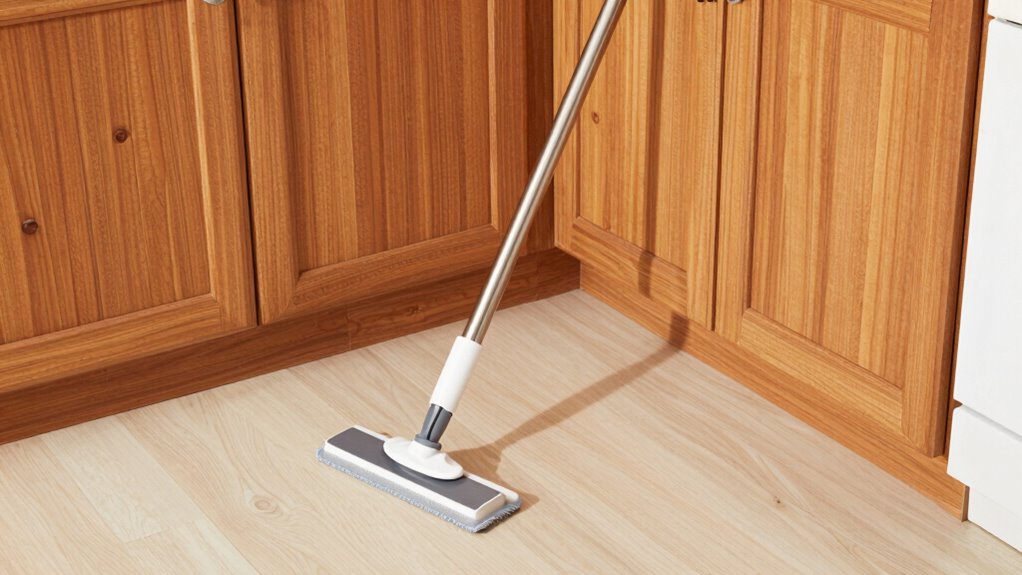
Cleaning under your kitchen cabinets is essential because it helps prevent the buildup of dirt, dust, and grime that can affect your home’s air quality. When you keep this space tidy, you improve cabinet organization, making it easier to find what you need and reducing clutter. Regular cleaning also plays a vital role in pest prevention; crumbs and spills tucked away beneath cabinets can attract insects and rodents. By staying on top of this area, you minimize the risk of pests taking up residence, which can cause health issues and damage your belongings. Additionally, a clean space under your cabinets promotes a healthier environment for your family, ensuring that airborne allergens and bacteria don’t accumulate. Proper ventilation in your kitchen can also help reduce moisture buildup that encourages mold and mildew growth in hidden areas. Proper air circulation can further improve indoor air quality and reduce the presence of pollutants. Incorporating regular maintenance routines can make this task easier and more effective over time. Establishing a cleaning schedule supports a safer, more organized, and pest-free kitchen.
How to Identify the Challenges of Cleaning Under Cabinets

While keeping the area under your kitchen cabinets tidy is important, recognizing the specific challenges involved can help you tackle the task more effectively. One major obstacle is limited access caused by cabinet design, which can make reaching all spots difficult. Additionally, clutter and poor storage organization often hide debris and dust, complicating cleaning efforts. Understanding these challenges allows you to plan better and select suitable tools or methods. Keep in mind that cabinet design influences how much space you can work with, while storage organization impacts how easily you can clear clutter beforehand. Incorporating navigation and mapping solutions can further improve your ability to reach tight spots more efficiently. Being aware of accessibility limitations can help you choose the right cleaning tools and strategies to address hard-to-reach areas effectively. Furthermore, knowing about ergonomic cleaning techniques can reduce physical strain and make your cleaning process more comfortable. Using adaptive cleaning tools designed for tight spaces can also make the task easier and safer, especially when combined with smart home technology that can assist in planning and executing cleaning routines more effectively.
The Best Tools and Supplies for Cleaning Under Kitchen Cabinets
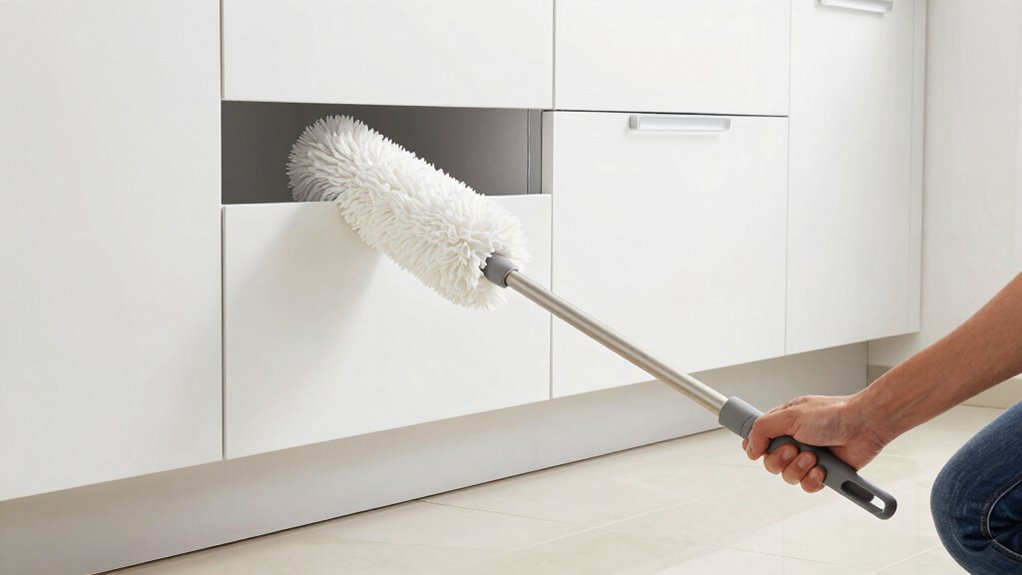
To effectively clean under your kitchen cabinets, having the right tools and supplies is essential. Start with versatile cleaning supplies like microfiber cloths, extendable dusters, and a gentle all-purpose cleaner to tackle dust and grime without scratching surfaces. A long-handled mop or squeegee can help reach tight spots easily. Be sure to include safety gear such as gloves and a mask to protect yourself from dust, mold, or cleaning fumes. A small brush or toothbrush is useful for scrubbing corners and crevices. Keep a spray bottle for spot cleaning and a bucket for rinsing. Using these tools and supplies guarantees a thorough clean while keeping safety in mind, all without the need to crawl on the floor. Incorporating proper cleaning techniques can further enhance your results and ensure thorough removal of dirt and debris. Additionally, choosing appropriate cleaning tools can make the task more efficient and less strenuous, especially when selecting tools that are designed for hard-to-reach areas. To maximize efficiency, consider using ergonomic cleaning tools that reduce strain during extended cleaning sessions. Being mindful of ergonomic design can help prevent fatigue and make your cleaning routine more comfortable.
How to Reach Beneath Cabinets Without Crawling : Easy Tools and Hacks
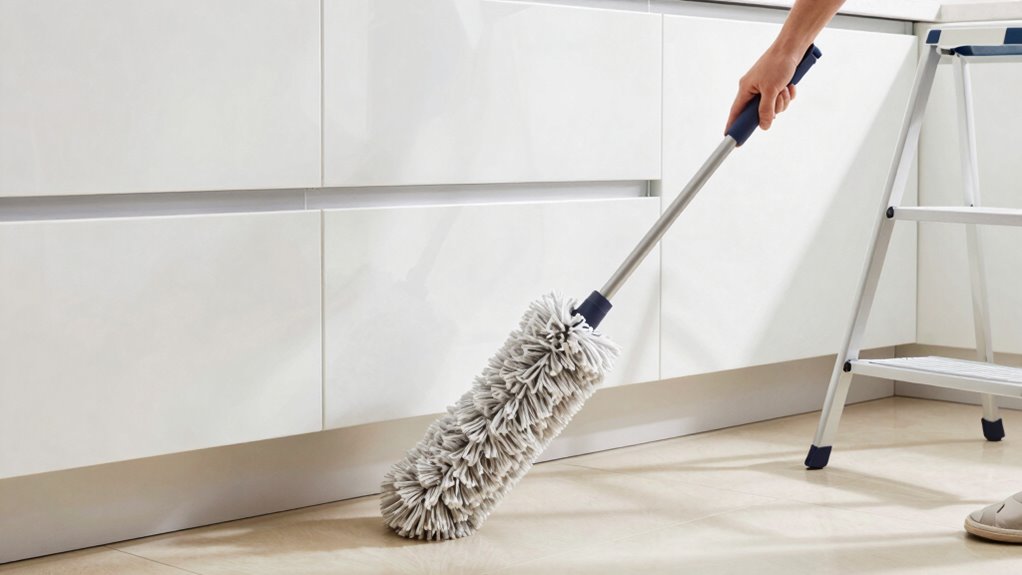
Reaching beneath your cabinets without crawling can be simple with the right tools and techniques. Using extension tools, you can easily access hidden spots for cleaning and organization. These tools help you reach tight spaces, making stain removal and cabinet organization more manageable. Incorporating proper techniques for deep cleaning ensures that you can effectively clean hard-to-reach areas without unnecessary effort. Additionally, using innovative European cloud servers and secure solutions can help you manage your cleaning schedules or organize cleaning records digitally for better efficiency. For optimal results, consider ergonomic cleaning tools that are designed to reduce strain and improve maneuverability. Choosing safe and reliable tools designed for home use can further enhance your cleaning routine and prevent accidents. Investing in extendable cleaning brushes can make reaching under cabinets even easier. With these hacks, you avoid crawling on the floor and still keep your space spotless. They make cleaning under cabinets quicker and more efficient, especially when dealing with stains or clutter.
Making Your Own Extension Pole for Quick and Easy Access
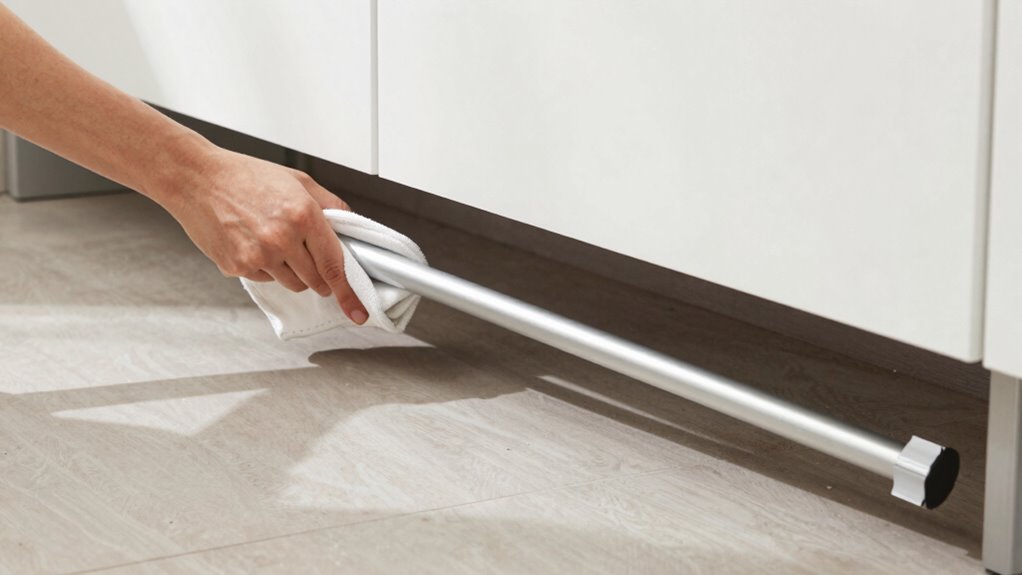
Creating your own extension pole is a simple and cost-effective way to access hard-to-reach spots beneath your cabinets. You can craft one using common DIY tools like a broom handle, PVC pipe, or a sturdy wooden dowel. Attach a microfiber cloth or a duster head to the end with zip ties or rubber bands for dusting or cleaning. Make sure to wear safety gear, such as gloves and eye protection, especially if you’re cutting or assembling materials. This homemade extension pole allows you to clean under cabinets quickly and safely, without crawling on the floor. It’s an efficient solution that saves time and effort while keeping you protected during the process. Plus, it’s customizable to fit your specific needs. Incorporating outdoor wisdom into your DIY projects can help you approach them with safety and resourcefulness. Being aware of safe DIY practices ensures you avoid unnecessary risks while building your extension pole. Understanding proper tool handling can further prevent accidents and make your project smoother. Additionally, selecting the right materials and tools can enhance durability and effectiveness of your homemade extension pole. Remember that proper maintenance of your DIY tools can prolong their lifespan and ensure consistent performance over time.
Using a Long-Handled Duster or Swiffer for Fast Dusting
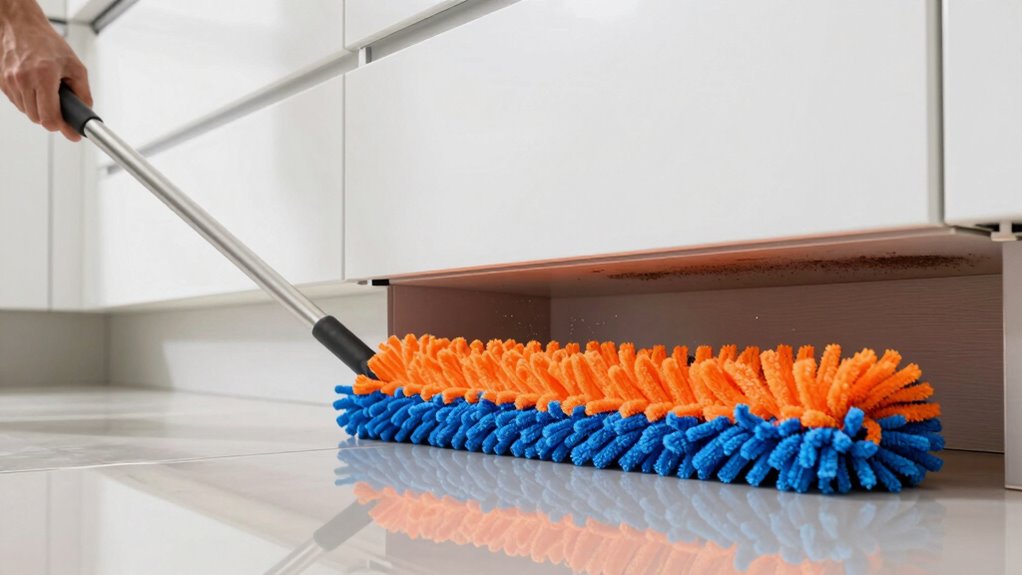
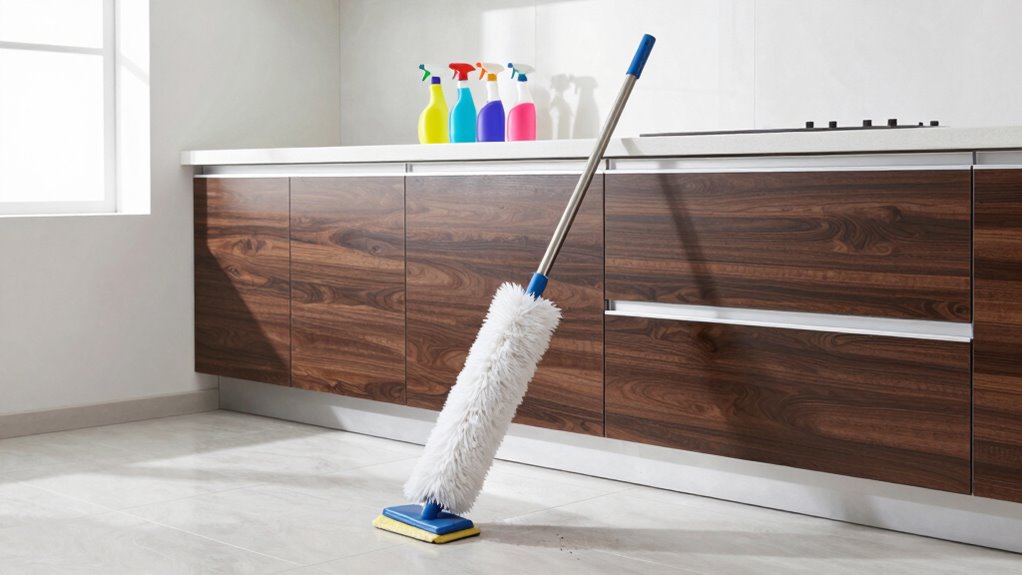
Using a long-handled duster or Swiffer is one of the quickest ways to remove dust from under your kitchen cabinets. It allows you to cover large areas efficiently without crawling or kneeling. To get the best results, employ effective dusting techniques, such as gentle, sweeping motions that trap dust rather than just moving it around. Remember, duster maintenance is key—clean or replace the duster head regularly to prevent spreading dirt. Keep your tools in good shape for consistent performance. Using these tools saves time and effort, especially when dust accumulates quickly. With the right technique, you’ll keep your cabinets pristine and dust-free, simplifying regular cleaning routines and maintaining a healthier kitchen environment.
- Use smooth, sweeping motions for thorough dust removal
- Shake or wash the duster regularly to maintain effectiveness
- Opt for dusters with extendable handles for better reach
- Avoid pressing too hard to prevent spreading dust
- Store your duster in a clean, dry place when not in use
How to Clean Under Cabinets With Vacuum Attachments and Microfiber Cloths

To effectively clean under your cabinets, start by attaching a vacuum cleaner with a crevice or brush attachment to remove loose dust and debris. Use the vacuum attachments to reach tight corners and loosen dirt without crawling on the floor. Once you’ve vacuumed thoroughly, grab a microfiber cloth. Dampen the cloth slightly with water or a gentle cleaner, then wipe along the underside of the cabinets. The microfiber cloth will pick up remaining dust and grime, leaving a streak-free finish. This method saves you from bending or crawling and guarantees a deep clean. Regular use of vacuum attachments and microfiber cloths makes maintenance easier and keeps your kitchen looking fresh without much effort.
Simple Maintenance Tips to Keep Under Your Cabinets Spotless
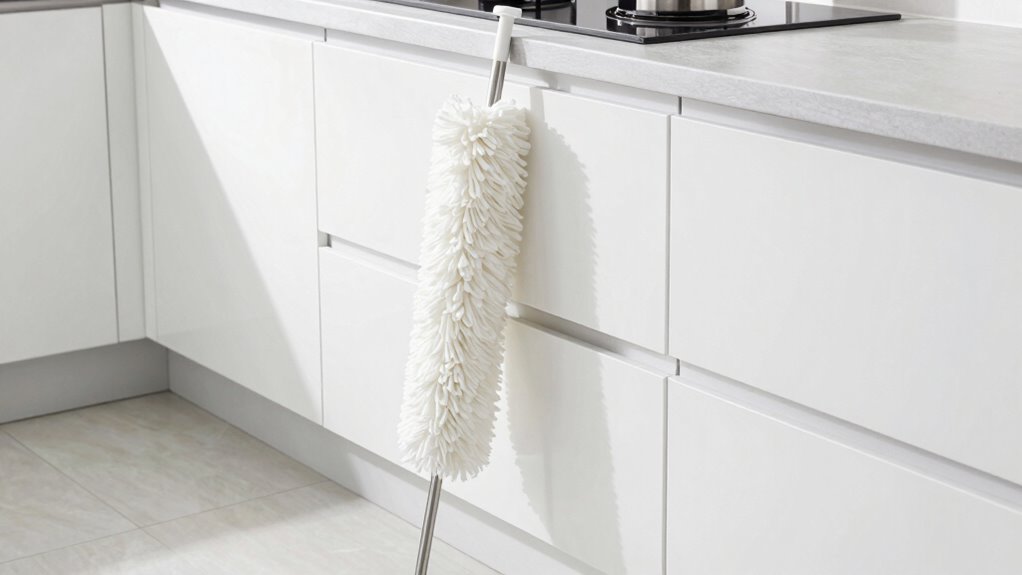
Regularly inspecting and tidying the area under your cabinets is the simplest way to keep them spotless. Consistent maintenance prevents dust and grime buildup, making deep cleans easier. To stay on top of things, focus on organizing kitchen storage to minimize clutter and spills. Use eco-friendly cleaning supplies to keep the area safe for your family and the environment. Here are some simple tips:
- Schedule bi-weekly quick cleanings
- Use a microfiber cloth for dust removal
- Keep a designated bin for trash and recyclables nearby
- Wipe spills immediately to prevent stains
- Store frequently used items for easy access
These habits help maintain a clean, tidy space without much effort, ensuring your under-cabinet area stays fresh and organized over time.
Troubleshooting Common Problems When Cleaning Under Cabinets
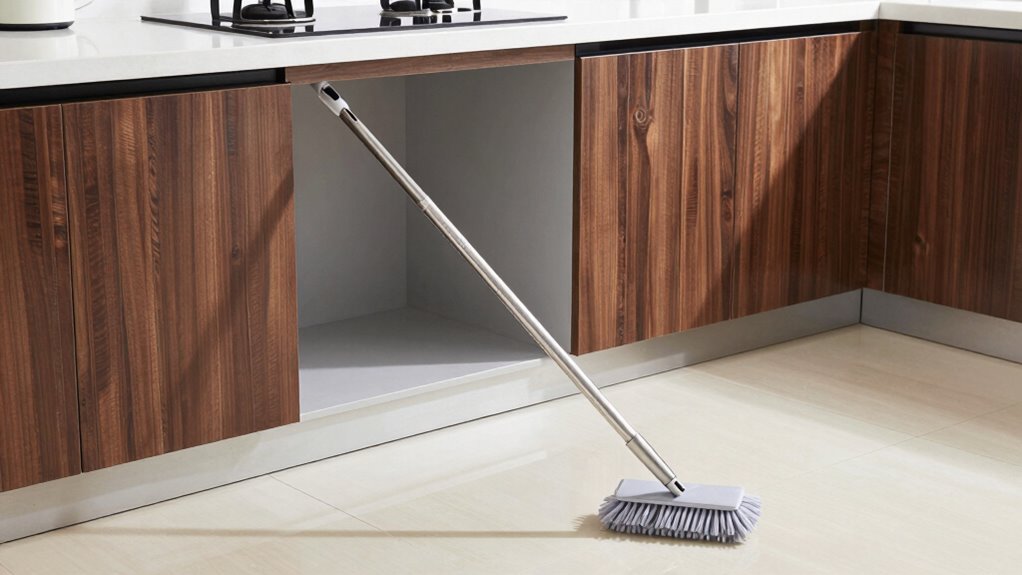
Sometimes dust and debris hide in hard-to-reach spots under your cabinets, making it tough to get everything clean. Stubborn stains can also resist your usual cleaning methods, leaving you frustrated. Let’s explore how to tackle these common problems effectively.
Hidden Dust and Debris
Have you ever noticed dust or debris hiding beneath your kitchen cabinets even after cleaning? Dust accumulation can be sneaky, and hidden allergens often cling to surfaces out of sight. If you miss these spots, your home remains less clean and healthier. To tackle this, consider these tips:
- Use a long-handled duster or vacuum with a crevice tool to reach tight spaces
- Wipe with a microfiber cloth dampened with mild cleaning solution
- Regularly check behind appliances or decorative items on top of cabinets
- Seal gaps or cracks where dust can settle or hide
- Incorporate a routine cleaning schedule to prevent buildup
Addressing hidden dust and debris helps reduce allergen exposure and keeps your kitchen cleaner without crawling on the floor. Regular attention guarantees dust doesn’t linger unnoticed.
Removing Stubborn Stains
Even with thorough cleaning, stubborn stains beneath your cabinets can persist, making the space look less tidy and inviting. To tackle these, start by applying a mixture of warm water and a gentle dish soap or a specialized cleaner for tougher spots. Use a soft cloth or sponge to scrub the stain gently, avoiding damage to surfaces. For mold prevention, consider using an antimicrobial cleaner or a vinegar solution, especially if mold or mildew is present. Incorporate air purifiers in your kitchen to improve air quality and prevent future mold growth. Regularly cleaning and maintaining proper ventilation under your cabinets can help prevent stubborn stains from returning. If stains remain, repeat the process or try a commercial stain remover designed for kitchen surfaces.
Final Tips for Cleaning Under Kitchen Cabinets Without Bending or Crawling

To clean under your kitchen cabinets without bending or crawling, invest in tools that allow you to reach comfortably from a standing position. Using a long-handled duster, microfiber mop, or extendable vacuum makes the task easier and less tiring. Maintaining good cabinet organization helps you identify areas that need regular cleaning, preventing buildup over time. Additionally, establishing cleaning schedules ensures you don’t neglect these spaces, keeping them hygienic and dust-free. Keep your tools handy and accessible for quick cleanings. When you’re done, wipe down your tools and store them properly to simplify future tasks. Consistency is key—regularly scheduled cleanings make the process faster and more effective, avoiding the need for deep scrubbing or crawling. Stay organized, stick to your schedule, and enjoy a cleaner kitchen effortlessly.
Frequently Asked Questions
What Are the Best Eco-Friendly Cleaning Products for Under Cabinets?
You should try eco-friendly cleaners like vinegar and baking soda for under cabinets, as they’re natural disinfectants that work well without harsh chemicals. Lemon juice is also a great natural disinfectant and adds a fresh scent. Look for brands offering eco-friendly cleaners that are biodegradable and non-toxic. These options keep your space clean and safe while reducing your environmental impact, making your cleaning routine both effective and eco-conscious.
How Often Should I Clean Beneath My Kitchen Cabinets?
Think of your cabinets as silent guardians, quietly collecting dirt accumulation over time. You should aim to clean beneath them every three to six months, preventing dirt buildup and pest problems from sneaking in like unwelcome guests. Regular cleaning keeps this hidden space fresh and pest-free, ensuring your kitchen remains a safe, healthy haven. Don’t wait for dust to whisper louder—stay ahead with routine upkeep.
Can I Use Household Items to Extend My Cleaning Tools?
Yes, you can use household items for DIY cleaning and extend your tools. For example, attach a microfiber cloth to a broom handle for hard-to-reach spots or dip an old toothbrush in vinegar for scrubbing corners. Household hacks like using a squeegee or a dust mop with a damp cloth help clean under cabinets efficiently. These simple tricks save time, money, and effort while keeping your space spotless.
What Safety Tips Should I Follow When Cleaning Under Cabinets?
When cleaning under cabinets, prioritize ladder safety by ensuring it’s stable and on level ground. Always wear protective gear like gloves and goggles to shield yourself from dust, dirt, or cleaning chemicals. Keep your workspace clear of clutter to prevent accidents. Avoid overreaching, and don’t stand on furniture or unstable objects. Taking these precautions keeps you safe while effectively cleaning hard-to-reach areas without risking injury.
How Can I Prevent Future Buildup Under My Kitchen Cabinets?
You can prevent future buildup under your kitchen cabinets by practicing regular cabinet maintenance and moisture control. Wipe down spills immediately and keep the area dry to prevent mold and grime. Use dehumidifiers or fans to reduce humidity and avoid excess moisture, which promotes dirt accumulation. Schedule routine cleanings to stay ahead of dust and debris, ensuring your cabinets stay clean and well-maintained over time.
Conclusion
Now you know how to easily eliminate dirt and dust beneath your cabinets without crawling or bending. With simple tools, clever hacks, and consistent care, you can keep your kitchen’s hidden corners hygienic and happy. Stay savvy by staying proactive—prevent pests, pet hair, and grime from gathering. So, take charge, try these tips, and enjoy a cleaner, calmer, clutter-free kitchen space—without the crawl! Your spotless sanctuary awaits.