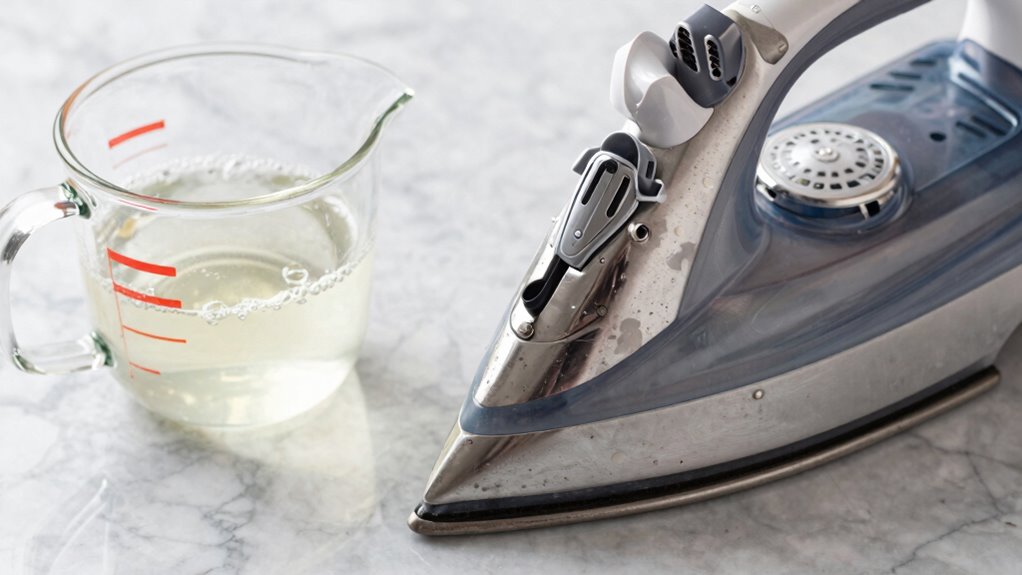

To keep your steam appliance performing well, regularly descale it before performance drops. Unplug and empty the water, then fill the reservoir with a mixture of equal parts vinegar and water or a commercial descaling solution. Run the appliance briefly, let it sit for 15-30 minutes, then rinse thoroughly with clean water. Maintaining a consistent descaling routine based on water hardness helps prevent mineral buildup and keeps features working smoothly—more tips are just ahead.
Key Takeaways
- Regularly test water hardness to determine appropriate descaling frequency.
- Use a vinegar-water mixture or commercial descaling solutions for effective cleaning.
- Unplug and empty the appliance before descaling to ensure safety and thoroughness.
- Run the descaling solution through the appliance, then rinse thoroughly with clean water.
- Schedule routine maintenance based on water hardness and appliance usage to prevent performance drops.
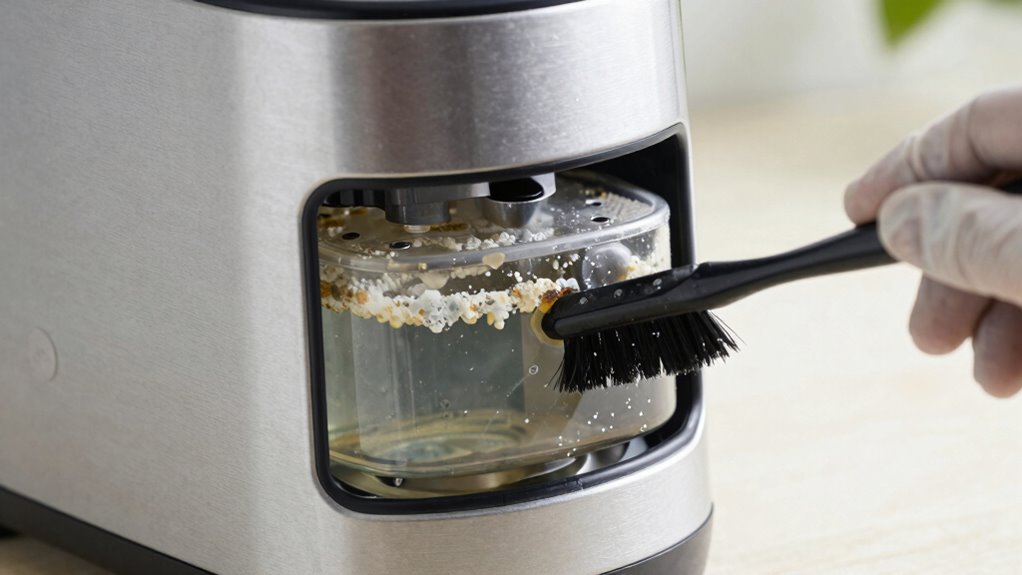
Have you ever noticed your steam appliances losing efficiency or producing less steam over time? It’s a common issue, and the root cause often lies in mineral buildup caused by water hardness. When water contains high mineral content, especially calcium and magnesium, these minerals accumulate inside your appliance’s boiler or steam generator. Over time, this buildup hampers heat transfer and reduces steam output, making your device less effective. To prevent this, understanding the importance of regular descaling and monitoring your water hardness levels is key.
Mineral buildup from hard water reduces steam appliance efficiency over time. Regular descaling is essential.
The first step to maintaining peak performance is knowing your water’s mineral content. If you have hard water, you’ll need to descale more frequently. The descaling frequency depends on how hard your water is and how often you use your appliance. For example, in areas with very hard water, you might need to descale every few weeks, while in softer water regions, every few months may suffice. Ignoring this can lead to mineral deposits forming faster, ultimately causing your appliance to work harder or even break down prematurely. Regularly testing your water’s hardness levels can help you determine the optimal descaling schedule for your appliance. Additionally, using water softening methods can help reduce mineral buildup and extend the intervals between descaling. Implementing water treatment can further mitigate mineral accumulation and improve appliance longevity.
To effectively descale your steam appliance, start by unplugging it and emptying any remaining water. Use a descaling solution specifically designed for steam appliances, or create a simple mixture of white vinegar and water, typically one part vinegar to one part water. Pour this solution into the water reservoir, then turn on the appliance and let it run for a few minutes. This allows the solution to circulate through the system and dissolve mineral deposits. Afterward, turn off the device and let the solution sit for about 15-30 minutes before rinsing thoroughly with clean water. Running plain water through the system afterward ensures no residual vinegar or descaling solution remains, preventing any unpleasant taste or damage. Additionally, regularly inspecting the internal components can help catch buildup early and prevent performance issues. Regular maintenance and cleaning of these parts can also prevent mineral deposits from causing long-term damage.
Regular descaling not only restores the appliance’s efficiency but also prolongs its lifespan. It’s a simple routine that saves you money and time in the long run. Remember, the key is consistency—adapting your descaling frequency based on your water hardness levels keeps your steam appliances running smoothly. Keep an eye on their performance; if you notice reduced steam output or longer heat-up times, it might be time for another round of descaling. By staying proactive and attentive to your appliance’s needs, you ensure it delivers peak performance every time you use it.

SALAV Garment Steamer Descaling Solution Packets for Build-up Removal, 5pc
- Powerful Descaling Action: Dissolves limescale and mineral build-up
- Safe & Eco-Friendly Formula: Compatible with all garment steamer brands
- Convenient Pre-Measured Packets: Easy to use for quick descaling
As an affiliate, we earn on qualifying purchases.
As an affiliate, we earn on qualifying purchases.
Frequently Asked Questions
How Often Should I Descale My Steam Appliance?
You should descale your steam appliance every 1 to 3 months, depending on your water hardness and usage. Regular cleaning frequency helps maintain peak performance. Use effective descaling methods like a mixture of vinegar and water or commercial descaling solutions to remove mineral buildup. If you notice reduced steam output or longer heating times, it’s time to descale. Consistent maintenance ensures your appliance runs smoothly and lasts longer.
Can I Use Vinegar for Descaling?
Like a knight seeking a trusty steed, you wonder if vinegar can be your alternative descaling method. Yes, vinegar works as a natural solution, but be cautious—its acidity may harm certain appliances. Commercial descaling solutions are often more effective and safer for your device. For a gentle yet effective clean, consider these options over vinegar, ensuring your steam appliance remains in peak condition without risking damage.
Are There Any Safety Precautions During Descaling?
Yes, you should take safety precautions during descaling. Always use gentle cleaning agents like vinegar or descaling solutions recommended by the manufacturer, and avoid harsh chemicals. Make certain to unplug the appliance before starting, and wear gloves to protect your skin. Guarantee proper ventilation to avoid inhaling fumes, and follow the appliance’s safety guidelines. These steps help maintain appliance safety and prevent accidents during the descaling process.
What Signs Indicate Descaling Is Needed?
Imagine your steam appliance struggling like a tired runner, gasping for breath. When you notice longer cleaning frequency or a decline in steam intensity, it’s time to act. Mineral buildup signals blockages. Use effective descaling methods to clear the path, restoring your device’s liveliness. Keep an eye on performance, and don’t wait until it’s too late—regular descaling keeps your appliance running smoothly and efficiently.
Can Descaling Damage My Appliance?
Descaling, if done correctly, won’t damage your appliance and actually helps extend its longevity by preventing damage from mineral buildup. However, using harsh chemicals or overly aggressive methods can harm internal parts. Always follow manufacturer instructions and use recommended descaling solutions. Proper descale routines remove mineral deposits safely, ensuring your appliance functions efficiently without risking damage, and ultimately prolongs its lifespan.
SALAV Garment Steamer Descaling Solution Packets for Build-up Removal, 5pc
- Powerful Descaling Action: Dissolves limescale and mineral build-up
- Safe & Eco-Friendly Formula: Compatible with all garment steamer brands
- Convenient Pre-Measured Packets: Easy to use for quick descaling
As an affiliate, we earn on qualifying purchases.
As an affiliate, we earn on qualifying purchases.
Conclusion
Think of your steam appliance as a trusted companion on your daily journey. When you descale it, you’re clearing away the stubborn obstacles that block its true potential. Just like tending to a garden helps flowers bloom, maintaining your device guarantees it performs at its best. Keep it clean, keep it running smoothly—your appliance’s shining performance is the symbol of your care and attention. Embrace this ritual, and watch your steam companion flourish.
SALAV Garment Steamer Descaling Solution Packets for Build-up Removal, 5pc
- Powerful Descaling Action: Dissolves limescale and mineral build-up
- Safe & Eco-Friendly Formula: Compatible with all garment steamer brands
- Convenient Pre-Measured Packets: Easy to use for quick descaling
As an affiliate, we earn on qualifying purchases.
As an affiliate, we earn on qualifying purchases.

Varify Water Hardness Test Kit – Water Testing Kit for Home, Drinking, Well, Spa, Swimming Pool, Softener, Dishwasher & More – Hard Water Test Strips for Calcium, Magnesium etc (0-425 pmm, 150 Strips)
- Protects Home and Health: Monitors water hardness to prevent damage and health issues
- Fast and Accurate Results: Provides reliable water hardness readings in seconds
- Easy-to-Read Color Chart: Oversized visual guide for quick result interpretation
As an affiliate, we earn on qualifying purchases.
As an affiliate, we earn on qualifying purchases.