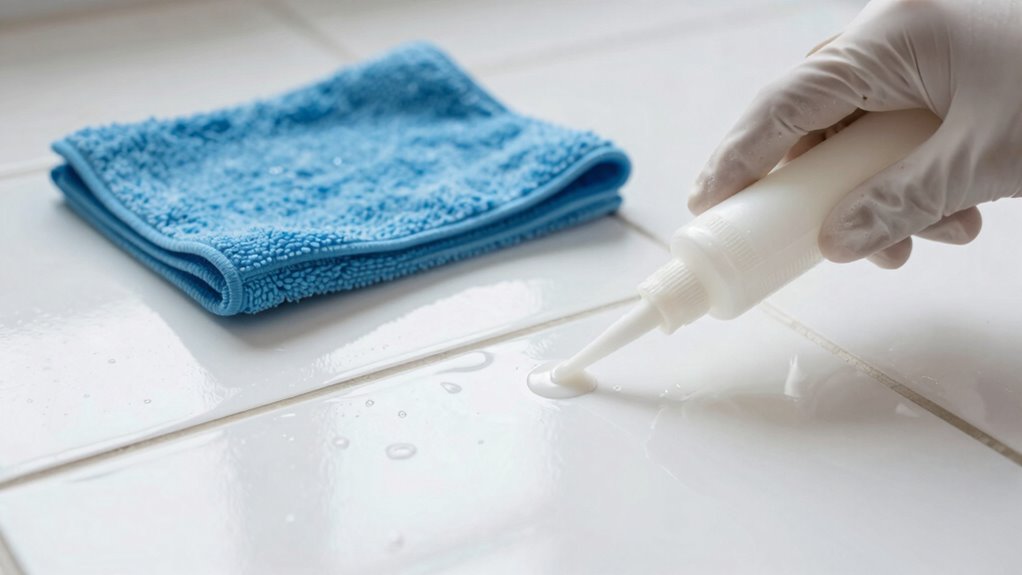

To safely remove adhesive residue from tile, start by identifying the adhesive type. For water-based adhesives, soak a cloth in warm soapy water, lay it over the residue, and let it sit. For stronger adhesives, use rubbing alcohol or vinegar. Gently scrape with a plastic scraper, avoiding metal tools to prevent scratches. Clean the area with warm water afterward to eliminate any leftover solvent. Want to know more about effective removal techniques?

Get cleaning gear delivered free with Prime
- Fast, free delivery on millions of items
- Prime Video, Amazon Music and more included
- Member-only deals all year
Key Takeaways
- Identify the adhesive type to choose the most effective and safe removal method for your tile.
- Gather essential supplies, including gentle solvents, a plastic scraper, and a soft cloth for safe removal.
- Test a small area with your chosen solvent to ensure compatibility and prevent tile damage.
- Soak a cloth in warm soapy water or vinegar for stronger adhesives, then gently scrape with a plastic scraper.
- Clean the area with warm water after removal and inspect for any remaining residue or damage.
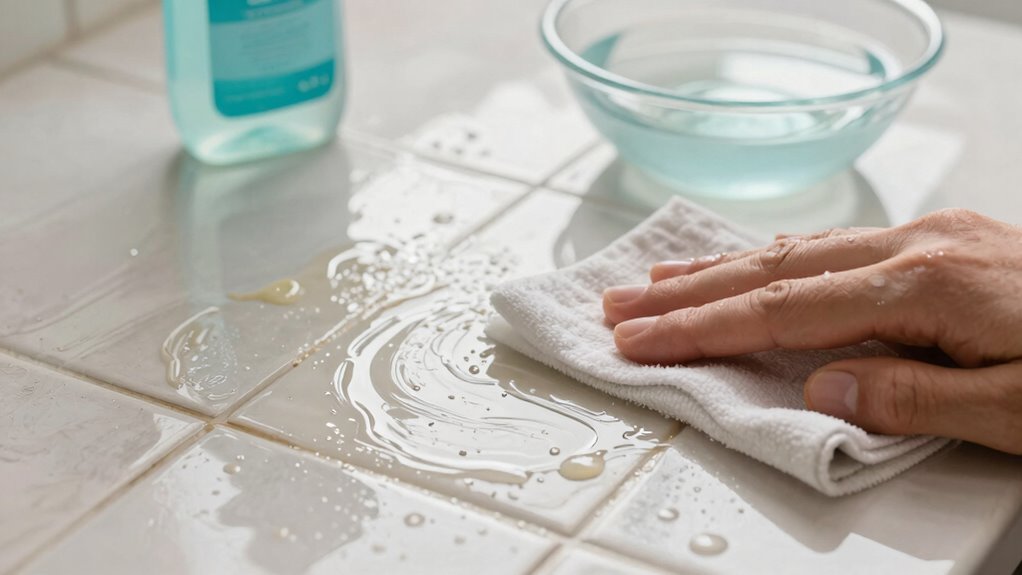
Removing adhesive residue from tile can feel like a challenging task, but it doesn’t have to be. With the right approach and tools, you can tackle it effectively and safely. First, it’s important to identify the adhesive types involved. Different adhesives, such as glue, tape, or mastic, require different methods for removal. Knowing what you’re dealing with can make a significant difference in how you proceed.
Removing adhesive residue from tile may seem daunting, but with the right tools and methods, it can be done effectively and safely.
Start by gathering your supplies. You’ll need some gentle solvents, a plastic scraper, and a soft cloth. If you’re unsure about the adhesive type, a small test area can help determine the best removal method without risking damage to your tile materials. For instance, ceramic tiles might be more resistant than natural stone. Always check the manufacturer’s recommendations for your specific tile type to avoid any mishaps.
Once you’ve identified the adhesive, apply a suitable solvent. For water-based adhesives, warm soapy water can work wonders. Soak a cloth in the solution, lay it over the residue, and let it sit for a few minutes. This softens the adhesive, making it easier to scrape away. For stronger adhesives, consider using rubbing alcohol or vinegar. Apply a small amount to a cloth and gently rub the area. Always test a small section first to verify it won’t harm your tile.
After applying the solvent, take your plastic scraper and gently work at the adhesive residue. Avoid metal scrapers, as they can scratch your tiles. Use a light touch, scraping away the softened adhesive. If you notice it’s not budging, apply more solvent and wait a bit longer. Patience is key here. Additionally, understanding the adhesive types helps you choose the most effective removal method. It’s also helpful to be mindful of the tile material to prevent any damage during cleaning. Being aware of the adhesive’s chemistry can help you select the safest and most effective solutions.
Once you’ve removed the majority of the residue, clean the area with warm water to remove any remaining solvent. This step is vital, especially if you’re using stronger chemicals. Wipe the area with a soft, dry cloth and let it air dry. If you see any leftover residue, repeat the process as needed.
Finally, it’s a good idea to inspect your tiles regularly for any signs of damage or residue build-up. By understanding the adhesive types and how they interact with your tile materials, you can tackle future projects with greater confidence. With these methods, you’ll keep your tiles looking pristine and free from unsightly adhesive remnants.
plastic scraper for tile adhesive removal
As an affiliate, we earn on qualifying purchases.
As an affiliate, we earn on qualifying purchases.
Frequently Asked Questions
Can I Use Vinegar to Remove Adhesive Residue Safely?
Yes, you can use vinegar to safely remove adhesive residue. Vinegar’s natural acidity breaks down various adhesive types, making it effective for tackling stubborn residue. Simply soak a cloth in vinegar, apply it to the area, and let it sit for a few minutes. Then, gently scrub to lift the adhesive. Not only is it safe for most surfaces, but it’s also an eco-friendly option that won’t harm your tiles.
What Tools Are Best for Scraping Adhesive off Tile?
To scrape adhesive off tile effectively, you’ll want a few key tools. A plastic scraper is gentle on your tile, while a metal scraper can tackle tougher adhesive types. Using a heat gun can soften the adhesive, making scraping easier. Experiment with different scraping techniques, like pulling at a low angle, to minimize damage. Always start with the least aggressive method, and adjust based on how stubborn the residue is.
Is Heat Effective for Loosening Adhesive Residue?
Yes, heat applications can be effective for loosening adhesive residue. When you apply heat, it softens various adhesive types, making them easier to scrape away. Use a heat gun or a hairdryer on a low setting, keeping it at a safe distance to avoid damaging your tile. Just be cautious; not all adhesives respond the same way, so test a small area first to verify it works without causing any issues.
How Can I Prevent Damage to My Tile While Cleaning?
To keep your tiles looking pristine, you’ll want to cradle them gently during cleaning. Use tile protection methods like soft cloths or sponges, avoiding harsh scrubbing pads. Embrace gentle cleaning techniques, like warm soapy water or a vinegar solution, to lift grime without harm. Always test in a small area first; it’s the secret to ensuring your tiles stay beautiful and unscathed while you tackle that pesky residue.
Are There Eco-Friendly Options for Adhesive Removal?
Yes, there are eco-friendly options for adhesive removal. You can use natural solvents like vinegar or rubbing alcohol, which effectively break down adhesives without harsh chemicals. Biodegradable cleaners are another excellent choice, as they’re safe for both your tiles and the environment. Just apply them to the residue, let them sit for a few minutes, and then wipe away. You’ll not only keep your tiles safe but also contribute to a greener planet.
As an affiliate, we earn on qualifying purchases.
Conclusion
Just like a gentle breeze sweeps away fallen leaves, you can effortlessly remove adhesive residue from your tile. With patience and the right tools, you’ll reveal the beauty beneath, much like uncovering a hidden treasure. As you wipe away the remnants, envision each stroke as a dance, restoring your tile’s shine. Embrace this task, and soon your space will feel like a polished gem, reflecting the care and effort you’ve invested in your home.
best vinegar for adhesive removal from tile
As an affiliate, we earn on qualifying purchases.
As an affiliate, we earn on qualifying purchases.
gentle adhesive remover for ceramic tiles
As an affiliate, we earn on qualifying purchases.
As an affiliate, we earn on qualifying purchases.
Halloween Picks
halloween
As an affiliate, we earn on qualifying purchases.