If your air purifier isn’t reducing odors, it’s likely because the filter has become saturated. Over time, trapped odor molecules and dust buildup clog your filter, making it less effective at absorbing smells. You may notice decreased airflow, foul smells, or indicator lights. To fix this, you’ll need to replace or clean the filter properly. Keep an eye on signs of saturation, and you’ll find ways to keep your indoor air fresh. Learn more about proper maintenance and filter choices here.
Key Takeaways
- Saturated filters release trapped odors and reduce airflow, making your air purifier less effective at odor removal.
- Visible dust, foul smells, or indicator lights signal that filters need replacement due to saturation.
- Regularly inspect and replace filters, especially activated carbon ones, to prevent odor buildup and maintain air quality.
- Overloading filters with dust or external odor sources can accelerate saturation and diminish purifier performance.
- Proper maintenance, correct installation, and choosing high-quality filters are essential to prevent saturation and ensure effective odor control.
How Do I Know When My Air Purifier Filter Is Saturated?
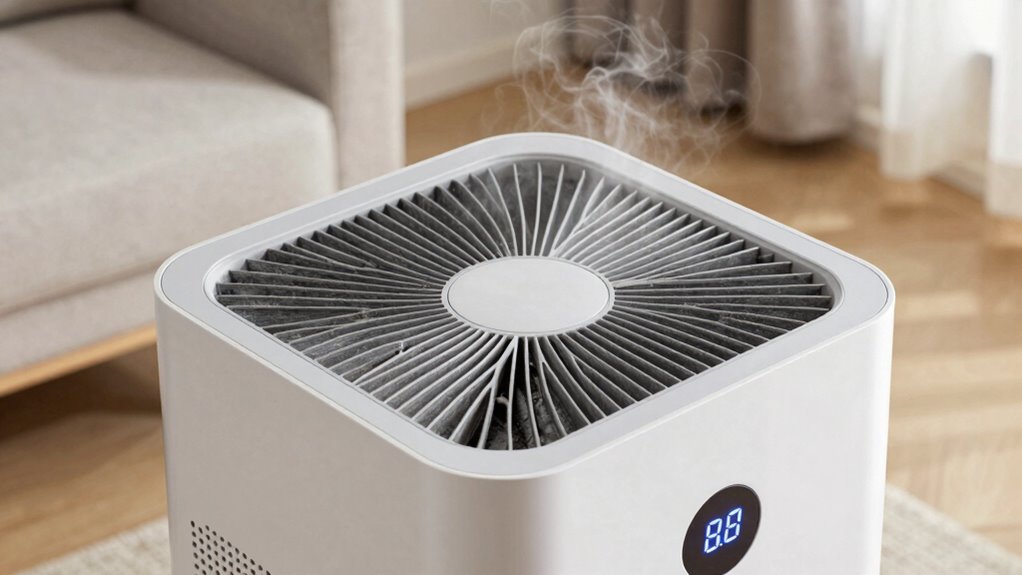
Knowing when your air purifier filter is saturated is essential for maintaining ideal performance. A saturated filter can no longer effectively improve air quality, leading to reduced efficiency. You’ll notice changes in airflow, as it may become weaker or louder than usual. Additionally, if your purifier isn’t maintaining the same level of air quality, it’s a sign that the filter’s lifespan is nearing its end. Some models have indicator lights that alert you when it’s time to replace the filter. Otherwise, check for visible signs like dust buildup or discoloration. Regularly monitoring these cues ensures you replace the filter at the right time, keeping your air clean and your purifier functioning at its best. Proper maintenance extends filter lifespan and keeps your indoor air fresh. Understanding filter saturation helps optimize your device’s performance and prolong its lifespan, especially when combined with regular maintenance routines. Additionally, paying attention to manufacturer guidelines can help prevent premature filter saturation and ensure your purifier operates efficiently. Being aware of filter replacement indicators can also help you avoid performance issues before they occur, and staying informed about air quality sensors can further assist in detecting when your filter needs attention.
Why Do Saturated Filters Cause Odors in My Air Purifier?

When your filter becomes saturated, the material starts to break down, releasing musty or foul smells. Trapped odor molecules can also build up, making the air feel worse instead of cleaner. Additionally, a clogged filter reduces airflow, which prevents fresh air from circulating properly and amplifies odors. Proper maintenance and timely replacement of filters are essential to prevent filter saturation and maintain a healthy indoor environment. Regularly inspecting and replacing filters helps ensure airflow efficiency and keeps odors at bay. Neglecting these steps can also contribute to air purifier malfunctions, further compromising air quality. Recognizing signs of filter degradation early can save you from more significant issues down the line. To improve overall performance, understanding the filter material and its lifespan can guide better maintenance decisions.
Filter Material Breakdown
As a filter becomes saturated, its material begins to break down, leading to the release of trapped particles and odors. This process, known as filter material breakdown, reduces the filter’s ability to adsorb odor molecules effectively. When the filter is saturated, its porous structure deteriorates, causing previously captured odor molecules to detach and become airborne again. This is why your air purifier might smell worse over time, despite running continuously. Additionally, the buildup of filter debris can further impede airflow and reduce overall effectiveness. Over time, this degradation impacts fundamentals of filtration, diminishing the purifier’s performance. To better understand, see the table below:
| Effect of Saturation | Result |
|---|---|
| Filter material breakdown | Loss of structural integrity |
| Odor molecule adsorption | Reduced, leading to odors escaping |
| Particle entrapment | Diminishes, allowing odors to re-release |
| Overall odor control | Becomes less effective |
Trapped Odor Molecules
Saturated filters can cause odors to escape because their porous structure deteriorates over time, reducing their ability to trap odor molecules effectively. When a filter reaches saturation, it no longer absorbs odors efficiently, allowing trapped molecules to become dislodged and released back into your indoor air. This breakdown in odor absorption compromises your air quality, making the environment smell worse despite running the purifier. As the filter becomes saturated, it cannot hold onto additional odor molecules, leading to an increase in airborne smells. You’ll notice that odors linger or even intensify, signaling that your filter has lost its effectiveness. To maintain fresh air, it’s essential to replace or clean the filter regularly before saturation causes odors to escape. Proper filter maintenance is critical to prevent odors from worsening and to ensure your purifier continues to work effectively. Regularly checking the filter saturation point can help you avoid these issues and keep your indoor air clean. Additionally, understanding how odor molecules interact with filter materials can help you select the most effective filters for your needs.
Reduced Airflow Efficiency
A filter that’s become saturated not only loses its ability to trap odors but also impedes airflow through the purifier. When airflow is restricted, your device struggles to circulate air efficiently, which can lead to poor air quality. Reduced airflow means fewer contaminants are filtered out, allowing odors to linger. Over time, this blockage can strain the motor and decrease the filter’s lifespan, making it less effective overall. You might notice your purifier running louder or longer to compensate for the reduced airflow. To maintain ideal air quality and extend your filter’s lifespan, it’s essential to replace or clean the filter regularly. Proper filter maintenance is key to keeping your purifier functioning optimally. Additionally, neglecting filter replacement can sometimes result in hidden damage that affects the long-term performance of your air purifier.
How to Replace or Clean Your Air Purifier Filter (Step-by-Step)

To start, turn off and unplug your air purifier to guarantee safety. Next, carefully remove the old filter according to your device’s instructions. A clean filter ensures that your air purifier continues to effectively remove odors and maintain air quality. Additionally, inspecting the filter for signs of saturation can help determine if it needs cleaning or replacing. Regular maintenance can help prevent filter saturation, which is essential for optimal air quality and odor removal performance. Finally, replace or clean the filter before plugging the unit back in and turning it on.
Turning Off and Unplugging
Before you begin replacing or cleaning your air purifier filter, it’s important to turn off the device and unplug it from the power source. This guarantees safety and prevents damage during maintenance. Regularly following your maintenance schedule helps keep your air quality indicators accurate, guiding you on when to change or clean filters. Unplugging the unit also prevents accidental activation while working on it. Check the manufacturer’s instructions for specific shutdown procedures, as some models require resetting after maintenance. Once unplugged, you can safely access the filter compartment. Keeping to a routine not only prolongs your air purifier’s lifespan but also maintains optimal air quality. Always handle filters carefully, and ensure the device is entirely disconnected before proceeding with cleaning or replacement.
Removing and Replacing Filter
Once you’ve turned off and unplugged your air purifier, it’s time to remove and replace the filter. Check your user manual for specific instructions, but generally, you’ll open the filter compartment and carefully take out the old filter. If your filter has exceeded its lifespan, it won’t absorb odors effectively anymore. Inspect it for visible dirt, dust, or saturation, especially if odors persist. To restore odor absorption, replace the filter with a new one that matches your purifier’s specifications. Regularly replacing or cleaning the filter ensures your device maintains peak performance and odor removal. Keep in mind that a clogged or saturated filter can diminish air quality and reduce the purifier’s efficiency, so don’t delay replacing it when needed.
Tips to Prevent Filter Saturation and Keep Odors Away

Regularly maintaining your air purifier is key to preventing filter saturation and keeping odors at bay. Consistent filter maintenance ensures the unit functions efficiently and reduces the chance of odor buildup. Start by checking and cleaning or replacing filters as recommended by the manufacturer. Avoid overloading the filter with too much dust or debris, which can cause saturation. Keep your space well-ventilated and control sources of strong odors, like smoking or cooking, to minimize strain on the filter. Using a pre-filter can also extend the life of your main filter, aiding in odor prevention. Regular upkeep not only improves air quality but also prolongs your purifier’s lifespan, saving you money and hassle in the long run. Proper filter care is essential for continuous, effective odor control.
Choosing the Best Filters for Longer-Lasting Odor Control

Choosing the right filters is essential for maximizing odor control and extending the lifespan of your air purifier. Look for filters designed for high odor absorption, such as activated carbon or charcoal filters, to effectively trap smells before they spread. Consider filters with a longer filter lifespan, which means fewer replacements and consistent performance. HEPA filters combined with activated carbon layers provide excellent odor absorption and air cleaning. Always check the filter’s specifications and replace them as recommended to prevent saturation. Investing in high-quality filters ensures your purifier maintains strong odor control over time, saving you money and effort. By selecting filters suited for odor absorption and durability, you’ll keep your indoor air fresh and clean longer.
What If Replacing the Filter Doesn’t Fix the Smell? Troubleshooting Tips

If replacing the filter doesn’t eliminate the smell, the issue might lie elsewhere in your air purifier’s setup or environment. Check the filter lifespan; if the filter is still relatively new, it might be clogged or damaged, reducing its odor absorption capacity. Sometimes, filters aren’t installed correctly, allowing odors to bypass them. Consider cleaning or replacing pre-filters, as they often trap larger particles and can impact overall performance. Also, ensure your air purifier is the right size for your space and that it’s operating properly. Persistent odors could indicate external sources or airborne contaminants that filters alone can’t fully handle. Troubleshooting these factors can help restore your air purifier’s effectiveness in reducing odors.
Frequently Asked Questions
How Often Should I Replace My Air Purifier Filter for Optimal Odor Removal?
You should replace your air purifier filter every 3 to 6 months for ideal odor removal. Check your unit’s filter lifespan and stick to a regular maintenance schedule to guarantee it works effectively. Factors like air quality and usage can affect how often you need to change the filter. Regular replacements prevent saturation, maintain airflow, and keep odors at bay, ensuring your air stays fresh and clean.
Can Using a Humidifier Affect My Air Purifier’s Ability to Reduce Odors?
Imagine you’re running a humidifier during winter, but your air purifier isn’t clearing odors effectively. Humidifier interaction can increase moisture levels, leading to mold growth and trapped odors, negatively impacting air quality. This excess humidity can make your purifier work harder, reducing its efficiency. To improve odor reduction, monitor humidity, keep the humidifier clean, and guarantee your air purifier is suitable for higher moisture environments.
Are There Specific Air Purifier Models Better at Handling Strong Odors?
Yes, some air purifiers are better at handling strong odors. Look for models with HEPA filters combined with activated charcoal filters, as the charcoal absorbs odors more effectively. Brands like Molekule or Blueair often incorporate these features. Choose a unit designed specifically for odor removal, and make sure to replace filters regularly to maintain performance. This way, you’ll get fresher air even with persistent smells.
How Does Room Size Influence Filter Saturation and Odor Control?
Room size directly impacts filter saturation and odor control because larger rooms require a higher airflow rate to circulate air effectively. If your purifier’s airflow rate isn’t sufficient for your room volume, odors will linger, and filters may saturate faster. Make certain your device matches your room size, and consider models with higher airflow capabilities to maintain ideal odor removal and reduce filter saturation.
What Are Natural Alternatives to Chemical Filters for Odor Elimination?
You can use natural alternatives like plant-based filters and activated charcoal to eliminate odors. Plant-based filters, such as those made from charcoal or bamboo, absorb odors naturally and are eco-friendly. Activated charcoal is highly effective at trapping airborne particles and neutralizing smells without chemicals. Simply place bowls of activated charcoal or use plant-based filters near odor sources to improve air quality safely and sustainably.
Conclusion
So, the irony here is that your trusty air purifier might be the culprit, quietly harboring odors instead of banishing them. Instead of giving up, check those filters regularly—because a saturated filter isn’t just ineffective, it’s secretly making your air worse. Sometimes, the fix is simple, but it’s easy to miss. Don’t let a tiny filter be the hidden villain behind your stubborn odors. Keep it fresh, and breathe easy—before it’s too late.