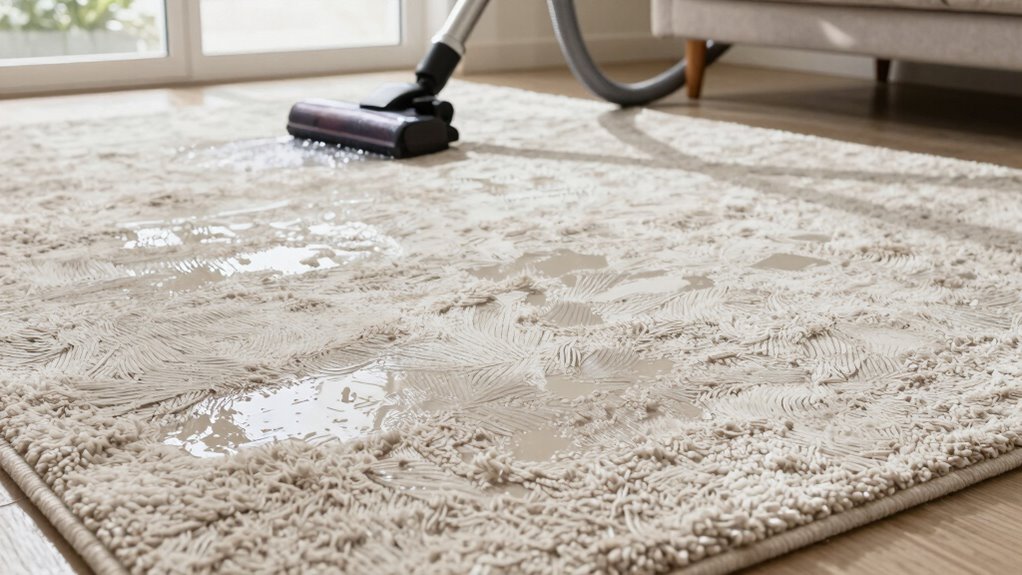
Carpet cleaners often leave carpets too wet because they use aggressive cleaning methods, inadequate extraction, or unsuitable equipment that doesn’t remove enough moisture. This excess water prolongs drying time and can lead to mold or damage. To reduce dry time, make certain cleaners use proper techniques, high-powered extraction equipment, and good air circulation. If you’re interested, you’ll discover more effective tips and strategies to keep your carpets dry and safe.
Key Takeaways
- Over-wetting occurs when cleaning methods inject excessive water or improper extraction leaves residual moisture in fibers.
- Inadequate equipment or technique can hinder effective water removal, prolonging drying time.
- Using high-powered extraction tools, air movers, and dehumidifiers accelerates moisture removal and reduces wetness.
- Proper detection of moisture levels and increasing airflow with fans or ventilation help speed up drying.
- Regular maintenance and strategic use of absorbent mats and professional tools minimize excess wetness and facilitate faster drying.
Why Do Carpets Stay Wet After Professional Cleaning?
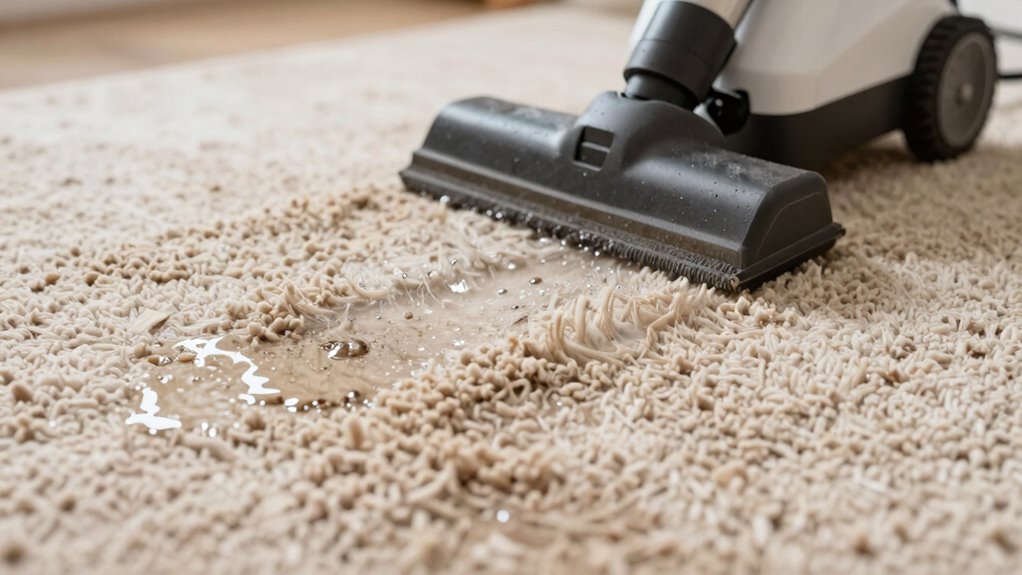
After a professional cleaning, carpets often remain wet because the cleaning process involves using water and cleaning solutions that need time to be extracted. If the carpet isn’t properly dried, it can lead to fiber damage, weakening the fibers and reducing the carpet’s lifespan. Excess moisture also creates an environment prone to mold and mildew growth, which can cause unpleasant odor concerns. Additionally, lingering dampness can result in a musty smell, making your space less inviting. Some cleaning methods inject more water into the fibers, making drying take longer. To prevent damage and odor issues, it’s essential to ensure thorough extraction and proper drying. Recognizing why carpets stay wet helps you take steps to minimize drying time and protect your investment. Proper drying techniques are crucial for reducing moisture retention and maintaining the carpet’s integrity, especially considering the importance of adequate airflow in the drying process. Using innovative drying equipment can significantly speed up the process and ensure a more thorough dry. Implementing effective moisture removal strategies can also help prevent long-term issues related to excess water. Incorporating smart drying technology can further optimize the drying process and prevent setbacks.
Which Cleaning Methods Leave Your Carpet Excessively Wet?
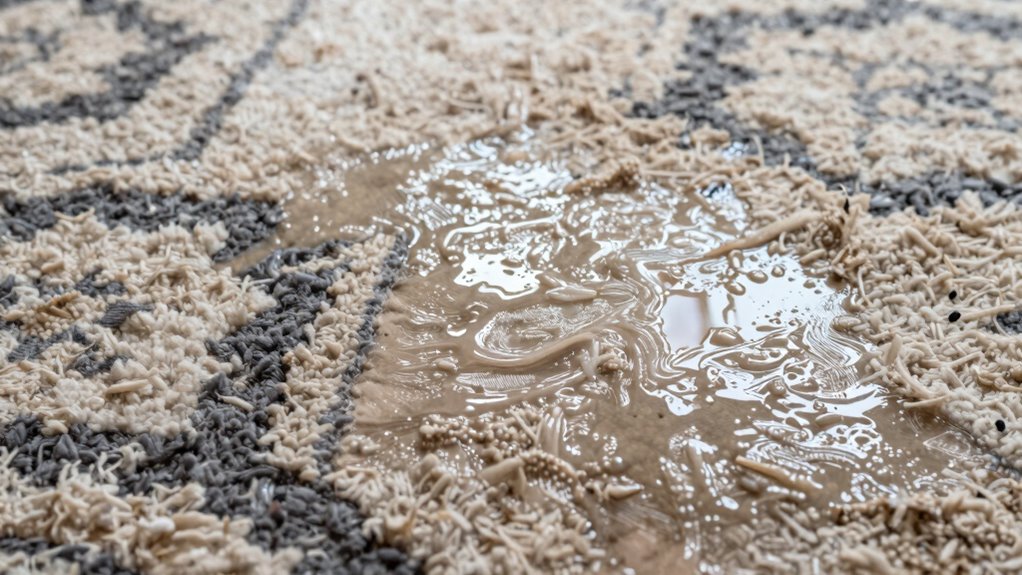
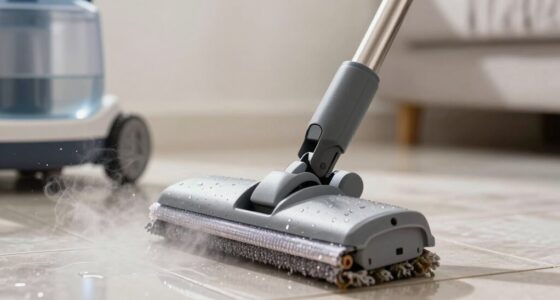
Certain cleaning methods tend to leave your carpet excessively wet because they rely heavily on water and cleaning solutions that require extensive extraction. Steam cleaning and hot water extraction are prime examples. These techniques use high-pressure hot water to loosen dirt, which then needs to be extracted thoroughly. If not done properly, they can leave your carpet damp for hours. Proper installation techniques and equipment maintenance can help minimize residual moisture. Additionally, extraction efficiency plays a crucial role in reducing drying times. Using professional equipment designed for optimal moisture removal can significantly improve drying times and prevent mold or mildew growth. The residual moisture left behind can also lead to unpleasant odors and damage if not addressed promptly. Understanding the moisture content in your carpet can help you better manage drying processes and prevent long-term issues. The table below highlights common methods and their wetness levels:
| Method | Wetness Level |
|---|---|
| Steam Cleaning | Excessively Wet |
| Hot Water Extraction | Excessively Wet |
| Encapsulation | Less Wet |
| Dry Cleaning | Minimal Wetness |
| Bonnet Cleaning | Slightly Wet |
Using steam cleaning or hot water extraction without proper extraction may prolong drying times.
How Over-Wetting Can Delay Drying and Cause Damage
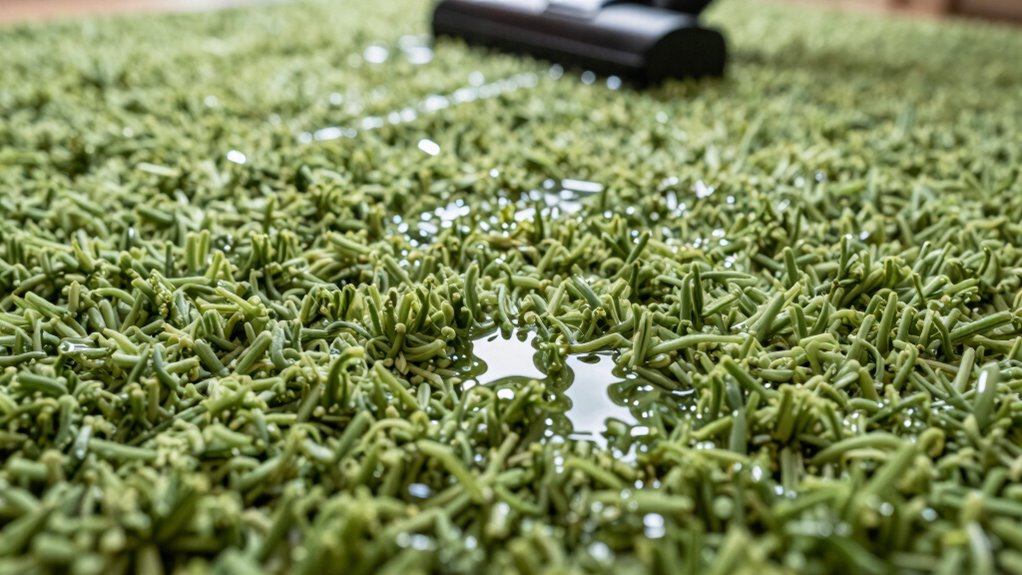
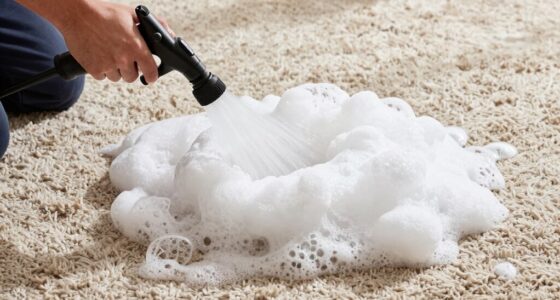
When carpets are left excessively wet after cleaning, it can considerably slow down the drying process and increase the risk of damage. Over-wetting causes moisture buildup deep within the carpet fibers, leading to prolonged saturation. This excess moisture prevents proper evaporation, making the carpet stay wet longer than necessary. Carpet saturation can weaken the backing and fibers, creating an environment for mold and mildew to develop. The longer moisture remains, the higher the chance of damage to your flooring and underlying padding. Additionally, over-wetting can cause color bleeding and fiber deterioration over time. Proper moisture management helps your carpet dry faster and reduces the risk of long-term damage. Using electric carpet cleaners with efficient extraction capabilities can help minimize excess water and improve drying times. Employing techniques such as air movers and dehumidifiers can further accelerate evaporation and protect your investment. Implementing proper drying techniques is also essential to prevent lingering moisture that can lead to issues down the line. Ensuring that the water extraction process is thorough can significantly reduce the amount of residual moisture left behind.
How Can You Tell If Your Carpet Is Still Too Wet?
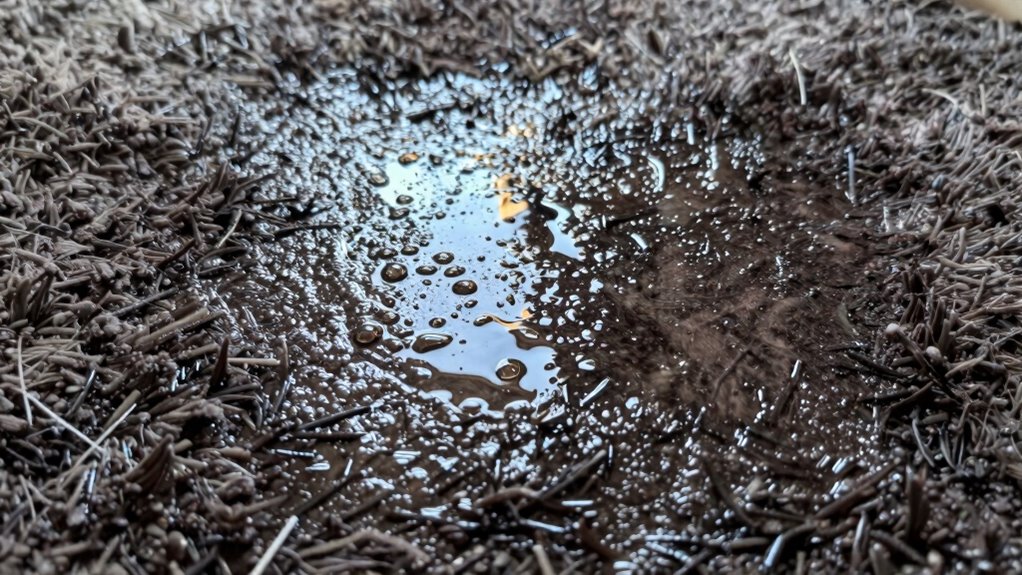
Wondering if your carpet is still too wet? You can use simple moisture detection methods and wetness indicators to determine this. Touch the surface—if it feels damp or sticky, it’s likely still wet. Lift a corner and check underneath for dampness. Additionally, look for visual clues like darker patches or a shiny appearance, which signal excess moisture. Some carpets have built-in wetness indicators—small strips that change color when wet. Use a moisture meter for precise readings: if the moisture level is above the safe threshold, your carpet needs more drying time. Being aware of carpet drying times can help prevent mold growth and damage. Properly understanding moisture levels in your carpet can also guide you in minimizing dry time and preventing issues like mold. Recognizing proper drying techniques ensures your carpet dries thoroughly and safely. Here’s a quick overview:
| Moisture Detection | Wetness Indicators |
|---|---|
| Touch and feel the surface | Color-changing strips |
| Check underneath | Visual dark patches |
| Use a moisture meter | Shine or damp spots |
| Observe drying time | Indicator strips signaling wetness |
Additionally, it’s helpful to know that air circulation plays a crucial role in speeding up the drying process. Improving airflow with fans or open windows can significantly reduce drying time and help your carpet dry more evenly.
Practical Tips for Faster Carpet Drying at Home
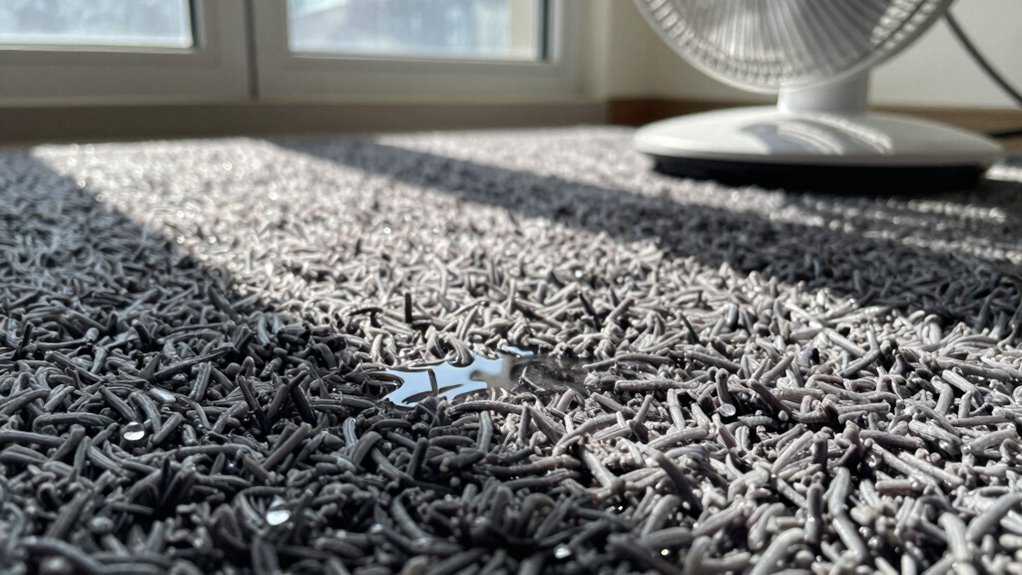
To speed up your carpet drying process at home, start by improving airflow and ventilation. Open windows, turn on fans, and use exhaust fans to circulate air and reduce moisture. You can also try DIY solutions like placing oscillating fans around the room to boost airflow directly onto the carpet. Using carpet protectors, such as plastic sheets or towels, can help contain moisture and prevent over-wetting during cleaning, which in turn markedly shortens drying time. Blot excess water with clean towels before drying, and avoid walking on wet areas to prevent spreading moisture. Regularly check for damp spots and continue airflow until the carpet feels dry to the touch. Understanding airflow principles can help you optimize your drying process and prevent lingering dampness. Employing proper ventilation methods can further accelerate drying and improve indoor air quality. Being aware of carpet moisture levels can help you determine the right timing for complete drying and prevent mold growth. These simple steps can significantly cut down your drying time and help your carpet recover faster. A good workspace includes understanding airflow principles to enhance comfort and efficiency during cleaning and drying routines.
How Professional Equipment and Techniques Impact Drying Time
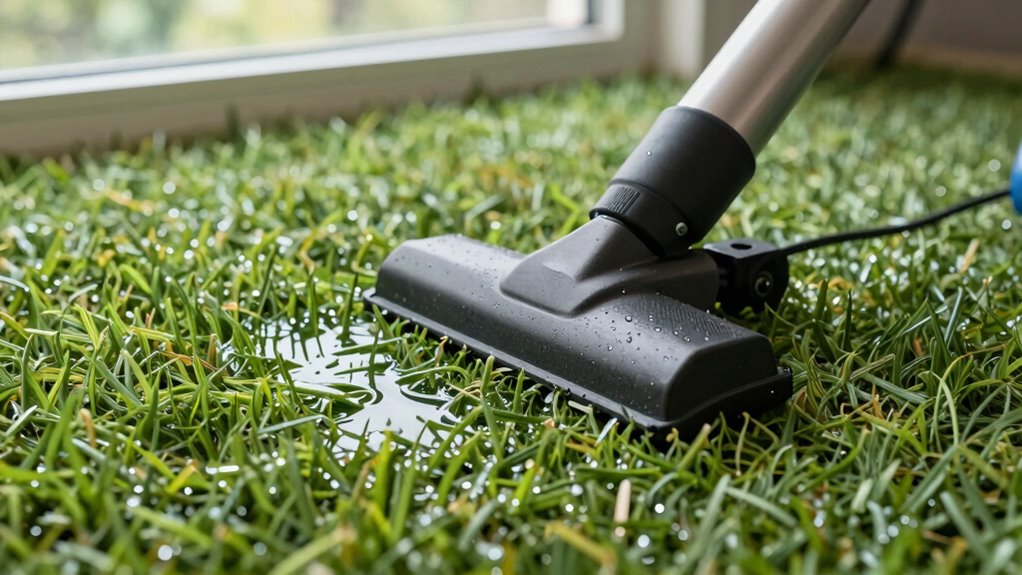
Professional equipment and techniques can substantially reduce carpet drying times by efficiently removing moisture and ensuring thorough drying. The impact of high-quality equipment, like powerful extraction machines and industrial-grade dryers, is significant because they remove more water in less time. Technique effectiveness also plays a vital role; professional cleaners use methods such as hot water extraction combined with precise extraction pressures and proper agitation to loosen dirt and moisture. This combination minimizes residual water, speeding up the drying process. Additionally, advanced tools like air movers or high-powered fans help circulate air and accelerate evaporation. When professional equipment and proven techniques work together, they not only improve cleaning results but also drastically cut down the time it takes for your carpet to dry completely.
How to Choose Carpet Cleaners That Minimize Excess Water
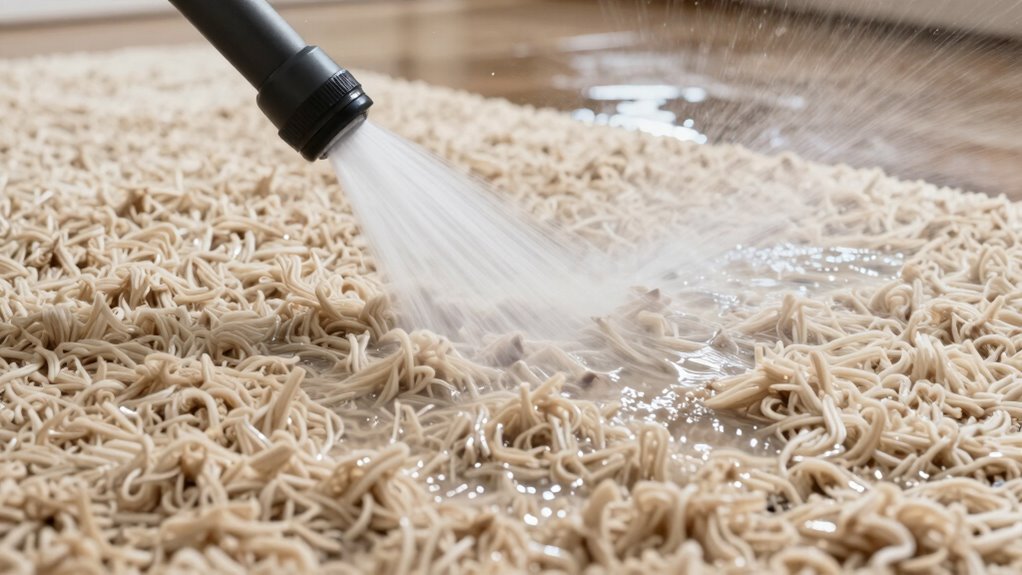
Choosing the right carpet cleaner is essential for minimizing excess water and ensuring faster drying times. Look for equipment that uses eco-friendly products, which clean effectively without adding unnecessary moisture. Select cleaners with advanced suction power and precise controls to avoid over-wetting your carpet. Consider options designed for stain prevention, reducing the need for multiple cleanings and excess water use.
| Eco Friendly Products | Stain Prevention | Drying Efficiency |
|---|---|---|
| Use biodegradable solutions | Special stain-resistant treatments | Quick-drying tools |
| Reduce chemical runoff | Minimize re-soiling | Low water consumption |
| Safe for pets & kids | Fewer repeat cleanings | Faster turnaround |
Choosing wisely helps you keep carpets clean and dry, saving time and preventing damage.
What Should You Do If Your Carpet Remains Wet or Develops Mildew?
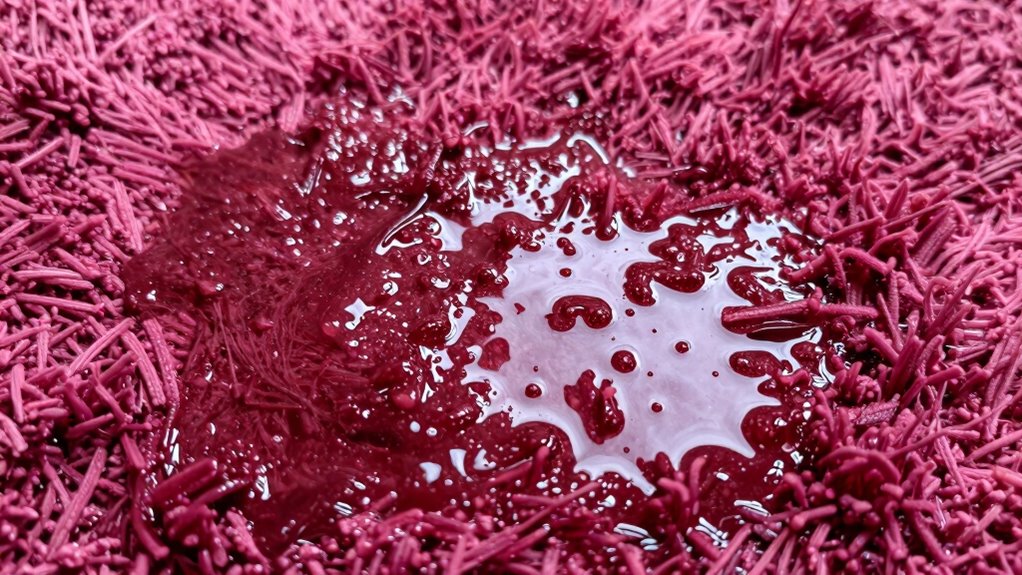
If your carpet stays wet or begins to develop a musty smell, it’s essential to act quickly to prevent mold and mildew growth. Start with moisture detection: use a moisture meter or touch test to confirm if the carpet is still damp. Once confirmed, take these steps:
- Increase airflow with fans and open windows to promote faster drying.
- Use a dehumidifier to remove excess moisture from the air.
- Apply a mildew prevention spray designed for carpets to inhibit mold growth.
Promptly addressing lingering moisture minimizes mildew risk and protects your indoor air quality. Remember, early intervention is key to preventing long-term damage and ensuring your carpet dries thoroughly.
Long-Term Strategies for Faster, Safer Carpet Drying
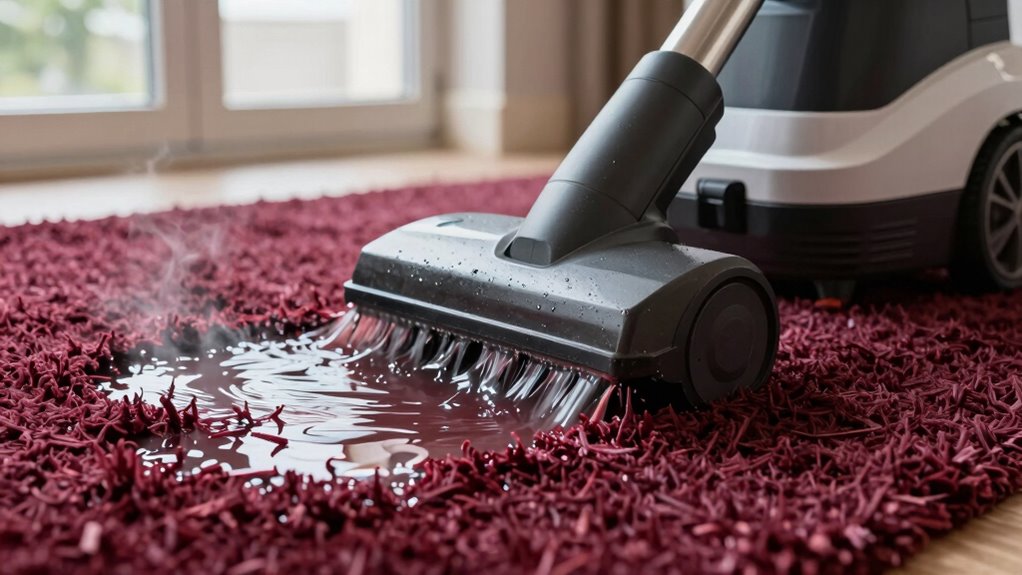
To speed up carpet drying safely over the long term, you should focus on effective air circulation techniques and use absorbent mats wisely. Scheduling regular professional maintenance can also help prevent moisture buildup and odors. By implementing these strategies, you’ll keep your carpets dry and in better shape for years to come.
Use Air Circulation Techniques
Ever wondered how air circulation can speed up and make carpet drying safer? Proper airflow optimization is key. By using effective drying equipment and strategic ventilation, you can drastically reduce dry times and prevent mold growth. Here’s how:
- Position fans and air movers to create a steady airflow across the carpet surface, increasing evaporation.
- Open windows and doors to enhance natural ventilation, especially in dry, breezy conditions.
- Use dehumidifiers alongside fans to remove excess moisture from the air, preventing it from settling back into the carpet.
These techniques improve airflow, accelerate drying, and minimize risks associated with lingering moisture. Incorporating good air circulation practices into your long-term strategy ensures carpets dry faster and stay safer for future use.
Employ Absorbent Mats Effectively
Using absorbent mats is a proven long-term strategy to enhance carpet drying efficiency and safety. Place these mats in high-moisture areas or underneath furniture to maximize moisture absorption. Ensure the mats are thick and made of high-quality materials to effectively draw out excess water. Regularly check and replace or reposition the mats as they become saturated to maintain ideal moisture absorption. This helps prevent mold growth and reduces drying times by continuously pulling moisture from the carpet fibers. For best results, combine absorbent mats with good air circulation and dehumidification. Proper placement and timely maintenance of these mats make a significant difference in how quickly your carpets dry, creating a safer, cleaner environment.
Schedule Professional Maintenance
Scheduling professional maintenance is essential for ensuring your carpets dry quickly and safely over the long term. Regularly scheduling appointments with carpet specialists helps identify moisture problems early and keeps your carpets in top condition. To maximize results, consider these steps:
- Schedule routine professional inspections to detect hidden moisture or damage.
- Book maintenance visits to optimize your cleaning equipment and techniques.
- Follow their advice on drying methods and ventilation strategies.
These proactive measures prevent excess moisture buildup and reduce dry times. Regular professional assessments ensure that any issues are caught early, saving you money and effort later. By maintaining a consistent maintenance schedule, you’ll promote faster drying, extend your carpet’s lifespan, and create a healthier indoor environment.
Frequently Asked Questions
Can Using Fans Speed up the Carpet Drying Process?
Yes, using fans can accelerate the carpet drying process. By increasing air circulation, fans help remove moisture from the carpet surface faster. Positioning fans strategically and using proper drying equipment guarantees better airflow, which reduces drying time. Keep in mind, the more effective your drying equipment and air circulation, the quicker your carpet will dry, preventing mold and mildew growth.
What Are the Risks of Over-Wetting Carpets During Cleaning?
Over-wetting carpets can lead to risks like carpet fiber damage and leftover cleaning solution residue. When too much water is used, fibers weaken and may fray or tear over time. Excess moisture also traps residues, making your carpet look dull and potentially causing odors or mold growth. To protect your carpet, guarantee the cleaner uses the right amount of water and thoroughly extracts it, preventing these issues.
How Long Should a Professionally Cleaned Carpet Typically Take to Dry?
Imagine your carpet as a sponge soaking up every drop; typically, it takes about 4 to 6 hours to dry after professional cleaning. To accelerate this, use fan assistance to circulate air and promote faster drying. Keep windows open if possible, and avoid walking on the carpet until it’s fully dry. Proper drying ensures your carpet stays fresh and prevents mold growth, making your space healthier.
Are There Specific Carpet Types That Dry Faster Than Others?
Yes, certain carpet types dry faster than others. Low-porosity fibers like nylon and polyester resist moisture absorption, reducing drying time. In contrast, high-porosity fibers like wool or natural fibers absorb more water, making them take longer to dry. You can tell by checking the carpet’s fiber absorption and porosity; less absorption means quicker drying. Choosing carpets with lower porosity can help you enjoy faster turnaround after cleaning.
What Signs Indicate Mold or Mildew Growth Due to Excess Moisture?
Think of your carpet as a garden; excess moisture invites unwanted mold signs and mildew indicators to grow like weeds. If you notice a musty smell, dark spots, or fuzzy patches, these are clear mold signs or mildew indicators. You should act quickly—ventilate the area, dry the carpet thoroughly, and consider professional cleaning—to stop mold growth before it damages your home and health.
Conclusion
To keep your carpets looking fresh without turning your home into a swamp, choose cleaners who use the right techniques and equipment. Stay vigilant about drying times, and act quickly if you notice lingering dampness or mildew. Think of your carpet like a sponge—if it stays too wet, it can’t do its job properly. By taking proactive steps, you’ll guarantee your carpets dry faster and stay cleaner longer, turning your home into a cozy, dry haven.