To stop your carpet cleaner hose from smelling, disconnect it carefully and rinse with warm water to remove dirt and residue. Soak the hose in a mixture of equal parts white vinegar, water, and baking soda for about 30 minutes to disinfect and neutralize odors. Afterwards, flush thoroughly with clean water and dry completely. Regular maintenance like this keeps odors at bay, and you’ll discover more tips to maintain fresh-smelling hoses next.
Key Takeaways
- Disconnect the hose, rinse thoroughly with warm water, and remove any debris or buildup inside.
- Soak the hose in a mixture of warm water, white vinegar, baking soda, and a few drops of essential oil for 30 minutes.
- Use a brush to scrub the interior gently, focusing on areas with stubborn residue or mold.
- Rinse the hose completely to remove cleaning solution and dry thoroughly before storage.
- Regularly inspect, clean after each use, and store in a cool, dry, ventilated area to prevent odors.
Why Does My Carpet Cleaner Hose Smell Bad, and How Can I Fix It?
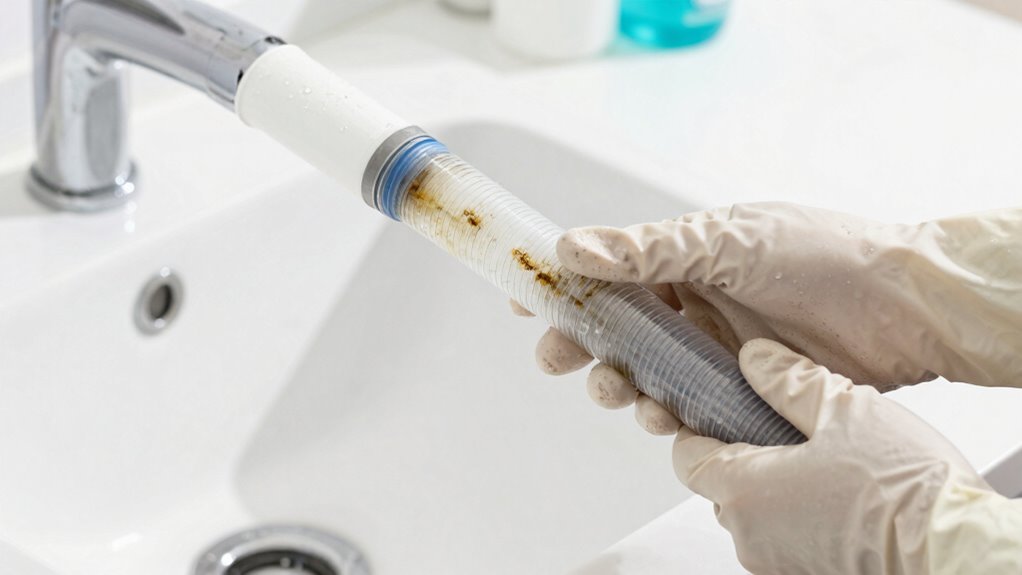
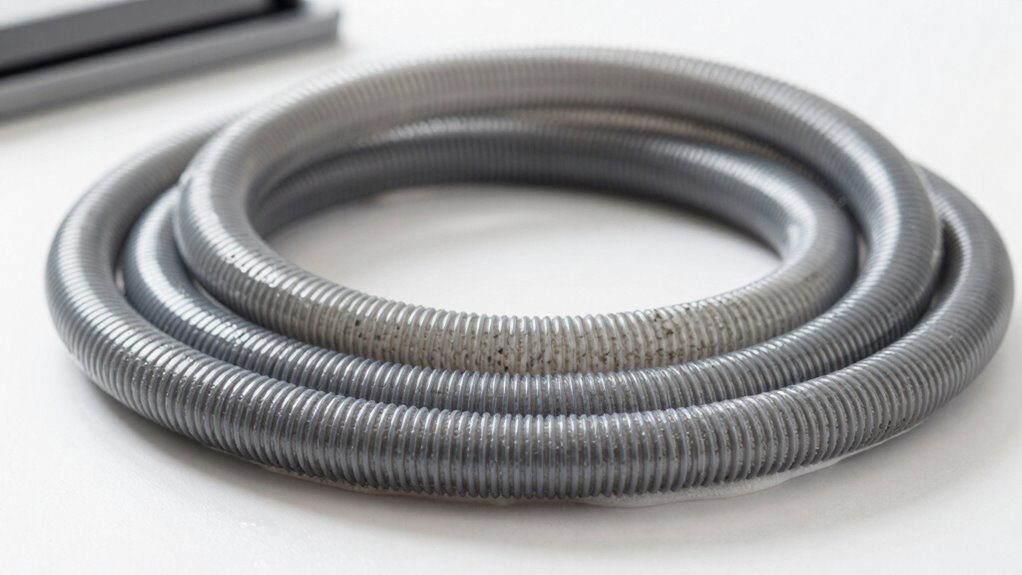
Have you noticed a foul odor coming from your carpet cleaner hose? The hose material often plays a role in trapping dirt, mold, and bacteria, which are primary odor sources. Flexible hoses made of rubber or plastic can absorb moisture, creating a breeding ground for mold and mildew. Over time, these odor sources develop, especially if you forget to rinse or dry the hose after use. Residual dirt or soap scum can also linger inside, intensifying the smell. The combination of dampness and organic matter leads to unpleasant odors that are tough to ignore. Understanding that your hose’s material and the buildup of odor sources are the root causes helps you take targeted steps to eliminate the smell effectively.
Gather Supplies to Clean Your Carpet Cleaner Hose Effectively
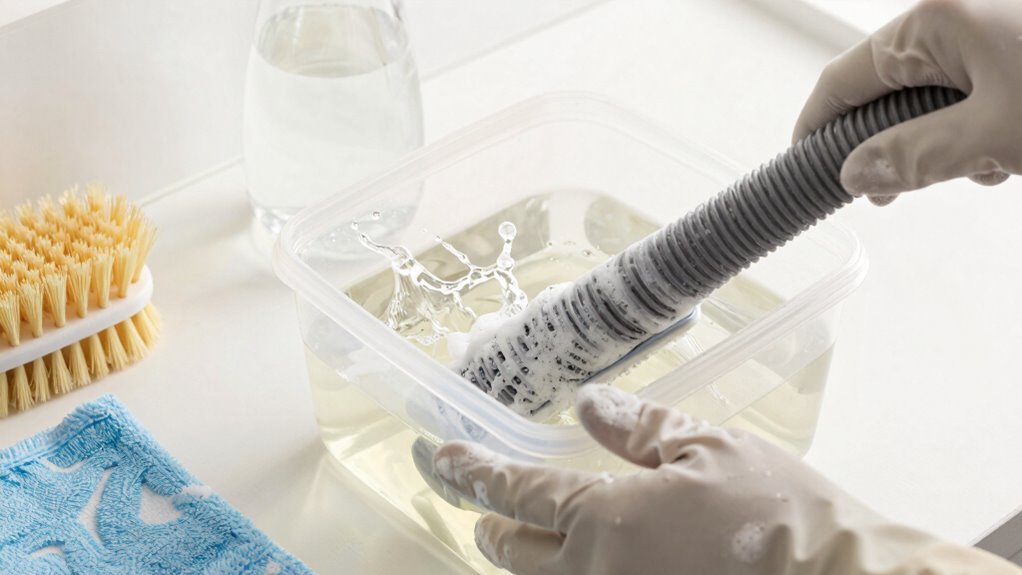
Before you start cleaning your carpet cleaner hose, gather all the necessary supplies to guarantee the process goes smoothly. You’ll need cleaning brushes to scrub inside the hose and hose clamps to secure it during cleaning. Having these tools ready prevents interruptions and makes the task easier. Additionally, prepare a cleaning solution (to be discussed later) to help eliminate odors. Use the table below to organize your supplies:
| Supply | Purpose |
|---|---|
| Cleaning brushes | Scrubbing the interior of the hose |
| Hose clamps | Securing the hose during cleaning |
| Cleaning solution | Odor removal and disinfecting |
| Towels or rags | Drying the hose after cleaning |
Having everything on hand ensures an efficient, thorough cleaning process. Proper preparation is essential for achieving the best results and preventing future odors. Recognizing the importance of regular maintenance can also extend the lifespan of your carpet cleaner and keep it functioning optimally. Additionally, understanding the horsepower of electric dirt bikes can help you appreciate the power behind various cleaning tools, ensuring you select the most effective equipment for your task. Incorporating professional services for deep cleaning can further enhance your equipment’s performance and longevity.
How to Make an Odor-Removing Cleaning Solution for Your Hose
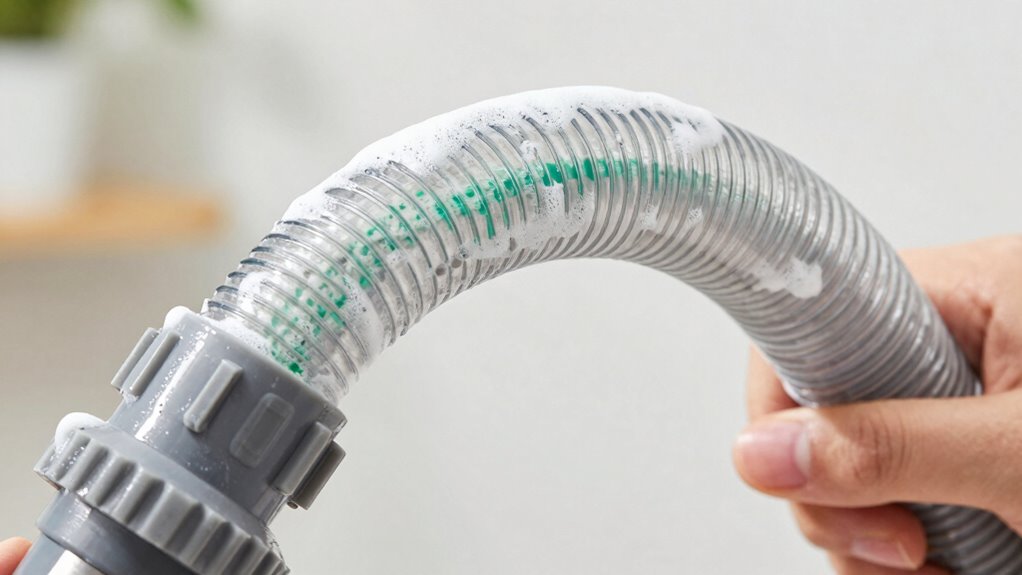
Creating an effective odor-removing cleaning solution for your hose is simple and cost-efficient. You can craft your own cleaning solutions to tackle stubborn smells and ensure odor removal. Here are four steps to make a powerful solution:
Make your own odor-fighting hose cleaner with simple, affordable ingredients like vinegar, baking soda, and essential oils.
- Mix 1 cup of white vinegar with 1 cup of water—vinegar is a natural deodorizer.
- Add 2 tablespoons of baking soda to enhance odor removal.
- Incorporate a few drops of your favorite essential oil for a fresh scent.
- Shake the mixture well until combined. Proper cleaning techniques help ensure the solution is safe for your equipment and environment.
This homemade cleaning solution effectively breaks down odors and cleans your hose thoroughly. Use it to rinse the hose after cleaning, ensuring no lingering smells remain. It’s a budget-friendly way to keep your carpet cleaner smelling fresh.
How to Safely Disconnect and Rinse Your Carpet Cleaner Hose
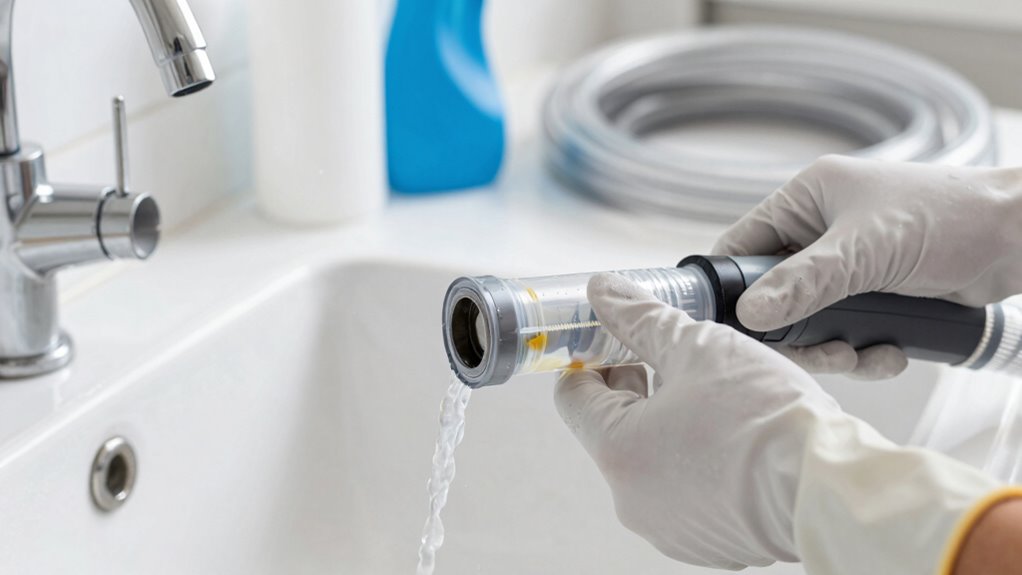
To safely disconnect and rinse your carpet cleaner hose, start by turning off the machine and unplugging it from the power source. Prioritize hose safety by ensuring there’s no electrical current running through the device. Locate the quick disconnect fittings on your machine, which make removing the hose easier and safer. Carefully detach the hose by pressing the release buttons or twisting the fittings, following your cleaner’s specific instructions. Once disconnected, hold the hose over a sink or drain and rinse thoroughly with warm water to remove any debris or residue. Be gentle to avoid damaging the fittings. Properly disconnecting and rinsing your hose helps prevent mold and odors, setting the stage for effective cleaning and maintenance. Understanding the field of view can also help you better assess the efficiency of your cleaning setup. Additionally, inspecting the cleaning system components regularly ensures optimal performance and longevity of your equipment. Incorporating proper maintenance routines can extend the lifespan of your carpet cleaner and keep it functioning at peak performance. Regularly checking the hosing connections can also help identify potential leaks or issues early on, ensuring your machine operates smoothly. Performing routine cleaning of the hose and attachments further minimizes the risk of buildup and odors.
Soaking and Flushing Your Hose to Eliminate Odors
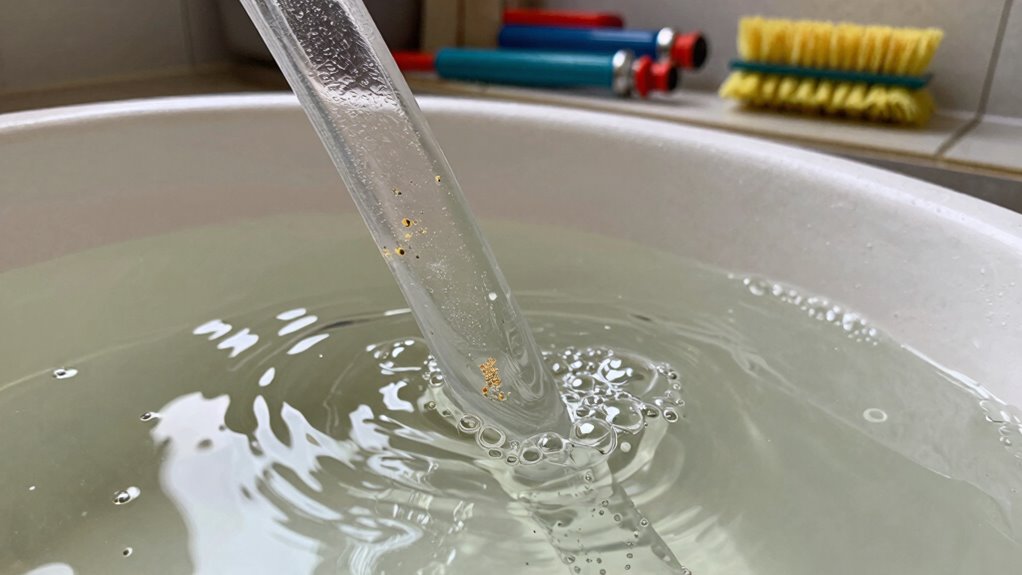
Soaking and flushing your hose is an effective way to eliminate persistent odors that can develop over time. Odor sources often cling to the hose material, especially if you use it frequently or neglect cleaning. To guarantee your hose stays fresh:
- Fill a bucket with a mixture of warm water and a cleaning solution suitable for your hose material.
- Submerge the hose completely, allowing it to soak for 30 minutes.
- Flush the hose thoroughly with clean water to remove loosened debris.
- Repeat if odors persist, ensuring all odor sources are washed away.
This process helps break down buildup and flush out lingering smells, keeping your carpet cleaner fresh and odor-free. Proper soaking and flushing are key to maintaining a clean, odorless hose.
Best Practices for Drying and Preventing Future Smells in Your Hose
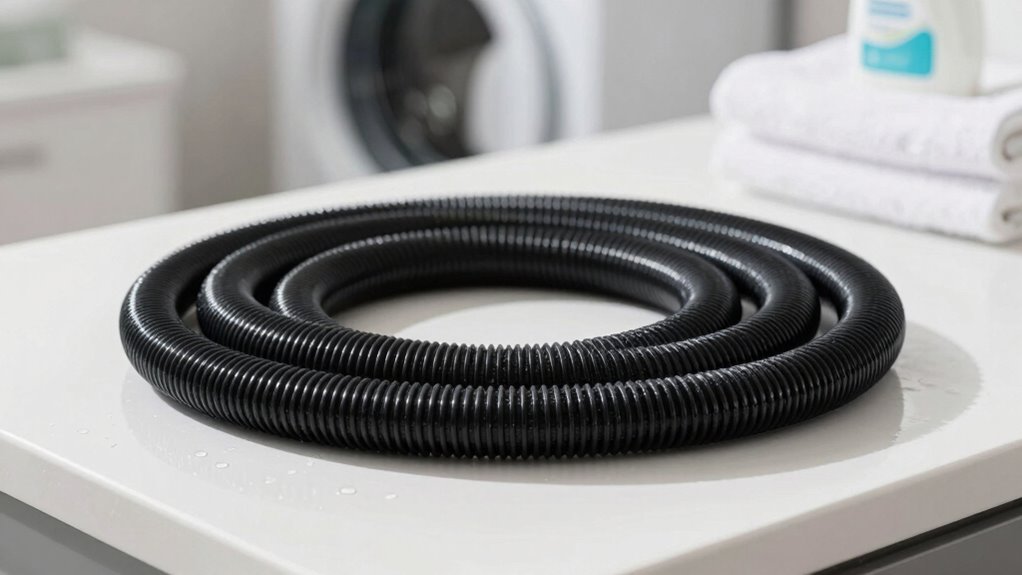
After cleaning your hose, it’s vital to dry it thoroughly to prevent future odors. Proper drying stops mold and bacteria buildup that cause smells. Store your hose in a cool, dry place to promote airflow and reduce moisture. To further prevent odors, consider hanging your hose or using a ventilation stand. Here’s a quick guide:
| Storage Method | Benefits | Tips |
|---|---|---|
| Hanging | Promotes airflow, dries faster | Use wall hooks or racks |
| Coiled in a closet | Keeps hose organized, dry | Avoid tight coils to prevent mold |
| Ventilated cabinet | Reduces moisture buildup | Ensure good air circulation |
Implementing these practices will improve odor prevention and keep your hose fresh longer. Proper drying techniques are essential for preventing lingering smells and maintaining your cleaner’s performance. Additionally, regular ventilation of your storage area helps prevent the buildup of odors over time. Incorporating routine cleaning of the hose can further ensure it stays odor-free and ready for use.
A well-ventilated storage environment is especially important for moisture control, which directly impacts odor prevention.
When Should You Replace Your Carpet Cleaner Hose? Troubleshooting Persistent Odors
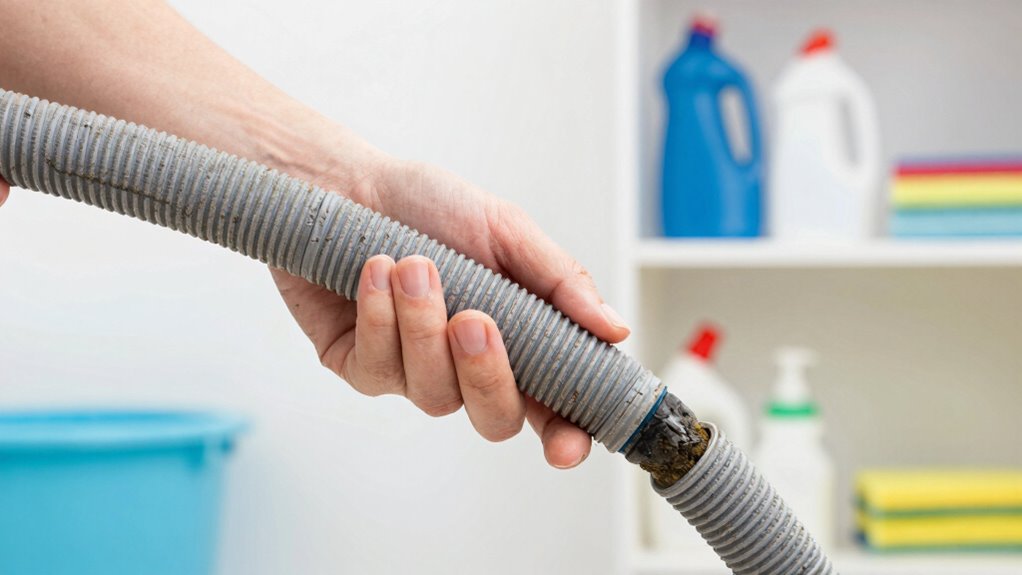
If your carpet cleaner hose starts to show signs of cracking or stiffness, it’s time to ensure replacing it. Persistent odors that won’t go away, even after cleaning, often indicate the hose is harboring bacteria or mold. Knowing when to replace your hose helps ensure your cleaner stays effective and odor-free.
Signs of Hose Deterioration
Over time, your carpet cleaner hose can show signs of deterioration that indicate it’s time for a replacement. Damage to the hose material can lead to persistent odors and reduced cleaning power. Watch for these key signs:
- Cracks or tears, which compromise the hose’s integrity and allow debris to build up.
- Persistent foul smell, even after cleaning, hinting at odor causes within the hose material.
- Leaks or loose fittings, signaling the hose is no longer airtight.
- Reduced water flow, caused by blockages or damage restricting circulation.
These issues not only diminish cleaning effectiveness but also create lingering odors. If you notice any of these signs, replacing the hose is essential to maintain your carpet cleaner’s performance and prevent further odor problems.
Persistent Odor Causes
Persistent odors in your carpet cleaner hose often signal that it’s time for a replacement, especially when cleaning efforts no longer eliminate unpleasant smells. This odor buildup is usually caused by mold growth or bacteria thriving inside the hose, which can be difficult to remove completely. Over time, residual moisture creates a perfect environment for mold to develop, leading to persistent, foul smells. If you notice odors that persist despite cleaning, it’s a sign that mold has taken hold and the hose may be beyond salvage. Continuing to use a hose with mold growth can also spread bacteria and affect your cleaning results. In such cases, replacing the hose ensures you eliminate odors effectively and maintain a hygienic cleaning process.
When to Replace Hose
Knowing when to replace your carpet cleaner hose is essential, especially when odors persist despite thorough cleaning. Regular hose inspection helps identify cracks, mold, or lingering smells that cleaning can’t fix. If you notice any of these signs, it’s time to consider a replacement. Here are four indicators:
- You detect a persistent, foul odor despite cleaning efforts.
- Cracks or tears appear during inspection, risking mold buildup.
- The hose remains sticky or discolored, indicating mold or residue.
- Odor prevention fails, and odors keep returning even after cleaning.
Replacing the hose ensures effective cleaning and prevents bacteria growth. Don’t ignore these signs; a new hose can restore your carpet cleaner’s performance and keep your home smelling fresh. Proper hose maintenance and timely replacement protect your investment and your family’s health.
Regular Maintenance Tips to Keep Your Carpet Cleaner Smelling Fresh
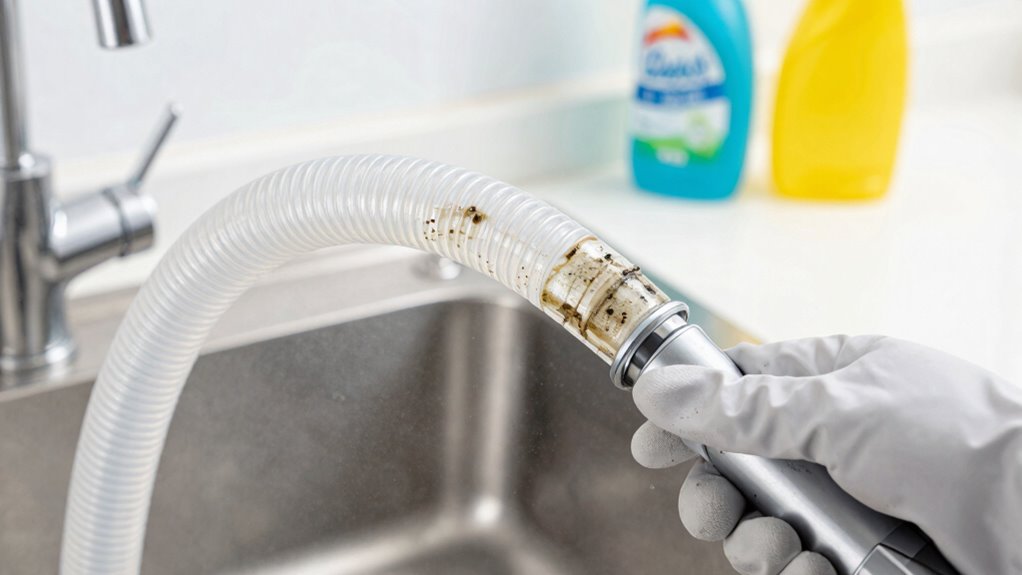
To keep your carpet cleaner smelling fresh, regular maintenance is essential. Start with vacuum maintenance to ensure debris doesn’t linger in the system, which can cause odors. Clean the filters regularly and empty the dirt tank to prevent mold and bacteria buildup. Prompt stain removal is also vital; clean spills immediately to prevent odor-causing residues from setting in. After each use, rinse out the hose thoroughly with water and a mild cleaning solution to remove dirt and soap residue. Periodically run a mixture of water and vinegar through the system to neutralize odors. Keeping your machine clean and well-maintained not only prolongs its life but also guarantees your carpets stay fresh and odor-free after every cleaning session. Incorporating proper workflow techniques can help streamline maintenance routines and prevent build-up issues. Additionally, paying attention to system airflow can improve overall cleaning performance and odor control. Using air purifiers in the same space can further enhance air quality and reduce lingering smells. Environmental considerations like proper water conservation and avoiding chemical buildup can also help maintain the system’s cleanliness and prevent lingering smells.
How Often Should You Clean Your Carpet Cleaner Hose for Best Results?
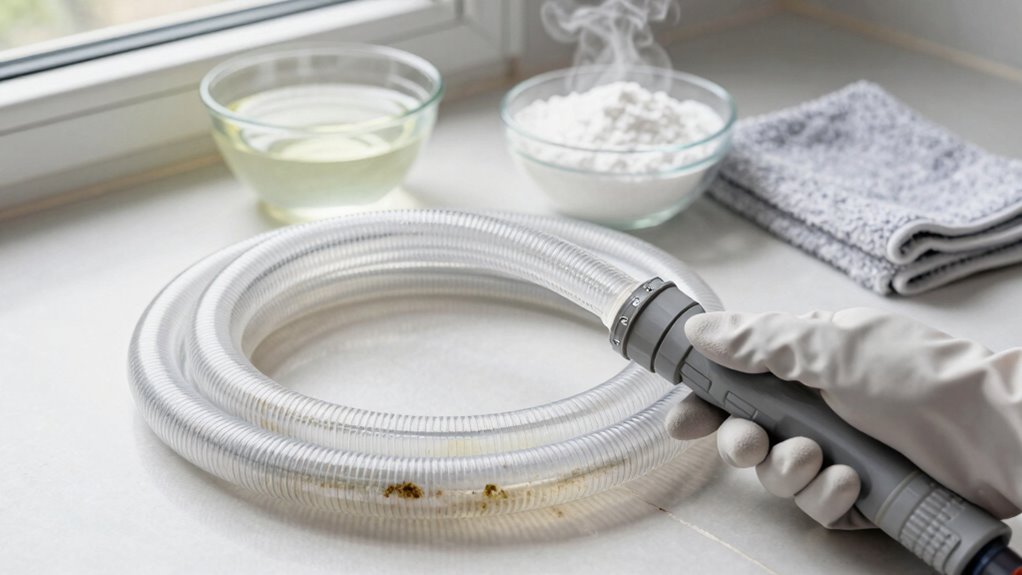
For ideal cleaning performance and to prevent odors, you should clean your carpet cleaner hose after every few uses—preferably once a month if you use the machine regularly. The hose material influences how often you should clean; flexible rubber hoses may trap more debris, requiring more frequent attention, while plastic hoses are less porous. To keep your hose in top shape, consider these tips:
- Clean after each heavy use to prevent buildup.
- Schedule a deep clean monthly to eliminate odors.
- Inspect for mold or residue regularly.
- Adjust cleaning frequency based on hose material and usage intensity.
- Using the right cleaning techniques and products can extend the lifespan of your hose and maintain its odor-free condition.
- Proper storage and maintenance practices also play a crucial role in preventing odors and prolonging hose life.
- Understanding the hose material properties helps tailor your cleaning routine for optimal results.
- Being aware of odor-causing factors can help you take proactive steps to keep your hose smelling fresh.
- Regularly checking for debris buildup inside the hose can help prevent foul odors and maintain suction efficiency.
Sticking to these steps ensures your hose stays fresh, odor-free, and performs at its best, no matter the hose material.
Frequently Asked Questions
Can Using Vinegar Damage My Carpet Cleaner Hose?
Using vinegar for cleaning your carpet cleaner hose is generally safe if you consider vinegar safety and hose material compatibility. Most hoses made of rubber or plastic can handle diluted vinegar without damage. Just make certain you dilute the vinegar properly to prevent any potential harm. Always check your manufacturer’s guidelines. If in doubt, test a small section first. Properly rinsing the hose afterward will also prevent any lingering vinegar smell or damage.
Are There Commercial Products Specifically Designed to Eliminate Hose Odors?
Yes, there are commercial odor eliminators and hose cleaning sprays specifically designed to tackle hose smells. These products are formulated to remove bacteria and mold that cause odors, making your hose fresh again. You simply spray or apply the product according to the instructions, then rinse. Using these commercial options is often quicker and more effective than homemade solutions, ensuring your carpet cleaner hose stays odor-free and ready for use.
How Do I Prevent Mold Growth Inside the Hose?
To prevent mold growth inside your carpet cleaner hose, regularly rinse the hose with a mixture of water and vinegar after use, especially if it’s made of rubber or plastic. Always let the hose dry completely before storing it, and avoid leaving water sitting inside. Using mold prevention techniques like moisture control and proper storage helps keep mold at bay, ensuring your hose stays clean and odor-free.
Is It Safe to Use Bleach on My Carpet Cleaner Hose?
Using bleach on your carpet cleaner hose isn’t recommended because it can damage the materials and pose safety risks. While bleach is a powerful cleaning chemical, only 60% of users follow safety guidelines, risking irritation or damage. Instead, opt for safer cleaning chemicals specifically designed for hoses, and always follow manufacturer instructions to guarantee your cleaning process remains safe and effective. Proper maintenance extends your cleaner’s lifespan and keeps it safe to use.
What Are Signs That My Hose Needs Professional Cleaning or Replacement?
If your hose material shows persistent mold, unpleasant odors, or blockages despite regular cleaning, it’s time for professional cleaning or replacement. Also, if you notice a decline in suction or water flow, it indicates the hose needs attention. You should clean your hose frequently, especially if you use your carpet cleaner often, to prevent buildup. When signs of wear appear, don’t delay—professional cleaning or replacing the hose keeps your machine functioning efficiently.
Conclusion
By regularly cleaning your carpet cleaner hose, you keep it smelling fresh and ready to battle stains. Imagine a clear stream flowing smoothly, free of debris and odor, just like your spotless carpets. With proper maintenance, your hose stays vibrant and odor-free, ensuring every cleaning session feels like a gust of fresh air. Keep up with these simple steps, and your cleaner will always be prepared to refresh your home like a gentle, invigorating breeze.