

If your pressure washer hose leaks, chances are it’s due to a worn or damaged O-ring that’s not sealing properly. Check the connection points for cracks, flattening, or brittleness, and inspect the O-rings closely. Replacing worn O-rings with the correct size and lubricating them can stop leaks and restore pressure. Keep an eye on signs of damage and proper maintenance, and you’ll prevent future issues. Stay with us to learn more on fixing this common problem.

Get cleaning gear delivered free — and shop member deals
- Fast, free delivery on millions of items
- Access to Prime Big Deal Days deals on October 6–7
- Prime Video, Amazon Music and more included
Key Takeaways
- Worn or damaged O-rings are a common cause of leaks at hose connections.
- Regularly inspect O-rings for cracks, flattening, or tears to prevent leaks.
- Proper lubrication of O-rings during installation or storage enhances sealing and extends lifespan.
- Cleaning the connection groove ensures a good seal before installing a new O-ring.
- Timely replacement of compromised O-rings prevents leaks and maintains pressure washer performance.
pressure washer O-ring replacement kit
As an affiliate, we earn on qualifying purchases.
As an affiliate, we earn on qualifying purchases.
Why Your Pressure Washer Hose Leaks and How O-Rings Can Help
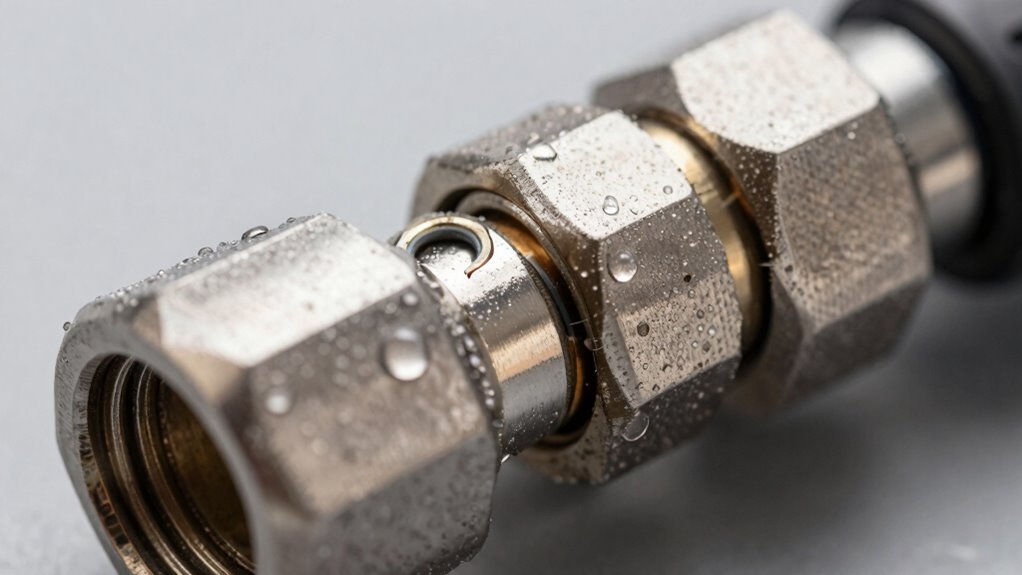
If your pressure washer hose is leaking, the most common cause is a worn or damaged connection point. Often, the culprit is a compromised O ring, which seals the connection between the hose and the spray gun or wand. Regular O ring lubrication can help prevent leaks by reducing friction and wear, ensuring a tight seal. If the O ring looks damaged or worn out, it’s best to explore hose replacement options—such as replacing just the O ring or upgrading the entire hose assembly. Replacing the hose can be a cost-effective way to eliminate leaks and restore pressure. Proper maintenance, including lubrication and timely replacement, keeps your pressure washer functioning efficiently and prevents ongoing leaks caused by faulty seals.
pressure washer hose repair parts
As an affiliate, we earn on qualifying purchases.
As an affiliate, we earn on qualifying purchases.
How to Spot a Worn or Damaged O-Ring on Your Pressure Washer
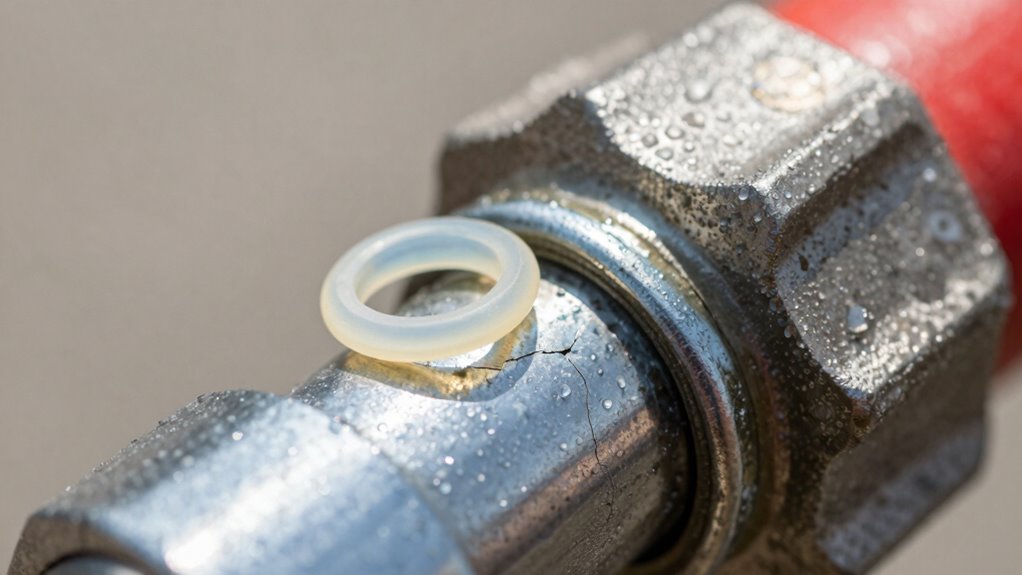
A quick way to determine if your pressure washer’s O-ring is causing leaks is by inspecting it closely for signs of wear or damage. Look for cracks, tears, or flattening, which indicate deterioration. The O ring material, such as rubber or silicone, affects its durability and sealing effectiveness; some materials are more prone to wear from exposure to water, chemicals, or temperature fluctuations. Worn or damaged O-rings often appear deformed or have visible signs of deterioration. If you notice any of these issues, your seal won’t be tight, leading to leaks. Regular inspection helps catch these problems early, ensuring your pressure washer maintains proper sealing effectiveness and preventing ongoing leaks that can damage your equipment. Proper sealing is essential for optimal pressure washer performance and to prevent costly repairs.
pressure washer hose seal repair
As an affiliate, we earn on qualifying purchases.
As an affiliate, we earn on qualifying purchases.
How to Inspect and Replace Your O-Ring in Simple Steps
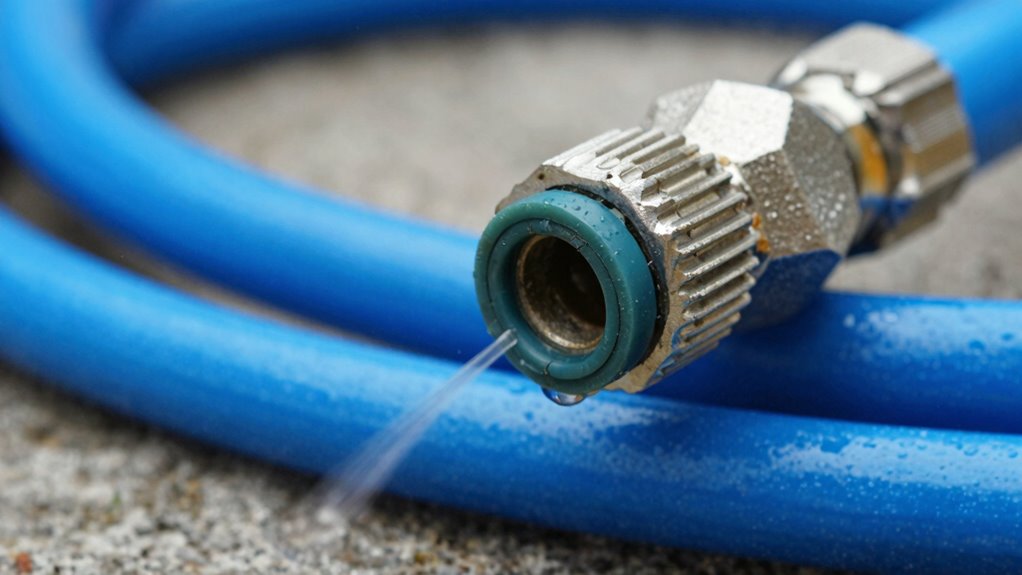
To effectively inspect and replace your O-ring, start by turning off your pressure washer and disconnecting it from the power source. Remove the hose or fitting to access the O-ring. Examine the O-ring for cracks, flattening, or tears—these indicate damage. When inspecting, consider O ring materials like rubber, silicone, or Viton, which affect durability and sealing performance. To replace, clean the groove thoroughly to remove dirt or debris. Apply sealing techniques such as a light coating of lubricant compatible with your O-ring material to guarantee a proper seal. Carefully seat the new O-ring into the groove, making sure it’s evenly positioned. Material selection plays a crucial role in the longevity and effectiveness of your O-ring. Proper installation techniques ensure the seal remains intact during operation. Additionally, understanding the Youngster Choice concept helps in selecting the right O-ring based on its durability and application needs. Using the right sealing methods can prevent future leaks and extend the life of your pressure washer. Reassemble the hose or fitting, then test your pressure washer for leaks, ensuring the new O-ring seals correctly.
As an affiliate, we earn on qualifying purchases.
Signs Your O-Ring Is Worn Out or Damaged
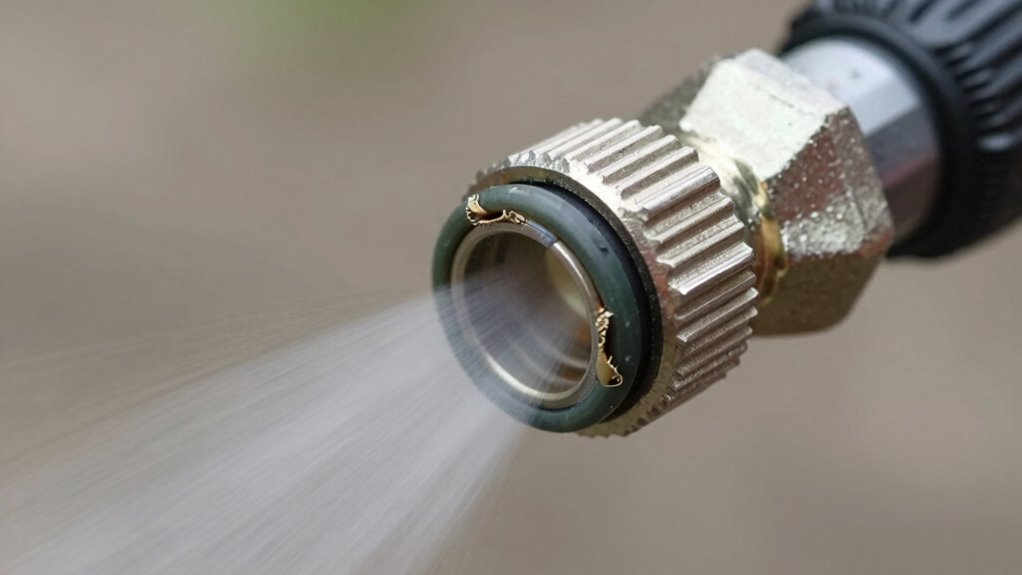
Over time, O-rings can wear out or sustain damage, leading to leaks and reduced pressure. You might notice water dripping from connections, or a sudden drop in pressure during use. Damaged O-rings often show signs like cracking, flattening, or brittleness, especially if the material isn’t suited for your pressure washer’s hose compatibility. Piercing care and hygiene is essential to maintaining the integrity of your equipment and preventing unnecessary wear. Regular inspection and maintenance can help identify issues early before they lead to significant problems. Watch out for these warning signs:
Over time, worn or damaged O-rings cause leaks, pressure drops, and signs like cracking or brittleness.
- Visible cracks or tears in the O-ring material
- Inconsistent or persistent leaks at hose connections
- Difficulty creating a proper seal, resulting in pressure loss
Easy Maintenance Tips to Keep Your O-Rings Sealing Properly
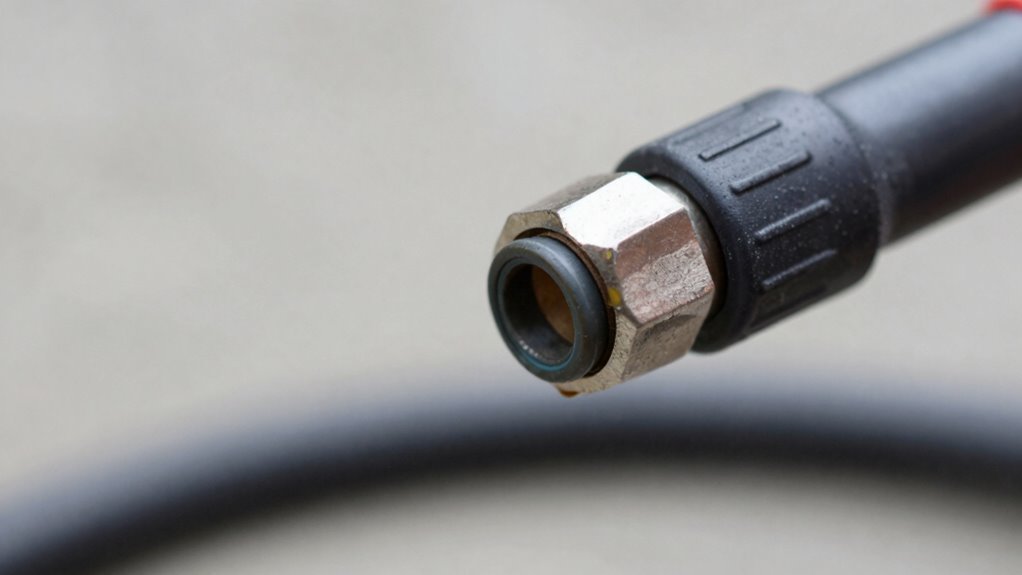
Keeping your O-rings in good shape is essential for preventing leaks and maintaining ideal pressure. One simple tip is to regularly apply O ring lubrication, which reduces friction and prevents cracking or drying out. Use a compatible lubricant to keep the O-rings supple and ensure a proper seal. Proper storage also plays a critical role; store your pressure washer and its accessories in a cool, dry place away from direct sunlight. This prevents the O-rings from deteriorating prematurely. Before storing, wipe the O-rings clean and lightly lubricate them to protect against moisture and dirt. Additionally, using proper storage techniques can significantly extend the lifespan of your O-rings and prevent unnecessary replacements. Regular inspections of your pressure washer and equipment can help identify early signs of wear or damage, ensuring timely maintenance. Incorporating routine checks into your maintenance schedule makes a big difference in avoiding leaks and costly repairs. Remember, a well-maintained pressure washer benefits from energetic alignment to promote optimal performance and longevity. By following these easy maintenance tips, you’ll extend the lifespan of your O-rings and keep your pressure washer operating smoothly without leaks.
Other Causes of Pressure Washer Hose Leaks You Should Know
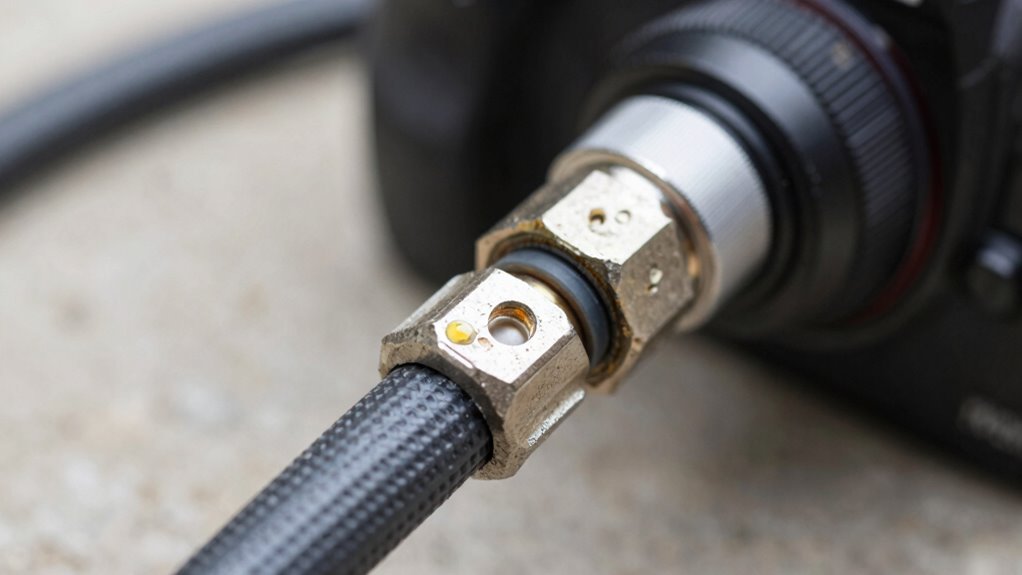
Even if your O-rings are in good condition, other factors can cause pressure washer hose leaks. One common issue is hose durability; over time, exposure to friction, sunlight, and pressure weakens the hose, leading to leaks. Additionally, nozzle compatibility is essential—using an incompatible nozzle can create excessive pressure and stress on the hose, causing it to rupture. Poor connections or damaged fittings can also be culprits, as they compromise the seal and allow water to escape. Proper hose maintenance ensures that fittings remain secure and hoses stay in good condition. Regular inspection helps catch these issues early, including checking small appliance maintenance to keep all components functioning properly. Also, neglecting proper hose handling can accelerate wear and lead to leaks sooner. Incorporating pressure regulation techniques can further help prevent unnecessary stress on your hoses and extend their lifespan.
When to Call a Professional for Pressure Washer Repairs
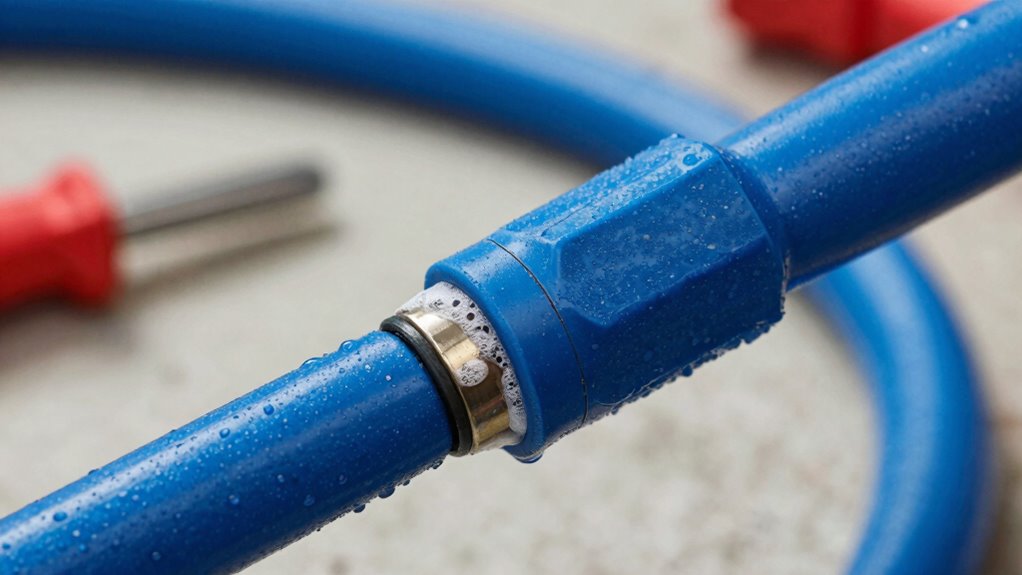
Knowing when to call a professional for pressure washer repairs is crucial to avoid further damage and guarantee safety. If your DIY repairs haven’t resolved leaks or if you notice persistent issues like loss of pressure, strange noises, or visible damage, it’s time to seek professional service. Attempting to fix complex components without proper knowledge can worsen the problem or cause injury. Proper diagnosis by a trained technician can identify underlying issues that might not be immediately apparent. Also, if your pressure washer is under warranty, unauthorized repairs might void it. Leave repairs involving internal parts, electrical components, or significant pressure system issues to trained technicians. Trusting a professional ensures proper diagnosis and safe, effective repairs, saving you time and preventing costly mistakes. Additionally, understanding pressure system components and their proper maintenance can help prevent future issues. Regular inspections of parts like the O-ring can identify wear before leaks develop, saving you from more extensive repairs later. Being familiar with common pressure washer problems can help you recognize early warning signs and act accordingly. When in doubt, consulting a pro is the safest choice for long-term performance.
Frequently Asked Questions
Can Using Incompatible Accessories Cause Pressure Washer Leaks?
Using incompatible accessories can definitely cause pressure washer leaks. If the accessory isn’t compatible, it might not fit securely or handle the pressure rating, leading to leaks. Always check accessory compatibility and guarantee it matches your pressure washer’s pressure rating before attaching. This prevents damage, leaks, and potential safety hazards. Properly matching accessories with your pressure washer’s specifications helps maintain a secure connection and peak performance.
How Often Should I Replace My Pressure Washer O-Ring?
You should replace your pressure washer O-ring every 6 to 12 months, or sooner if leaks start. The O-ring lifespan varies based on usage, exposure, and maintenance—don’t wait until it’s a fountain of water. Regular inspection and timely replacement prevent leaks and costly repairs. Think of it as giving your machine a spa day—because a fresh O-ring keeps everything tight, and your pressure washer happy and leak-free.
Are There Different O-Ring Sizes for Various Pressure Washer Models?
Yes, there are different O-ring sizes for various pressure washer models. You should always check the O-ring sizing to guarantee it matches your specific model’s requirements. Model compatibility is vital because using an incorrect size can cause leaks or damage. When replacing an O-ring, measure the diameter and thickness carefully, or refer to your pressure washer’s manual for the right specifications to avoid issues.
What Materials Are Best for O-Rings in High-Pressure Washers?
For high-pressure washers, the best O-ring materials are Viton and nitrile rubber. These materials offer excellent chemical resistance and maintain material compatibility under high pressure, preventing leaks. Viton is ideal if you deal with chemicals or solvents, while nitrile rubber works well for standard water applications. Always choose O-rings suited for your specific pressure washer model and verify they’re rated for high-pressure use to avoid leaks.
Can Environmental Factors Degrade Pressure Washer O-Rings Over Time?
Did you know that over 60% of pressure washer leaks are caused by environmental damage? UV damage and chemical degradation can seriously weaken your O-rings over time, leading to leaks and decreased performance. Exposure to sunlight accelerates UV damage, while harsh chemicals cause chemical degradation. To prevent this, store your pressure washer in a shaded area and use compatible chemicals, helping your O-rings last longer and maintain a tight seal.
Conclusion
Remember, your pressure washer’s leaks often hide in plain sight—like a small crack in a dam waiting to burst. Checking and replacing your O-rings keeps the seal tight and your sprayer working smoothly. Regular maintenance is your shield against unexpected drips and costly repairs. Keep an eye on those tiny O-rings; they’re the unsung heroes that keep your pressure washer flowing like a well-oiled machine.
Fall Picks
fall essentials
As an affiliate, we earn on qualifying purchases.