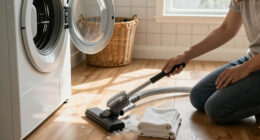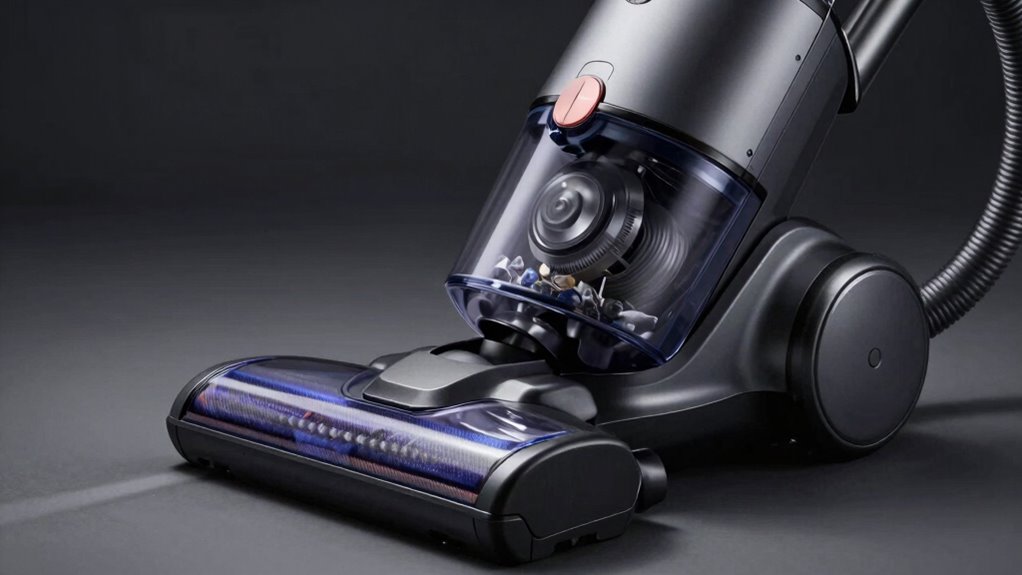

When your vacuum emits a high-pitched whine, start by inspecting the filters and brush roller for dirt, hair, or debris, as blockages can strain the motor. Next, check the belt for wear or looseness; a damaged belt often causes squealing noises. Finally, examine the airflow pathways, including hoses and vents, for obstructions that increase motor effort. Addressing these common issues quickly helps prevent further damage—continue for more detailed troubleshooting steps.

Get cleaning gear delivered free with Prime
- Fast, free delivery on millions of items
- Prime Video, Amazon Music and more included
- Member-only deals all year
Key Takeaways
- Check for obstructions or debris in the brush roller and airflow pathways to reduce motor strain.
- Inspect the vacuum belt for cracks, looseness, or wear, and replace if necessary.
- Examine filters and vents for clogs, ensuring proper airflow and motor cooling.
- Listen for unusual motor sounds, indicating potential motor or airflow issues needing immediate attention.
- Perform regular maintenance, including cleaning filters, replacing belts, and clearing blockages, to prevent high-pitched noises.

A high-pitched whine from your vacuum can be both annoying and concerning, signaling that something may be wrong with the appliance. Understanding the vacuum noise causes is the first step in troubleshooting vacuum issues effectively. This persistent sound often indicates a problem with the motor, belt, or airflow, so it’s essential to identify the root cause promptly. Ignoring the noise can lead to further damage or decreased cleaning performance, so tackling it head-on is the best approach.
A high-pitched vacuum noise signals potential motor, belt, or airflow issues needing prompt attention.
The first step in troubleshooting vacuum is to check the motor and brush roller. A high-pitched whine can develop if the motor is struggling or overheating, which might happen due to clogged filters or a blocked air pathway. Turn off and unplug your vacuum, then inspect the filters—if they’re dirty or clogged, replace or clean them according to your model’s instructions. Next, examine the brush roller for hair, string, or debris that could be causing strain. When the brush is jammed, it puts extra load on the motor, resulting in that high-pitched noise. Clearing any obstructions can often resolve the issue quickly.
If cleaning and inspecting the filters and brush roller don’t solve the problem, the next step is to look at the belt. A worn or loose belt can slip or squeal, producing that irritating high-frequency sound. To troubleshoot vacuum belts, remove the vacuum’s bottom plate or access panel and check the belt for signs of wear, cracks, or slackness. If it’s damaged or loose, replacing the belt usually restores proper function and quiets the noise. Be sure to follow your manufacturer’s guidelines for the correct belt size and installation process.
Finally, consider airflow obstructions. Reduced airflow can cause the motor to work harder, which in turn generates that high-pitched whine. Check for blockages in the hose, wand, or other attachments. Disconnect these parts and clear out any debris or obstructions. Also, ensure that no filters or vents are blocked or dirty, as this can compromise airflow and lead to increased noise. Maintaining good airflow throughout the vacuum system is key to preventing noise issues and prolonging the life of your appliance. Proper airflow maintenance is essential for optimal vacuum performance and longevity.
As an affiliate, we earn on qualifying purchases.
Frequently Asked Questions
Can a Vacuum’s High-Pitched Sound Indicate a Safety Issue?
Yes, a vacuum’s high-pitched sound can indicate safety hazards or electrical risks. If you notice this noise, stop using the vacuum immediately to prevent potential electrical fires or damage. It might signal worn-out motor parts, loose wiring, or other electrical issues that could pose safety hazards. address the problem promptly by inspecting the vacuum or consulting a professional to confirm it’s safe to use again.
Is It Safe to Continue Using the Vacuum Despite the Noise?
Sure, keep using your vacuum if you enjoy risking safety issues, but don’t be surprised if a high-pitched whine signals looming trouble. Ignoring it could lead to safety risks like motor damage or electrical issues. It’s smarter to address the problem now, as delaying repairs increases urgency and the chance of bigger, costlier repairs later. Play it safe, fix it sooner rather than later, and avoid unnecessary hazards.
How Often Should I Perform Maintenance to Prevent This Issue?
You should perform maintenance regularly, ideally every 1 to 3 months, to prevent high-pitched whines. Stick to a consistent maintenance schedule that includes cleaning filters, checking belts, and inspecting for obstructions. This preventive care helps keep your vacuum running smoothly and reduces the risk of motor strain or damage. Regular upkeep ensures you won’t have to deal with annoying noises and maintains the vacuum’s peak performance.
Are Certain Vacuum Models More Prone to High-Pitched Whines?
You might find that certain vacuum models, especially those with intricate vacuum design or less durable components, are more prone to high-pitched whines. Cheaper or less well-built models often struggle with noise issues. To keep your vacuum running smoothly, choose a model known for durability and simple design, and perform regular maintenance. This proactive approach helps prevent annoying noises and extends your vacuum’s lifespan.
Can a High-Pitched Vacuum Sound Affect Indoor Air Quality?
Yes, a high-pitched vacuum sound can affect indoor air quality by increasing noise pollution, which stresses your breathing and focus. While it doesn’t directly release airborne particles, the noise can cause discomfort, making you less aware of dust or allergens released during cleaning. Over time, persistent noise pollution may impact your overall health, especially for those sensitive to sound. Reducing the noise helps create a healthier, more comfortable environment.
As an affiliate, we earn on qualifying purchases.
Conclusion
Just like tuning a fine instrument, diagnosing your vacuum’s high-pitched whine is all about patience and attention. By checking the filters, belts, and motor components step-by-step, you can silence that annoying squeal and restore its smooth harmony. Think of your vacuum as a musical instrument—when all parts work together in tune, it performs perfectly. With a little detective work, you’ll have your vacuum singing sweetly again in no time.
As an affiliate, we earn on qualifying purchases.
vacuum brush roller cleaning kit
As an affiliate, we earn on qualifying purchases.
As an affiliate, we earn on qualifying purchases.
Halloween Picks
halloween
As an affiliate, we earn on qualifying purchases.