

If your vacuum hose keeps falling off, start by ensuring the connection point is clean and debris-free. Try pushing the hose firmly onto the port and listen for a click or feel for a secure fit. For added security, use hose clamps or locking features if your vacuum has them. Regularly check for cracks or wear in the hose and replace if needed. To learn more about maintaining a secure fit, continue exploring these helpful tips.
Key Takeaways
- Use hose clamps to securely tighten the hose around the port and prevent slipping.
- Ensure both hose and connection points are clean and free of debris before attaching.
- Confirm the hose is fully inserted and the locking mechanism clicks into place.
- Regularly inspect for damage or wear on hoses and replace if necessary.
- Consider adding a hose clamp or locking feature for extra security if connections remain loose.
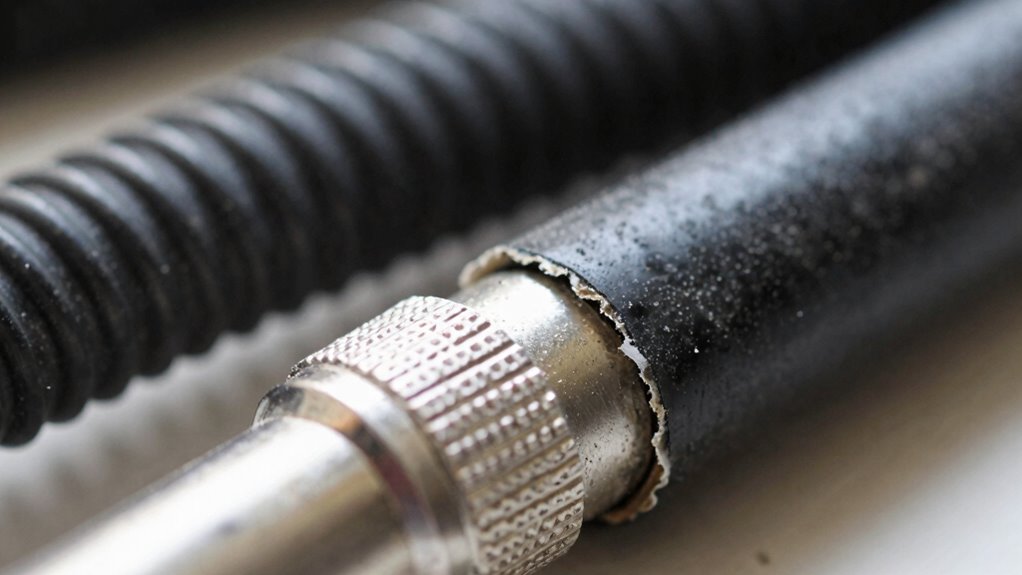
If your vacuum hose keeps falling off, it can be frustrating and interfere with your cleaning routine. You want your vacuum to work efficiently, but a loose connection can cause loss of suction and make your job harder. Fortunately, fixing this issue is often straightforward. One of the simplest solutions involves using hose clamps to secure the connection. These small, adjustable devices tighten around the hose and the vacuum port, holding them firmly in place. To apply a hose clamp, slide it over the end of the hose before attaching it to the vacuum. Once connected, tighten the clamp with a screwdriver until it feels snug but not overly tight, which could damage the hose or the vacuum port. This added security prevents the hose from slipping off during use and guarantees a stronger, more reliable connection. Ensuring proper connection maintenance can help prevent recurring issues and extend the lifespan of your vacuum components.
In addition to hose clamps, understanding some connection tips can help you maintain a secure fit. First, always check that the hose and port are clean and free of debris before attaching. Dirt or obstructions can cause a loose fit, so wipe the connection points with a damp cloth if needed. Next, ensure you’re attaching the hose in the correct orientation; some hoses have a specific end that fits better or a ridged side that locks into place. If your vacuum has a locking mechanism, make sure you hear or feel it click into position, confirming a secure connection. If the hose is old or worn out, replacing it with a new one designed for your vacuum model may be necessary. Sometimes, the hose’s diameter can be slightly off, causing it to slip off easily, so verifying compatibility is vital.
Another helpful tip involves double-checking the connection after initial attachment. Give the hose a gentle tug to see if it stays firmly in place. If it pulls off easily, reattach it, making sure it’s pushed on fully and secured with a clamp or locking feature. Regularly inspecting the hose and connection points can prevent future issues. Over time, hoses can become brittle or develop cracks, reducing their grip. Replacing damaged hoses promptly is key to maintaining a secure connection. If you find that nothing seems to work, consider consulting your vacuum’s user manual for specific connection tips or taking your vacuum to a professional for assistance.
Frequently Asked Questions
Can I Use Duct Tape to Secure a Loose Vacuum Hose?
You can use duct tape to temporarily secure a loose vacuum hose, but it’s not the best DIY repair solution long-term. Duct tape may hold it in place briefly, but it can lose grip over time, especially with frequent use. For household tips, consider replacing worn-out or damaged hose fittings or using hose clamps for a more secure, lasting fix. This approach guarantees your vacuum functions efficiently without constant readjustments.
What Tools Are Best for Tightening Vacuum Hose Connections?
Think of tightening your vacuum hose connection like securing a lid on a jar—you want it snug. Use pliers or a screwdriver to tighten hose clamps, which are the best tools for the job. If clamps aren’t enough, consider clamp alternatives like zip ties. Sometimes, hose replacement is the best option if the connection remains loose. These tools and options help guarantee a firm, lasting fit, preventing future slips.
How Often Should I Inspect My Vacuum Hose for Damage?
You should inspect your vacuum hose for damage at least once every three to six months. Regular connection maintenance helps prevent issues like leaks or falling-off hoses, saving you from frequent hose replacement. Look for cracks, tears, or clogs, and guarantee the connections are tight. By staying vigilant, you can catch problems early, prolong the life of your vacuum, and maintain ideal cleaning performance.
Are There Specific Hoses Compatible With All Vacuum Models?
Imagine you’re in a vintage arcade, searching for the perfect game—that’s like finding a universal hose. Not all hoses fit every vacuum; hose compatibility varies by model. You’ll need model-specific hoses for a snug fit and peak performance. While some universal hoses exist, they often don’t match every vacuum’s connection, leading to loose fittings. Always check your vacuum’s make and model to choose the right hose for a secure, lasting connection.
What Are the Signs of a Cracked Vacuum Hose?
You’ll notice signs of a cracked vacuum hose, like visible splits or tears in the hose material, and reduced suction power. You might also hear whistling sounds or see debris escaping from the cracks. Cracks compromise connection durability, making hoses prone to falling off or losing suction. Regularly inspect your hose for these signs, especially if it’s old or exposed to harsh conditions, to prevent further damage and maintain peak vacuum performance.
Conclusion
Don’t despair if your vacuum hose repeatedly slips. With a few simple strategies—securing snug connections, inspecting for damage, and considering adapters—you’ll stop the slipping and start sweeping smoothly again. Remember, a secure seal prevents persistent problems and prolongs your vacuum’s life. So, stay steady, strengthen the snugness, and enjoy a spotless space without the stress of a slipping hose. Your diligent efforts will definitely deliver a dependable, dust-free delight!