

If your vacuum is losing suction, first check for hidden clogs in the hose, attachments, and crevice tools, as debris often causes airflow restrictions. Inspect the brush roll and belt for obstructions, and make sure your filters are clean and the dustbin isn’t full. Also, clear debris from the motor vent and exhaust port to prevent overheating and suction loss. Want to fix the problem fast? Keep scrolling to learn more about these hidden causes.
Key Takeaways
- Inspect and clear blockages in hoses, filters, and brush rolls to improve airflow and suction.
- Check for debris or obstructions in the vacuum’s motor vent and exhaust port.
- Examine wand, crevice tools, and attachments for hidden clogs or debris buildup.
- Ensure the belt and brush roll are free of tangled hair and debris, and replace if worn.
- Regularly clean or replace filters and empty the dustbin to maintain optimal suction power.
Why Does Your Vacuum Lose Suction? Common Hidden Clogs Explained
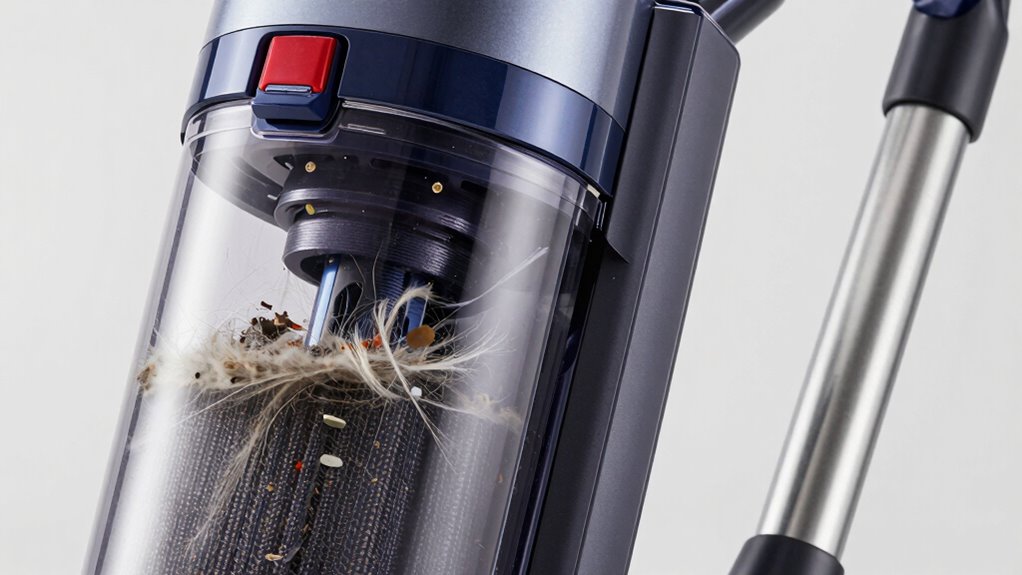
If your vacuum suddenly loses suction, hidden clogs are often the culprit. These clogs can cause airflow restriction, making it hard for air to move freely through the vacuum. When airflow is blocked, your vacuum struggles to pick up dirt and debris effectively. Over time, this restriction can put extra strain on the motor, leading to potential motor damage if left unchecked. You might notice your vacuum running louder than usual or overheating. The buildup of debris in narrow passages or inside filters can silently cause these issues, reducing suction power without obvious signs. Regularly inspecting and clearing these hidden clogs helps maintain proper airflow and protects your vacuum’s motor from unnecessary wear and tear. Proper maintenance and routine cleaning are essential to prevent these issues from recurring, especially considering the scientific skepticism surrounding the effectiveness of some cleaning methods. Additionally, understanding the airflow dynamics within your vacuum can help identify potential problem areas before they cause significant performance issues. Knowing how to identify and address these airflow restrictions can save you time and extend the life of your appliance.
Check the Hose and Attachments for Hidden Clogs

Hidden clogs often occur in the hose and attachments, silently blocking airflow and reducing suction power. To address this, begin with a thorough hose inspection, looking for debris or kinks that may impede airflow. Next, perform an attachment check, detaching all tools and inspecting for obstructions that could obstruct suction. Here are some tips to help you:
- Look for hair, debris, or small objects lodged inside the hose or attachments
- Gently run a broomstick or similar object through the hose to dislodge hidden clogs
- Check for cracks or holes that might cause leaks and loss of suction
- Remove and clean attachments to ensure no blockages remain
- Test the vacuum after cleaning the hose and attachments to confirm airflow is restored
- Remember that airflow efficiency can be affected by even small obstructions, so thorough cleaning is key to maintaining maximum suction. Additionally, inspecting the vacuum filters regularly can prevent buildup that hampers airflow and suction power. Regularly checking for airflow obstructions ensures your vacuum functions at peak performance and prolongs its lifespan. Incorporating routine cleaning maintenance can also help identify issues early before they impact performance. For optimal results, consider using specialized tools designed to clear hose blockages more effectively.
Inspect the Brush Roll and Belt for Obstructions
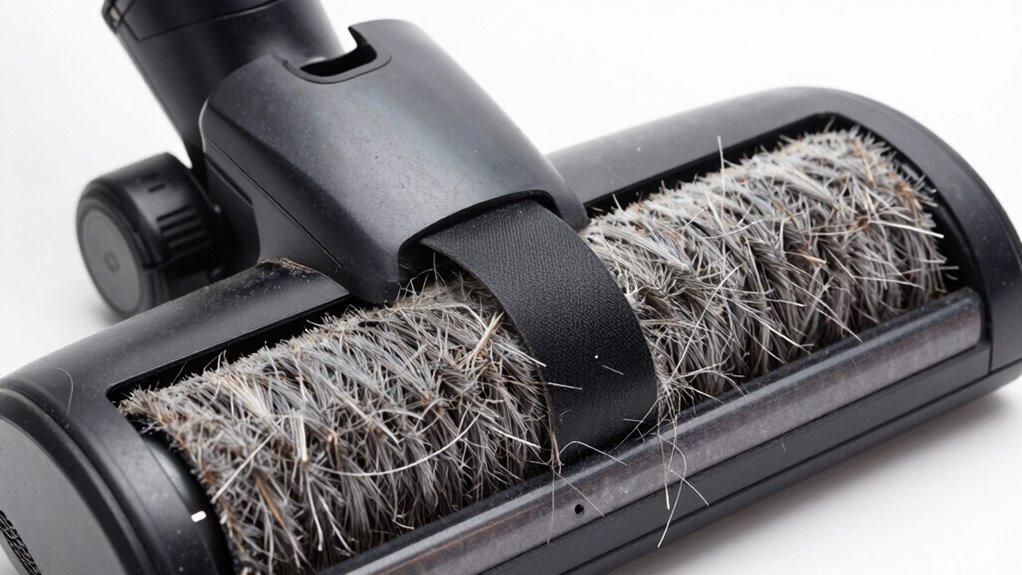
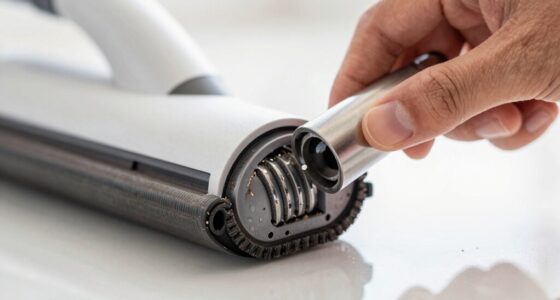
To guarantee your vacuum’s brush roll and belt aren’t causing suction loss, start by inspecting them thoroughly. Remove any hair, string, or debris wrapped around the brush roll, as these can create a belt obstruction and hinder proper rotation. Check the belt for signs of wear, cracks, or slack; a damaged or misaligned belt can reduce suction. If the brush roll doesn’t spin freely or the belt appears broken or loose, it’s time to replace or realign it. Ensure the belt sits properly on the pulleys and that nothing is blocking its movement. Proper belt tension and alignment are crucial for maintaining optimal suction and cleaning performance. A clear, unobstructed brush roll and a properly tensioned belt help maintain peak suction and cleaning performance. Regular inspection prevents buildup of obstructions that can impair your vacuum’s efficiency. Proper maintenance practices include checking the vacuum’s airflow pathways to ensure nothing is blocking the intake or exhaust, which also contributes to optimal suction. Additionally, inspecting the airflow pathways for any blockages can prevent loss of suction and improve overall performance. Incorporating advanced manufacturing techniques in your maintenance routine can also help identify hidden issues before they impact performance.
Clean or Replace the Filter and Empty the Dustbin

Regularly cleaning or replacing your vacuum’s filter and emptying the dustbin are essential steps to restore suction. Proper filter maintenance prevents airflow restrictions, ensuring your vacuum functions efficiently. Dustbin emptying removes accumulated debris that can clog airflow pathways, maintaining peak suction power. To effectively manage this, consider these tips:
Regular filter cleaning and dustbin emptying restore vacuum suction and maintain peak performance.
- Check the filter for dirt buildup and replace it if necessary
- Wash reusable filters according to manufacturer instructions
- Empty the dustbin before it’s full to avoid overloading
- Remove and clean any debris stuck around the filter housing
- Inspect for damage and replace parts if they’re worn or broken
- Regularly inspecting for clogs and blockages can prevent loss of suction and keep your vacuum performing at its best. Additionally, ensuring your vacuum’s airflow pathways are clear is crucial for optimal performance. For optimal efficiency, also verify that the filter is suitable for your vacuum model and functioning properly. Maintaining proper filter airflow helps prevent airflow restrictions that can impair suction, and regularly checking for airflow obstructions can further enhance your vacuum’s effectiveness.
Clear Clogs in the Wand and Crevice Tools

Clogs in the wand and crevice tools can reduce your vacuum’s suction power. Be sure to remove blockages carefully to avoid damaging the attachments. Regularly cleaning these tools helps keep your vacuum working efficiently. Proper maintenance of your tools ensures they function correctly and prolongs their lifespan. Additionally, inspecting the airflow pathway can help identify hidden obstructions that may impact performance. Performing routine inspections can prevent minor clogs from becoming major issues over time. Checking for obstructions in the hose regularly can also prevent loss of suction and improve cleaning results. Incorporating simple tools like BTU and CADR calculators can assist in diagnosing airflow restrictions and maintaining optimal performance.
Remove Blockages Carefully
Have you noticed your vacuum losing suction? It might be due to blockages in the wand or crevice tools. To remove these carefully, first detach the attachments. Check for airflow restrictions caused by debris buildup. Use a long, flexible brush or compressed air to dislodge stubborn clogs without damaging the tools. Be gentle to avoid cracking or breaking parts. Focus on these areas:
- Narrow passages where debris accumulates
- Inside crevice tools with tight bends
- The openings of the wand and attachments
- Residue around brush bristles
- Any visible blockages obstructing airflow
Additionally, inspecting the navigation and mapping features of your vacuum can help identify if sensors or pathways are obstructed, ensuring optimal performance. Understanding how airflow management works within your vacuum can also assist in preventing future suction issues.
Regularly Clean Attachments
Cleaning your vacuum attachments regularly helps prevent airflow restrictions caused by accumulated debris. Proper attachments maintenance ensures your vacuum performs efficiently and reduces the risk of clogs. Focus on clearing debris from the wand and crevice tools, which often trap dirt and block airflow. Use a small brush or running water to remove dirt and dust from these attachments, ensuring they’re completely dry before storage. When not in use, store accessories properly in designated accessory storage to keep them clean and easily accessible. Regular cleaning prevents buildup that could impair suction and prolongs the lifespan of your vacuum parts. Incorporate routine attachment maintenance into your cleaning schedule to keep your vacuum running smoothly and avoid losing suction due to hidden clogs.
Remove Debris From the Motor Vent and Exhaust Port
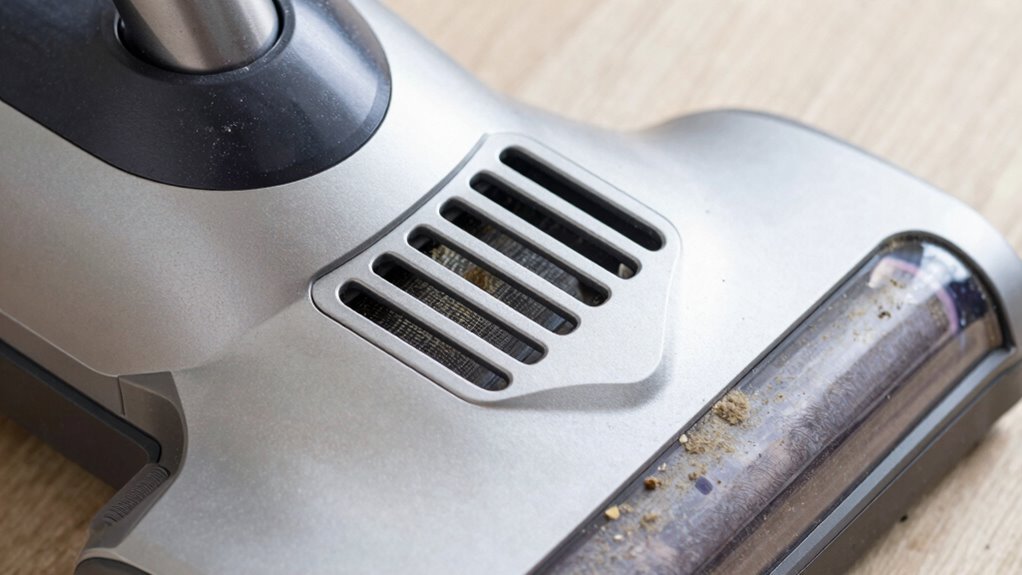
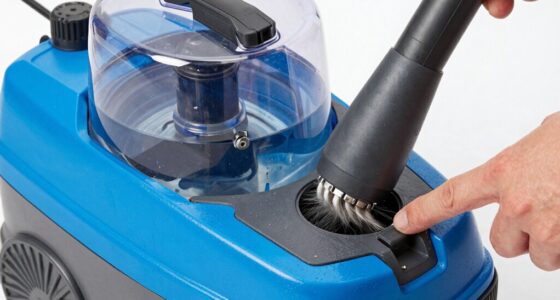
Debris buildup in the motor vent and exhaust port can markedly reduce your vacuum’s suction power. Dust, hair, and lint can clog these critical components, causing overheating and decreased performance. To fix this, turn off and unplug your vacuum first. Then, carefully inspect the motor vent and exhaust port for blockages. Use a small brush or compressed air to remove obstructions. Be gentle to avoid damaging delicate parts. Regularly cleaning these areas guarantees proper airflow and prevents debris from restricting suction. Keep in mind:
- Remove dust and lint from the motor vent
- Clear debris from the exhaust port
- Use compressed air for stubborn buildup
- Check for obstructions behind grill covers
- Wipe surfaces with a damp cloth for residue
Maintaining a clean motor vent and exhaust port keeps your vacuum running efficiently.
Tips to Prevent Future Clogs and Maintain Suction
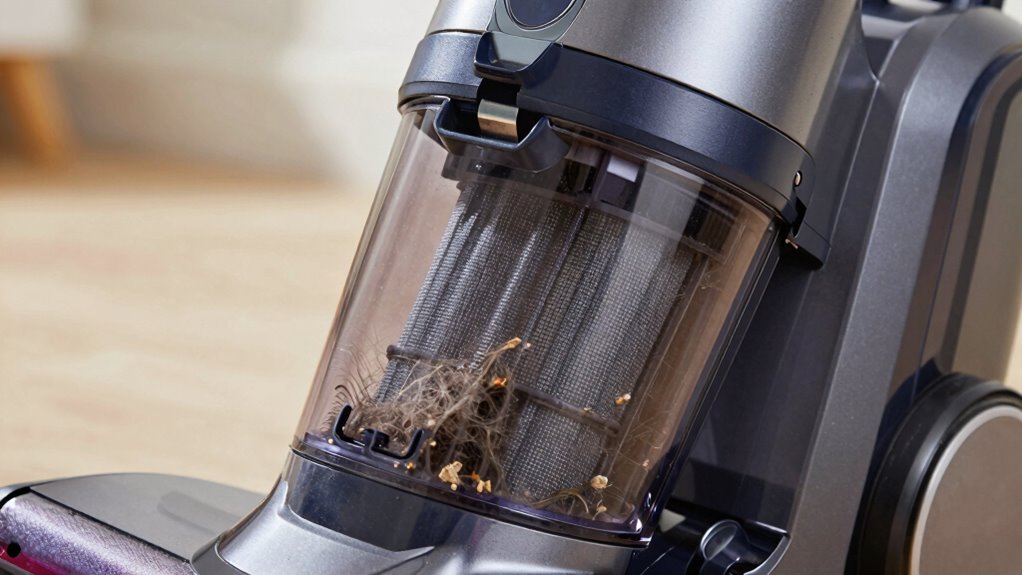
To keep your vacuum working effectively, make sure you regularly clear any blockages. Using the right attachments helps prevent dirt from building up and causing clogs. Taking these simple steps will help maintain strong suction over time.
Regularly Clear Blockages
Regularly clearing blockages is essential to keep your vacuum’s suction strong and prevent future clogs. Dust buildup inside hoses, filters, or brushes can diminish performance over time if not addressed. Incorporating consistent maintenance routines helps identify and remove obstructions early. To maintain peak suction, consider these steps:
- Check hoses and pipes for debris
- Clear out dust buildup from filters and vents
- Inspect brush rolls for tangled hair or fibers
- Clean or replace filters regularly
- Remove any trapped debris from the nozzle
Use Proper Attachments
Using the right attachments can substantially improve your vacuum’s performance and help prevent future clogs. Proper attachment handling is key; always detach and clean attachments regularly to prevent debris buildup. When switching attachments, do so gently to avoid damaging the hose or connectors. Store your attachments properly—use designated hooks or containers—to keep them organized and easily accessible. Proper attachment storage tips include keeping them in a dry, clean area and avoiding piling them together to prevent damage. This not only extends their lifespan but also ensures you use the correct tools for each job, reducing the risk of blockages caused by inappropriate or damaged attachments. Consistent, careful handling of attachments keeps your vacuum suction strong and reduces the chances of future clogs.
Frequently Asked Questions
How Often Should I Check for Hidden Clogs in My Vacuum?
You should check for hidden clogs in your vacuum’s air pathway during routine maintenance, ideally every few months or if you notice a drop in suction power. Regularly inspecting this area helps prevent buildup that can reduce efficiency. If you use your vacuum frequently or have pets, consider checking more often. Keeping the air pathway clear guarantees your vacuum stays effective and prolongs its lifespan.
Can a Clogged Vacuum Damage the Motor Over Time?
Think of your vacuum as a beating heart; if clogged, it struggles to pump life into its motor. Yes, neglecting vacuum maintenance can strain the motor and reduce its longevity over time. Hidden clogs force the motor to work harder, risking overheating and damage. Regularly check for obstructions to protect your vacuum’s health, ensuring it runs smoothly and lasts longer, safeguarding your cleaning investment.
Are There Specific Signs Indicating a Clog Before Suction Loss?
You’ll notice signs of a clog before complete suction loss, like a sudden reduction in suction power or airflow restriction during cleaning. If your vacuum’s airflow feels weaker than usual or the motor sounds strained, these are clear indicators of a clog. Pay attention to these signs, as they allow you to address airflow restrictions early, preventing further damage and maintaining peak suction performance.
What Tools Are Best for Removing Stubborn Clogs?
To remove stubborn clogs, use a flexible brush or a pipe cleaner to dislodge debris, ensuring they’re compatible with your vacuum parts. A plunger or a length of flexible hose can also help loosen tough blockages. Always prioritize vacuum maintenance by choosing tools that fit your vacuum’s specifications to avoid damage. These tools make clearing clogs easier and help restore peak suction quickly.
Is Professional Servicing Necessary for Complex Vacuum Blockages?
Professional servicing isn’t always necessary for complex vacuum blockages. You can try DIY fixes first, like checking hoses and filters for clogs or blockages. If these don’t resolve the issue, then it’s time for a professional repair. Experts have the tools and expertise to handle tricky problems safely and effectively, preventing further damage. So, start with DIY solutions, but don’t hesitate to seek professional help if needed.
Conclusion
Think of your vacuum as a mighty river—the flow of dirt and debris relies on clear channels. When clogs appear like stubborn rocks blocking the way, suction suffers. By clearing these hidden obstructions, you free the current to surge smoothly again. Keep your vacuum’s pathways open and flowing, and it’ll stay strong, ready to sweep away messes like a powerful tide. With a little attention, your vacuum will always run like a well-oiled machine.