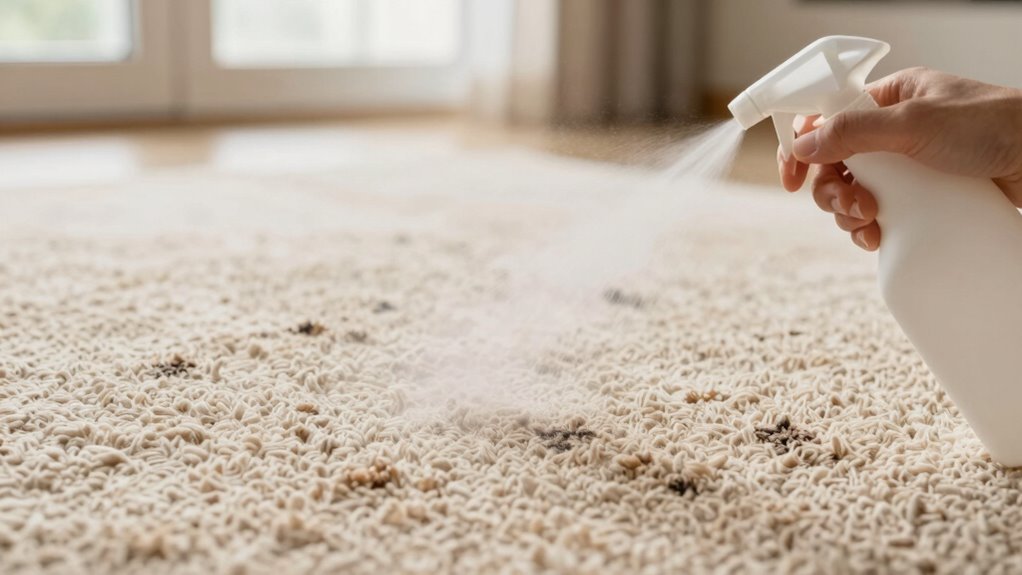

Knowing when your carpet needs rinsing helps keep it clean and odor-free. Rinse if you’ve had pet accidents, food spills, or stubborn stains that vacuuming can’t remove. It’s also helpful to rinse after heavy or sticky residues to prevent mold and further staining. If your carpet looks and smells fresh, rinsing isn’t necessary. To protect your flooring and get the best result, understanding the right times to rinse can make a difference—more tips await if you keep going.
Key Takeaways
- Rinse carpets after pet accidents, food spills, or stubborn stains to remove residues and prevent odors.
- Frequent vacuuming reduces the need for rinsing, especially if the carpet looks and smells clean.
- Rinse when stains have set-in or if residues attract more dirt, leading to further staining or mold growth.
- Avoid rinsing if the carpet is clean, odor-free, and regular vacuuming suffices for maintenance.
- Always dry thoroughly after rinsing to prevent mold or mildew development.
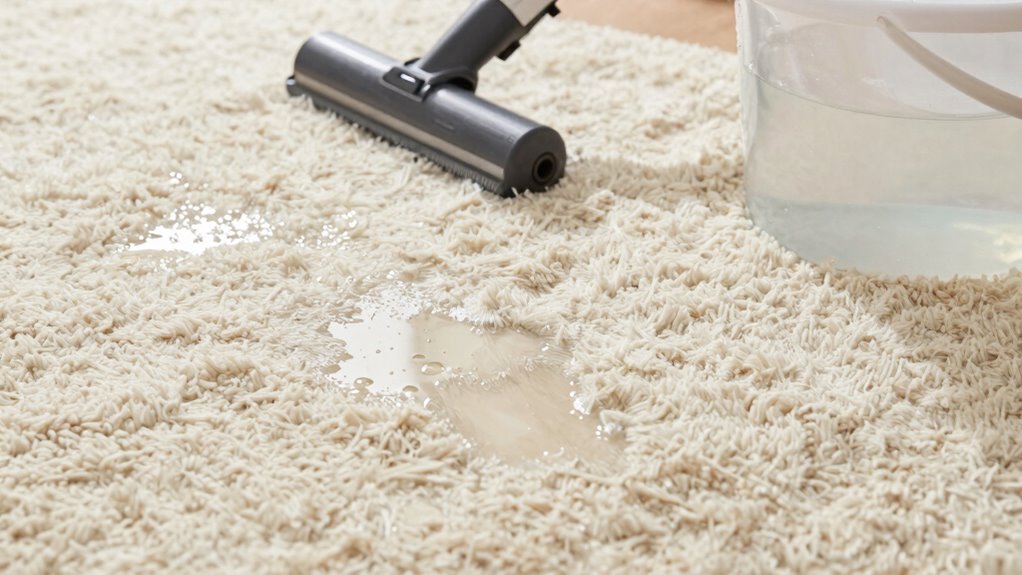
Keeping your carpet clean often requires rinsing to remove residues and stains effectively. Rinsing helps eliminate leftover cleaning solution, dirt, and stubborn stains that vacuuming alone might not fully address. But knowing when to rinse and when it’s unnecessary can save you time and prevent damage. One essential factor is your vacuum frequency. If you vacuum regularly—say, at least once a week—you remove surface dirt and loose debris, reducing the need for frequent rinsing. However, if you notice stains that linger or odors that don’t go away with vacuuming, rinsing becomes vital. It’s also important to contemplate stain removal techniques. For fresh spills, blotting and using spot treatments often suffice, but older or set-in stains usually require a rinse to truly lift the discoloration.
When you’re dealing with heavy or sticky residues, rinsing your carpet helps break down and flush out lingering substances. For example, pet accidents or food spills can leave behind residues that attract more dirt if left untreated. In such cases, rinsing with clean water or a mild cleaning solution ensures no residues are left behind, which could lead to further staining or odors. Proper carpet maintenance involves knowing when rinsing is necessary to avoid damage or mold growth. Conversely, if your carpet only has surface dust or light debris, a good vacuum at the right frequency is enough. Over-rinsing can sometimes damage carpet fibers or cause mold and mildew if not dried properly, so it’s essential to assess the level of soiling carefully.
The key is to remember that rinsing isn’t always necessary after every cleaning session. If your carpet looks fresh and smells clean, and your vacuuming routine keeps dirt at bay, rinsing might be an unnecessary step. On the other hand, if you’re tackling a particularly stubborn stain or a heavily soiled area, rinsing with water or a suitable cleaning solution can make a significant difference. Always follow stain removal techniques tailored to the type of stain—whether it’s enzymatic for pet stains or solvent-based for oil-based spots—and ensure thorough drying afterward to prevent mold. By balancing your vacuum frequency with targeted rinsing when needed, you keep your carpet looking its best without risking damage or lingering issues.
Frequently Asked Questions
How Often Should I Rinse My Carpet for Optimal Cleanliness?
You should rinse your carpet every 6 to 12 months for maximum cleanliness, especially if you notice stains or odors. Rinsing helps with carpet stain removal and odor elimination, preventing dirt buildup. After heavy traffic or spills, consider rinsing sooner. Regular rinsing keeps your carpet fresh, prolongs its lifespan, and maintains a healthy home environment. Don’t wait until it looks dirty—routine rinsing ensures it stays clean and odor-free.
Can Rinsing Damage Delicate or Old Carpets?
Rinsing can damage delicate fibers or old carpets, just like overwatering a fragile plant can cause roots to rot. If your carpet is aged or composed of delicate fibers, aggressive rinsing might weaken its structure or cause shrinkage. To protect your carpet, use gentle cleaning methods and avoid excessive water. When unsure, consult a professional to prevent damage and keep your carpet looking its best.
What Are Signs That My Carpet Needs Rinsing?
You’ll know your carpet needs rinsing if you notice persistent stains or odors that don’t go away with regular cleaning. If stain removal becomes difficult or odors linger after cleaning, rinsing can help eliminate residues. Rinsing also guarantees deep cleaning, removing dirt and cleaning agents that can cause odors or damage over time. If your carpet feels sticky or looks dull, it’s a sign you should rinse for a thorough refresh.
Is Professional Rinsing Necessary or Can I Do It Myself?
You can definitely handle DIY cleaning for rinsing your carpet, but professional services often deliver better results, especially for stubborn stains or deep grime. If you have the right equipment and experience, DIY rinsing saves money and time. However, for thorough, safe cleaning, especially in high-traffic areas or with delicate carpets, investing in professional services is worth it. Consider your carpet’s condition and your comfort level before choosing.
Are There Eco-Friendly Rinsing Methods Available?
You bet there are eco-friendly rinsing options that won’t hurt your wallet or the planet. Green cleaning solutions like vinegar, baking soda, and eco-friendly detergents are effective and safe. These methods are gentle but powerful enough to refresh your carpet without harsh chemicals. Using eco-friendly rinsing keeps your space healthy, saves the environment, and proves that you don’t have to choose between clean and green. It’s a win-win situation!
Conclusion
Remember, sometimes a good rinse isn’t necessary—trust your instincts and assess your carpet’s needs. If it looks stained or smells off, rinsing can do wonders. But if it’s just a regular cleaning, gentle vacuuming might suffice. As the saying goes, “A stitch in time saves nine,” so address carpet issues early before they become bigger problems. Keep an eye on your carpet’s condition, and you’ll keep it fresh and inviting longer.