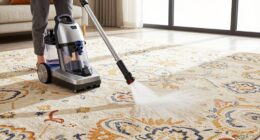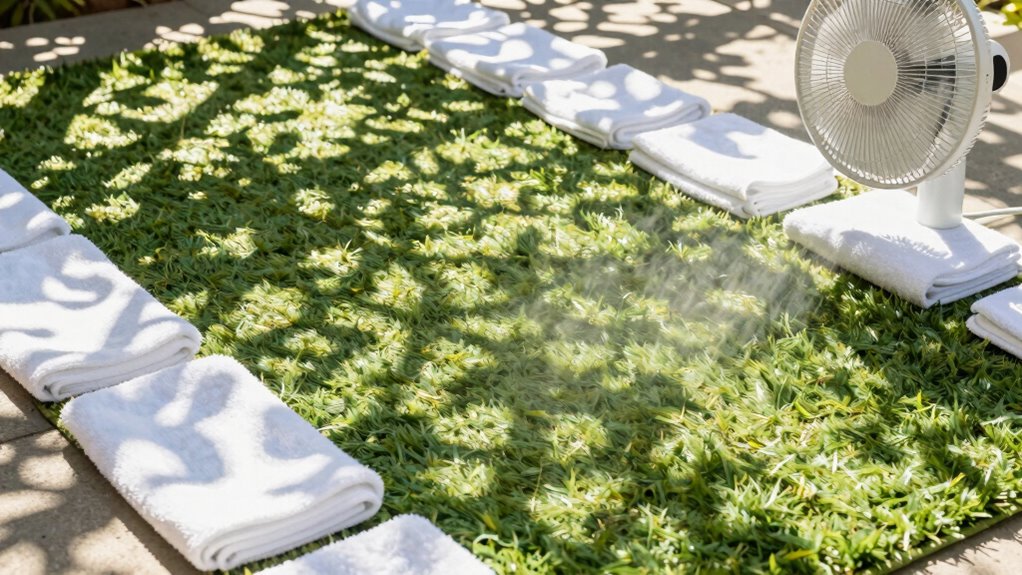
After cleaning your rug, make certain it dries thoroughly to prevent mold and mildew. Promote good air circulation by placing it in a well-ventilated area or outdoors on a dry, sunny day, or use fans and dehumidifiers to speed up the process. Flip the rug to dry both sides completely, and consider targeting stubborn spots with a hairdryer on cool settings. For expert tips on keeping your rug fresh and mildew-free, keep exploring these methods.

Get cleaning gear delivered free with Prime
- Fast, free delivery on millions of items
- Prime Video, Amazon Music and more included
- Member-only deals all year
Key Takeaways
- Ensure thorough air circulation by placing the rug in a well-ventilated area with fans or open windows.
- Flip the rug once the top dries to promote even drying and prevent trapped moisture underneath.
- Use dehumidifiers or fans to accelerate moisture evaporation and keep the environment dry.
- Dry the rug outdoors in warm, dry weather, avoiding prolonged sun exposure to prevent color fading.
- Check regularly for damp spots and address any remaining moisture immediately to prevent mold and mildew growth.

Drying a rug properly is vital to prevent mold, mildew, and damage. When you finish cleaning your rug, the way you dry it can make all the difference in how well it holds up over time. Effective air circulation is key to speeding up the drying process and guaranteeing that moisture doesn’t linger, which could lead to unpleasant odors or fungal growth. You want to create a situation where fresh air constantly moves around the rug, carrying away moisture as it evaporates. To do this, place the rug in a well-ventilated space, ideally with open windows or fans that promote airflow. If possible, lift the rug off the ground using blocks or furniture to allow air to reach all sides, especially the underside, which tends to trap moisture. This technique helps prevent water from pooling and encourages even drying.
When considering drying techniques, it’s important to be strategic. Start by blotting excess water with a clean towel immediately after cleaning to reduce initial moisture. Then, use fans or a dehumidifier to facilitate air circulation. Positioning a fan to blow across the surface of the rug creates a constant breeze that accelerates evaporation. For best results, aim the airflow at different angles or move the fan periodically to cover all areas. If you have access to outdoor space, drying your rug outside in the sun can be highly effective, provided the weather is dry and warm. Sunlight acts as a natural disinfectant and helps evaporate moisture quickly. Just be cautious not to leave it out too long if the sun is very strong, as prolonged exposure can fade colors.
Another useful drying technique involves turning or flipping the rug during the process. Once the top side feels dry, flip it over to ensure the underside dries thoroughly. This step is vital because trapped moisture underneath can cause mold growth if left unchecked. If your rug is large or heavy, consider using a portable clothes dryer or a hairdryer on a cool setting to target any stubborn damp spots. However, avoid high heat, which can damage delicate fibers. Additionally, choosing a space with good air circulation can significantly improve drying efficiency. Throughout this process, constantly check for signs of dampness and adjust your air circulation methods accordingly. Keep the space well-ventilated, use fans effectively, and ensure the rug isn’t left damp for too long. Proper drying techniques combined with good air circulation will help your rug dry faster and stay in excellent condition, preventing the development of mold or mildew that could ruin its appearance and longevity.
As an affiliate, we earn on qualifying purchases.
Frequently Asked Questions
How Long Does It Typically Take for a Rug to Fully Dry?
It usually takes 24 to 48 hours for a rug to fully dry, depending on humidity levels and rug material. If the air is humid, it’ll take longer, so you might want to increase airflow with fans or open windows. Natural fibers like wool dry more slowly than synthetic ones. To speed up drying, elevate the rug and ensure good ventilation, avoiding moisture buildup that can cause mildew.
Can I Speed up the Drying Process Without Damaging the Rug?
Yes, you can speed up the drying process safely. Improve air circulation around the rug by opening windows or turning on fans. Use absorbent materials like towels or old rags to blot excess moisture, especially in thicker areas. Elevate the rug if possible, to allow airflow underneath. These steps help dry the rug faster without risking damage or mold growth, ensuring it stays fresh and mildew-free.
Is It Safe to Use a Hairdryer to Dry a Rug?
Yes, you can use a hairdryer to dry a rug, but you need to follow safety precautions. Keep the dryer on a low or cool setting to avoid damaging fibers or causing static. Maintain a safe distance and move the dryer constantly. For alternative drying methods, consider air drying in a well-ventilated area or using fans. These methods reduce risk and help prevent mildew growth effectively.
What Signs Indicate Mold or Mildew Has Started Forming?
You’ll notice a mildew smell or musty odor on your rug, which indicates mold or mildew has started forming. Look for discoloration signs, such as dark or fuzzy patches, especially in damp areas. These visual cues, combined with a persistent smell, signal you need to act quickly. Removing excess moisture and thoroughly cleaning the affected area can help prevent further mold growth and keep your rug fresh.
Should I Avoid Sunlight While Drying My Rug?
You should avoid prolonged sunlight exposure while drying your rug, as it can cause rug fading. For example, if you leave a rug in direct sunlight for several hours, the vibrant colors may fade unevenly, ruining its appearance. Instead, opt for indirect sunlight or air drying in a shaded area. This helps prevent mold or mildew growth without risking damage from harsh sun rays, keeping your rug vibrant and clean.
As an affiliate, we earn on qualifying purchases.
Conclusion
To keep your rug fresh and mold-free, make sure it dries completely after cleaning. Think of it like this: if you leave even a little moisture behind, it’s like inviting trouble. By following proper drying steps—air drying in a well-ventilated space or using fans—you prevent mildew from taking hold. Remember, thorough drying isn’t just a tip; it’s the key to maintaining a clean, healthy rug that stays beautiful for years to come.
As an affiliate, we earn on qualifying purchases.
As an affiliate, we earn on qualifying purchases.
Halloween Picks
halloween
As an affiliate, we earn on qualifying purchases.