
To vacuum stairs without missing the edges, use a vacuum with crevice or brush attachments to target corners and sides closely. Slowly move along each step, angling the nozzle toward edges and using zigzag motions to loosen debris. Pay special attention to the front edge of each tread and wipe down wooden surfaces afterward for a thorough clean. For more tips on perfecting your technique and maintaining your stairs, keep exploring these strategies.
Key Takeaways
- Use a vacuum with crevice or brush attachments to reach edges and corners effectively.
- Angle the vacuum toward edges and wiggle or zigzag to loosen debris.
- Move slowly and methodically across each step for thorough cleaning.
- Focus on the front edge of each tread and along side walls to remove trapped dust.
- Combine vacuuming with wiping for wooden or smooth stairs to ensure complete cleanliness.
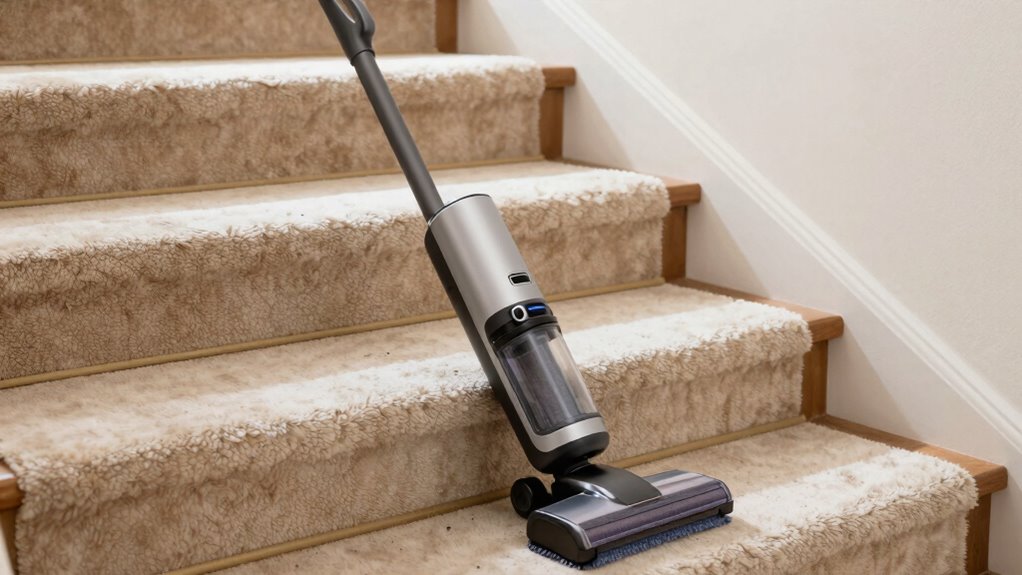
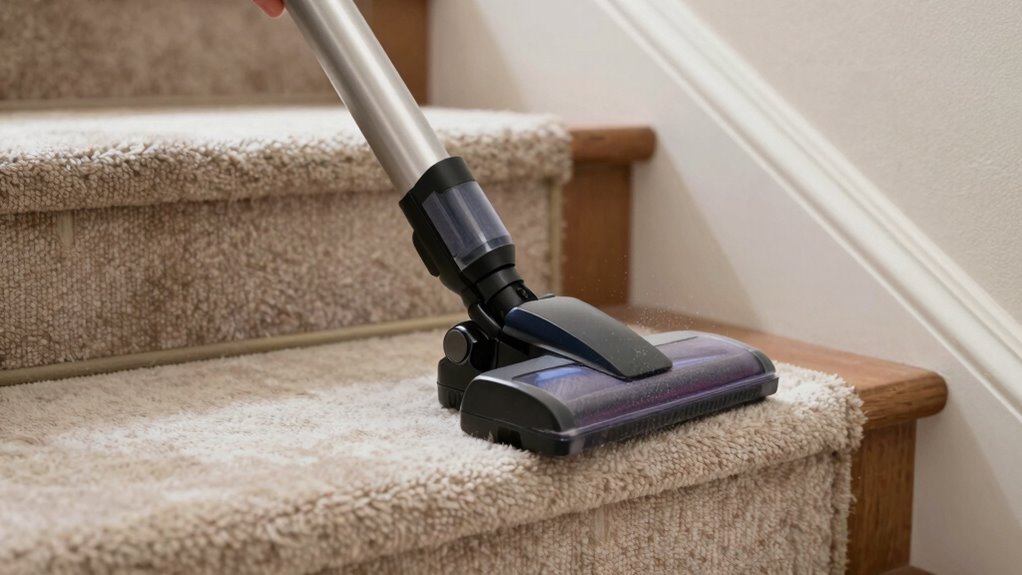
Have you ever struggled to vacuum stairs effectively? It’s a common issue. Stairs can be tricky because of their shape and the angles involved, making it easy to miss spots or neglect proper stair tread care. However, mastering the right technique can make your job easier and more thorough. One key aspect is focusing on edge cleaning. The edges of each stair tend to trap dust, crumbs, and pet hair, and neglecting these areas can leave your stairs looking less than spotless. To tackle this, start by choosing a vacuum with a crevice tool or a brush attachment designed for detailed cleaning. These tools allow you to get into tight corners and along the edges where dust and debris often hide. When you’re vacuuming, don’t just run over the center of each tread—angle your tool toward the edges to lift dirt from the corners and along the sides. A quick wiggle or zigzag motion helps loosen debris stuck in the corners, ensuring you don’t miss any spots.
Another important aspect is stair tread care. Each tread gets the most wear, so it’s essential to clean it thoroughly without damaging the material. If your stairs are carpeted, adjust the vacuum height to avoid pulling or fraying the fibers. For bare wood or laminate stairs, be gentle to prevent scratches. Regularly vacuuming the surface helps maintain the appearance and extends the lifespan of your stairs. Pay special attention to the front edge of each tread, where a lot of dirt gets pushed and accumulated. Use the vacuum’s edge cleaning feature or a handheld attachment to reach this area effectively. Moving slowly and methodically ensures you pick up everything, especially in the corners where dust tends to settle. Being aware of sustainable cleaning practices can also improve how you care for your stairs over time.
It’s also helpful to develop a consistent routine so you don’t let dirt build up. After vacuuming, consider wiping down the stair treads with a damp cloth if they are made of wood or a smooth surface. This extra step keeps the stairs looking fresh and helps preserve their condition. The key is to be deliberate with your movements—cover each step thoroughly, focusing on the edges and corners. By doing so, you prevent dirt from accumulating and reduce the need for deep, intensive cleaning later on. Proper stair tread care combined with diligent edge cleaning makes a noticeable difference in the cleanliness and longevity of your stairs. With practice, vacuuming stairs becomes quicker and more effective, leaving your staircase spotless and well-maintained.
Frequently Asked Questions
Can I Use a Standard Vacuum on All Types of Stairs?
You can use a standard vacuum on most stairs, but it may not be ideal for all types. Regular vacuum maintenance guarantees it works well, and having specialized stair cleaning tools can make the job easier and more effective. For carpeted stairs, use a vacuum with good suction and a brush attachment. For wood or tile stairs, a lightweight, adjustable vacuum with a crevice tool helps reach edges and corners, ensuring a thorough clean.
How Often Should I Vacuum My Stairs for Optimal Cleanliness?
You should vacuum your stairs at least once a week for ideal cleanliness, but if you have pets or allergies, consider vacuuming more frequently. Regular staircase maintenance helps prevent dirt buildup and maintains a fresh look. Adjust your vacuuming frequency based on how much foot traffic your stairs get, ensuring you keep them clean and safe. Consistent vacuuming also extends the life of your stairs’ surfaces.
What’s the Best Way to Reach Under Stair Handrails?
To reach under stair handrails, adjust your vacuum’s attachment to a smaller, angled brush or crevice tool. Staircase design varies, so consider the handrail materials—wood, metal, or glass—when choosing tools. For wooden handrails, a soft brush prevents scratches, while a narrow crevice tool works well for metal or glass. Carefully maneuver under the handrail, ensuring you clean all tight corners and hard-to-reach areas thoroughly.
Are There Specific Vacuum Attachments Recommended for Stairs?
Yes, there are specific vacuum attachments you should utilize for stairs. Look for stair cleaning tools like small brush nozzles and crevice tools, which help reach tight corners and edges. These attachments make it easier to clean along the edges and under handrails. Using the right vacuum attachments guarantees you get a thorough clean, effectively removing dust and debris from every part of your stairs without missing any spots.
How Do I Prevent My Vacuum From Damaging Delicate Stair Surfaces?
Did you know that over 60% of homeowners accidentally damage delicate flooring with improper vacuuming? To prevent this, always use a vacuum brush designed for delicate surfaces. Gently glide the brush over your stairs, avoiding excessive pressure. This protects your delicate flooring from scratches and dents. Regularly check your vacuum’s attachments and adjust the settings to guarantee gentle cleaning, keeping your stairs looking pristine without any damage.
Conclusion
Think of vacuuming stairs like tending a delicate garden; each step is a flower that needs careful attention. By following the right technique, you guarantee no petal is missed, and your stairs stay pristine. When you approach with patience and precision, you transform a simple chore into an artful act of care. Soon, your staircase becomes a well-maintained pathway—beautiful, inviting, and free of dust—reflecting the harmony of your attentive touch.