Normal rug shedding is common, especially with natural fibers like wool or new rugs, and usually involves loose fibers or small fibers collecting on surfaces. Excessive shedding, however, shows signs like bald patches, fuzzy patches, or fibers piling up despite regular cleaning. Factors like fiber type, quality, and age influence shedding levels. If your rug keeps shedding more than usual, specific causes may be involved. Keep exploring to learn how to distinguish normal from problematic shedding and how to care for your rug effectively.
Key Takeaways
- Normal shedding occurs mainly during initial months and involves loose fibers, decreasing over time with proper care.
- Excessive shedding is persistent, visible as fuzz balls, thinning patches, or fiber buildup beyond the break-in period.
- Natural fibers like wool shed more initially, while synthetic fibers generally shed less and more gradually.
- Proper maintenance, including gentle vacuuming and rug rotation, helps control normal shedding, but ongoing issues may require professional help.
- Signs of a problem include worsening shedding, fiber loss despite cleaning, and damage or fraying of the rug fibers.
What Is Normal Rug Shedding and When Is It Excessive?
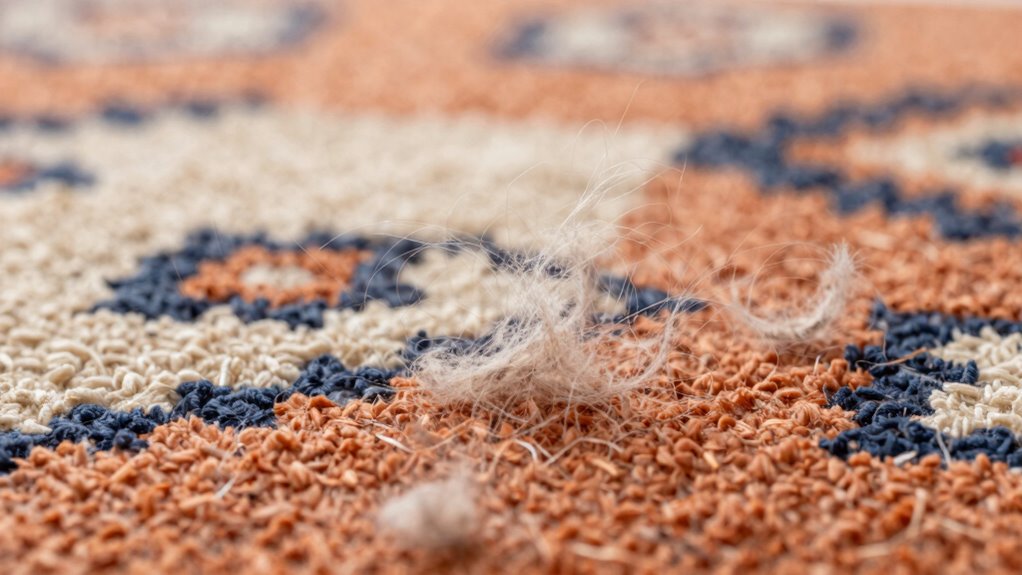
Rug shedding is a common occurrence that varies depending on the type of rug and its materials. In the early stages, shedding often results from fiber manufacturing processes, where loose fibers are naturally released. This is normal for many new rugs and usually decreases with regular rug maintenance. You might notice fibers coming loose during vacuuming or foot traffic, but this shouldn’t cause concern if it lessens over time. Excessive shedding, however, persists beyond the initial break-in period or worsens with cleaning, indicating a possible problem. Understanding what’s normal helps you differentiate between typical shedding and signs of a deeper issue. Proper rug maintenance, like gentle vacuuming and avoiding harsh cleaners, can minimize shedding and prolong your rug’s lifespan. Additionally, selecting high-quality rugs made from durable fibers can reduce the amount of shedding over time. Choosing durable fibers can also help ensure your rug maintains its appearance and reduces shedding in the long run. Being aware of fiber quality can assist in making informed decisions when purchasing new rugs. Moreover, understanding fiber manufacturing processes can provide insight into how shedding occurs and how to manage it effectively. Recognizing fiber treatments can further help in selecting rugs that are less prone to shedding and more resistant to wear.
How Can You Tell If Your Rug Is Shedding Too Much?
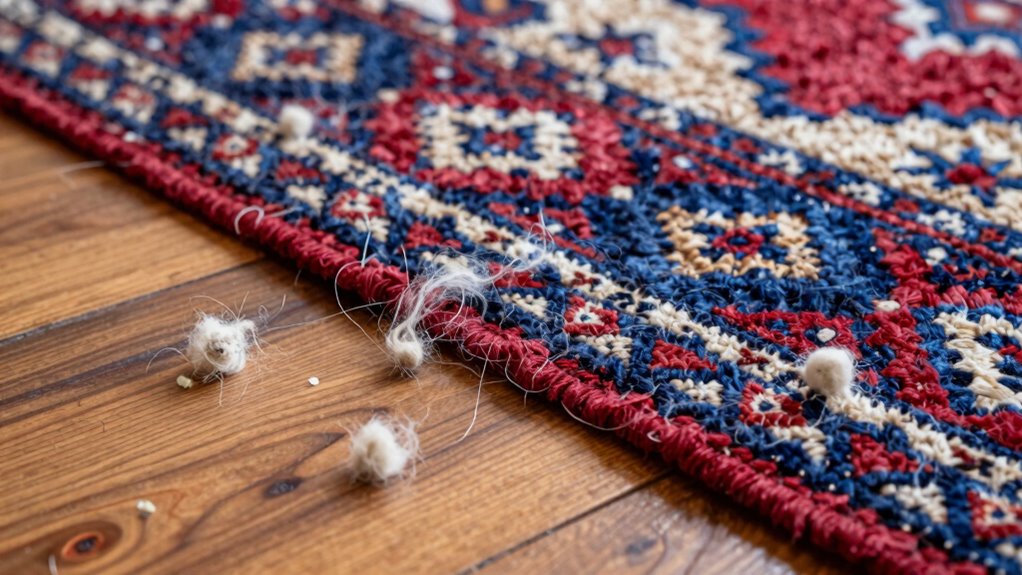
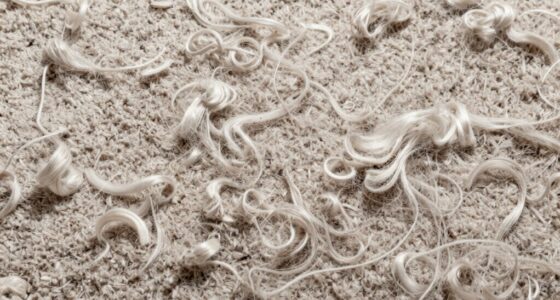
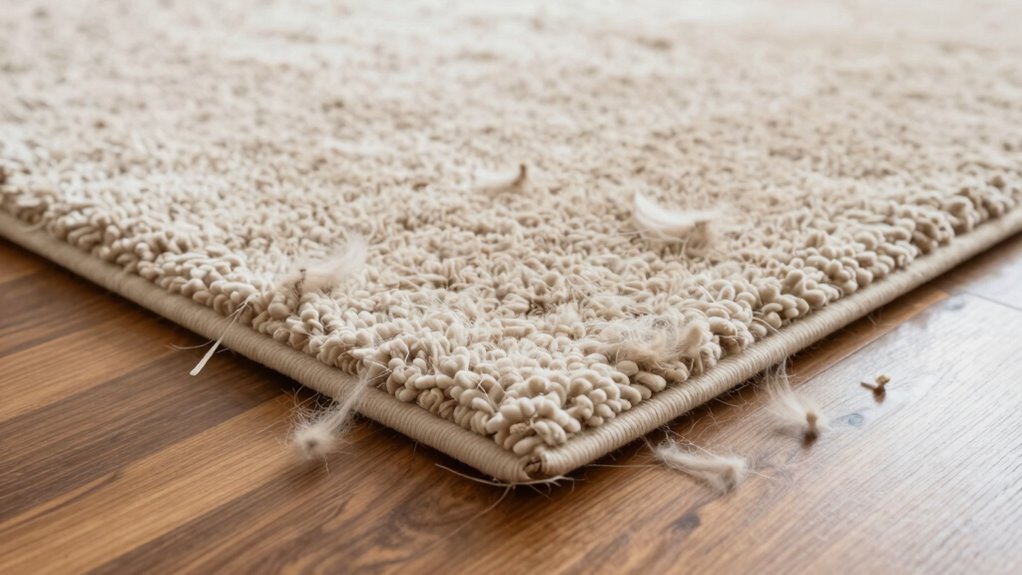
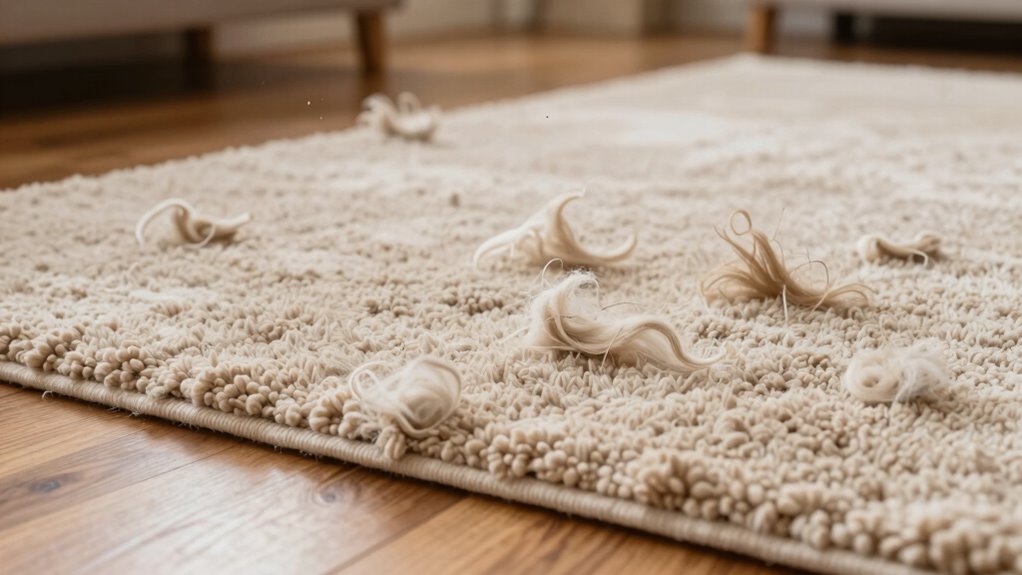
If you notice a lot of fuzz balls around your rug, it might be shedding excessively. Sudden thick patches of hair or fibers can also be signs of over-shedding. Additionally, if the rug’s appearance changes noticeably, it’s time to check if shedding has become a problem. Understanding rug fibers can help you determine whether the shedding is normal or indicates a need for replacement. Recognizing the manufacturing process behind your rug can also provide insights into its durability and shedding tendencies. Considering the fiber composition can further clarify why certain rugs shed more than others.
Visible Excessive Fuzz Balls
When you notice tiny fuzz balls collecting on your floors or furniture, it’s a clear sign your rug might be shedding excessively. You’ll see clumps of fibers forming along edges or scattered across surfaces. If this happens frequently, it’s a good idea to evaluate your vacuum frequency—vacuuming too often or not enough can affect shedding. Additionally, consider fiber treatments; some rugs come with protective coatings that reduce fiber loss. Excess fuzz balls outside normal wear might indicate your rug’s fibers are breaking down prematurely. Keep an eye on how much fuzz accumulates over time. Regular, gentle vacuuming combined with fiber treatments designed for delicate fibers can help minimize visible fuzz balls and reduce ongoing shedding issues.
Sudden Thick Shedding Areas
Noticeable thick patches of shedding that appear suddenly on your rug can signal excessive fiber loss. These areas often indicate that the rug’s fibers are loosening or breaking, possibly due to poor fiber treatments or inadequate rug padding. To assess if your rug’s shedding is problematic, consider the following factors:
| Cause | Indicator | Solution |
|---|---|---|
| Fiber treatments | Excessive shedding in patches | Use rugs with proper fiber treatments |
| Rug padding | Uneven shedding in certain spots | Replace or add quality rug padding |
| Wear and tear | Sudden thick patches | Professional cleaning or repair |
| Manufacturing defect | Inconsistent shedding | Contact manufacturer or replace |
| Environmental factors | Humidity or sunlight exposure | Improve rug placement and care |
| Natural Fiber | Thicker shedding in rugs made from natural fibers | Consider fiber type when selecting rugs |
Additionally, environmental conditions like humidity can accelerate fiber deterioration, leading to excessive shedding over time. Proper rug care practices can help mitigate some of these issues and prolong the life of your rug.
Rug Appearance Changes
How can you tell if your rug is shedding too much? One sign is noticeable changes in its appearance, like thinning patches or increased fuzziness around the fibers. During rug manufacturing, fiber treatments are applied to reduce shedding, but if these treatments wear off or weren’t effective, shedding can become more visible. You might see loose fibers on the surface or fibers collecting in high-traffic areas. If the rug’s surface looks uneven or it appears to be losing its plushness quickly, these are clues that shedding is excessive. Proper rug care and regular maintenance can help minimize shedding and extend the life of your rug. Additionally, understanding fiber treatments and their durability can provide insight into why shedding occurs. Recognizing that initial break-in periods often involve some shedding can help you distinguish normal from problematic shedding. Normal shedding typically decreases over time, while persistent shedding beyond this phase may indicate an issue. Recognizing these appearance changes helps you determine whether the shedding is normal or if you should take steps to address it. Understanding rug shedding and its causes can help you better manage your rug’s condition over time.
Why Does My Rug Shed? Common Causes Explained
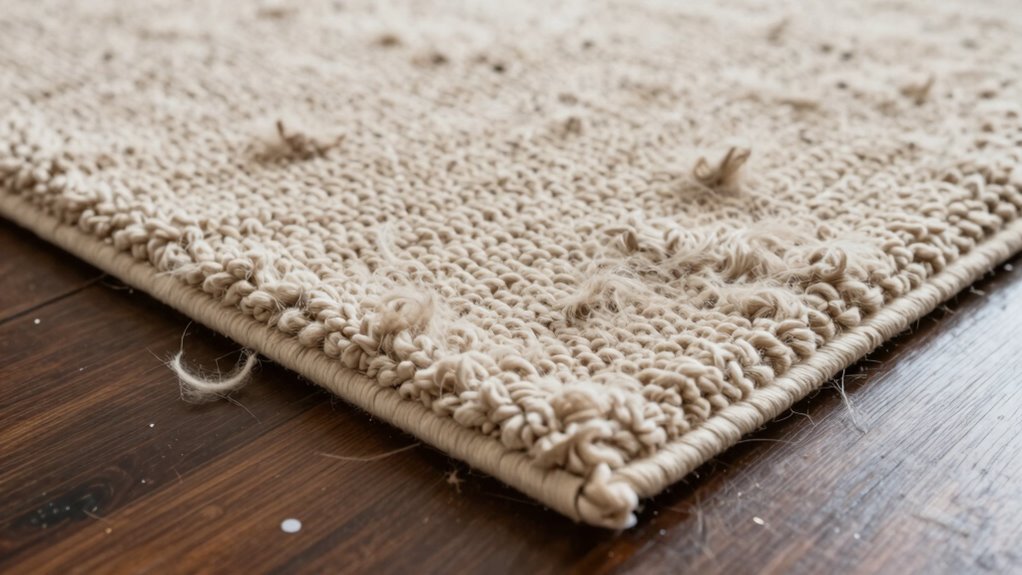
Rug shedding is a common issue that can leave your floors covered in loose fibers, and understanding its causes can help you manage or prevent it. One reason for shedding is fiber dyeing, where excess dye particles can loosen over time. Rug padding also plays a role; poor padding can cause fibers to become more abrasive and shed more easily. Additionally, manufacturing flaws or low-quality materials may result in loose fibers that shed during regular use. Over-vacuuming or frequent foot traffic can irritate the fibers and accelerate shedding. Being aware of these factors allows you to take steps like choosing better materials, using appropriate padding, and gentle cleaning methods. Proper rug care techniques can help minimize shedding and extend the life of your rug. This helps keep shedding under control and prolongs your rug’s lifespan.
Does Rug Fiber Type Affect How Much It Sheds?

The type of fiber in your rug plays a big role in how much it sheds. Longer fibers tend to shed more initially, especially if they aren’t tightly woven. Natural fibers like wool often shed more than synthetic options such as nylon or polyester. Additionally, the fiber weight of the rug can influence shedding, with heavier, denser fibers generally shedding less over time.
Fiber Length and Shedding
Fiber length plays a significant role in shedding because shorter fibers tend to loosen more easily from the rug’s surface. When fibers are shorter, they often have lower fiber quality, which increases the shedding frequency. You’ll notice more loose fibers on the surface and in your environment with shorter fibers. Longer fibers generally stay more secure, reducing shedding. The fiber length impacts durability and appearance, making it a key factor in choosing a rug. Keep these points in mind:
- Shorter fibers shed more often due to looseness
- Fiber quality influences shedding severity
- Longer fibers tend to shed less
- Shedding can decrease over time as fibers settle
- Fiber quality also affects how well fibers stay secured in the rug
Understanding fiber length helps you gauge how much shedding to expect and select rugs that fit your needs.
Natural vs Synthetic Fibers
Whether you choose natural or synthetic fibers, the type of material can substantially influence how much your rug sheds. Natural fibers like wool or cotton tend to shed more initially because of loose fibers that need to settle. Synthetic fibers such as nylon or polyester generally shed less over time, requiring minimal fiber maintenance. However, shedding myths suggest that synthetic rugs never shed, which isn’t true—some may shed less but still require care. The fiber type affects how fibers bond and loosen, impacting shedding levels. Choosing the right material depends on your preferences for durability and upkeep. Additionally, fiber bonding plays a role in shedding behavior, influencing how tightly fibers are held together. Proper manufacturing techniques, like fiber treatment, can also reduce shedding and improve rug longevity. Moreover, manufacturing quality significantly impacts how much a rug sheds during its lifespan, with higher-quality production often resulting in less shedding. Manufacturing processes are designed to enhance fiber retention and minimize shedding, making higher-quality rugs a better investment for long-term use. Understanding these differences helps you manage expectations and maintain your rug properly, ensuring it looks good longer and shedding remains manageable.
When Should You Call a Professional About Rug Shedding?
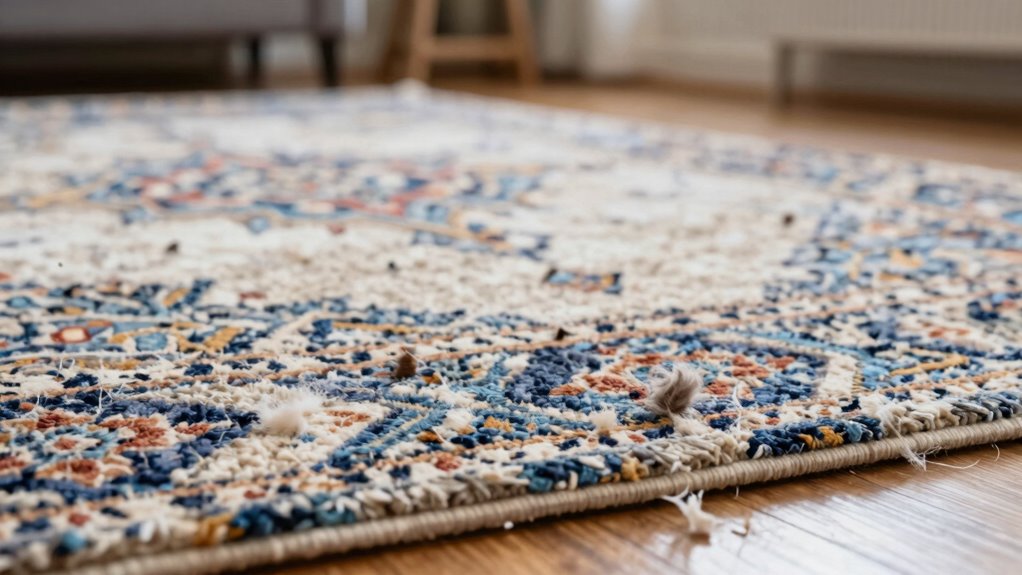
If your rug continues to shed excessively despite regular vacuuming and maintenance, it’s time to contemplate calling a professional. Persistent shedding might indicate issues like dye bleeding or poor backing quality that you can’t remedy yourself. A professional can assess whether the shedding is normal or a sign of deeper problems. Consider calling an expert if:
If shedding persists despite cleaning, consult a professional to diagnose underlying issues.
- Shedding worsens over time rather than stabilizing
- You notice dye bleeding onto your floor or furniture
- The backing feels fragile or deteriorating
- Shedding persists even after cleaning and proper care
- The rug’s fiber integrity appears compromised or deteriorating, which may require specialized evaluation.
Professionals can evaluate the rug’s fiber integrity and identify if it’s a manufacturing defect or material issue. Addressing these problems early can save your rug from further damage and ensure it stays beautiful longer.
How Can I Reduce Shedding and Keep My Rug Looking Fresh?
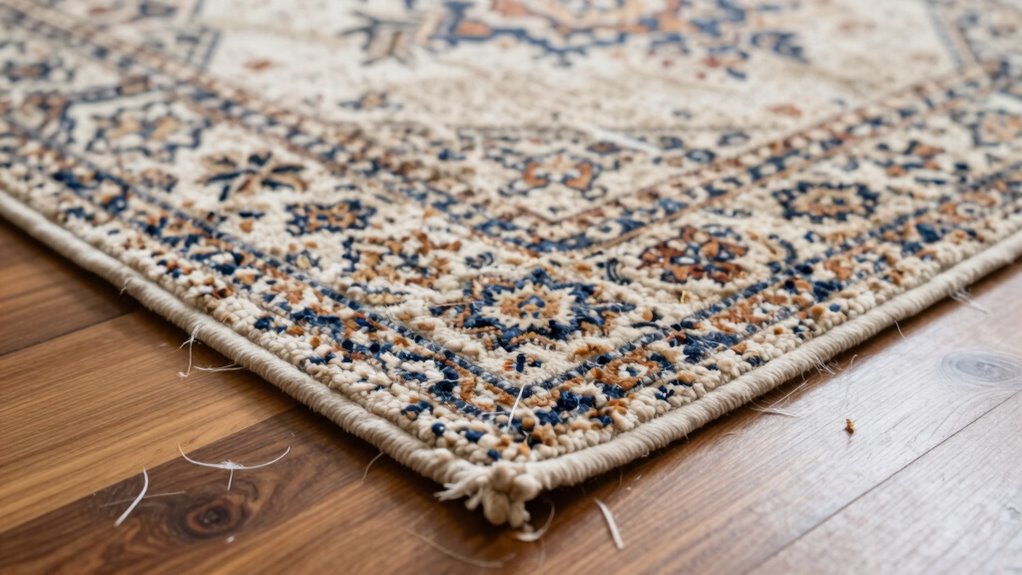
To reduce shedding and keep your rug looking fresh, regular maintenance is essential. Start by vacuuming frequently with a gentle brush attachment to remove loose fibers and pet hair. If shedding persists, consider professional rug repair to fix damaged or worn fibers that may contribute to excess shedding. Pet hair removal can be made easier with rubber gloves or a lint roller, especially in high-traffic areas. Avoid harsh cleaning products that can weaken fibers and increase shedding. Instead, gently shake or beat the rug outdoors to loosen loose fibers without damaging the rug’s structure. Consistent care helps maintain the rug’s appearance and reduces shedding, ensuring your rug stays vibrant and inviting.
What Are the Best Cleaning Tips to Minimize Shedding?
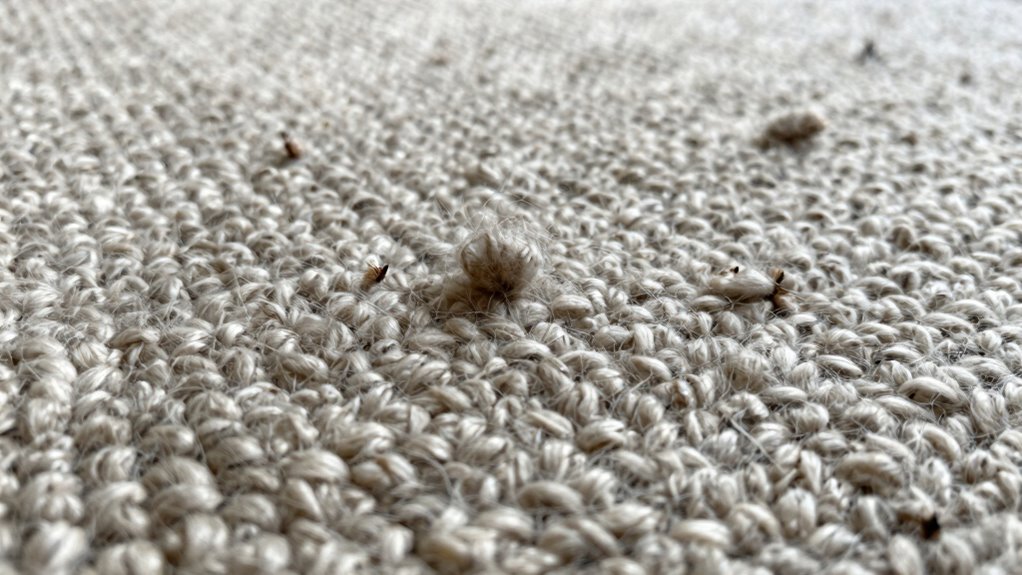
Regular cleaning is one of the most effective ways to minimize shedding on your rug. Consistent vacuum maintenance guarantees dirt and loose fibers are removed without damaging the rug’s structure. Use a vacuum with gentle suction and a brush attachment to prevent fiber pullout. Regularly clean spills promptly to prevent stains and fiber damage, which can lead to increased shedding. Additionally, avoid harsh chemicals that weaken fibers. Keep your rug protected from direct sunlight to prevent fiber deterioration. Rotate the rug periodically to distribute wear evenly. Consider professional deep cleaning once or twice a year to remove embedded dirt. Maintaining these habits helps preserve fibers, reduce shedding, and keep your rug looking fresh longer.
- Use a gentle vacuum with proper maintenance
- Clean spills immediately to prevent stains
- Rotate the rug regularly to spread wear
- Avoid harsh chemicals that weaken fibers
Why Do New Rugs Shed More Than Older Ones?
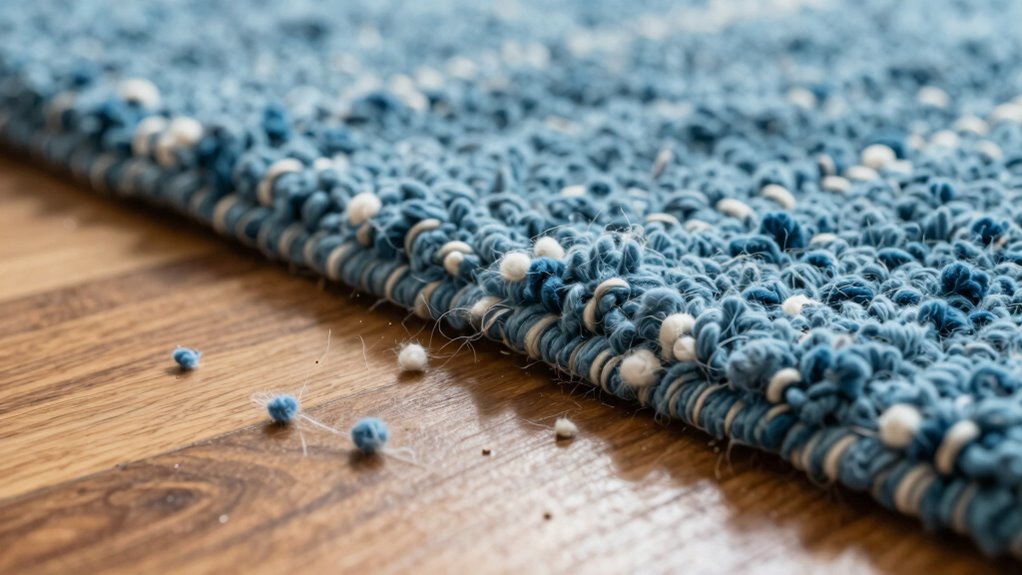
New rugs tend to shed more than older ones because they still contain loose fibers from the manufacturing process. This initial shedding is common and usually decreases over time with proper rug maintenance. As fibers loosen, they can fall out, impacting the rug’s aesthetic appeal and making it appear worn prematurely. Regular vacuuming helps remove these loose fibers and promotes healthier rug fibers. Additionally, avoiding harsh cleaning methods preserves the rug’s surface and reduces the amount of shedding. Keep in mind that excessive shedding isn’t necessarily a sign of poor quality but rather a natural phase for new rugs. Once the loose fibers are gone, you’ll notice less shedding, and your rug will maintain its beauty longer. Proper maintenance ensures your rug stays attractive and vibrant over time.
Which Rug Materials Shed Less and Last Longer?
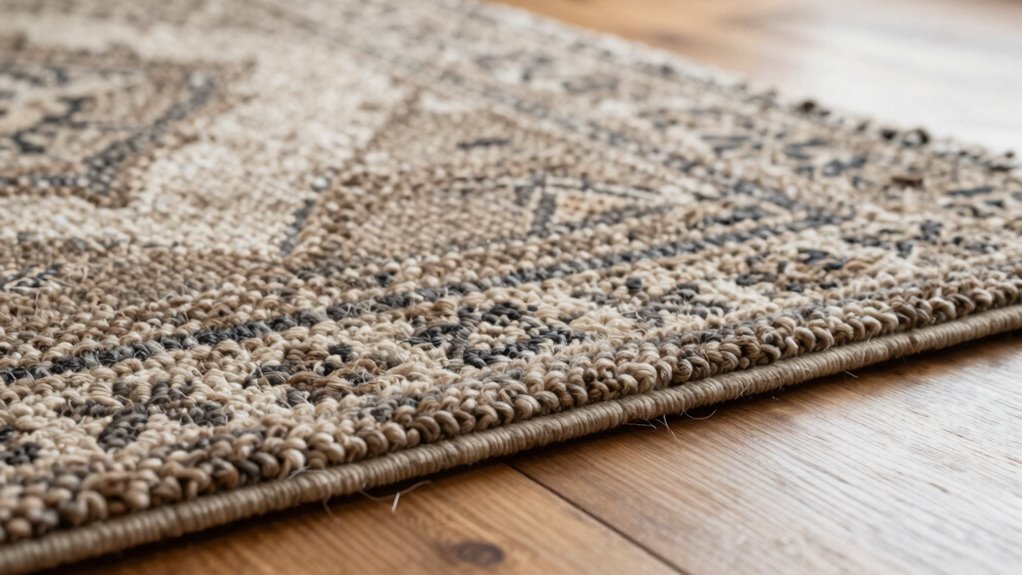
Choosing the right rug material can substantially reduce shedding and extend the rug’s lifespan. To get the most durable and low-shedding area rugs, focus on fibers with high durability. Materials like wool, nylon, and polypropylene are known for their fiber durability, making them excellent choices. Wool, in particular, tends to shed less over time and resists wear. Nylon offers outstanding resilience and longevity, while polypropylene is affordable and resistant to moisture and stains. These fibers maintain their structure longer, reducing shedding and ensuring your rug stays beautiful for years. Keep in mind that the quality of construction also affects shedding. Opt for high-quality rugs with dense knots or fibers for the best results in longevity and shedding reduction.
Choosing durable fibers like wool, nylon, and polypropylene reduces shedding and extends rug life.
- Wool rugs shed less and last longer
- Nylon offers excellent fiber durability
- Polypropylene is affordable and durable
- Dense knots improve longevity and reduce shedding
What Should You Do If Your Rug Keeps Shedding Excessively?
If your rug continues to shed excessively despite choosing durable fibers like wool, nylon, or polypropylene, it’s time to take specific steps to address the issue. Regular rug maintenance, like vacuuming with a gentle setting, helps remove loose fibers and reduces shedding. Consider using a rug pad to minimize friction that causes fibers to loosen. If pet allergies are a concern, frequent cleaning becomes even more vital to prevent allergens from accumulating. Additionally, avoid aggressive vacuuming that can damage the rug. Here’s a quick guide:
| Step | Action | Purpose |
|---|---|---|
| Vacuum regularly | Use a gentle brush setting | Reduce loose fibers and allergens |
| Rotate the rug | Change its position weekly | Even wear and shedding |
| Professional cleaning | Schedule annually | Deep clean and preserve fibers |
| Use a rug pad | Place underneath | Minimize friction and shedding |
Proper rug maintenance keeps shedding manageable and helps maintain a healthy environment.
Frequently Asked Questions
Can Rug Shedding Be a Sign of Poor Quality?
Yes, rug shedding can be a sign of poor quality. Low fiber quality or manufacturing defects often cause excessive shedding, making your rug look worn quickly. If you notice persistent shedding beyond the initial few weeks, it’s likely a quality issue. To avoid this, choose rugs made from high-quality fibers and reputable manufacturers. Proper care can also help reduce shedding and extend your rug’s lifespan.
How Long Does Typical Rug Shedding Last?
Typically, rug shedding lasts for a few weeks to a few months, depending on fiber types like wool or synthetic fibers. During this shedding timeline, you’ll notice loose fibers gradually decreasing as the rug’s fibers settle. To minimize shedding, vacuum regularly and avoid excessive agitation. Keep in mind that natural fiber rugs shed more initially, but this usually stabilizes over time, making your rug look better and last longer.
Does Vacuuming Increase Rug Shedding?
Vacuuming doesn’t increase rug shedding; in fact, it helps prevent excessive fibers from accumulating. Think of it like trimming a tree’s branches—regular grooming keeps it healthy. By vacuuming frequently, you remove loose fibers and dust, reducing shedding over time. Aim for consistent vacuum frequency for shedding prevention, especially with shedding rugs, to keep your space tidy and your rug looking its best without causing more fibers to fall out.
Are Synthetic Rugs Less Likely to Shed Than Natural Fibers?
Synthetic rugs are generally less likely to shed than natural fiber rugs because of their synthetic durability. You’ll notice they shed less over time, making cleanup easier. Natural fiber rugs, on the other hand, often offer more softness but tend to shed more initially. If you want a rug that combines durability with minimal shedding, synthetic options are your best bet, providing long-lasting beauty with less hassle.
Is Professional Cleaning Necessary for Shedding Rugs?
Imagine a gentle breeze lifting loose fibers from your rug’s surface—professional cleaning isn’t always necessary for shedding rugs. Regular care tips like vacuuming with a brush attachment and gentle spot cleaning often suffice. However, if shedding persists or worsens, a deep cleaning using specific methods can help. Trust your instincts, but know that routine maintenance usually keeps shedding in check, making your rug look fresh and vibrant.
Conclusion
Ultimately, understanding the subtle signs and shedding specifics helps you distinguish between normal nuisance and notable neglect. By staying savvy about synthetic and natural fibers, scheduling swift inspections, and adopting simple cleaning strategies, you can keep your rug looking pristine and plush. Remember, prompt patience prevents persistent problems. So, stay vigilant, handle hassle early, and enjoy a beautifully balanced, shedding-safe space that sparkles and stays splendid for years to come.