
Air Changes Per Hour (ACH) shows how many times your home’s indoor air refreshes each hour. It helps you understand how well your ventilation system removes pollutants like dust, allergens, and humidity. Higher ACH means better air quality and circulation. Several factors affect ACH, including system types and habits. To create a healthier home, you can learn ways to optimize ACH—continue exploring to discover practical tips and guarantee your indoor air stays fresh and safe.
Key Takeaways
- ACH measures how many times indoor air is replaced each hour, affecting pollutant removal and air quality.
- Higher ACH levels indicate better ventilation, reducing dust, allergens, and airborne viruses at home.
- Ventilation systems and occupant habits influence ACH, impacting indoor air freshness and humidity control.
- Proper ACH levels vary by room type, with kitchens and bathrooms needing more frequent air exchange.
- Regular assessment and system maintenance ensure effective ACH, promoting healthier indoor environments.
What Is Air Changes Per Hour (ACH) and Why Does It Matter?
Have you ever wondered how quickly fresh air replaces the stale air inside a space? That’s where Air Changes Per Hour (ACH) comes in. ACH measures how many times the air inside a room gets replaced within an hour, directly impacting indoor pollutants. Poor air circulation can trap dust, allergens, and other indoor pollutants, making indoor air quality worse. A higher ACH means better air circulation, which helps remove contaminants and refreshes the environment. It’s especially important in spaces like kitchens, offices, or homes with pets. Knowing your ACH helps you understand how well your space is ventilated and whether it needs more airflow. Achieving an optimal ACH often involves considering free floating particles and ensuring proper ventilation strategies. Improving airflow dynamics can further enhance the effectiveness of your ventilation efforts, especially when considering air quality management practices. Additionally, understanding ventilation standards can guide you in selecting appropriate solutions for your space.
How Do You Measure Your Home’s ACH?
Measuring your home’s ACH involves a straightforward process that helps you determine how effectively your space is ventilated. To assess air quality, you can use measurement methods like smoke tests, tracer gas tests, or digital air quality monitors. Smoke tests involve releasing a harmless smoke or vapor and observing how quickly it disperses, indicating airflow efficiency. Tracer gas tests use a safe gas, like carbon dioxide, and measure how fast it’s cleared, providing precise ACH data. Digital monitors can track air quality parameters over time, giving you real-time insights. Additionally, understanding your home’s ventilation system performance is crucial for maintaining healthy indoor air quality. Proper air exchange rates are essential for reducing indoor pollutants and enhancing overall comfort. Monitoring your indoor air quality regularly helps you make informed decisions about ventilation improvements and maintain a healthier living environment. Incorporating air quality standards into your assessment ensures your space meets recommended safety guidelines.
What Are the Recommended ACH Levels for Different Rooms?
Ever wonder what the ideal ACH levels are for different rooms in your home? Maintaining proper air quality standards depends on following ventilation guidelines tailored to each space. Generally, living areas like bedrooms and living rooms should have an ACH of 4 to 6 to ensure fresh air without excessive energy use. Kitchens and bathrooms, where humidity and odors are higher, benefit from 10 to 15 ACH for better air exchange. Proper ventilation systems ensure these ACH levels are maintained effectively over time. Utilizing air exchange rates helps determine the necessary airflow to meet health and comfort standards. Understanding air change per hour is essential for selecting the right ventilation strategies for each room. Additionally, air filtration can further improve indoor air quality by removing pollutants and allergens. Here’s a quick reference:
| Room Type | Recommended ACH |
|---|---|
| Living rooms, bedrooms | 4-6 ACH |
| Kitchens, bathrooms | 10-15 ACH |
| Basements | 6-8 ACH |
Adhering to these levels helps optimize indoor air quality and meets ventilation standards for comfort and health. Additionally, regularly monitoring air quality metrics can help ensure that your ventilation system maintains these recommended ACH levels effectively.
How Do Different ACH Levels Impact Indoor Air Quality and Ventilation?
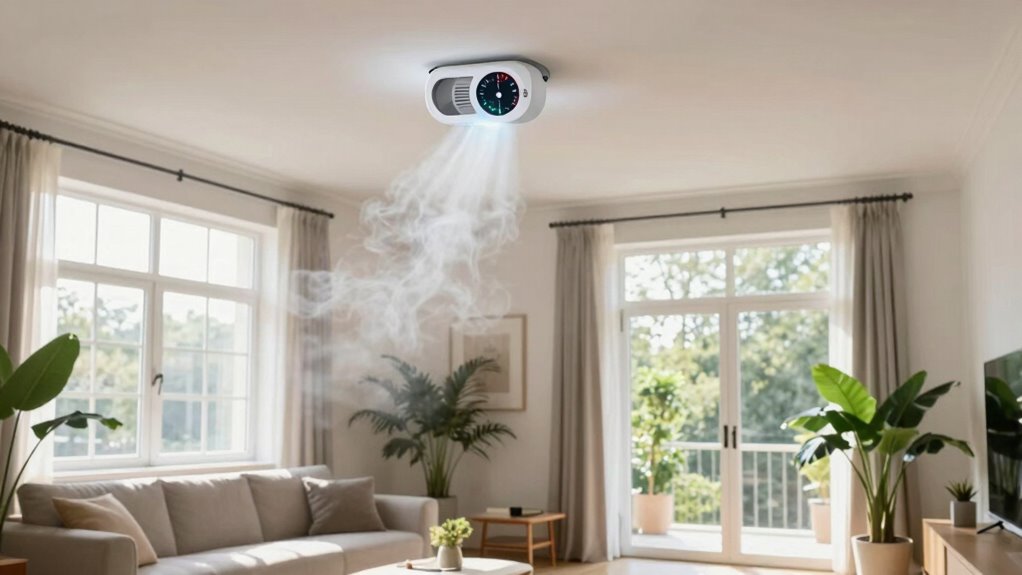
Different ACH levels directly influence how effectively your indoor air is refreshed and how well pollutants are removed. Higher ACH improves air quality by reducing dust, allergens, and airborne viruses, aligning with ventilation standards. Conversely, low ACH can cause stale air, humidity buildup, and increased indoor pollutants. Optimal ACH levels ensure maximum air exchange efficiency and help maintain a healthy indoor environment. Maintaining proper ACH also supports air filtration effectiveness, ensuring your ventilation system performs optimally. Additionally, appropriate ACH rates help prevent unwanted humidity, which can lead to mold growth and other issues. Regularly monitoring and adjusting ACH rates can prevent airborne contaminant buildup, further enhancing indoor air safety. Higher ACH rates mean cleaner, fresher air, which is essential for health and productivity. Maintaining appropriate ACH levels ensures your indoor environment supports good air quality, minimizes health risks, and adheres to recommended ventilation standards. Understanding these impacts helps you make informed decisions about your home’s ventilation.
What Factors Affect Your Home’s ACH?
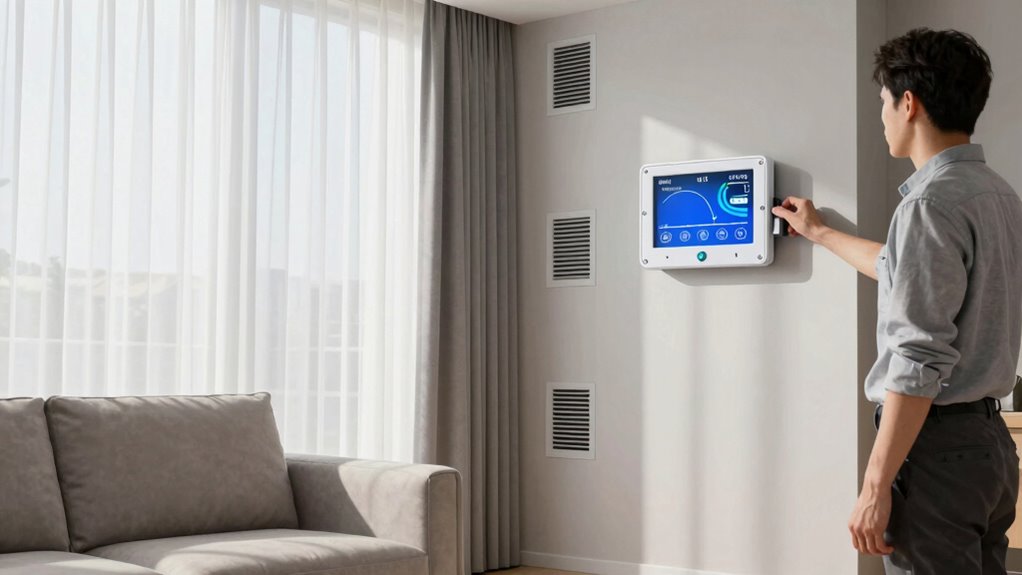
Your home’s size and layout influence how quickly air circulates, impacting ACH. The type of ventilation system you have also plays a big role in how often fresh air replaces indoor air. Additionally, your daily habits and how you use your space can cause variations in your home’s ACH levels. Proper air circulation is essential to reduce pollutants and maintain a healthy environment indoors. Factors like HVAC system efficiency can significantly affect how well your home maintains optimal air exchange rates. Regular maintenance and filtration of your ventilation systems can also help sustain proper ACH levels and improve indoor air quality. Ensuring adequate ventilation design tailored to your space can further optimize air changes and promote a healthier living environment. Moreover, understanding air exchange rates can help you better assess and improve your home’s indoor air quality.
Home Size and Layout
The size and layout of your home directly influence its air changes per hour (ACH). Larger rooms or open floor plans can either increase or decrease air flow, depending on ventilation. When rooms are bigger, it takes longer to exchange the air completely, reducing ACH if ventilation isn’t sufficient. Conversely, smaller rooms may have higher ACH due to quicker air exchange, but poor layout can hinder air flow.
Consider these factors:
- Room size and ceiling height
- Open vs. compartmentalized spaces
- Placement of windows and doors
- Presence of obstacles blocking air flow
- Overall home layout and airflow pathways
Understanding how room size and layout impact air flow helps you manage ACH effectively and improve indoor air quality.
Ventilation System Type
The type of ventilation system installed in your home plays a crucial role in determining its air changes per hour (ACH). Different ventilation system types, such as exhaust fans, supply fans, or balanced systems, influence indoor air circulation differently. For example, exhaust systems remove stale air, creating negative pressure that pulls in fresh air, while supply systems push in conditioned air, enhancing airflow. Properly chosen systems improve indoor air quality and help maintain desired ACH levels. The efficiency of your ventilation system depends on its design, power, and placement within your home. A well-functioning system ensures consistent indoor air circulation, reducing pollutants and humidity. Understanding how your ventilation system type impacts ACH empowers you to optimize your home’s ventilation for healthier, more comfortable living.
Occupant Behavior and Use
Occupant behavior considerably influences a home’s air changes per hour because how you use your space affects ventilation patterns. Your daily habits, such as opening windows or running exhaust fans, directly impact ACH levels. The use of appliances also plays a role; for example, gas stoves and dryers release moisture and pollutants, affecting air quality and ventilation needs.
Consider these factors:
- Opening windows regularly to increase fresh air intake
- Using exhaust fans in kitchens and bathrooms
- Running appliances that emit moisture or pollutants
- Keeping doors open to promote airflow
- Adjusting thermostat settings that influence ventilation systems
Your habits shape how well your home ventilates, making occupant behavior a key factor in maintaining healthy indoor air quality.
How Can You Increase ACH and Improve Indoor Air Quality?
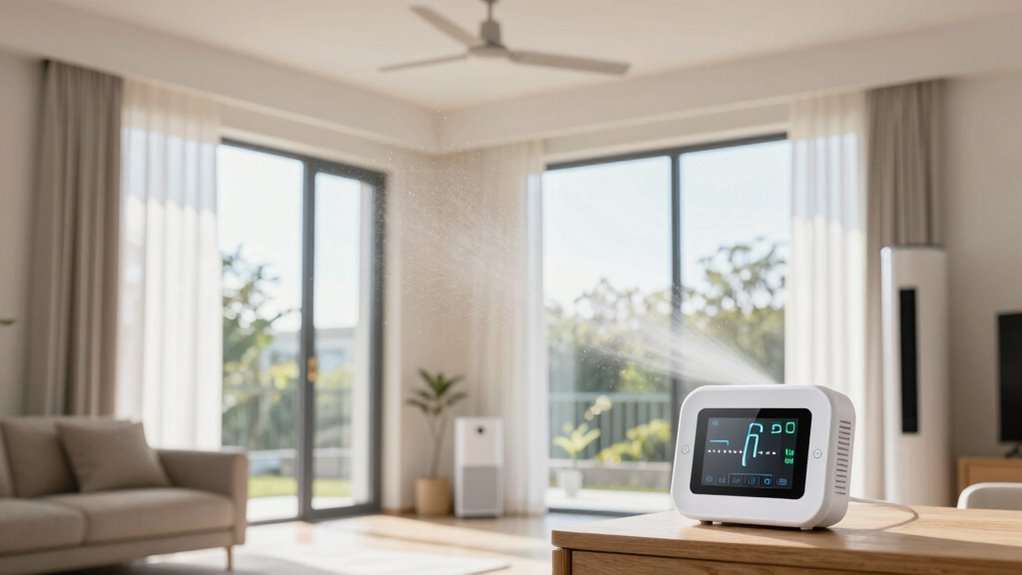
To effectively increase air changes per hour (ACH) and boost indoor air quality, you need to focus on enhancing ventilation and air circulation. One way is to improve natural ventilation by opening windows and doors regularly, allowing fresh air to flow in and stale air to escape. Installing exhaust fans in kitchens and bathrooms also helps remove pollutants and moisture. Additionally, using air purification devices with HEPA filters can capture airborne particles, further improving air quality. Consider upgrading your HVAC system with better filters or adding an air exchange system to ensure continuous fresh air intake. These strategies work together to increase ACH, reduce indoor pollutants, and create a healthier environment inside your home.
What Common Mistakes Reduce ACH and Harm Air Quality?
Are common mistakes blocking your home’s airflow and lowering ACH? These errors can trap indoor pollutants and decrease air quality. One mistake is sealing windows and vents too tightly, preventing fresh air from entering. Using inadequate ventilation systems or ignoring maintenance reduces airflow. Blocking vents or air returns with furniture or curtains hinders proper circulation. Neglecting regular filter changes allows dirt and pollutants to build up, worsening indoor air quality. Ultimately, relying solely on natural ventilation during extreme weather can limit airflow, reducing ACH. To keep your air clean and fresh, avoid these common pitfalls. Properly maintain ventilation systems, keep vents clear, and ensure your home breathes freely. This helps improve ACH, reduces indoor pollutants, and promotes healthier indoor air quality.
How Do You Choose the Right Ventilation System for Your Home?
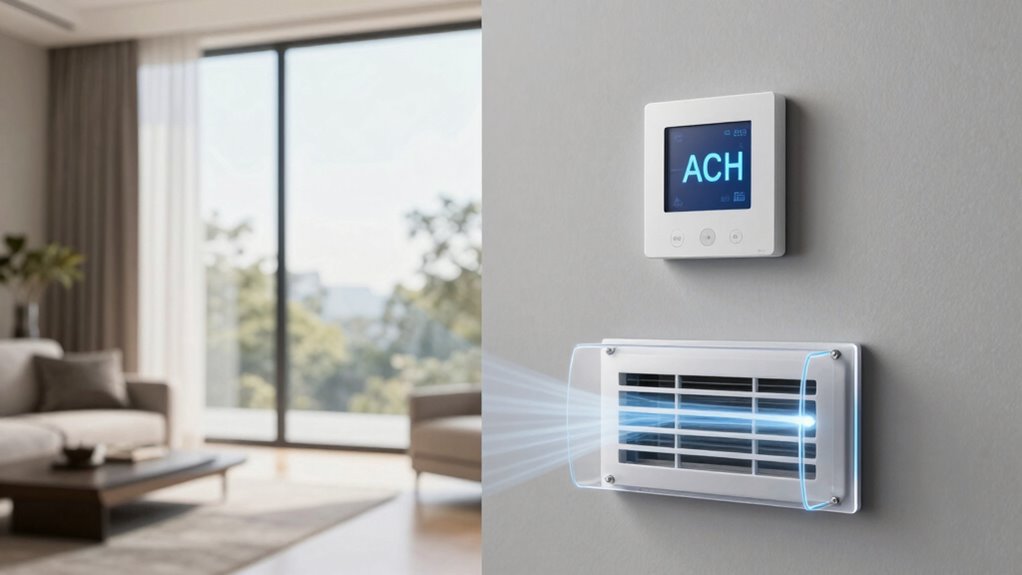
Choosing the right ventilation system for your home starts with understanding your specific needs and the size of your space. Consider your air quality concerns—if you have allergies or mold issues, you may need a system with better filtration. Ventilation efficiency is also key; a system that matches your home’s layout ensures effective airflow and consistent ACH. Assess whether you need continuous ventilation or intermittent solutions based on your daily routines. Look for systems that are energy-efficient to save on costs while maintaining ideal air quality. Consulting with professionals can help you select equipment suited to your home’s design and your health priorities. Ultimately, choosing a system that balances air quality improvement with ventilation efficiency will create a healthier, more comfortable living environment.
FAQs: Achieving and Maintaining Optimal ACH in Your Home
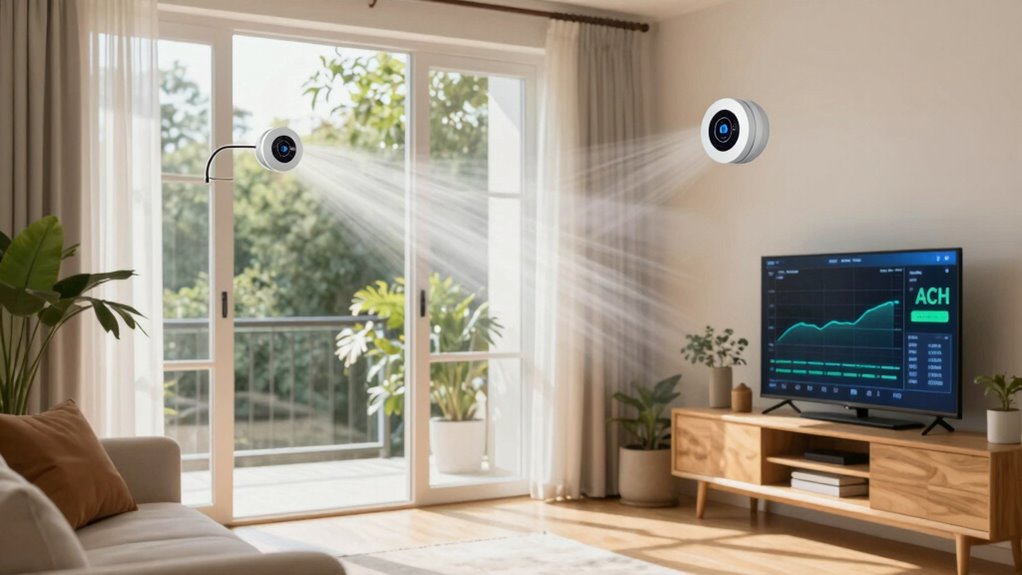
Wondering how to achieve and maintain the right ACH in your home? It’s key to indoor air purification and energy efficiency. To keep your indoor air fresh and healthy, consider these tips:
Achieve optimal ACH for healthier, more energy-efficient indoor air quality.
- Regularly update your ventilation system to ensure proper air exchange.
- Use energy-efficient fans and filters to optimize indoor air quality without raising energy costs.
- Seal leaks and drafts to prevent unwanted air loss and maintain consistent ACH.
- Schedule routine maintenance for your HVAC system for peak performance.
- Monitor indoor air quality with sensors to adjust ventilation as needed.
Frequently Asked Questions
How Often Should I Test My Home’s ACH?
You should test your home’s ACH every six months to make certain it meets ventilation standards and maintains proper air exchange rates. Regular testing helps identify if your ventilation system is working effectively or needs adjustments. If you notice increased indoor humidity, odors, or allergens, consider testing more frequently. Staying on top of your ACH ensures a healthier indoor environment and helps prevent issues caused by poor air quality.
Can High ACH Levels Cause Energy Loss?
Yes, high ACH levels can cause energy loss because increased air exchange often means your HVAC system works harder to maintain temperature. Poor ventilation efficiency leads to more conditioned air escaping and outside air entering, which can raise energy bills. To balance fresh air and energy savings, you should optimize your ACH, ensuring adequate ventilation without excessive air exchange that strains your system. Proper control helps maintain comfort and efficiency at home.
What Are the Signs of Poor Indoor Air Quality?
If you’re sneezing nonstop, smelling odd odors, or feeling consistently dizzy, your indoor air quality might be as charming as a swamp. These signs often point to indoor air toxins lingering in the air. Investing in an air purifier benefits you by reducing these toxins, making your home healthier. Poor air quality can cause headaches, fatigue, and allergies—so don’t ignore the subtle hints; breathe easier with cleaner air.
How Does Outdoor Air Pollution Affect ACH Effectiveness?
Outdoor pollution can reduce ACH effectiveness because pollutants can enter your home, making ventilation less efficient. When outdoor air quality is poor, it may increase indoor pollutants despite your ventilation efforts. To combat this, you should use proper air filtration systems that trap outdoor particles before they enter, ensuring your ACH still improves air quality. Regularly checking outdoor air quality helps you adjust ventilation and filtration as needed for healthier indoor air.
Are There DIY Methods to Improve My Home’s ACH?
Yes, you can boost your home’s ACH with simple DIY improvements. Improve ventilation strategies by opening windows regularly and using exhaust fans in kitchens and bathrooms. Consider installing inexpensive air purifiers or DIY air filters to enhance air circulation and quality. Additionally, rearranging furniture to avoid blocking vents and adding vent covers can optimize airflow. These small steps help increase air exchanges, making your home healthier and more comfortable.
Conclusion
Think of your home as a living, breathing garden where fresh air is the sunlight that nurtures it. When you understand and optimize your ACH, you’re planting seeds of clean, healthy air. With each thoughtful adjustment, you invite a gentle breeze that clears away the shadows of pollutants. Keep nurturing your indoor environment, and watch it flourish—your home becomes a sanctuary where every breath refreshes your spirit.