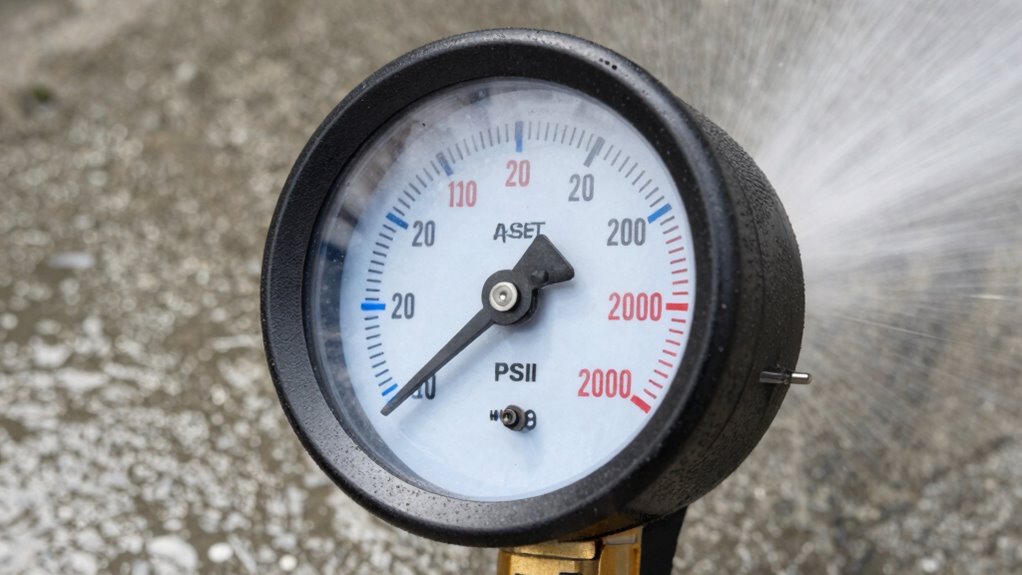

When comparing pressure washers, PSI shows how forceful the water spray is, while GPM indicates how much water flows through it. Both impact cleaning efficiency, but neither works alone—high PSI can damage delicate surfaces, and high GPM speeds up large-area cleaning. To get the best results, you need the right balance based on your tasks. Keep exploring to discover how understanding these numbers can help you choose the perfect pressure washer for any job.
Key Takeaways
- PSI measures water pressure, affecting the force of cleaning; GPM indicates water flow rate, impacting cleaning speed and coverage.
- High PSI is essential for stubborn stains, but excessive pressure can damage delicate surfaces; GPM influences overall cleaning efficiency.
- For large areas, higher GPM speeds up cleaning, while high PSI targets tough dirt with narrower nozzles.
- Balancing PSI and GPM prevents surface damage and optimizes cleaning performance based on task requirements.
- Focusing solely on PSI can be misleading; effective cleaning depends on the right combination of pressure and flow.
What Do PSI and GPM Mean in Pressure Washers?
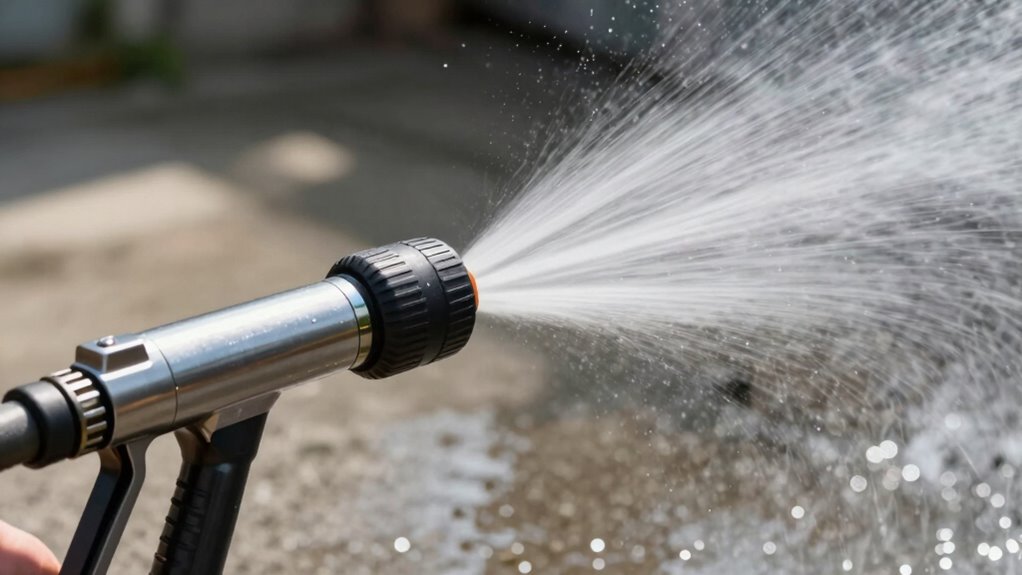
Have you ever wondered what PSI and GPM really mean in pressure washers? PSI, or pounds per square inch, measures the water pressure, directly affecting how forcefully water hits a surface. GPM, gallons per minute, indicates water flow rate, which determines how much water is used during cleaning. Both are essential for effective cleaning, but they serve different purposes. Water flow influences the overall cleaning speed, and nozzle choice can modify how water is dispersed, impacting cleaning efficiency. A nozzle with a narrow spray concentrates water for tough grime, while a wide spray covers large areas quickly. Understanding these numbers helps you select the right pressure washer to match your cleaning needs, ensuring you balance power with surface safety. Pressure washer specifications also play a crucial role in choosing the most suitable equipment for your tasks.
How Does PSI Impact Cleaning Power and Surface Safety?
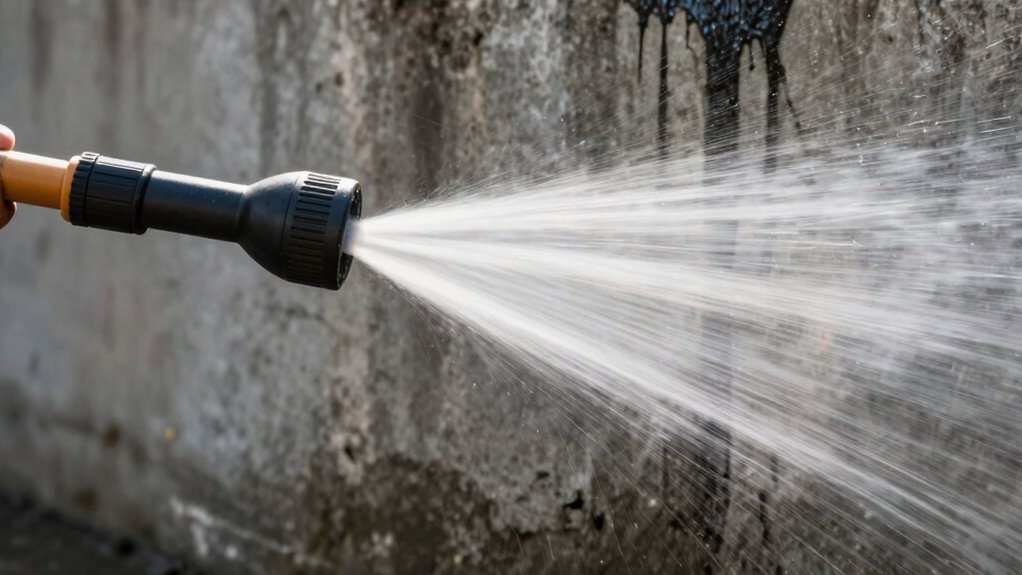
Higher PSI increases your cleaning power, making stubborn dirt easier to remove. However, it also raises the risk of damaging delicate surfaces if you’re not careful. pressure balance is essential to avoid surface damage while maintaining effective cleaning. Maintaining the correct pressure settings can help prevent unintended harm and optimize your cleaning results. Understanding indoor air quality can also contribute to safer cleaning practices by reducing airborne pollutants during and after use. Additionally, proper safe installation practices ensure your pressure washer operates effectively and minimizes safety hazards. Regular equipment maintenance further extends the lifespan of your pressure washer and ensures consistent performance.
Impact on Cleaning Efficiency
The pressure setting, measured in PSI, directly influences both cleaning power and surface safety. Higher PSI means tougher grime removal, but it can also risk damaging delicate surfaces or stripping paint. Lower PSI is gentler, ideal for sensitive areas and ensuring surface safety. Your choice affects detergent compatibility too—more pressure can improve cleaning but may require special detergents or lower noise levels for quieter operation. Additionally, understanding the appropriate pressure level for different tasks helps prevent unnecessary wear on your equipment. Recognizing the appropriate pressure for various surfaces ensures optimal cleaning efficiency while maintaining surface integrity. Proper pressure adjustment also involves considering surface sensitivity, which is crucial for preventing damage during cleaning. Being aware of pressure regulation techniques can help you fine-tune your washer for specific cleaning needs. Moreover, the impact of pressure on cleaning efficiency underscores the importance of selecting the right PSI for each job.
Surface Damage Risks
Adjusting the pressure setting in PSI directly impacts not only cleaning effectiveness but also the risk of surface damage. Too high a PSI can cause surface deterioration, including paint stripping and gouging. To visualize, consider these risks:
- Stripping paint off delicate surfaces, exposing bare wood or metal.
- Creating deep scratches that weaken the surface integrity.
- Removing protective coatings, accelerating wear.
- Damaging softer materials like vinyl or stucco, leading to costly repairs.
Using excessive PSI increases surface deterioration, making surfaces look worn or uneven. Proper pressure settings are crucial for maintaining surface safety and achieving optimal cleaning results. Selecting an appropriate pressure level based on the surface material helps prevent damage and extends the lifespan of the cleaned surface. Being aware of surface compatibility is essential to avoid unintended harm during pressure washing.
Why Does GPM Matter for Faster, More Efficient Cleaning?

Since gallons per minute (GPM) directly measure how much water a pressure washer delivers, it plays an essential role in cleaning speed and efficiency. A higher GPM means more water hits the surface faster, reducing cleaning time and covering larger areas quickly. This efficiency not only saves you effort but also lessens the time your equipment is in use, which can improve pressure washer durability by preventing overheating or strain. Additionally, a steady flow of water supports safer operation, as it helps maintain consistent pressure and reduces the risk of sudden spraybacks or pressure spikes. Understanding water flow rates can further optimize your cleaning tasks and extend your pressure washer’s lifespan. Proper understanding of pressure washer specifications can help you select the right model for your needs, ensuring you get fast, thorough cleaning without sacrificing safety or risking damage to your equipment. Recognizing water delivery capacity can also assist in choosing a unit that balances power and efficiency for your specific cleaning tasks, especially when considering pressure and flow combination.
How to Choose the Right Pressure Washer for Your Tasks
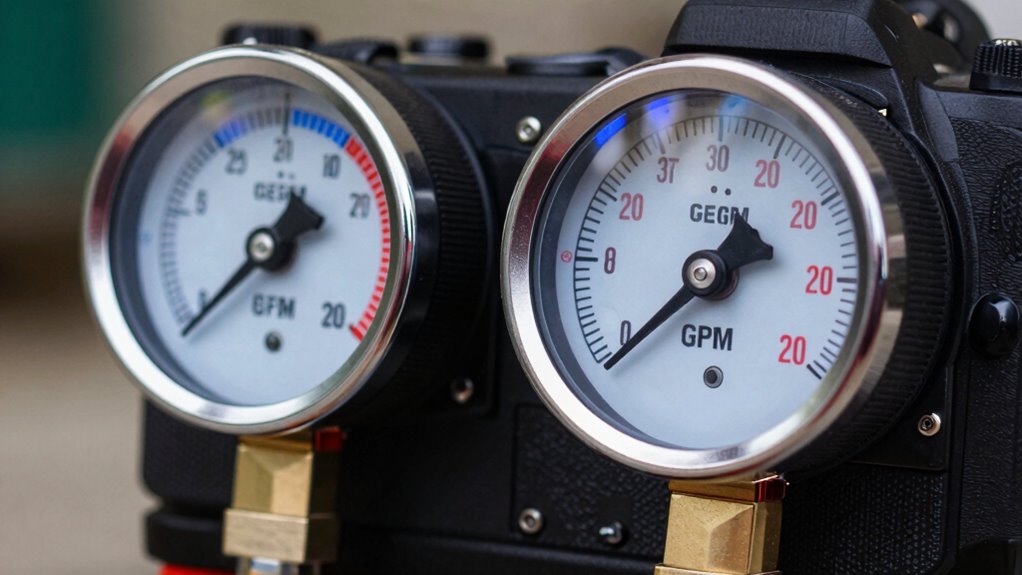
Choosing the right pressure washer depends on matching its power to your specific tasks. You need to find the right balance between pressure and flow to get effective cleaning without causing damage. Let’s explore how task needs and flow rate play into making the best choice. Understanding how to care for and live with art can also be seen as balancing appropriate tools and techniques to preserve its integrity over time. Additionally, considering the appropriate breed for your environment can help ensure your dog remains healthy and well-adjusted in your home setting.
Task-Specific Power Needs
To select the right pressure washer for your tasks, it’s essential to understand how different power levels match specific cleaning needs. Consider these scenarios:
- Light duty tasks like window washing or car cleaning, requiring lower PSI and GPM, with low noise levels.
- Medium tasks such as decks or siding, needing moderate pressure and chemical compatibility for detergents.
- Heavy-duty cleaning like driveways or concrete, demanding high PSI and flow, with attention to noise levels to avoid disturbance.
- Industrial or commercial use, requiring maximum pressure, high flow rates, and specialized nozzles for chemical compatibility.
Matching these needs guarantees effective cleaning without damaging surfaces or causing unnecessary noise, making your job efficient and safe.
Pressure and Flow Balance
Finding the right balance between pressure (PSI) and flow rate (GPM) is essential for effective cleaning without damaging surfaces. Too much pressure can harm delicate materials, while too little may be ineffective. Focus on the pressure flow combination to suit your task. Your nozzle choice plays a vital role—wider nozzles reduce pressure, protecting surfaces, while narrower ones concentrate power for tougher stains. Adjust the nozzle according to the surface and dirt type to optimize cleaning and avoid damage. Understanding how pressure and flow work together helps you select a pressure washer that delivers the right power without overdoing it. Always consider the specific cleaning task to determine the best pressure flow balance, ensuring efficient, safe results. Understanding fluid dynamics can help you better grasp how pressure and flow interact during operation. Being mindful of pressure and flow interaction allows for more precise control and better cleaning outcomes.
How to Balance PSI and GPM for Best Results

Have you ever wondered how to achieve ideal cleaning power without damaging surfaces? Balancing PSI and GPM requires focus on key factors. First, adjust your pressure regulation to control the force, preventing surface damage. Second, choose the right nozzle; a wider spray reduces pressure, while a narrower one boosts it. Third, match nozzle size to GPM—larger GPM needs a nozzle that can handle higher flow. Fourth, test your setup on a small area before full cleaning, ensuring optimal performance. Additionally, understanding the pressure flow relationship can help you fine-tune your settings for the best balance. By tweaking pressure regulation and selecting the proper nozzle, you maximize both pressure and flow. This balance delivers effective cleaning while protecting surfaces. Keep these steps in mind, and you’ll master the art of balancing PSI and GPM for superior results.
Common Myths About PSI and GPM You Should Know
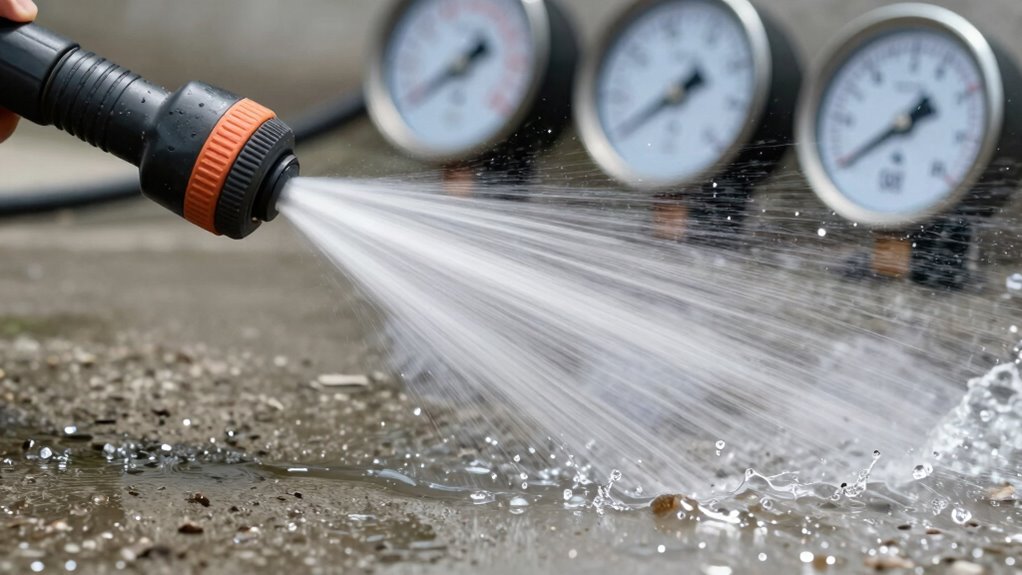
Many people believe that higher PSI always means better cleaning power, but this isn’t true. That’s a common pressure washer myth. People often confuse water flow with cleaning effectiveness, but water flow misconceptions can lead you astray. A higher PSI doesn’t guarantee better results if the GPM is low, and vice versa. Some assume that increasing water pressure alone will clean faster, but it’s actually a balanced combo of PSI and GPM that matters most. Focusing solely on PSI might cause damage or waste water, while ignoring GPM can limit cleaning speed. Understanding these pressure washer myths helps you choose the right equipment and avoid misconceptions that can hinder your cleaning projects. Remember, effective cleaning depends on a proper balance, not just raw pressure.
How to Read Pressure Washer Specs and Pick the Right Model
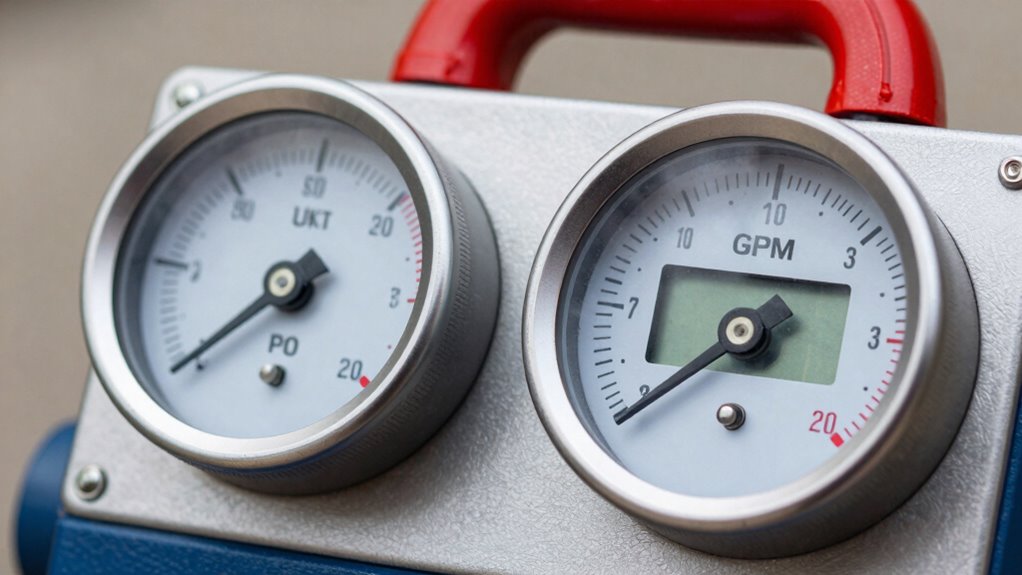
When choosing a pressure washer, understanding how to read its specifications is essential to picking the right model for your needs. Start by examining the PSI and GPM ratings: PSI indicates cleaning power, while GPM shows water flow. To visualize, consider:
- A high PSI but low GPM as a focused jet for stubborn stains.
- Balanced PSI and GPM for versatile cleaning tasks.
- Low PSI with high GPM for gentle cleaning over large areas.
- Matching specs to your environment, like eco-friendly models with lower GPM for water conservation.
Also, check for features that simplify pressure washer maintenance, such as easy-access parts. Keep environmental considerations in mind—select models that minimize water and energy use to reduce your footprint. Picking the right specs guarantees effective cleaning and sustainable operation.
When Is High PSI More Important Than High GPM?

High PSI becomes more important than high GPM when you’re tackling stubborn, resistant stains or debris that require forceful, concentrated pressure. For these jobs, high PSI helps break down grime, especially with chemical cleaners that need targeted power. Your nozzle choices also matter; a pinpoint nozzle directs pressure precisely where needed, maximizing effectiveness. Use this table to understand your priorities:
| Situation | Why PSI Matters |
|---|---|
| Heavy rust removal | Focuses force on tough spots |
| Paint stripping | Helps loosen layers |
| Concrete cleaning | Penetrates deep into surface |
| Delicate surfaces | Avoids over-spray damage |
In these cases, high PSI delivers the concentrated force you need for effective cleaning without wasting water or risking damage.
When Do You Need Higher GPM Instead of PSI?

When you’re tackling heavy-duty cleaning tasks or covering large surfaces, higher GPM becomes more essential than PSI. It guarantees a steady flow of water needed to break down tough grime and clean efficiently. In these cases, focusing on GPM helps you get the job done faster and more effectively.
Heavy-Duty Cleaning Tasks
Heavy-duty cleaning tasks often require more than just strong pressure; they demand a higher GPM to effectively remove stubborn dirt and grime. When tackling large, heavily soiled surfaces, a higher GPM guarantees enough water volume to flush away debris. Imagine:
- Washing mud-caked equipment after a muddy job site
- Cleaning greasy garage floors with thick grime
- Rinsing off animal enclosures with stubborn dirt buildup
- Applying detergent effectively without sacrificing flow rate
A higher GPM helps detergents work better by providing consistent flow, especially when compatibility is key. Plus, it often results in lower noise levels compared to high-PSI models, making the job less disruptive. Choose a unit with a balanced GPM for tough, large-scale tasks that need power and efficiency.
Large Surface Coverage
If you’re working on large surfaces, having the right water flow can make all the difference. Higher GPM is essential when covering extensive areas quickly, especially for tasks like concrete cleaning or deck washing. It allows you to maintain a steady, consistent flow, reducing cleaning time. When using chemical cleaning solutions, a higher GPM helps deliver the chemicals evenly across the surface, ensuring thorough coverage. Surface compatibility also matters—softer surfaces may need a gentler approach, but larger areas generally benefit from increased water volume. In these situations, focusing on GPM rather than PSI guarantees you get efficient, uniform cleaning without risking damage. Ultimately, choosing a pressure washer with higher GPM supports faster, more effective large surface cleaning while accommodating chemical applications and surface sensitivity.
Tips for Selecting the Best Pressure Washer for Your Cleaning Goals

Choosing the right pressure washer begins with understanding your cleaning goals. Think about what you want to tackle, whether it’s a car, driveway, or deck. To make the best choice, consider these factors:
Identify your cleaning needs to choose the perfect pressure washer for any task.
- The types of pressure washer accessories you’ll need, like different nozzles for delicate or tough jobs.
- The ideal water temperature—hot water models are better for grease and oil, while cold water works for general cleaning.
- The required PSI and GPM to match the surface and dirt level.
- Whether portability or storage is more important for your workspace.
Focusing on these points will help you select a pressure washer that fits your tasks perfectly, ensuring efficient and effective cleaning every time.
Frequently Asked Questions
How Do PSI and GPM Affect Different Cleaning Tasks?
When tackling different cleaning tasks, higher PSI helps remove stubborn dirt, while GPM determines how quickly water flows, affecting overall cleaning speed. You should consider detergent compatibility for deeper grime and choose nozzle selection wisely to optimize pressure and flow. For delicate surfaces, lower PSI and appropriate nozzles prevent damage, whereas tougher jobs benefit from higher PSI and GPM, ensuring efficient cleaning without compromising surface integrity.
Can High PSI Damage Delicate Surfaces?
High PSI can cause surface damage if you’re not careful, especially on delicate materials. You need to contemplate equipment compatibility to avoid damaging surfaces like wood or painted areas. Use lower PSI settings and a wider spray nozzle for gentle cleaning. Always test on a small area first, and adjust your pressure accordingly. This approach helps prevent surface damage while still achieving effective cleaning results.
Is GPM More Important for Large Cleaning Jobs?
You’ll find GPM more important for large cleaning jobs because it determines how much water flows through your pressure washer, making cleaning faster. For instance, higher GPM models can clean surfaces up to 50% quicker. When choosing pressure washer accessories, consider GPM to optimize performance. Additionally, using the right GPM helps reduce environmental impact by avoiding overuse of water and ensuring efficient cleaning without waste.
What Are the Safety Considerations When Using High PSI Pressure Washers?
When using high PSI pressure washers, always prioritize safety by wearing proper safety gear like goggles, gloves, and long sleeves. Make sure to use pressure regulation features to prevent damage or injury from excessive force. Keep a safe distance from surfaces and avoid pointing the spray at yourself or others. Regularly inspect your equipment for leaks or damage, and never operate the washer without understanding its safety features.
How Do I Maintain My Pressure Washer’s Performance?
To keep your pressure washer performing well, regularly check and clean the nozzles and filters, and replace worn parts. Use proper storage tips, like draining water and storing in a dry place to prevent rust and damage. This maintenance boosts your equipment’s lifespan and guarantees consistent pressure. Also, follow the manufacturer’s guidelines for oil and fluid levels, and inspect hoses for leaks to maintain ideal performance over time.
Conclusion
Now that you understand what PSI and GPM really mean, you can choose a pressure washer that matches your cleaning needs. Remember, the right balance of pressure and flow makes all the difference. Are you ready to pick a model that’ll tackle your toughest jobs efficiently? With this knowledge, you’re all set to make smarter, more informed decisions—so get out there and clean with confidence!