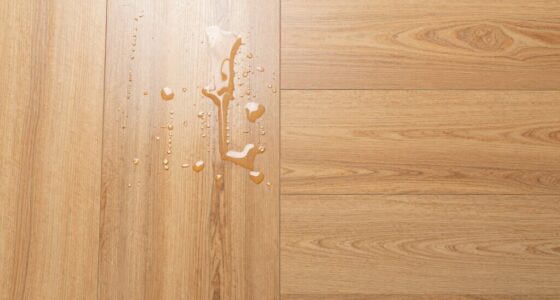
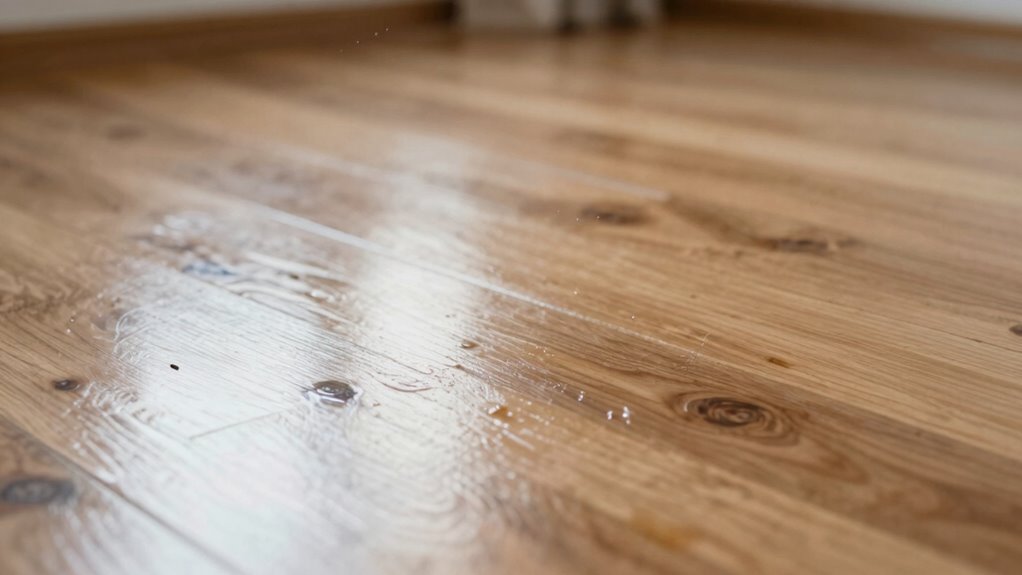

Using too much cleaner or not rinsing properly leaves behind residue that attracts dirt, dust, and debris. This residue creates a cycle where floors look dirtier sooner and become harder to clean over time. The buildup can trap allergens and odors, worsening the mess. If you keep overusing products, you’ll find your floors get grimy faster. Stick around to learn how to break this cycle and keep your floors cleaner longer.
Key Takeaways
- Excess cleaner leaves behind residues that trap dirt, making floors appear dirtier over time.
- Overusing cleaning products creates a chemical barrier that reduces cleaning effectiveness and attracts more debris.
- Residue buildup fosters mold, bacteria, and odors, worsening dirt and grime on floors.
- Thick residues diminish cleaning efficiency, causing floors to look dull and attract dust more easily.
- Proper rinsing and minimal product use prevent residue accumulation, breaking the cycle of dirtier floors.
What Is the Residue Cycle and Why Does It Make Floors Dirtier?

Although frequent cleaning might seem like a way to keep floors spotless, it can actually set off a residue cycle that makes them dirtier over time. Every time you clean, you leave behind some cleaning residue, especially if you use too much product or don’t rinse thoroughly. This buildup creates a residue cycle, where dirt and debris cling to the leftover film, attracting more grime. Over time, your floor gets coated with layers of cleaning residue, which makes it look dull and dirty faster. Instead of improving cleanliness, excessive cleaning can trap dirt and grime on the surface, leading to a cycle that’s hard to break. Recognizing the residue buildup process can help you choose better cleaning techniques and products, including using appropriate cleaning tools and methods to prevent excessive residue. Additionally, understanding the impact of cleaning product chemistry can guide you toward more effective and residue-free cleaning routines. Being aware of dirt adhesion can further improve your cleaning strategy by reducing how much dirt sticks to surfaces during cleaning. Incorporating gentle cleaning practices can help break this cycle and maintain cleaner floors over time.
How Overusing Cleaning Products Causes Residue Buildup

When you use too much cleaning product, residue starts to build up on your floors over time. This buildup makes cleaning less effective and causes dirt to stick more easily. As a result, your floors can become dirtier faster despite multiple cleanings. Additionally, residue buildup can trap pollutants and allergens, reducing overall indoor air quality. Overusing cleaning products can also lead to chemical buildup, which may damage flooring surfaces and decrease their lifespan. Incorporating proper cleaning techniques and understanding cleaning product residues can help prevent excessive residue accumulation and maintain cleaner floors. Being aware of cleaning product chemistry can further help you select the most suitable cleaning methods for your flooring type.
Residue Accumulation Over Time
Overusing cleaning products can lead to a stubborn buildup of residues on your floors, which might seem counterintuitive at first. When you clean too often or with excessive product, remnants from previous cleanings don’t fully wash away. Instead, they accumulate over time, forming a thick layer of residue. This buildup can trap dirt and debris, making your floors look grimy even after cleaning. The more frequently you clean with chemical-laden products, the faster this residue accumulates. Over time, this creates a cycle where your efforts to clean actually leave behind more residue, requiring even more cleaning to remove it. To prevent this, you need to be mindful of cleaning frequency and use minimal, eco-friendly products that won’t leave harmful residues behind. Understanding residue buildup and the importance of proper filter maintenance can help break this cycle and maintain a cleaner, healthier floor environment. Regularly inspecting and replacing filters can reduce residual chemicals that contribute to residue accumulation, ultimately supporting a more effective cleaning routine. Additionally, choosing gentle cleaning agents can significantly decrease the likelihood of residue formation over time.
Reduced Cleaning Effectiveness
Applying too much cleaning product can actually reduce its effectiveness over time. When you overuse cleaners, chemical reactions with residues create build-up that hampers cleaning performance. This buildup can alter surface compatibility, making it harder for future products to work properly. To understand this, consider:
- Excess residue forms a barrier, preventing cleaning agents from bonding effectively.
- Chemical reactions between old residues and new cleaners weaken cleaning power.
- Surface compatibility issues cause cleaners to become less effective, leaving dirt behind instead of removing it.
- Regularly cleaning surfaces with appropriate amounts helps maintain the cleaning system’s effectiveness.
Additionally, residue buildup can lead to persistent surface stains and a less hygienic environment over time. Proper cleaning techniques and moderation in product use are essential for maintaining optimal cleaning performance and preventing residue accumulation.
Increased Dirt Attraction
Have you ever noticed how dirty floors seem to attract more grime after cleaning? This happens because overusing cleaning products can create a layer of residue buildup that actually attracts dirt. When you apply too much cleaner, it leaves behind a sticky film that makes the surface more appealing to dust, crumbs, and other debris. Instead of staying clean, your floor becomes a magnet for dirt attraction, pulling in particles more easily. This residue acts like a dirt trap, causing your floors to look dirtier faster. The cycle continues as you keep applying more cleaner to remove the new grime, which only worsens the buildup. To break this cycle, use cleaning products sparingly and ensure thorough rinsing to prevent residue from drawing in dirt.
Signs Your Floors Are Suffering From Residue Buildup
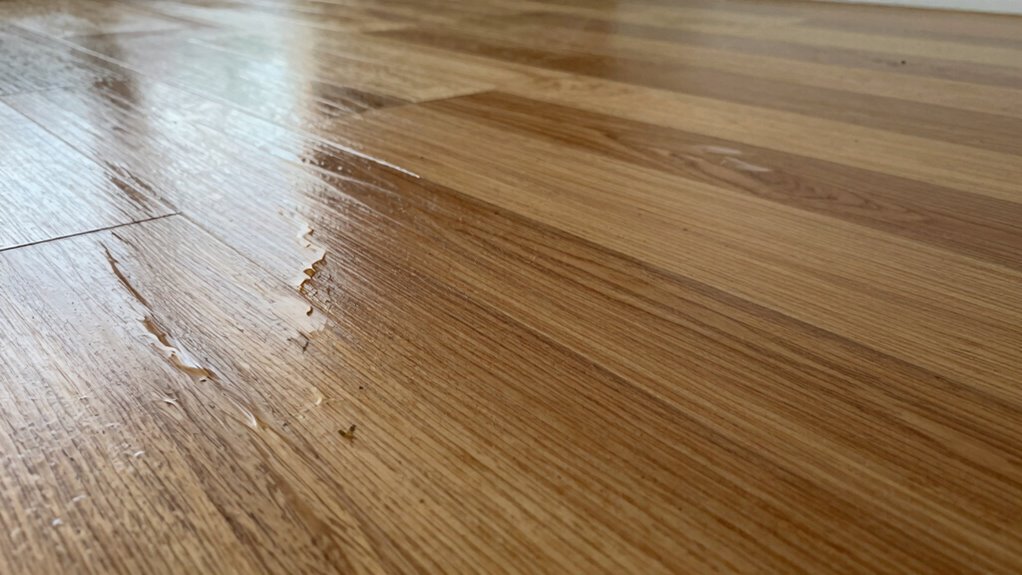
If your floors start looking dirtier even after cleaning, you might notice more visible grime and streaks. Unpleasant odors that linger or worsen over time are also signs of residue buildup. Additionally, if you find yourself cleaning more often without lasting results, it’s a clear indication your floors are suffering from accumulated residues. This cycle can be exacerbated by the Residue Cycle, which causes cleaning products to leave behind layers that trap dirt rather than remove it. Understanding the chemical reactions involved in residue formation can help you choose better cleaning strategies to break this cycle and prevent residue accumulation from recurring. Proper cleaning techniques that avoid residue buildup can help maintain a cleaner, more resilient floor surface over time. Incorporating connected cleaning tools with smart technology can also optimize your maintenance routine and minimize residue issues.
Visible Dirt Accumulation
Noticing a dull or sticky film on your floors often signals residue buildup rather than genuine cleanliness. When this happens, your floors might look dirty even after mopping. To spot the problem, look for these signs:
- Persistent streaks or cloudiness – indicating leftover cleaning product residue.
- Sticky spots that attract more dirt – showing your cleaning schedule isn’t effectively removing debris.
- Quick re-soiling after cleaning – a sign of mopping mistakes that leave behind film.
- Recognizing the importance of proper cleaning techniques can help prevent this residue cycle from continuing. These issues suggest your cleaning efforts are unintentionally promoting residue accumulation. Relying on frequent cleaning schedules with improper techniques can worsen the cycle. To break it, you need to identify residue early and adjust your cleaning methods accordingly, including understanding the Residue Cycle and how it impacts your flooring.
Unpleasant Odor Development
When residue builds up on your floors, it often leads to more than just a dull appearance or sticky patches — unpleasant odors can also develop over time. As residue accumulates, it creates a breeding ground for mold growth, which produces musty, lingering smells. Additionally, allergen buildup from dust, pet dander, and dirt trapped in the residue can intensify odors and cause discomfort. When your floors emit a persistent, strange smell, it’s a clear sign that residue isn’t being effectively removed. The combination of mold and allergens not only worsens odors but can also impact your indoor air quality. If you notice a sour or stale scent that doesn’t go away, it’s time to address the residue buildup before it worsens.
Increased Cleaning Frequency
As residue continues to build up on your floors, you’ll find yourself cleaning more frequently than usual. This increased cleaning can seem effective but often signals residue buildup from cleaning myths and overuse of harsh products. You might notice that despite frequent mopping, floors remain dull or sticky. Here are some signs to watch for:
- Constant need to re-clean the same spots
- Persistent streaks or cloudiness after cleaning
- A buildup of film that attracts more dirt
These symptoms suggest your floors are suffering from residue accumulation. Relying solely on eco-friendly solutions and understanding that more cleaning isn’t always better can help break this cycle. Proper cleaning techniques reduce residue and keep your floors cleaner longer.
Why Cleaning Residue Attracts Dirt and Debris
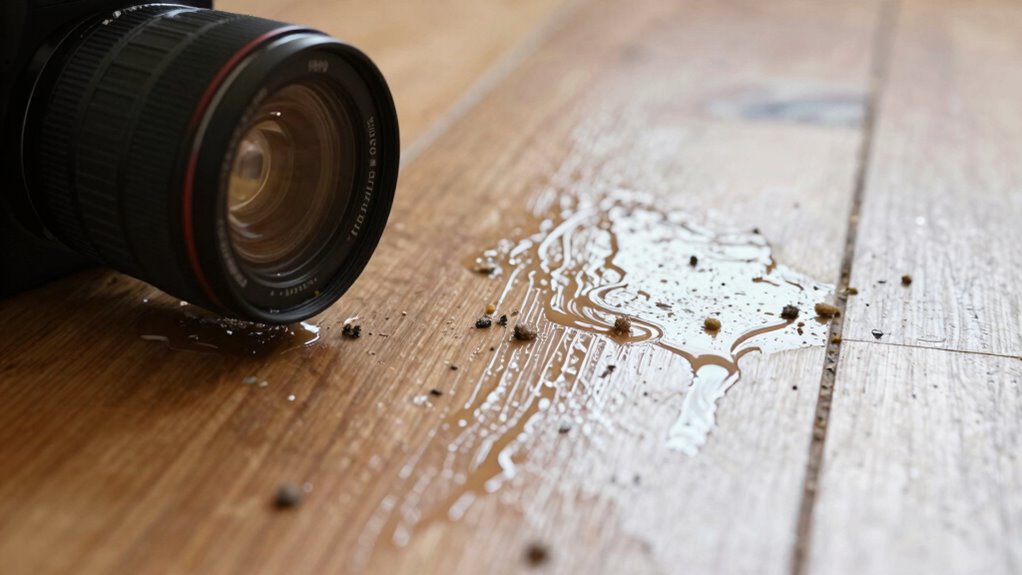
Cleaning residue can unintentionally make floors dirtier because it leaves behind a film that attracts dust and debris. This often ties into cleaning myths, where you believe more cleaning products or frequent mopping improves cleanliness. In reality, residue myths suggest that buildup forms faster with excessive cleaning, attracting dirt instead of preventing it. Visualize this cycle with the following:
| Residue Layer | Attracted Dust | Dirt Accumulation |
|---|---|---|
| Thin film | Light particles | Slightly dirty |
| Thick film | Heavy particles | Very dirty |
| Sticky residue | All debris | Rapid dirtiness |
| Oily film | Grease, dust | Persistent grime |
| Dull surface | Invisible dust | Hidden dirt |
This cycle emphasizes how residue acts like a magnet, making your floors dirtier over time.
How to Break the Residue Cycle and Keep Floors Cleaner
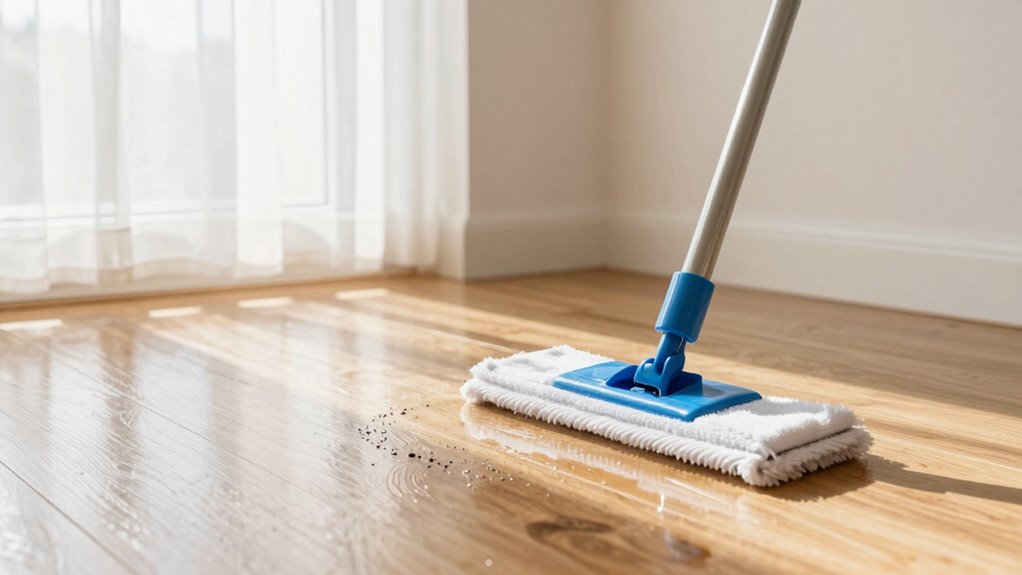
To break the residue cycle and keep your floors cleaner, start by using the right cleaning methods and products. Focus on eco-friendly solutions that won’t leave behind harmful residues. Proper mopping techniques are key: avoid oversaturating the mop, rinse frequently, and use minimal cleaning solution. These steps prevent excess soap buildup that attracts dirt later. Consider these tips:
Use eco-friendly cleaning methods and proper mopping techniques to prevent residue buildup and keep floors cleaner.
- Use natural, residue-free cleaners like vinegar or baking soda.
- Mop with clean water often to remove leftover residue.
- Adopt efficient mopping techniques, such as overlapping strokes and gentle pressure, to avoid spreading dirt.
Choosing the Right Products and Techniques to Prevent Residue

Choosing the right cleaning products and techniques can make a significant difference in preventing residue buildup on your floors. Opt for eco-friendly options that are free from harsh chemicals, which can leave behind residues that attract dirt later. Natural remedies like vinegar and baking soda are effective and gentle alternatives for cleaning without residue. Always follow manufacturer instructions to avoid overuse of cleaners, and use minimal amounts to prevent buildup. Consider using microfiber mops and cloths, which trap dirt without spreading residues. Regularly rinsing floors with clean water helps remove leftover cleaning agents, reducing residue. By selecting eco-friendly options and employing proper techniques, you can maintain cleaner floors longer and break the residue cycle that leads to dirtier surfaces over time.
Frequently Asked Questions
Can Natural Cleaning Methods Reduce Residue Buildup Effectively?
Natural cleaning methods can effectively reduce residue buildup and extend residue longevity on your floors. You’re less likely to leave behind harsh chemicals that attract dirt, allowing your floors to stay cleaner longer. By using natural ingredients like vinegar or baking soda, you minimize residue that can trap dirt over time. This approach promotes healthier indoor air quality and less frequent cleaning, making your floors look fresh and spotless without the residue cycle.
How Often Should Floors Be Cleaned to Prevent Residue Accumulation?
If you want to avoid a residue apocalypse, clean your floors at least twice a week! Regular cleaning frequency is your best weapon against stubborn buildup and residue prevention. Skipping cleanings allows dirt and chemicals to team up, creating a sticky trap that attracts even more grime. Stay vigilant, clean often, and you’ll keep your floors shining without the dreaded residue cycle taking over.
Do Certain Flooring Materials Resist Residue More Than Others?
Some flooring materials resist residue better than others. For example, tile and vinyl tend to have higher residue resistance because their smooth, non-porous surfaces don’t trap dirt easily. Conversely, carpet and hardwood can accumulate more residue over time due to their porous or textured surfaces. When choosing flooring, consider its residue resistance to reduce the frequency of deep cleaning and maintain a cleaner appearance longer.
What Are the Health Risks Associated With Cleaning Residue?
Like Pandora’s box, cleaning residue can release health risks. When you leave behind toxic chemicals, you risk allergic reactions, respiratory issues, and skin irritations. Over time, these substances accumulate, making your home unsafe, especially for children and pets. Always rinse thoroughly and choose eco-friendly cleaners to minimize exposure. Protect yourself by understanding that lingering residue isn’t just dirt—it’s a potential hazard that can affect your health long-term.
Are There Eco-Friendly Products That Avoid Residue Problems?
Yes, you can choose eco-friendly products that avoid residue problems. Look for cleaners with biodegradable formulas and plant-based ingredients, which break down naturally and leave fewer residues. These products are gentle on your floors and better for the environment. By opting for such options, you guarantee a cleaner, healthier home without the buildup that causes dirt to stick later, making your cleaning routine more effective and sustainable.
Conclusion
Think of your floors as a delicate dance floor—you want them shiny and inviting, not sticky and cluttered. When you overuse cleaning products, it’s like piling on too many dance partners, making the floor harder to enjoy. Break the residue cycle by choosing wisely and cleaning thoughtfully. With the right moves, you’ll keep your floors gleaming, like a polished mirror reflecting a clear, bright sky—clean, fresh, and ready for your next step.