
Stains set into fabrics when heat and time trigger chemical reactions that cause the stain particles to bond deeply with fibers, making them harder to remove. Warm temperatures accelerate these reactions, causing stains to embed more firmly. If you wait too long, stains can become permanent as they react with fibers. Understanding how temperature influences this process helps you act quickly to prevent stains from becoming difficult to remove—continue exploring to learn more about effective stain management.

Get cleaning gear delivered free — and shop member deals
- Fast, free delivery on millions of items
- Access to Prime Big Deal Days deals on October 6–7
- Prime Video, Amazon Music and more included
Key Takeaways
- Stains set when absorbed liquids chemically react with fibers, embedding deeply and becoming resistant to cleaning.
- Warm temperatures accelerate chemical reactions, causing stains to bond more firmly with fabric fibers.
- Heat from hot water or warm environments increases molecular activity, promoting stain penetration and fixation.
- Delaying cleaning allows chemical reactions to solidify stains, making removal more difficult over time.
- Using cooler temperatures slows reactions, preventing stains from setting and facilitating easier removal.
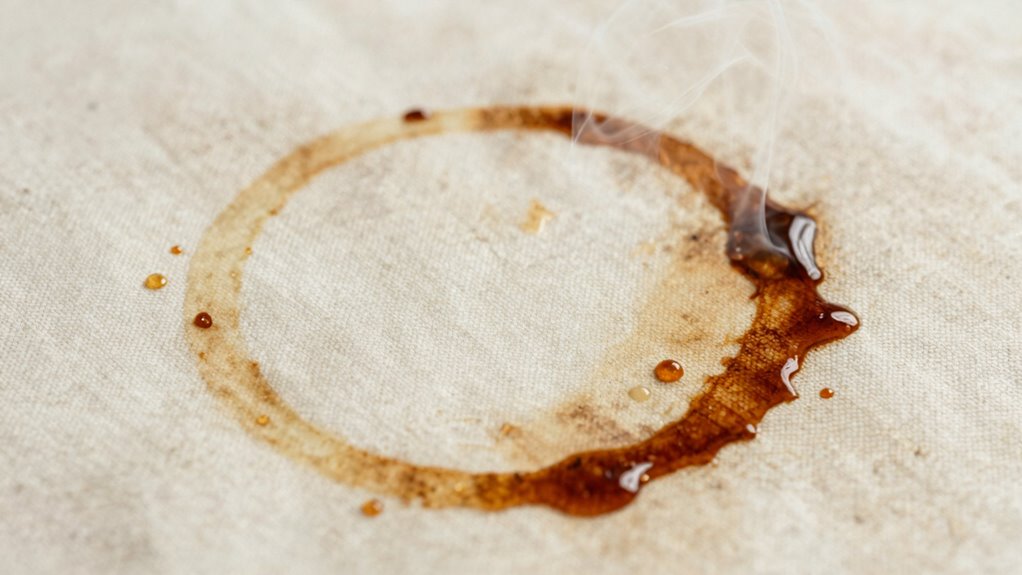
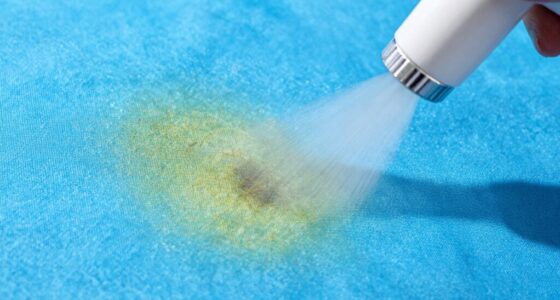
When a spill occurs, the liquid often contains various compounds—such as dyes, oils, or proteins—that interact with the fibers through a process called fiber absorption. The fibers act like tiny sponges, drawing in the liquid and trapping particles deep inside. If you delay cleaning, these substances are more likely to settle in and undergo chemical reactions that solidify them into the material, making removal more difficult. Additionally, the type of stain and the fabric’s fiber composition can influence how quickly it sets and how resistant it becomes to cleaning. Temperature plays a significant role in how quickly and strongly a stain sets. When the environment is warm, heat accelerates many chemical reactions, including those involved in stain setting. Higher temperatures increase the energy within the molecules, causing the stain’s components to bond more firmly with the fibers. This is why hot water can sometimes make stains worse rather than better; it encourages the stain to penetrate deeper and react more aggressively with the fabric. Conversely, cooler temperatures tend to slow down these reactions, giving you a better chance to lift the stain before it becomes permanently embedded. That’s why cold water is often recommended for removing fresh stains, especially on delicate fabrics or stubborn substances like blood or wine. Understanding how fiber absorption and chemical reactions work together helps explain why some stains are so persistent. When a stain is absorbed into the fibers, it’s not just sitting on the surface—it’s embedded inside, where cleaning agents and temperature have less immediate effect. As the stain interacts with the fibers over time, chemical reactions can cause it to bind more tightly, especially if exposed to heat, which speeds up these processes. That’s why prompt action is essential: the sooner you treat a spill, the less chance there is for heat-induced reactions to set the stain permanently. Using the right temperature and cleaning methods can disrupt these reactions and fiber absorption, preventing stains from becoming a lasting part of your fabric or carpet. Recognizing the importance of chemical reactions in stain setting can help you choose more effective cleaning strategies.
As an affiliate, we earn on qualifying purchases.
Frequently Asked Questions
Can Certain Fabrics Prevent Stains From Setting?
Certain fabrics can help prevent stains from setting because they often have fabric treatments designed for stain resistance. You should choose materials like polyester or treated cotton, which repel liquids and make stain removal easier. By opting for fabrics with stain prevention features, you reduce the chances of stains setting in, especially when combined with quick action and proper cleaning techniques. This proactive approach keeps your clothes looking fresh longer.
How Long Does It Take for a Stain to Set?
Imagine spilling red wine on your white shirt during dinner. Generally, a stain can start setting within minutes, especially if it’s a protein or dye-based stain. This happens because of chemical reactions in stain chemistry, where the molecules bond with fabric fibers. To prevent it from setting, you should act quickly—within 10 to 15 minutes—before the stain becomes permanent, giving you a better chance to remove it.
Do All Stains Respond Similarly to Temperature Changes?
Not all stains respond similarly to temperature changes. The fabric weave and stain color influence how heat affects them. For example, delicate fabrics with tight weaves may resist heat, while looser weaves absorb more, causing stains to set faster. Darker stain colors often respond more quickly to heat, making them harder to remove if not treated promptly. Always consider these factors to choose the right cleaning method and temperature.
Can Cold Water Always Prevent Stains From Setting?
Cold water can’t always prevent stains from setting because fabric absorption and stain penetration vary. If the stain has deeply penetrated or set into the fibers, cold water may not be enough to lift it. For fresh stains, cold water helps slow down absorption, reducing the chance of setting. However, for older or stubborn stains, you might need additional treatments, since temperature alone isn’t always enough to prevent setting.
Are There Stains That Are Impossible to Remove Once Set?
Yes, some stains become impossible to remove once set, especially on delicate fabrics or those with special fabric treatments. You might try various stain removal techniques, but if the stain has bonded deeply or the fabric’s been treated to lock in dyes, removal becomes unlikely. To prevent this, act quickly and avoid heat when treating stains, as heat often makes it harder to remove them later.
As an affiliate, we earn on qualifying purchases.
Conclusion
Remember, a stitch in time saves nine, especially when dealing with stains. Acting quickly with cold water can prevent stains from setting, saving you time and effort later. Heat may seem like a quick fix, but it often makes things worse by setting stains permanently. So, stay proactive and choose your approach wisely. When it comes to stains, patience and proper temperature are your best allies—because a good cleanup is worth more than a hurried one.
As an affiliate, we earn on qualifying purchases.
As an affiliate, we earn on qualifying purchases.
Fall Picks
fall essentials
As an affiliate, we earn on qualifying purchases.