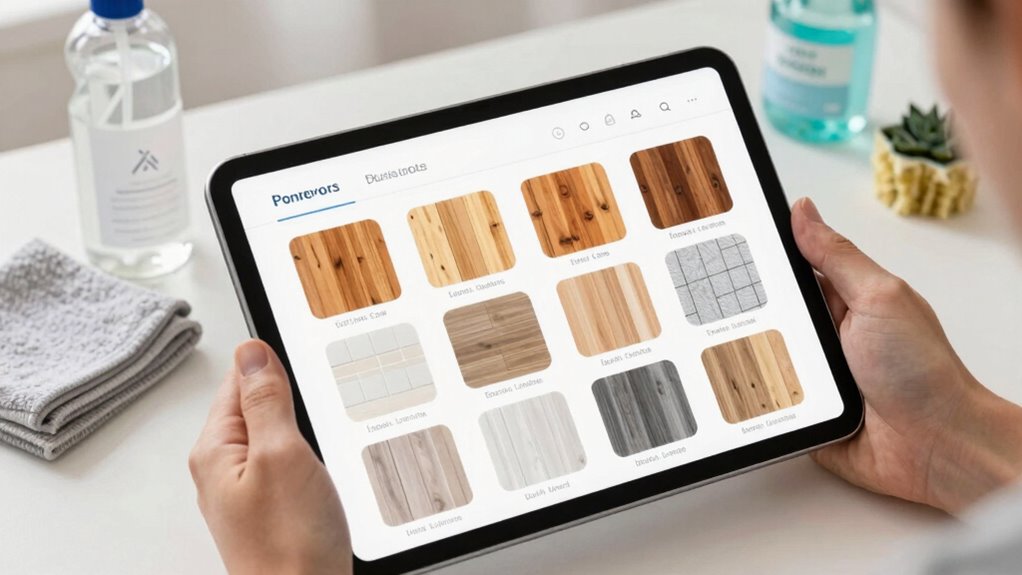

To choose the right floor cleaner, identify your surface type—wood, laminate, tile, or vinyl—and match it with a mild or harsh cleaner accordingly. Always check labels for guidance on strength and ingredients, prioritizing eco-friendly options if possible. Test new cleaners on a small area first to prevent damage. If you continue exploring, you’ll discover how to select products that protect your floors while delivering effective cleaning.
Key Takeaways
- Identify your floor surface material and choose a cleaner specifically formulated for it.
- Read labels carefully to match cleaner strength (mild or harsh) with your flooring needs.
- Consider eco-friendly options for safer, sustainable cleaning, especially for sensitive environments.
- Test the cleaner on a small, hidden area to prevent damage or discoloration.
- Verify product trustworthiness by reviewing labels, certifications, and reputable reviews before purchasing.

Are you overwhelmed by the variety of floor cleaners on the market? It can feel like a formidable task trying to pick the right one, especially with so many options claiming to be the best. To make an informed choice, you need to understand the differences between mild vs. harsh cleaners and the debate between eco-friendly vs. chemical-based products. Your goal should be to select a cleaner that effectively cleans your surface without causing damage or harming your health.
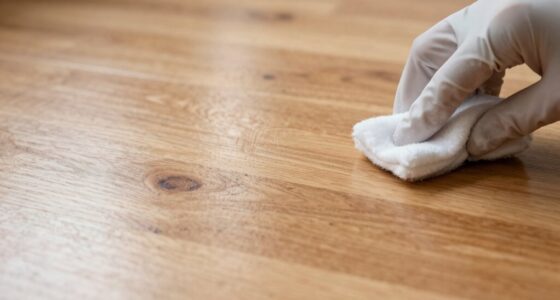
When evaluating floor cleaners, consider the strength needed for your specific surface. Mild cleaners are typically gentle, making them suitable for delicate floors like hardwood, laminate, or vinyl. They usually contain fewer aggressive chemicals, reducing the risk of stripping finishes or causing discoloration. Harsh cleaners, on the other hand, are more potent and may be necessary for heavily soiled surfaces like tile or concrete. However, using a strong cleaner where a mild one suffices can lead to long-term damage, such as erosion or dullness. Always read the label and follow manufacturer instructions to match the cleaner’s strength with your flooring material.
The choice between eco-friendly and chemical-based cleaners also plays a pivotal role. Eco-friendly products often use natural ingredients, such as plant-based extracts, and avoid synthetic chemicals, making them safer for your family, pets, and the environment. These cleaners tend to be biodegradable and free from harmful fumes, creating a healthier indoor air quality. Chemical-based cleaners might deliver quick, powerful results but can contain harsh substances like ammonia or bleach, which can irritate your skin, eyes, or respiratory system. If sustainability and health are priorities for you, opting for eco-friendly options is a wise move, especially for frequent cleaning routines.
Additionally, consider your specific needs and priorities. If you have allergies, sensitivities, or small children, choosing a mild, eco-friendly cleaner makes sense. For tougher stains or stubborn grime, you might need a stronger, possibly chemical-based cleaner, but always ensure it’s appropriate for your floor type. Testing a small, hidden area first can prevent accidental damage or discoloration. Remember, the most effective cleaner isn’t necessarily the strongest; it’s the one suited to your surface and your health considerations.
Being aware of the trustworthiness of the product’s claims can help you avoid misleading marketing and ensure you’re making a safe choice. In the end, choosing the right floor cleaner isn’t about guessing but about understanding your surface, your health priorities, and the ingredients involved. Take the time to research labels, compare options, and select a product that balances power with safety. Your floors will thank you, and so will your lungs and the environment.
Frequently Asked Questions
Can I Use the Same Cleaner on Hardwood and Tile Floors?
You shouldn’t use the same cleaner on hardwood and tile floors. Hardwood needs gentle, pH-neutral cleaners to prevent damage, while tile can handle more robust solutions. When mopping, use proper techniques and adjust cleaning frequency based on traffic. For hardwood, mop less often and avoid excess water, while tile floors may need more frequent cleaning. Always follow manufacturer instructions to keep each surface in top condition.
Are Natural or Chemical Cleaners Safer for Children and Pets?
Natural cleaners are generally safer for children and pets since they often have fewer toxic ingredients. Eco-friendly options usually avoid harsh chemicals, reducing concerns about toxic ingredients. However, always read labels carefully, as some natural products still contain allergens or irritants. Chemical cleaners can pose risks due to toxic ingredients, so it’s best to choose natural, eco-friendly options when cleaning around your family. This way, you minimize health hazards and create a safer environment.
How Often Should I Deep Clean My Different Floor Types?
Your floors deserve a deep clean so thorough, it’s almost like they’re brand new again. For daily wear, sweep and spot clean regularly, but aim for a deep cleaning schedule of at least once a month for hardwood, every two weeks for tile, and weekly for carpets. This way, you maintain impeccable cleanliness, prolong your floor’s life, and keep your home looking spectacular—no guessing involved.
Will Certain Cleaners Damage or Discolor My Specific Flooring?
Certain cleaners can indeed damage or discolor your flooring if they’re not compatible with your finishings. Always check for finishings compatibility on the label before use. To prevent stains, apply stain prevention techniques like sealing porous surfaces and testing cleaners on a small area first. Using the right cleaner guarantees your floors stay vibrant, protected, and free from discoloration, keeping them looking fresh and well-maintained.
What Ingredients Should I Avoid in a Floor Cleaner?
Avoid cleaners with harmful chemicals and skin irritants, as they can quietly damage your flooring and irritate your skin. Steer clear of ammonia, bleach, and phosphates, which can cause discoloration or deterioration. Instead, opt for gentle, eco-friendly ingredients that clean effectively without leaving harmful residues. Protect your surfaces and your health by choosing products free from these harsh substances, ensuring a safe, sparkling floor every time.
Conclusion
Choosing the right floor cleaner doesn’t have to be a guessing game. By considering your surface type and reading labels carefully, you’ll make smarter choices that keep your floors spotless and safe. Did you know that using the wrong cleaner can reduce your floor’s lifespan by up to 50%? So, take a moment to choose wisely. Your floors will thank you with lasting shine and durability!