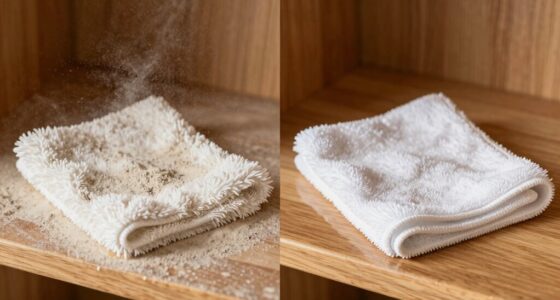


To guarantee effective disinfection of floors, you need to clean thoroughly first. Dirt, dust, and debris can shield germs from disinfectants, making the process less effective. Using a proper mopping technique and selecting the right disinfectant tailored to your floor type are essential steps. When you clean well before disinfecting, you’re removing physical barriers that prevent germs from being killed. Keep going to discover how to master the entire process for a safer, cleaner space.
Key Takeaways
- Dirt, dust, and debris can shield germs, reducing disinfectant effectiveness; cleaning first exposes microbes for better elimination.
- Proper cleaning removes physical barriers, ensuring disinfectants can directly contact and kill pathogens on floors.
- Use appropriate cleaning methods and tools, like microfiber mops, to thoroughly remove dirt before disinfecting.
- Selecting the right disinfectant compatible with your flooring enhances microbial kill rate and prevents surface damage.
- Allow disinfectants to sit for the recommended contact time after cleaning for maximum disinfection efficacy.

To effectively disinfect your floors, you first need to clean them thoroughly. This initial step is vital because dirt, dust, and debris can shield germs from disinfectants, rendering your efforts less effective. When it comes to mopping techniques, you’ll want to focus on methodically working from one corner of the room to the other, ensuring you don’t miss any spots. Use a mop with a clean, damp microfiber cloth or sponge head to pick up dirt efficiently. Avoid overly wet mops, as excess water can spread dirt around and make the floor harder to dry. Instead, wring out your mop well before each pass, maintaining a consistent dampness. This helps lift debris without leaving puddles that could dilute your disinfectant later.
Once your floor is visibly clean, it’s time to choose the right disinfectant type. Not all disinfectants are created equal, so you’ll want to select one suited for your flooring material and the level of disinfection you require. Common disinfectant types include diluted bleach solutions, alcohol-based products, quaternary ammonium compounds, and hydrogen peroxide-based cleaners. For everyday cleaning, a diluted bleach solution (typically one part bleach to ten parts water) is highly effective and inexpensive, but it requires careful handling due to its strong odor and potential for damage to certain surfaces. Alcohol-based disinfectants, usually containing at least 70% alcohol, dry quickly and are great for quick sanitation, especially on sealed floors. Quaternary ammonium compounds are popular in commercial settings and often come pre-mixed; they’re effective against a broad spectrum of microbes and are generally safe for most floors when used as directed. Hydrogen peroxide-based disinfectants are also a good choice, especially for those seeking a less harsh chemical option. Additionally, understanding the color accuracy of your disinfectant products can ensure you choose options that won’t stain or damage your flooring surface.
Frequently Asked Questions
How Long Should I Wait Between Cleaning and Disinfecting?
You should wait at least 10 minutes between cleaning and disinfecting your floors. This allows the cleaning product to loosen dirt and mold removal, making disinfection more effective. During this wait, guarantee your pet stays away to maintain pet safety. Rushing the process can reduce effectiveness and leave behind harmful residues, so patience is key. Always follow product instructions for the best results and safety.
Can I Use the Same Cloth for Cleaning and Disinfecting?
Using the same cloth for cleaning and disinfecting isn’t recommended because cloth contamination can transfer germs, reducing disinfectant effectiveness by up to 90%. Studies show bacteria can survive on cloth fibers, risking cross-contamination. To keep your surfaces safe, always use a clean cloth for disinfecting, or better yet, switch to disposable wipes. This simple step guarantees disinfectants work properly and keeps your environment healthier.
What Types of Disinfectants Are Safest for Floor Surfaces?
You should choose disinfectants that prioritize safety and are compatible with your floor material. Look for options labeled as safe for use on your specific surface, such as hardwood, tile, or vinyl. Always check the product’s instructions for disinfectant safety and confirm it won’t damage your floors. Using a disinfectant compatible with your floor material prevents damage and ensures effective cleaning without risking harmful residues.
How Often Should I Follow the “Clean First, Then Disinfect” Rule?
You should follow the “clean first, then disinfect” rule based on your cleaning schedule and the frequency guidelines for your space. Typically, do this daily in high-traffic or contaminated areas to prevent germs. For less-used spaces, cleaning every few days may suffice. Always adjust your routine if there’s a spill, visible dirt, or after someone sick has been on the floor. Regular cleaning helps keep your environment safe and hygienic.
Does This Rule Apply to All Types of Flooring Materials?
Sure, the rule applies to all flooring variations—unless, of course, your floor’s material compatibility is questionable. You might think a quick sweep is enough, but dirt can hide in textured surfaces, making disinfectants less effective. Always check your flooring material’s suitability with disinfectants, because what works on tile may damage hardwood. So, don’t skip cleaning first; your floors deserve proper care based on their specific materials.
Conclusion
Remember, skipping the cleaning step might seem faster, but it’s like painting over dirt—it won’t last. When you clean first, you’re removing the grime that can hide germs, making disinfecting more effective. It’s a simple switch that can protect your family and extend the life of your floors. So, don’t rush to disinfect; instead, embrace the clean first approach. After all, a spotless floor isn’t just about looks—it’s about health and peace of mind.