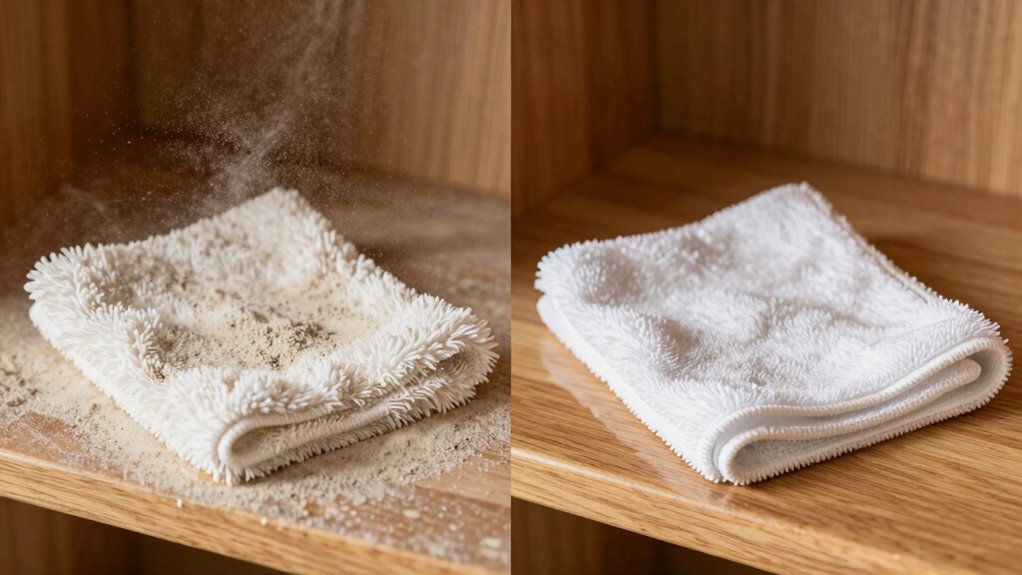

Dry dusting quickly lifts surface dust using cloths or dusters, but it can stir allergens and isn’t as thorough. Damp dusting uses a slightly moist cloth to trap dust more effectively and reduce airborne allergens, making it better at removing stubborn debris. The right choice depends on your surfaces and allergy sensitivities. Keep exploring to discover how to optimize your dusting routines for a cleaner, healthier home.
Key Takeaways
- Damp dusting traps and lifts more dust particles due to moisture, making it more effective than dry dusting.
- Dry dusting quickly removes surface dust but can stir allergens into the air, reducing overall cleanliness.
- Combining both methods optimizes dust removal, with damp dusting handling stubborn grime and dry dusting for quick cleanups.
- Damp dusting reduces airborne allergens more effectively than dry dusting, improving indoor air quality.
- Proper technique and tools, like microfiber cloths, enhance dust removal effectiveness for both methods.
What Are Dry and Damp Dusting Methods?
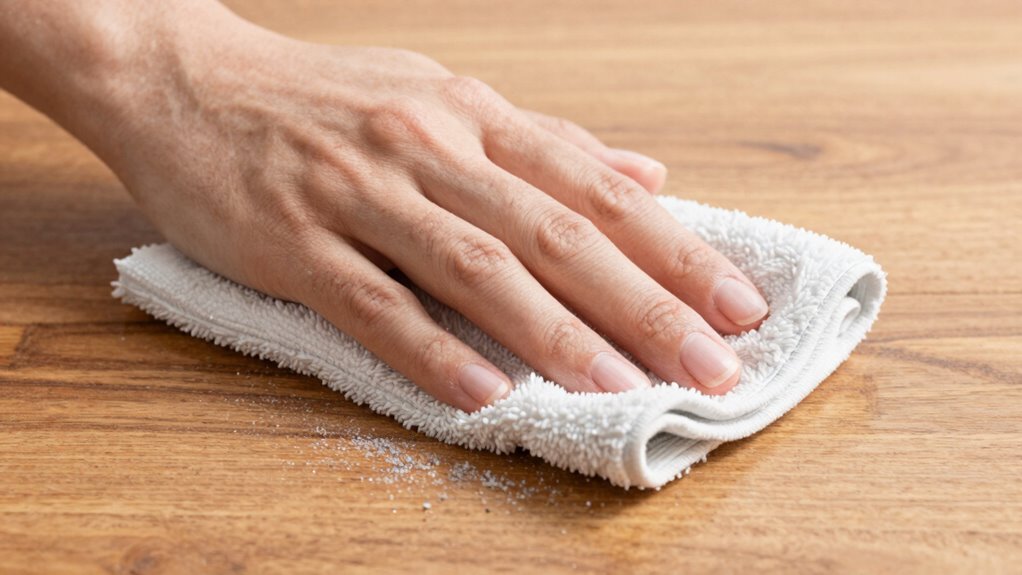
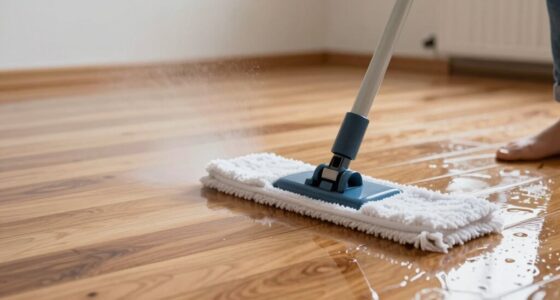
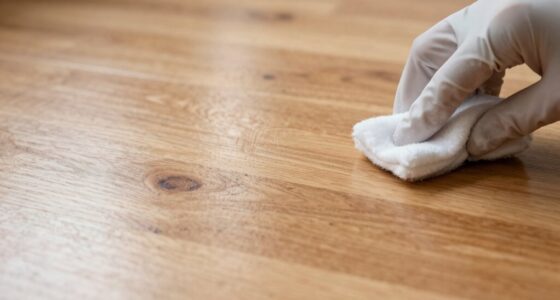
Dry and damp dusting are two common methods used to clean surfaces effectively. Historically, cleaning practices varied across cultures, with some favoring dry dusting to preserve delicate surfaces or respect cultural dusting habits. Dry dusting involves using a cloth or duster to lift dust without moisture, making it quick and simple. It’s especially useful for surfaces that can’t get wet or for light dust accumulation. Damp dusting, on the other hand, uses a slightly moist cloth or sponge to trap and remove dust particles more thoroughly. This method has roots in traditional cleaning practices where moisture was believed to better eliminate dust and dirt, aligning with cultural dusting habits that emphasize cleanliness and surface preservation. Additionally, understanding the contrast ratio of a surface can help determine the most effective cleaning method for optimal visual clarity. The choice between dry and damp dusting can also depend on the type of surface, as some materials are more sensitive to moisture and require gentle cleaning approaches. Depending on the surface material, choosing the appropriate dusting technique can prevent damage and ensure thorough cleaning. Both methods serve different needs based on context and surface type.
Which Dusting Technique Works Better at Removing Dust?
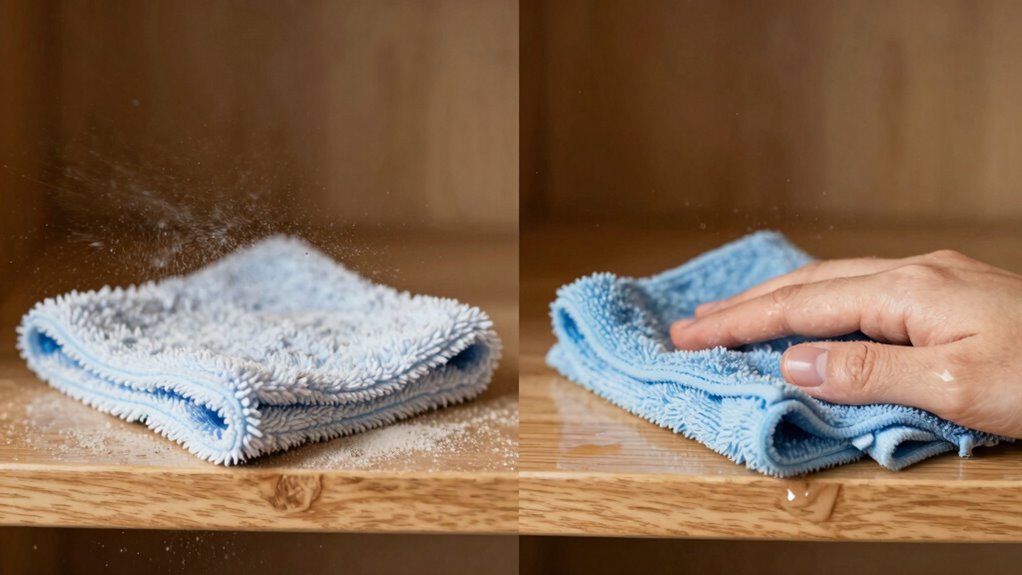
When it comes to effectively removing dust, damp dusting generally outperforms dry dusting because the moisture helps trap and lift particles more thoroughly. This method not only cleans more effectively but also contributes to allergy reduction by limiting airborne dust. Additionally, damp dusting promotes furniture safety by preventing scratches and damage caused by abrasive dry cloths. To maximize results, consider these points:
Damp dusting outperforms dry dusting by trapping dust, reducing allergens, and protecting furniture.
- Moisture captures dust better than dry surfaces
- Reduces airborne allergens effectively
- Less likely to spread dust around
- Preserves delicate furniture finishes
- Reduces the need for repeated cleaning
- Dust removal efficiency is improved through proper damp dusting techniques. Incorporating effective cleaning tools can further enhance dust elimination for a cleaner environment. Using the correct cleaning tools and techniques ensures optimal dust removal and minimizes residual dust. Employing appropriate cleaning methods also minimizes the disturbance of settled dust particles, promoting a healthier indoor environment. Proper technique selection can significantly impact overall cleaning effectiveness and dust control.
What Are the Pros and Cons of Dry vs. Damp Dusting?
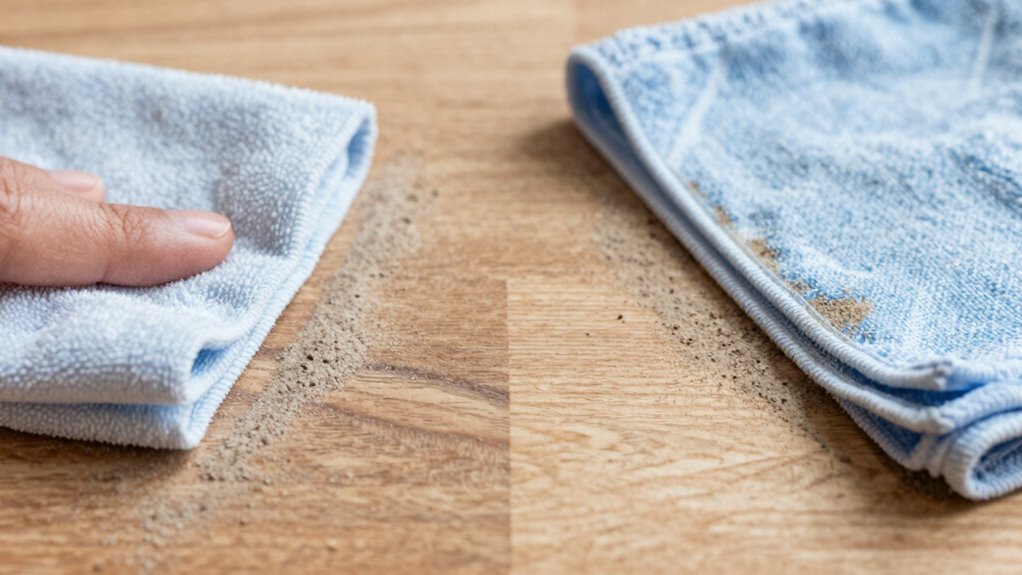
Choosing between dry and damp dusting depends on your priorities and the surfaces you’re cleaning. Dry dusting is quick and helps improve air quality by reducing airborne dust, but it may stir up allergens. Damp dusting traps dust and prevents it from becoming airborne, enhancing surface safety and reducing allergens, but it can damage delicate surfaces if not done carefully. Here’s a quick comparison:
| Aspect | Dry Dusting | Damp Dusting |
|---|---|---|
| Air Quality | Improves air quality by removing dust | Maintains cleaner air with less dust dispersal |
| Surface Safety | Safe for most surfaces, no moisture | Risks damage on sensitive surfaces |
| Efficiency | Good for quick dust removal | Better for thorough cleaning |
| Convenience | Fast and easy | Slightly messier, requires drying |
| Surface Damage | Less risk of damage | Potential for water marks or warping |
Using the appropriate technique can help maintain a healthier and more visually appealing environment, especially when considering the environmentally friendly aspects of cleaning methods. Additionally, understanding the dust removal process can guide you in choosing the most effective method for your needs.
How Do You Choose the Best Dusting Method for Your Home?
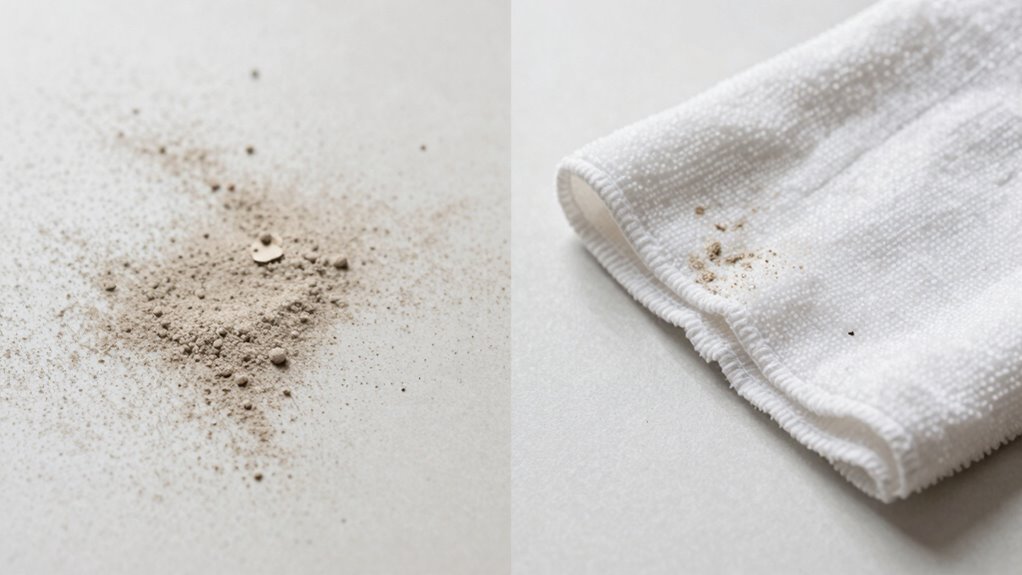
Selecting the right dusting method for your home depends on your specific cleaning needs and the surfaces you’re working with. Consider whether you want to focus on allergen reduction or electrostatic cleaning, which helps attract and trap dust more effectively. Dry dusting is quick and good for delicate surfaces, while damp dusting is better for removing stubborn grime and reducing allergens. To choose the best method, evaluate factors like surface type, dust level, allergy sensitivities, need for electrostatic cleaning, and preference for quick or thorough cleaning. Matching these factors guarantees you select an efficient and effective dusting approach for your home. Additionally, understanding the types of dust can help you tailor your cleaning method to target specific particles more effectively. When selecting a dusting technique, consider the impact on air quality and how each method influences dust dispersal and allergen levels in your living space. Considering the dust composition can further improve your cleaning strategy by targeting particles more precisely.
Tips for Effective Dusting With Dry or Damp Methods
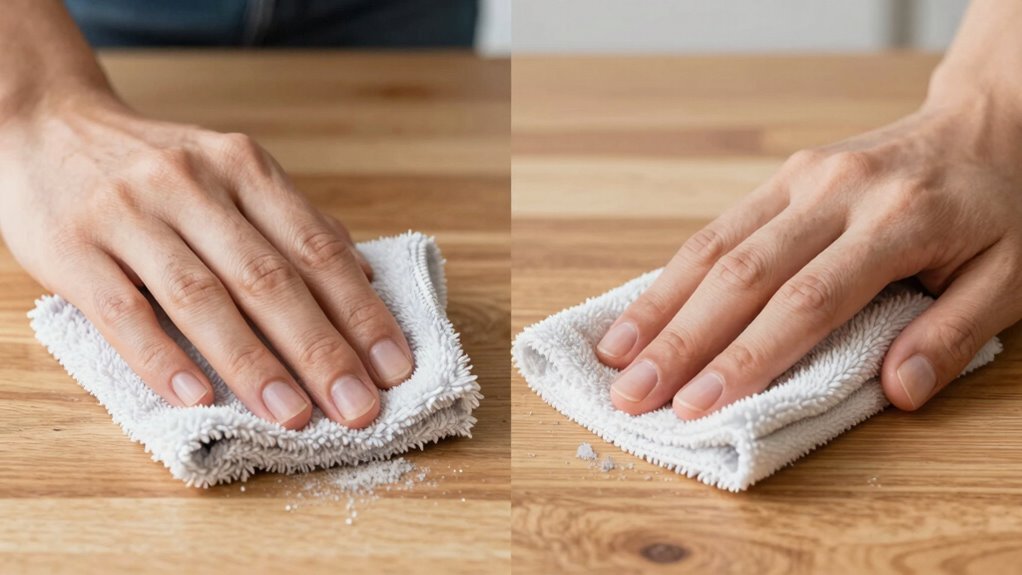
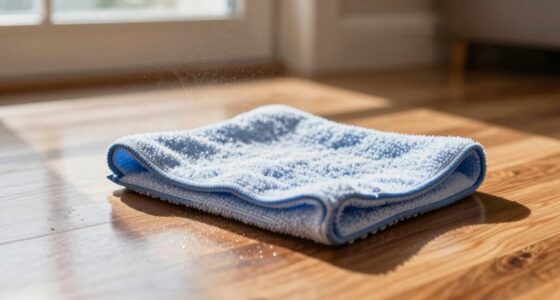
To maximize the effectiveness of your dusting routine, it’s vital to use the right technique for each surface and situation. For eco-friendly cleaning, opt for reusable cloths and natural cleaning solutions. When dusting with dry methods, use microfiber cloths or dusters to trap dust and allergens efficiently. Damp dusting helps remove stubborn dirt and allergens from surfaces that can tolerate moisture, like wood or glass. Always test a small area first. Incorporating proper dusting techniques can further improve your cleaning results. Choosing the appropriate method can also depend on the types of surfaces, ensuring that you don’t damage delicate materials during cleaning. Additionally, understanding the benefits of UST projectors can inspire you to create a comfortable and versatile living space that’s easy to maintain. Proper dust removal methods can also reduce indoor allergens, promoting healthier indoor air quality. Being aware of support breakfast options available in various locations can help you start your day with nutritious and satisfying meals, making your cleaning routine even more efficient by saving time on meal prep.
Frequently Asked Questions
Can Damp Dusting Damage Delicate Surfaces?
Yes, damp dusting can damage delicate surfaces if you’re not careful, especially if you use too much moisture or harsh cleaning solutions. This can lead to surface damage, such as warping or discoloration. To guarantee cleaning safety, test a small, hidden area first and use a gentle, damp cloth. Proper technique helps protect fragile surfaces while effectively removing dust.
Is Dry Dusting More Effective for Pet Hair Removal?
Imagine sweeping away a cloud of pet hair that’s settled deep into your furniture—dry dusting is your best bet. It’s more effective for pet hair removal because the static charge lifts and traps hair from surfaces. You’ll notice a cleaner, dust-free space faster, especially with delicate surfaces. Dry dusting effectively boosts dusting effectiveness, making your home look tidy and pet-hair-free without the mess of damp methods.
How Often Should Each Dusting Method Be Performed?
You should perform dry dusting weekly and damp dusting every two weeks for ideal results. Following a consistent frequency schedule helps maintain clean surfaces and reduces dust buildup effectively. Dry dusting is quick and ideal for delicate items, while damp dusting provides a deeper clean on sturdier surfaces. Adjust the intervals based on your home’s dust levels and pet hair presence to keep your space fresh and dust-free.
Are There Specific Cleaning Products Recommended for Damp Dusting?
You should choose gentle cleaning solutions like a mixture of water and a few drops of dish soap for damp dusting. Microfiber cloths are highly effective because they trap dust and dirt without spreading it around. Imagine wiping down your surfaces with a damp microfiber cloth—its fine fibers easily pick up dust particles, leaving your space spotless. This method guarantees thorough cleaning while minimizing residue or streaks.
Does Using a Microfiber Cloth Improve Dust Removal Efficiency?
Using a microfiber cloth substantially improves dust removal efficiency because of its fine fibers and static charge. Microfiber effectiveness helps trap and lift dust particles better than traditional cloths, making your cleaning more effective. When you use a microfiber cloth, you’re likely to notice less dust lingering on surfaces, and you’ll spend less time wiping repeatedly. Overall, microfiber cloths are a smart choice if you want to maximize dust removal and keep your space cleaner longer.
Conclusion
Ultimately, mastering the mix of dry and damp dusting means you’ll minimize mess and maximize cleanliness. By balancing bold brushing with gentle dampening, you banish dust effectively and efficiently. Remember, a strategic switch between the two techniques keeps surfaces spotless and spirits soaring. So, stay savvy, switch skills seamlessly, and enjoy a dust-free domain that dazzles with delight and dedication. Dust diligently, and delight in a cleaner, fresher home every day!