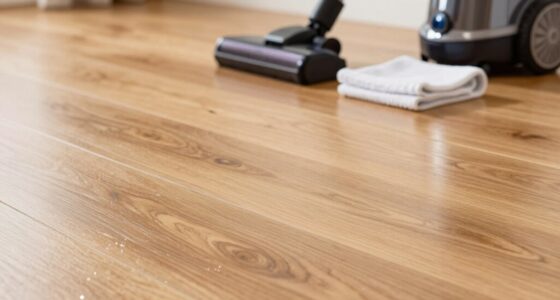
Floors still look dull after cleaning because of residual dirt, grime buildup beneath the surface, or leftover soap and cleaning products that create a cloudy film. Hard water deposits and mineral buildup can also dull the shine. Over-polishing or excess wax layers may cause a hazy appearance. Using improper tools or techniques can damage your finish and trap dirt. If you want to uncover simple fixes and best practices, there’s more to think about for long-lasting brightness.
Key Takeaways
- Residual dirt, grime, or buildup beneath the surface can cause dullness despite surface cleaning.
- Over-application of wax or polish creates a cloudy film that dulls the floor’s natural shine.
- Hard water deposits and mineral buildup leave chalky films that diminish gloss.
- Using inappropriate tools or harsh chemicals can scratch or strip the finish, leading to dull floors.
- Inadequate rinsing and lack of regular polishing prevent the removal of residues and restore shine.
Why Do Floors Still Look Dull After Cleaning?
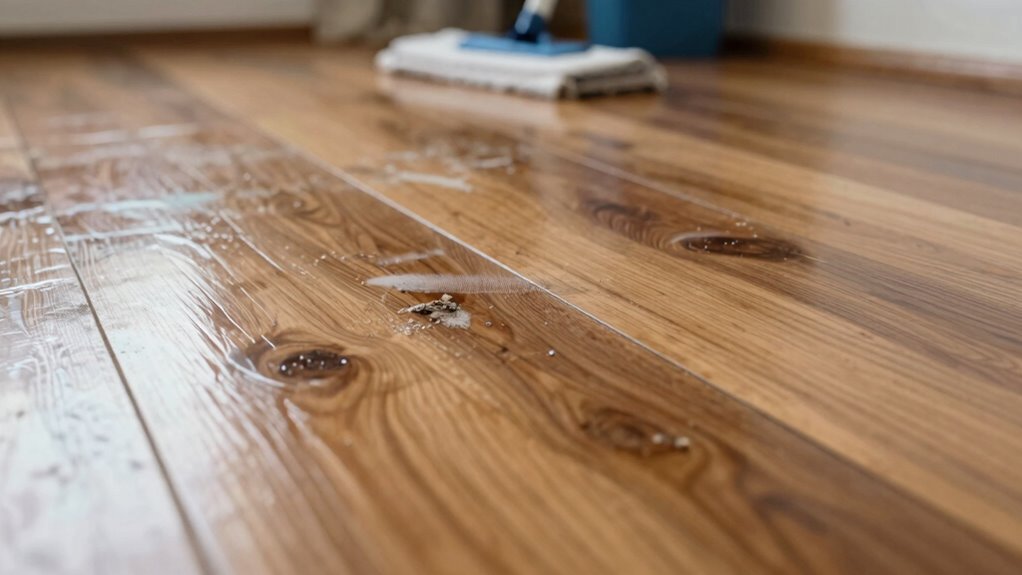
Even after cleaning, your floors can still appear dull because dirt and grime often build up deep within the surface, not just on top. Regular floor inspection helps you identify hidden buildup that standard mopping might miss. If you don’t follow a consistent cleaning schedule, dirt can accumulate over time, making floors look dull despite your efforts. Skipping routine inspections or cleaning too infrequently allows debris and residue to embed into the surface, dulling its shine. To maintain a bright, polished look, establish a regular cleaning routine that includes thorough inspections. Addressing dirt buildup early prevents dullness from becoming a persistent issue. Additionally, understanding surface reflectivity and how different cleaning methods affect it can help you choose the best approach for maintaining your floors’ shine. Using appropriate cleaning techniques tailored to your floor type ensures that you do not inadvertently damage the surface or diminish its natural gloss. Regularly proper maintenance can also extend the lifespan of your flooring materials. Incorporating preventive measures such as mats and protective pads can further reduce surface wear and dullness. Conducting periodic deep cleaning can effectively remove embedded dirt and restore shine. Remember, a well-planned cleaning schedule keeps your floors looking vibrant longer and helps you catch problems before they worsen.
How Residual Soap and Cleaning Products Cause Floor Film

Residual soap and cleaning products often leave behind a thin film on your floors that regular rinsing might not remove. This soap residue creates a sticky surface that attracts dirt and dust, leading to a dull appearance over time. When you don’t thoroughly wash after cleaning, cleaning buildup accumulates, forming a persistent film. This film can make your floors look cloudy and lack the shine they once had. Even small amounts of leftover soap can cause a noticeable difference in their appearance. To prevent this, use the right amount of cleaning product, rinse thoroughly, and avoid using excessive soap. Proper rinsing ensures no residue remains, restoring your floors’ natural luster and keeping them looking fresh and clean. Additionally, understanding the principles of Free Floating can help you choose the best cleaning techniques that prevent residue buildup and maintain your flooring’s appearance, especially by avoiding excessive scrubbing that can damage surfaces. Employing gentle cleaning methods can further enhance the longevity and appearance of your floors, ensuring they stay spotless and shiny over time. Using appropriate cleaning tools can also make a significant difference in achieving a streak-free finish.
Using the Wrong Cleaning Tools and Techniques for Your Floor Type

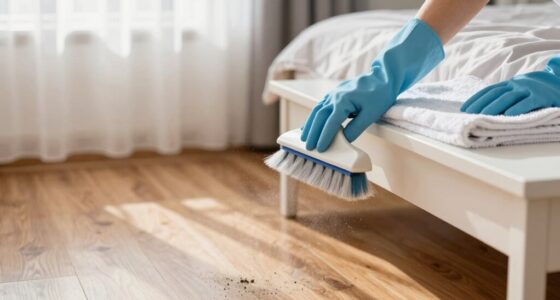
Using the wrong cleaning tools and techniques can quickly damage your floors and leave them looking dull. Not all floors respond well to the same brushes or cleaning methods. For example, using a stiff-bristled brush on hardwood can scratch the surface, while a soft cloth or mop is better suited. Similarly, certain cleaning techniques, like excessive scrubbing or harsh chemicals, can strip finishes or cause discoloration. Always choose the right brush types for your floor material—microfiber mops for tile, soft brushes for laminate, and gentle cleaning solutions. Proper techniques involve gentle, consistent motions and avoiding overly wet cleaning methods that can lead to warping or staining. Matching your tools and techniques to your floor type guarantees a thorough clean without damage, helping your floors stay shiny and vibrant.
Hard Water Deposits and Mineral Buildup on Your Floors

When cleaning your floors, you might notice dull spots or a chalky film that doesn’t seem to go away. This is often caused by hard water, which contains high levels of minerals like calcium and magnesium. When you mop with hard water, mineral deposits can accumulate on the surface, leaving behind a stubborn residue. Over time, these mineral deposits build up, creating a dull, cloudy film that dulls your floor’s shine. To fix this, avoid using hard water directly and opt for softened water or distilled water when cleaning. You can also use a vinegar solution—mix equal parts white vinegar and water—to dissolve mineral deposits. Regularly cleaning with this mixture helps prevent buildup and restores your floor’s natural luster. Understanding water quality and its impact on cleaning can help you choose the best approach for maintaining your floors. Additionally, ensuring proper water testing can help identify mineral levels and prevent future issues. Proper maintenance routines are also key to keeping floors looking their best over time. Incorporating water softening systems into your home can effectively reduce mineral content, minimizing buildup and prolonging the shine of your floors. Being aware of water hardness levels can guide you in selecting more effective cleaning methods and solutions.
How Excess Wax or Over-Polishing Dulls Your Floors

When you apply too much wax or polish, it can create a hazy film that dulls your floors’ shine. Over-polishing layers on product, leading to a buildup that obscures the natural luster. Too much of these treatments leaves a dull finish instead of a glossy, smooth surface. To prevent this, it’s important to use the right application techniques and avoid excessive layers that can compromise the finish.
Wax Buildup Creates Haze
Excess wax or frequent over-polishing can cause a dull, hazy film to develop on your floors. This wax buildup creates a persistent layer that obscures the shine and makes your floors look dull even after cleaning. Over time, the accumulated wax forms a cloudy film known as floor haze, which reduces the floor’s natural brightness. This haze often appears as a dull sheen that won’t wash away with regular cleaning. To fix this, you might need to strip the old wax using a specialized wax remover or a mild solvent. After removing the buildup, reapply a fresh, thin coat of wax or sealant to restore the floor’s natural gloss. Regular maintenance and proper waxing techniques can prevent future wax buildup and floor haze. Understanding proper waxing techniques and regular cleaning can help keep your floors looking their best.
Over-Polishing Causes Layering
Over-polishing your floors can lead to a buildup of wax layers that dull their natural shine. Layering issues occur when you repeatedly apply polish without proper removal, creating thick, uneven coatings. These excess layers can obscure the original finish, making floors look dull instead of shiny. Polishing mistakes like overdoing it or using the wrong products contribute to this problem. Instead of enhancing your floor’s appearance, excessive polishing creates a hazy film that reflects less light. To fix this, avoid excessive layers by using the right products and techniques. Regularly stripping old wax before reapplying guarantees a smooth, even surface. Proper maintenance prevents layering issues and helps your floors retain their natural luster, avoiding the dullness caused by over-polishing. Additionally, understanding how floating on water techniques can promote gentle cleaning may help prevent damage to your floors.
Dull Finish Results From Excess
Applying too much wax or polishing too frequently can cause a dull finish on your floors. When you use excess product, it builds up on the surface, creating a thick layer that prevents light from reflecting evenly. This buildup results in a polished surface that looks cloudy or dull rather than shiny. Over-polishing can also wear down the finish, reducing the overall gloss level and making your floors appear lackluster. Instead of increasing shine, too much wax or polishing diminishes it, giving your floors a flat, lifeless appearance. To restore their original brilliance, you’ll need to strip away the excess, clean the surface thoroughly, and apply a fresh, thin coat of polish or wax. This process helps revive the reflected light and regain a high-gloss finish.
Why Dirt and Grime Build Up Beneath the Surface

Even if your floors look clean on the surface, dirt and grime often accumulate beneath the surface over time. Dirt accumulation happens when particles settle into tiny pores and crevices that regular cleaning can’t reach. Grime infiltration occurs when oils, residues, and moisture seep into these hidden areas, creating a stubborn layer below the surface. This buildup can dull the floor’s shine and make it appear dirty even after cleaning. Over time, this unseen grime can cause discoloration and damage the finish. To combat this, you need to focus on deeper cleaning methods that target beneath the surface, ensuring you remove the hidden dirt and grime infiltration. Proper maintenance requires understanding how dirt infiltration happens and using appropriate cleaning techniques. Without addressing this buildup, your floors will continue to look dull despite your efforts. Regularly performing deep cleaning techniques like steam cleaning or using specialized cleaning agents can help remove this hidden grime and restore your floor’s appearance.
Choosing the Right Cleaning Methods for Your Floor Type

To restore your floors’ shine, you need to choose the right cleaning methods for your specific floor type. Using the correct products and techniques guarantees you don’t damage the surface or leave streaks. Pay attention to matching cleaning supplies and maintaining proper techniques for the best results. Incorporating simple organizing strategies can also help keep your floors looking their best by reducing dirt and debris buildup. Additionally, understanding modern cleaning technology can enhance your efforts, leading to more efficient and effective cleaning routines. Being aware of appropriate cleaning tools ensures you select equipment that suits your floor material and improves cleaning efficiency. Exploring advanced cleaning solutions can further optimize your routine and help maintain a pristine appearance over time.
Matching Cleaning Products
Choosing the right cleaning products is essential to restore your floor’s shine without causing damage. To do this, verify you’re matching cleaning products to your floor type—hardwood, tile, laminate, or vinyl each needs specific formulas. Using incompatible cleaners can dull or harm the surface. Always read labels carefully and select gentle, pH-balanced solutions for delicate floors. Pair these with durable cleaning tools that won’t scratch or abrade the surface, such as microfiber mops or soft-bristled brushes. Avoid harsh chemicals like bleach or ammonia unless specifically recommended for your floor type. Properly matching cleaning products and using durable cleaning tools help you clean effectively without stripping away the floor’s natural luster, keeping your floors looking vibrant and well-maintained. Additionally, understanding floor surface materials can help you choose the most appropriate cleaning methods and products.
Proper Maintenance Techniques
Selecting the proper cleaning method is essential because different floor types require specific techniques to maintain their appearance and durability. For example, hardwood floors benefit from gentle sweeping and occasional floor polishing to restore shine, while tile floors may need regular mopping with suitable cleaners. Establishing a consistent cleaning schedule prevents buildup that dulls surfaces and ensures your floors stay vibrant. Using the right tools and products tailored to your floor type helps avoid damage and preserves their finish. For instance, avoid harsh chemicals on wood, which can cause discoloration. Regularly scheduled maintenance combined with appropriate cleaning methods keeps your floors looking fresh and shiny. Remember, proper care extends their lifespan and reduces the need for costly repairs or refinishing.
How to Rinse Your Floors Properly and Keep Them Shiny
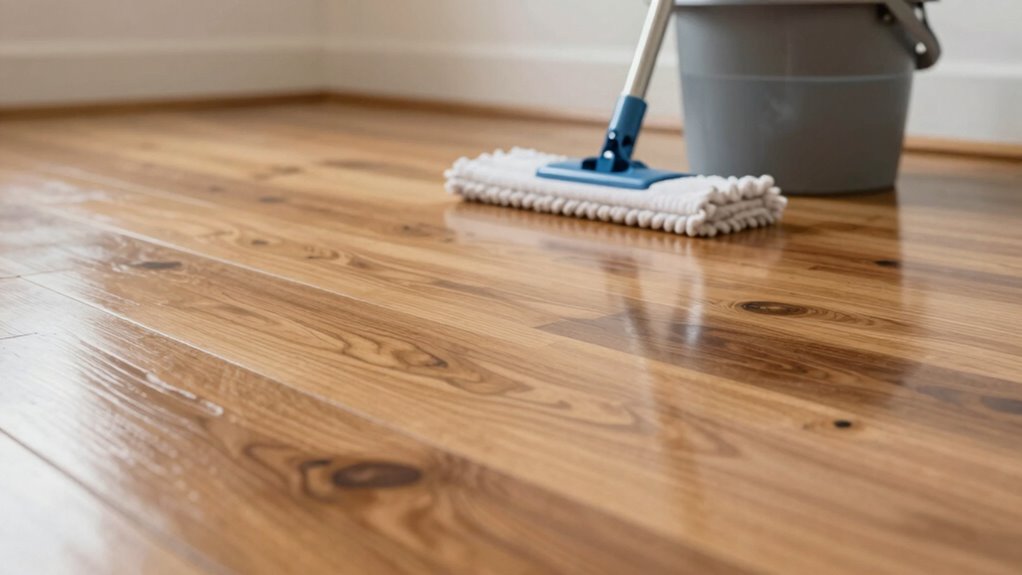
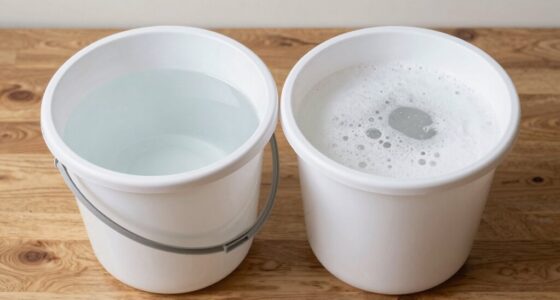
Properly rinsing your floors is essential to remove any leftover cleaning solution and prevent dullness. A good rinse ensures no residue is left behind that could dull the surface over time. Use a consistent mop technique, such as overlapping strokes, to cover every inch evenly. When rinsing, switch to a clean bucket of water frequently to avoid spreading dirt or soap. The rinse method involves gentle, thorough mopping without pressing too hard, which helps lift residues without damaging the floor. Focus on areas that tend to trap more cleaner, like corners or grout lines. Remember, a proper rinse leaves your floors clean, shiny, and free of dulling residue, maintaining their bright appearance after each cleaning session.
Simple Fixes to Restore Floor Shine and Maintain Brightness
If your floors have lost their luster, simple fixes can quickly restore their shine and keep them looking bright. Start with regular floor polishing using a high-quality polish suitable for your flooring type. This instantly boosts brightness and creates a protective layer that resists dullness. Next, refine your floor cleaning routine by using gentle, pH-balanced cleaners that don’t strip away finish or cause streaks. Avoid harsh chemicals that can dull the surface. For added shine, buff the floor with a soft cloth or a microfiber mop after cleaning. This enhances the reflective quality of the surface. Consistent floor polishing and proper cleaning habits are key to maintaining brightness and preventing dullness over time. With these simple steps, your floors will look vibrant and well-maintained.
Frequently Asked Questions
Can Ambient Humidity Affect My Floors’ Shine?
Yes, ambient humidity can influence your floors’ shine. When humidity levels are too high, excess moisture can make your floors look dull and even cause damage over time. Conversely, low humidity can lead to dryness and cracking. Proper moisture control helps maintain a consistent environment, keeping your floors glossy and protected. Managing humidity levels ensures your floors stay vibrant and durable, preserving their natural shine.
Do Different Floor Finishes Require Specific Cleaning Products?
Yes, different floor finishes need specific cleaning agents to avoid damage. For example, epoxy or polyurethane finishes benefit from gentle, pH-neutral cleaners, while waxed floors require special wax-safe products. Always check if your floor has a sealant layer, as using harsh cleaning agents can strip it and cause dullness. Using the right floor sealants and cleaning products guarantees your floors stay shiny and protected, prolonging their lifespan.
How Often Should I Deep Clean My Floors to Prevent Dullness?
Did you know that neglecting a proper floor cleaning schedule can reduce your floor’s lifespan by up to 50%? You should deep clean your floors at least once every 3 to 6 months, depending on foot traffic. Regular professional deep cleaning can maintain their shine and prevent dullness. Don’t wait until dirt and grime build up; proactive cleaning keeps your floors looking vibrant and extends their durability.
Are There Natural Remedies to Restore Floor Gloss?
Yes, you can restore your floor’s gloss with natural remedies. Try mixing a small amount of natural oils like coconut or olive oil with lemon juice or vinegar to create homemade polishes. Apply this mixture with a soft cloth, gently buffing the surface. These natural oils nourish the wood and add a healthy shine, giving your floors a revitalized, glossy look without harsh chemicals.
Does Sunlight Exposure Contribute to Floor Dulling Over Time?
Sunlight exposure can definitely contribute to your floor’s dullness over time due to UV damage. Constant UV exposure breaks down floor finishes, causing fading and loss of shine. To prevent this, use UV-resistant window treatments or rugs in sunlit areas. Regularly cleaning and reapplying protective coatings can also help maintain your floors’ gloss, keeping them looking vibrant despite sunlight damage.
Conclusion
To keep your floors shining, stay mindful of residue, choose the right tools, and rinse thoroughly. Avoid buildup, steer clear of over-polishing, and address mineral deposits promptly. Maintain your floors with consistent care, proper techniques, and gentle cleaning. By understanding the causes of dullness and applying simple fixes, you’ll not only restore their glow but also preserve their beauty longer. Keep your floors bright, clean, and inviting—because a fresh surface starts with your care.