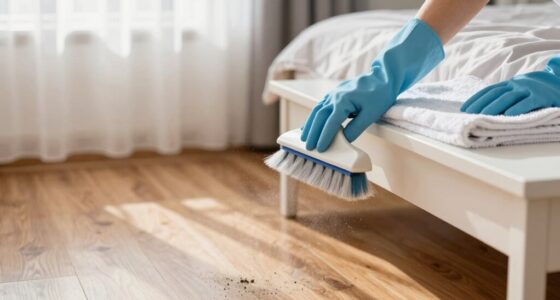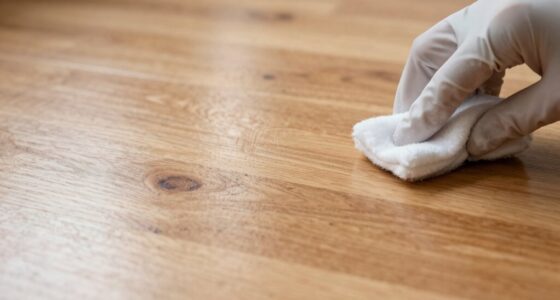


To keep surfaces and air quality in check, you need to treat dust, dirt, and grit differently. Dust floats and settles on surfaces, so regular dusting with damp cloths helps trap it. Dirt and grit are larger particles that require scrubbing or gentle cleaning to remove, with grit needing care to prevent scratches. Understanding these differences guarantees your cleaning routine is effective and the longer you apply the right strategies, the better your results will be.
Key Takeaways
- Different debris types vary in size, behavior, and surface adhesion, requiring specific cleaning methods for effective removal.
- Dust is airborne and invisible, needing dusting tools; dirt and grit are larger, demanding scrubbing or gentle handling.
- Grit can scratch surfaces if not carefully managed, unlike dust or dirt, which are less abrasive.
- Ignoring dust can worsen air quality, while neglecting dirt and grit accelerates surface damage.
- Tailoring cleaning routines to each debris type ensures better maintenance, surface longevity, and indoor air quality.

Dust, dirt, and grit are often used interchangeably, but they each have distinct properties that affect how you clean and maintain your environment. Understanding these differences is vital to developing an effective cleaning routine. Dust primarily consists of airborne particles such as pollen, pet dander, and tiny skin flakes. These particles float through the air and settle on surfaces, creating a thin, often invisible film. When you neglect dust, it doesn’t just sit idle; it accumulates over time, leading to surface buildup that can trigger allergies or respiratory issues. Regular dusting with a damp cloth or a microfiber duster helps trap these airborne particles before they settle deeply into fabrics or crevices, reducing surface buildup and improving air quality.
Dust consists of airborne particles that settle on surfaces, causing buildup and potential respiratory issues.
Dirt tends to be more substantial than dust. It usually originates from outside sources like mud, soil, or spilled liquids, and it often gets tracked indoors on shoes, clothes, or through open windows. Unlike airborne particles, dirt isn’t just floating around; it tends to settle quickly on floors, counters, and other surfaces. Dirt often clings more stubbornly to surfaces, especially if it’s mixed with oils or moisture. When you’re cleaning dirt, you need to focus on removing the actual substance, which sometimes requires more than just dusting — scrubbing, mopping, or using cleaning agents are often necessary. Ignoring dirt can result in persistent stains and surface degradation over time.
Grit is a coarse, abrasive material often composed of tiny, hard particles like sand, gravel, or crushed minerals. You’ll find grit embedded in outdoor footwear, tools, or even in outdoor furniture. Unlike dust or dirt, grit can cause physical damage to surfaces, scratching or wearing down finishes. It’s especially problematic on delicate surfaces like glass or polished wood. Because grit is abrasive, you need to be careful when cleaning to avoid scratches. Use gentle, non-abrasive tools or cloths, and consider rinsing or vacuuming grit before wiping surfaces. If you don’t treat grit properly, it can accelerate wear and tear, shortening the lifespan of your furnishings. Additionally, proper maintenance of surfaces can help prevent grit from causing long-term damage.
Recognizing these differences helps you tailor your cleaning approach. Dust calls for light, frequent dusting to keep airborne particles at bay. Dirt demands thorough cleaning methods to remove stubborn residues. Grit requires careful handling to prevent surface damage. By treating each type of debris appropriately, you not only keep your environment cleaner but also extend the life of your belongings and improve indoor air quality.
Frequently Asked Questions
How Can I Identify Whether a Substance Is Dust, Dirt, or Grit?
To identify whether a substance is dust, dirt, or grit, look at visual cues and texture differences. Dust appears as fine, powdery particles that settle easily and look fuzzy under a magnifier. Dirt is coarser, often clumping together, with a slightly damp feel. Grit is gritty and rough, feeling abrasive and often visible as small, hard particles. Touch and close inspection help you distinguish them quickly.
Are There Specific Cleaning Products Best Suited for Each Type?
You should choose cleaning products based on the type of substance and surface compatibility. For dust, use a microfiber cloth or HEPA vacuum for gentle removal. Dirt benefits from all-purpose cleaners and scrubbing tools like brushes. Grit requires stronger cleaning agents and abrasive tools, but make certain they’re compatible with your surfaces to avoid damage. Always match cleaning tools and products to the specific type of debris for effective, safe cleaning.
Can Improper Cleaning of One Type Cause Damage to Surfaces?
Think of improper cleaning as a storm that can erode your surfaces over time. Using the wrong cleaning techniques or harsh products on dust, dirt, or grit can cause surface damage, like scratches or discoloration. For example, scrubbing dirt aggressively might gouge wood, while neglecting grit lets it scratch glass. Always match your cleaning methods to each type, protecting your surfaces and keeping them looking pristine.
How Often Should I Clean to Prevent Buildup of Each?
You should clean regularly to prevent buildup of dust, dirt, and grit. Aim for dusting at least twice a week, vacuuming and mopping weekly, and deep-cleaning areas prone to grit monthly. Incorporate air purification to reduce airborne particles and stick to consistent cleaning schedules. This routine helps prevent damage, maintains surface integrity, and keeps your environment healthier by tackling each type of debris appropriately.
Do Different Environments Require Different Cleaning Approaches for These Materials?
Just like you’d adjust your clothes for weather, you should adapt your cleaning approach to different environments. Environmental factors influence whether dust, dirt, or grit accumulate faster, so you need specialized cleaning tools for each. For example, a damp cloth works well indoors for dust, but outdoor areas with dirt and grit might require a more vigorous scrub or a leaf blower. Tailoring your methods keeps your space spotless.
Conclusion
Understanding the differences between dust, dirt, and grit helps you clean more effectively. Think of them as distinct guests at your home—each requiring a unique approach to keep your space spotless. By tailoring your cleaning routine, you’ll prevent buildup and prolong the life of your surfaces. Just as a gardener carefully tends to each plant, treating each type of debris with care guarantees your home stays fresh and inviting. Your cleaner space starts with knowing what to tackle first.