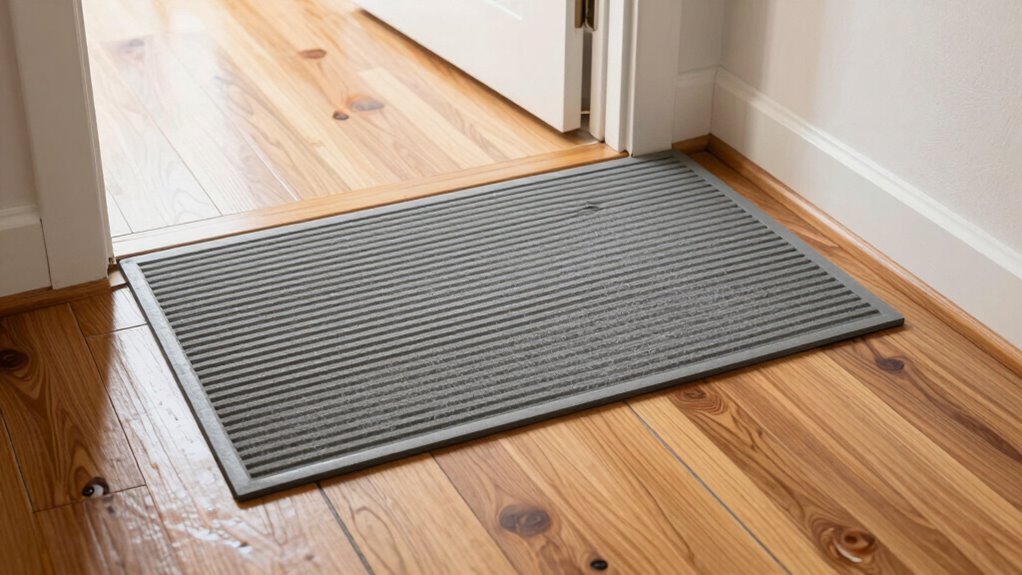
To protect your floors, start by placing durable, non-slip mats at entry points to trap dirt and moisture before they damage your floors. Add shoe racks or trays to organize footwear and reduce foot traffic. Regularly clean and replace mats to prevent buildup. Keep your entryway well-lit and organized, and consider a drop zone for everyday items. If you keep these tips in mind, you’ll discover simple ways to keep your floors pristine and long-lasting.
Key Takeaways
- Place durable, non-slip mats at entry points to trap dirt and moisture, preventing floor damage.
- Regularly clean and replace mats to avoid dirt buildup that can scratch or stain floors.
- Incorporate shoe racks, wall hooks, or trays to reduce foot traffic and keep dirt off floors.
- Wipe spills immediately and act quickly on stains to prevent lasting damage.
- Improve lighting and organize the space to encourage consistent use of protective mats and accessories.
Why Entryways Damage Floors: And How to Protect Them
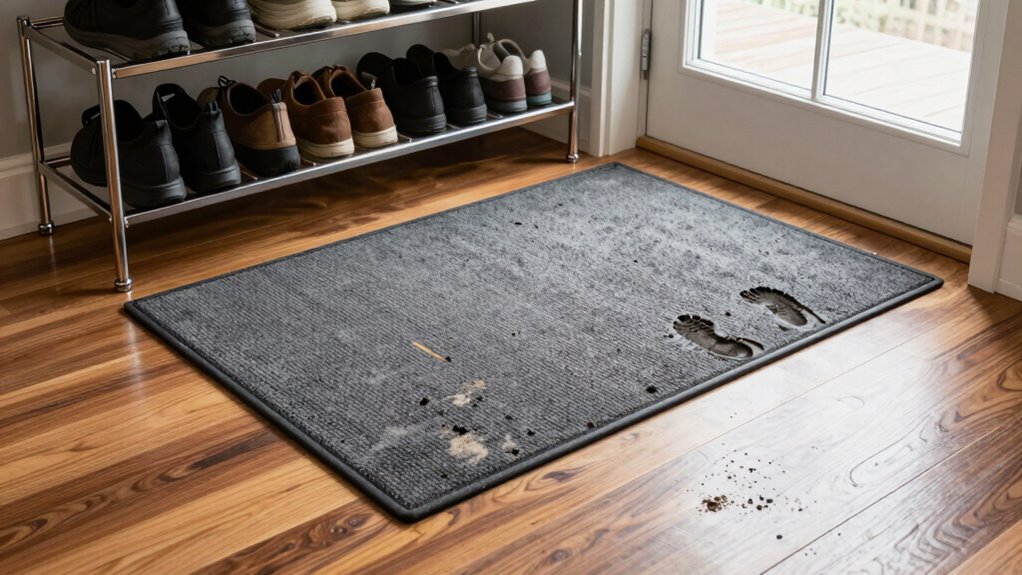
Entryways often damage floors because they’re the first point of contact for shoes, dirt, and moisture that can cause scratches, stains, and wear over time. The type of floor material you choose plays a big role in how much damage occurs. Hard surfaces like hardwood or tile are more susceptible to scratches and dents from debris, especially if dirt is trapped underneath shoes. Entryway design also impacts floor durability; a poorly planned layout with little protection invites more wear. Without proper mats or barriers, shoes transfer grit and moisture directly onto the surface. To minimize damage, you need to understand your floor material’s vulnerabilities and optimize your entryway design to reduce the impact of daily foot traffic. Proper entryway protection can significantly extend the lifespan of your floors and keep them looking their best. Additionally, choosing the right flooring material can help resist scratches, dents, and moisture damage, further safeguarding your investment. Implementing appropriate barrier mats at entry points is an effective way to trap dirt and moisture before they reach your floors, further reducing potential damage.
Choosing the Best Entryway Floor Protection Materials
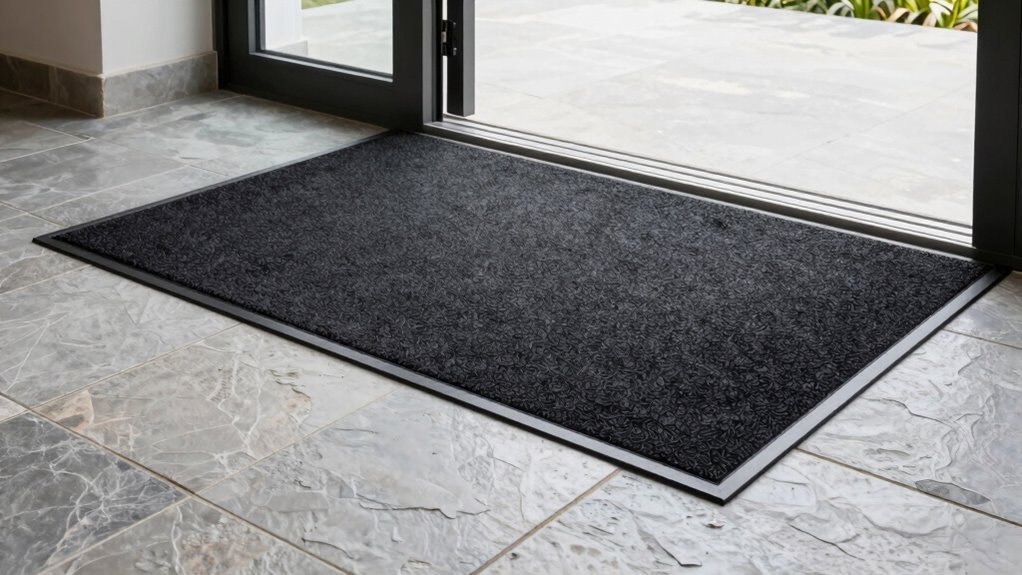
Selecting the right floor protection materials for your entryway is essential to prevent damage from dirt, moisture, and wear. Durable mats or rugs with non-slip backing shield your floors from heavy foot traffic and seasonal decor accessories. Consider materials like rubber, coir, or vinyl, which are easy to clean and resistant to moisture. Proper entryway lighting can highlight these protective layers, making them more noticeable and encouraging consistent use. When choosing materials, think about how they complement your seasonal decor, ensuring they blend seamlessly while providing maximum protection. Focus on options that are easy to maintain and replace when worn out. Additionally, incorporating Free Floating features in your entryway design can help create a seamless transition from outdoor to indoor space, minimizing dirt and debris tracked inside. To further enhance durability, selecting high-quality mats designed for heavy use can significantly extend their lifespan. Using connected home fitness solutions, such as smart mats with moisture sensors, can help monitor entryway cleanliness and prevent damage. Incorporating durable materials that resist common wear and tear will also help maintain your entryway’s appearance over time. Additionally, choosing mats with proper drainage can help prevent moisture buildup and prolong their usability. Ultimately, the right combination of protective flooring and strategic lighting keeps your entryway functional, inviting, and damage-free year-round.
Designing a Stylish and Functional Entryway Mat Area
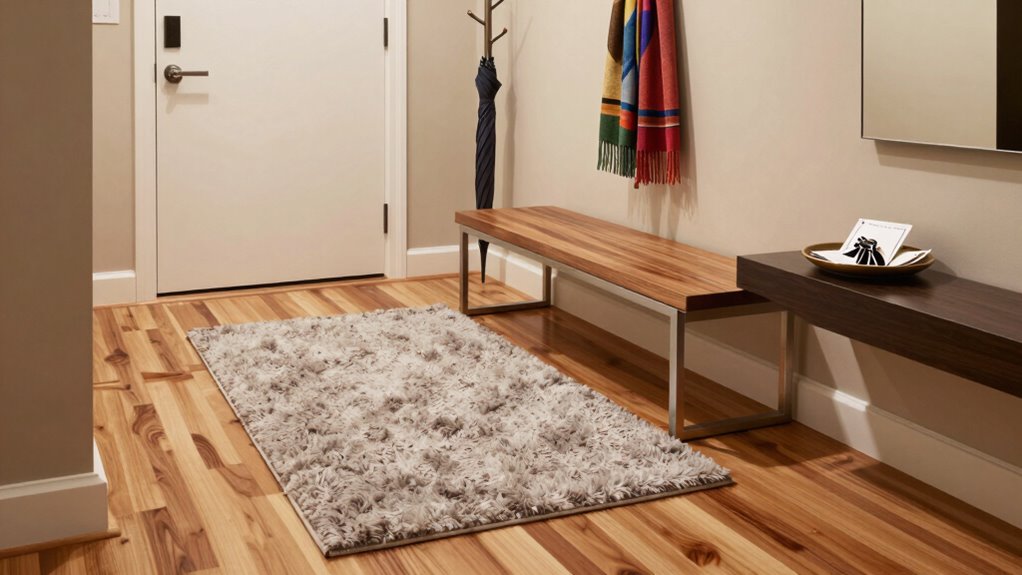
Creating a stylish and functional entryway mat area starts with choosing pieces that complement your overall decor while serving their purpose effectively. Select mats that enhance your entryway aesthetics, blending seamlessly with your style, whether modern, rustic, or traditional. Consider layered options—an eye-catching front mat paired with a softer, absorbent runner inside—to combine practicality with visual appeal. Incorporate seasonal decor by swapping out mats or accessories to reflect holidays or seasons, keeping the space fresh and inviting. Keep the area tidy and organized by choosing mats with non-slip backing and easy-to-clean surfaces. This approach guarantees your entryway not only looks great but also efficiently traps dirt and moisture, protecting your floors while welcoming guests with style. Integrating smart home technology such as automated cleaning devices can further maintain this space effortlessly.
Setting Up a Drop Zone to Keep Dirt and Moisture Out
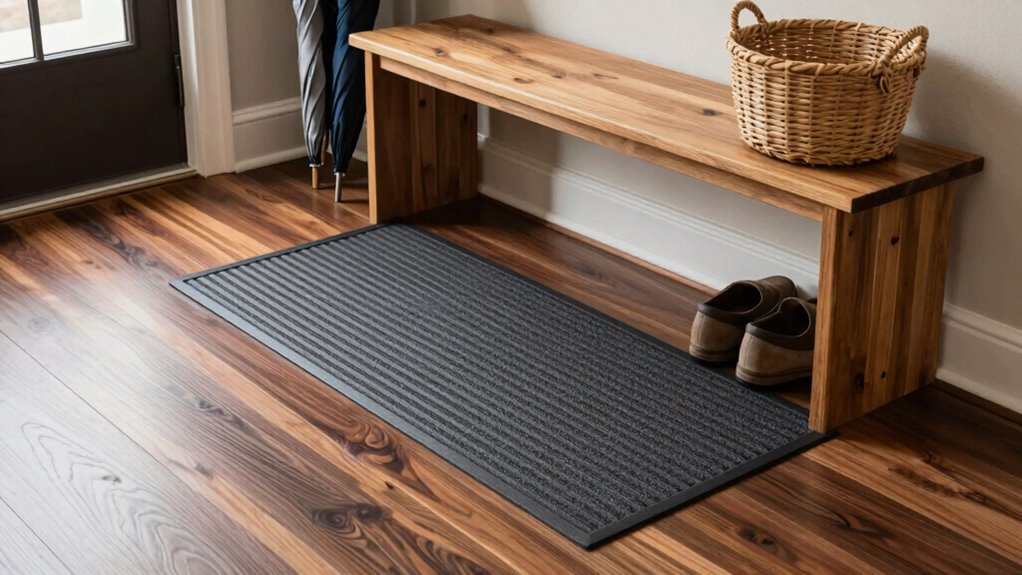
Choosing the right mat is essential for catching dirt and moisture before they reach your floors. Proper placement guarantees your drop zone is effective and convenient, while regular maintenance keeps it working well. Let’s explore how to select, position, and care for your entryway drop zone.
Choosing the Right Mat
Ever wonder how to prevent dirt and moisture from tracking into your home? Choosing the right mat is key. Opt for a durable, absorbent mat that traps dirt and moisture effectively. Look for options with a non-slip backing to prevent accidents. Consider seasonal decor to keep your entry inviting year‑round—adding festive touches during holidays or cozy accents in winter. Also, think about lighting options around your mat; good lighting highlights your drop zone and makes it easier to see dirt or debris. Properly air-filtered entryways can further reduce pollutants brought inside, enhancing your home’s air quality. Incorporating moisture absorption features into your mat selection can significantly improve its performance. Additionally, selecting a mat with quick-drying materials can help prevent mold and unpleasant odors over time. Here’s a quick guide:
| Feature | Benefits | Tips |
|---|---|---|
| Absorbent Material | Keeps floors dry | Look for microfiber or coir |
| Non-slip Backing | Prevents slips | Ensure it’s secure on your floor |
| Seasonal Decor & Lighting | Enhances appeal | Rotate decor & add warm lighting |
A well-chosen mat keeps your entryway tidy and your floors protected.
Placement and Maintenance Tips
To effectively keep dirt and moisture from spreading throughout your home, it’s essential to carefully place and regularly maintain your drop zone. Start by positioning your mat in a well-lit area with good entryway lighting to encourage use. Use decorative accents like a stylish bench or plant to make the space inviting, prompting you to wipe your feet. Keep your mat clean and replace it when worn to prevent buildup. Regularly vacuum or shake out the mat and surrounding area. Consider adding a small tray or container for shoes to contain dirt. Incorporate entryway safety measures, such as non-slip mats, to prevent accidents. Additionally, understanding the importance of proper placement can significantly enhance your entryway’s effectiveness. Proper placement not only helps in dirt control but also contributes to floor safety, reducing the risk of slips and falls. With consistent maintenance, your entryway stays tidy, and your floors stay protected. Proper placement and upkeep make your drop zone both functional and visually appealing.
Easy Maintenance Tips to Keep Your Floors Looking Fresh
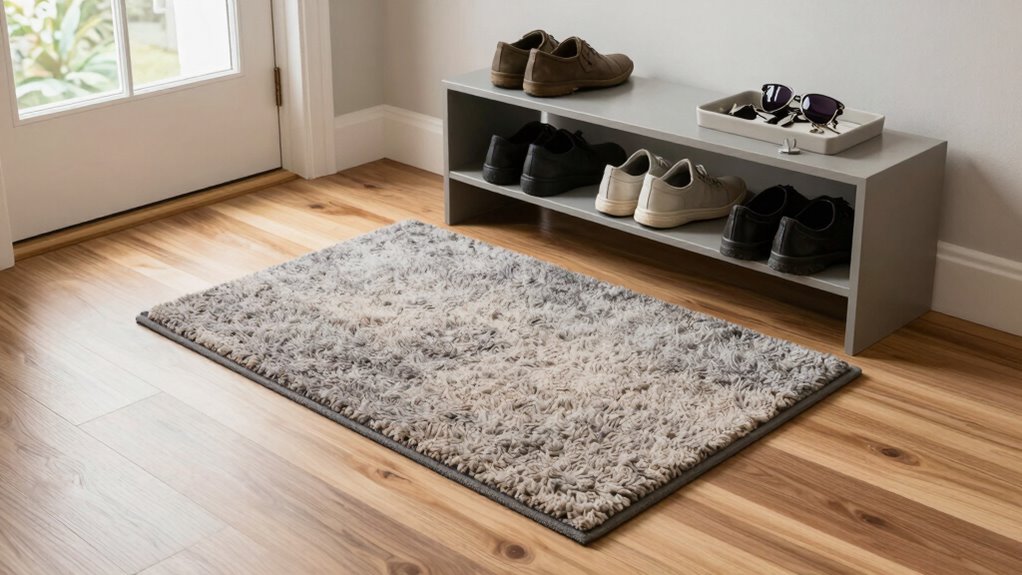
Keeping your floors looking fresh doesn’t have to be complicated. Simple maintenance can make a big difference. Regularly sweep or vacuum to remove dirt and debris that can scratch surfaces. When updating seasonal decor, choose lightweight, non-abrasive pieces to avoid scuffs. Pay attention to lighting choices; soft, warm lighting minimizes glare and highlights your floors’ natural beauty. To help you stay organized, here’s a quick guide:
| Tip | Action | Benefit |
|---|---|---|
| Use doormats | Place them at entry points | Trap dirt and moisture |
| Clean spills immediately | Wipe with a damp cloth | Prevent staining and damage |
| Regularly check lighting | Adjust for ideal brightness | Showcases floors at their best |
Follow these tips to keep your entryway inviting and your floors pristine.
How to Clean and Care for Entryway Floors After Damage
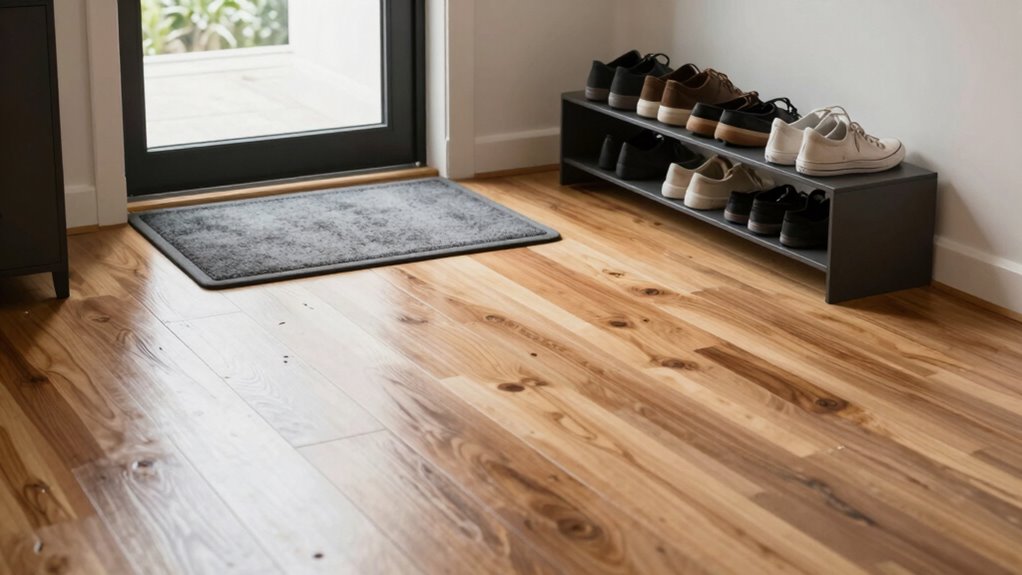
When your entryway floors get stained or damaged, quick and proper cleaning is essential. You can effectively remove stains with the right solutions and techniques, preventing them from setting in. Additionally, taking steps to protect your floors afterward helps prevent future damage and keeps them looking their best. To ensure your floors maintain optimal performance and durability, it’s also helpful to understand the appropriate cleaning methods for different flooring materials, which can extend their lifespan. Being aware of specialized cleaning techniques for various surfaces can further enhance your maintenance routine. Understanding how different flooring types react to cleaning allows you to select the most effective and safe methods for each material. Learning about floor-specific protective measures can also help prevent damage before it occurs.
Removing Stains Effectively
Stains on entryway floors can be stubborn, but quick and proper cleaning makes a significant difference. To effectively handle stain removal, focus on using the right cleaning solutions and acting fast. Here are three tips to help you succeed:
- Identify the stain type to select the most effective cleaning solution.
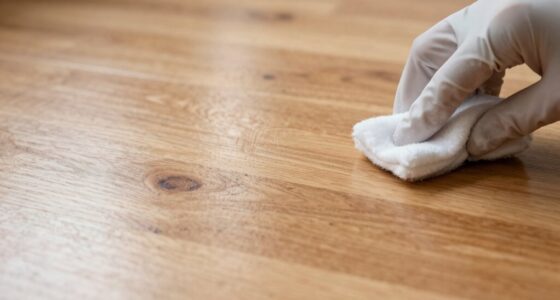
- Use a gentle scrub with a soft cloth or brush to lift the stain without damaging the floor.
- For tough stains, try a mixture of baking soda and water or a specialized stain remover suited for your flooring material.
Always test cleaning solutions in a small, hidden area first. Staying proactive with stain removal preserves your entryway’s appearance and prolongs your floors’ lifespan.
Preventing Future Damage
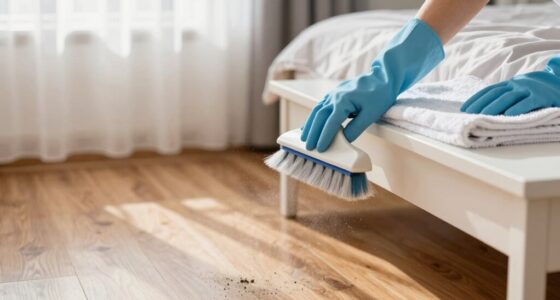
After removing stains, it’s important to adopt ongoing cleaning habits that prevent future damage to your entryway floors. Regularly wipe down the area to remove dirt and debris that can scratch or wear down the surface over time. Encourage the use of seasonal footwear, such as boots in winter or sandals in summer, to minimize dirt and moisture brought inside. Place a mat or rug at the entrance to catch mud and water before they reach your floors. Be cautious with indoor plants; ensure their pots have proper drainage and avoid placing overly wet or muddy plants near your flooring. By maintaining these habits, you protect your floors from lasting damage and keep your entryway looking fresh and inviting.
Affordable Ways to Upgrade Your Entryway Floor Protection
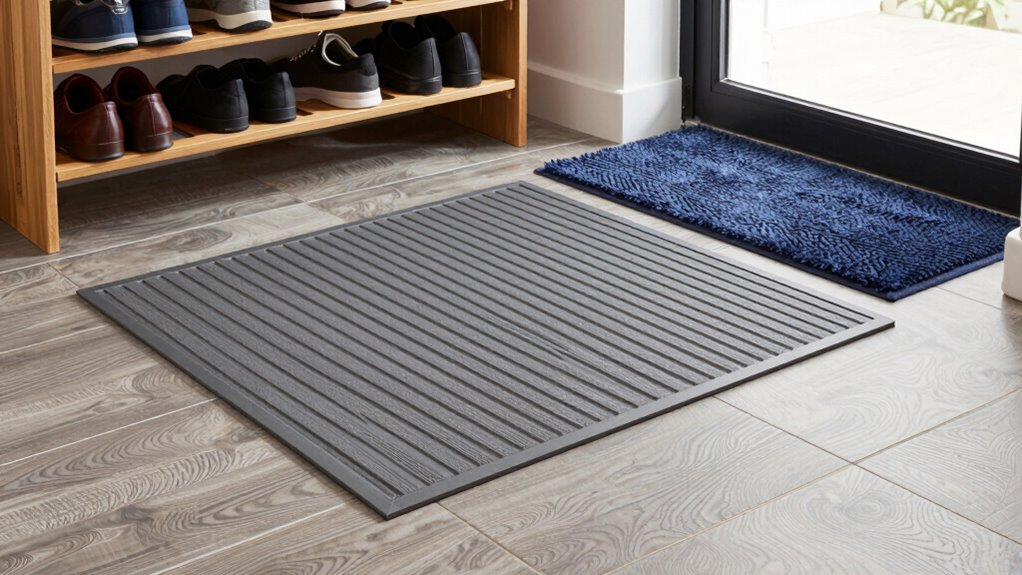
Upgrading your entryway floor protection doesn’t have to break the bank. You can enhance durability and style with simple, affordable solutions. First, choose a durable doormat with a non-slip backing to trap dirt and moisture. Second, incorporate smart storage solutions like shoe racks or wall-mounted hooks to prevent clutter and reduce foot traffic on delicate floors. Additionally, maintaining proper entryway maintenance can help you stay ahead of potential issues before they cause damage. Ultimately, improve entryway lighting to make cleaning easier and deter dirt buildup. These upgrades not only protect your floors but also create a welcoming space. Additionally, considering the importance of entryway maintenance can help you stay ahead of potential issues before they cause damage. By focusing on cost-effective options, you can maintain your entryway efficiently without overspending. Small changes like these make a big difference in extending the life of your floors while enhancing overall functionality.
Common Mistakes to Avoid When Protecting Entryway Floors
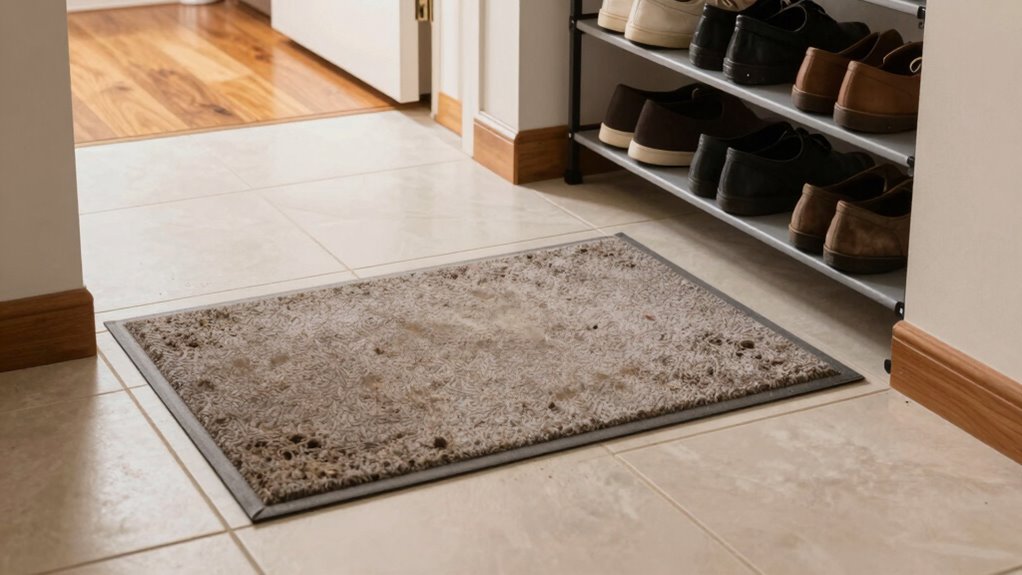
One common mistake homeowners make when protecting entryway floors is neglecting to regularly clean and maintain their protective measures. Dirt, mud, and debris can quickly wear down mats and rugs, reducing their effectiveness. Additionally, ignoring seasonal decorations can cause buildup of moisture or dirt that damages flooring over time. It’s essential to frequently vacuum or wash entryway mats and replace worn-out protectors. If you have pets, opt for pet friendly options that are easy to clean and resistant to scratches. Failing to do so allows dirt and moisture to seep through, causing long-term damage. Regular upkeep guarantees your protection remains effective, preventing costly repairs and preserving your floors’ appearance and durability. Moreover, understanding how air purifier maintenance can improve indoor air quality can help reduce airborne dirt and allergens, extending the lifespan of your entryway protections. Regularly inspecting and maintaining your smart home integrations can also optimize your cleaning routines and ensure your entryway remains protected efficiently. Incorporating floor protection strategies can further enhance the longevity of your flooring investment.
Frequently Asked Questions
How Often Should I Replace My Entryway Mats for Optimal Protection?
You should replace your entryway mats every six to twelve months for ideal protection. Regular mats maintenance helps you spot wear and tear early, ensuring they continue to protect your floors effectively. Keep an eye on the mats’ condition, and if you notice fraying, thinning, or dirt buildup that won’t clean, it’s time for a replacement. Sticking to a consistent replacement schedule keeps your entryway looking fresh and your floors safe.
Can Certain Flooring Types Withstand Frequent Entryway Traffic Better Than Others?
Your floors face a battlefield every day, so choosing the right material makes all the difference. Rubber and tile often outperform hardwood or laminate in durability comparison, thanks to their superior material resistance. Rubber mats handle heavy traffic without tearing, while tile resists scratches and moisture. For high-traffic entryways, opt for these tougher options to protect your floors effectively and prevent costly damage.
Are There Eco-Friendly Options for Entryway Floor Protection Materials?
Yes, eco-friendly options like biodegradable mats and rugs made from natural fibers help protect your floors while being environmentally conscious. You can also choose entryway protection made from recycled materials, such as recycled rubber or plastic. These options not only reduce waste but also offer durability and style. By selecting biodegradable and recycled materials, you make a sustainable choice that keeps your floors clean and eco-friendly.
What’s the Best Way to Prevent Slips on Entryway Mats During Wet Weather?
To prevent slips on entryway mats during wet weather, you should use non-slip solutions like rubber backing or adhesive pads underneath your weather-resistant mats. Make sure to choose mats with textured surfaces to improve grip and regularly shake or clean them to remove dirt and moisture. These simple steps will keep your entryway safe and your floors protected, even during rainy days.
How Can I Personalize My Entryway to Match My Home’s Decor Style?
Want your entryway to scream “you”? Start with decorative accents that reflect your style—think vintage signs or sleek modern vases. Mix and match textures for a cozy vibe, and use color coordination to tie everything together. Whether you favor bold hues or subtle neutrals, personalize your space so it feels welcoming and uniquely yours. After all, your entryway should be the first impression, not an afterthought.
Conclusion
So, next time you ignore that muddy shoe or soggy umbrella, remember—you’re basically sabotaging your floors. But hey, who needs pristine floors when you can have a stylish chaos zone? Just follow these simple tips, set up your drop zone, and enjoy your “lived-in” look. Because really, what’s a little wear and tear compared to the thrill of dodging water stains and scratches every day? Happy protecting!