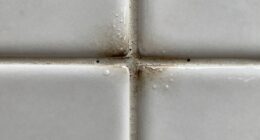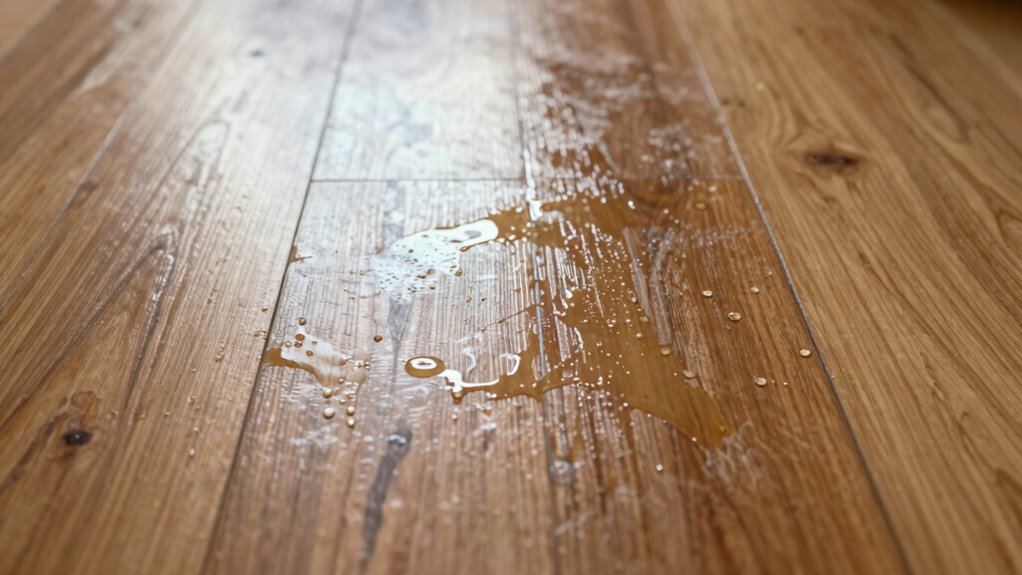

If your floor cleaner leaves a sticky film, it’s often due to using too much product, inadequate rinsing, or incompatible cleaners with your surface. Residues can also form from dirt, waxes, silicones, or fragrances that aren’t completely removed. To prevent this, use less cleaner, rinse thoroughly with warm water, and choose gentle, floor-specific products. Keep going to discover proven methods to keep your floors spotless and residue-free.
Key Takeaways
- Inadequate rinsing after cleaning leaves residues that cause sticky films on floors.
- Using excessive or incompatible cleaning products, especially those with waxes or silicones, promotes buildup.
- Applying too much cleaner or not rinsing properly prevents residue removal, leading to stickiness.
- Improper cleaning techniques or tools can spread residues and worsen film formation.
- Hot water and thorough rinsing techniques help dissolve and remove residues, preventing sticky films.
Why Does My Floor Cleaner Leave a Sticky Film?
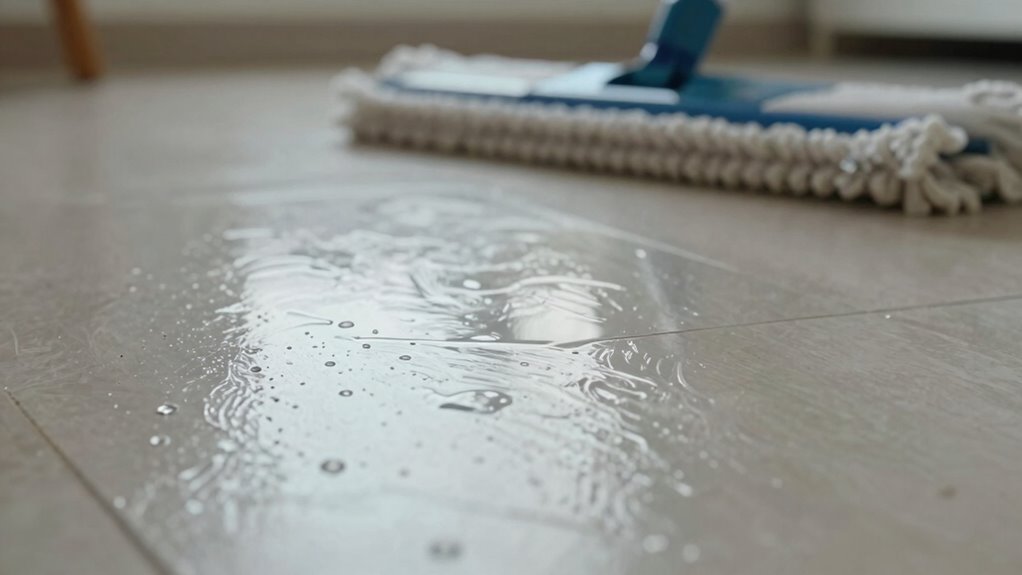
Sometimes, your floor cleaner leaves a sticky film because it wasn’t rinsed off properly or because it reacts with residues left behind from previous cleaning products. Many cleaning myths suggest that using strong or multiple cleaners always guarantees a spotless floor, but this isn’t true. Instead, it can cause buildup and leave a sticky residue. If you’re environmentally conscious, you might opt for eco-friendly options, believing they won’t cause residue issues. However, not all eco-friendly cleaners are rinsed thoroughly or formulated to prevent film. To avoid this, always follow the instructions carefully, rinsing well and choosing products suitable for your flooring. Understanding the cleaning process helps you make better decisions and keeps your floors truly clean without unwanted stickiness. Additionally, ensuring proper cleaning techniques can significantly reduce residue buildup and improve overall results. Proper maintenance practices also play a key role in preventing sticky films over time. Being aware of how residue buildup occurs can help you take preventative steps and maintain a cleaner, safer floor environment. Regularly inspecting and addressing issues early can further prevent stubborn residues from forming.
Which Floor Cleaners Are Most Likely to Leave Residue?
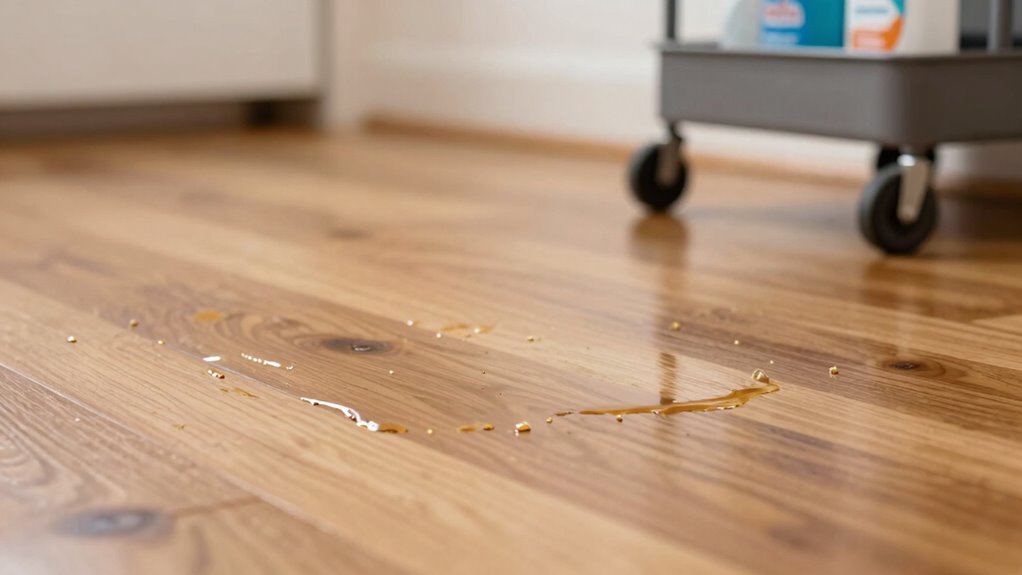
You’ll find that heavy chemical formulations often leave behind stubborn residue on your floors. Using too much product or applying it improperly can also contribute to sticky film buildup. Additionally, some cleaners aren’t suited for certain surface types, increasing the likelihood of leftover residue. For example, using inappropriate cleaners for delicate surfaces can lead to undesirable residue buildup. Choosing energy-efficient cleaning products can help reduce chemical residues and promote a cleaner, safer environment. Selecting appropriate cleaning solutions tailored to specific flooring materials can further minimize residue and ensure effective cleaning.
Heavy Chemical Formulations
Heavy chemical formulations in floor cleaners are among the main culprits for leaving sticky residues behind. These products often contain potent chemical ingredients that can disrupt formulation stability, causing residue buildup over time. When choosing a cleaner, be aware of the following factors:
- High concentrations of surfactants can leave films if not properly balanced.
- Additives like waxes or silicones may create a sticky film, especially if overused.
- Fragrances and dyes can contribute to residue if they don’t fully rinse away.
- Inconsistent formulation stability can cause separation, leading to uneven application and sticky patches.
- The presence of residue-causing ingredients in some products can exacerbate buildup and make floors appear dull. Additionally, using improper cleaning techniques can leave residues that are difficult to remove. Regularly inspecting product labels for chemical additives can help prevent residue issues and maintain a clean, streak-free finish.
Excessive Use Products
Floor cleaners that are used excessively tend to leave more residue than necessary, especially those with heavy chemical formulations or added conditioners. Overusing these products can cause buildup, impacting surface compatibility and contributing to environmental impact due to chemical runoff. To minimize residue, consider the type of cleaner and how often you apply it. Some products are designed for frequent use but still require moderation. Additionally, understanding cleaning product formulations can help you choose options that are less likely to leave a sticky film. Being aware of residue-causing ingredients in cleaning products can further help in selecting more suitable, residue-free options. Recognizing proper cleaning techniques can also reduce the need for excessive product application and prevent residue accumulation. Moreover, selecting cleaners with proper dilution ratios ensures effective cleaning without excess residue buildup. Learning about formulation ingredients can assist in identifying products that are formulated to leave minimal residues.
Inappropriate Surface Types
Certain surface types are more prone to residue buildup when using inappropriate floor cleaners. If the cleaning product selection doesn’t match the surface’s compatibility, you risk leaving a sticky film. For example:
- Wood floors: Harsh chemicals can leave a film if not specifically formulated for wood.
- Laminate surfaces: Some cleaners cause streaks or residues due to incompatible ingredients.
- Tile and stone: Acidic or abrasive products may leave behind films or damage the surface. Proper understanding of surface compatibility can help prevent these issues.
- Vinyl flooring: Certain cleaners leave a sticky residue if they aren’t designed for vinyl’s surface compatibility.
Using the wrong product can also affect the protective coating that helps preserve the floor’s appearance and durability. Additionally, choosing the proper cleaner can help prevent residue buildup, ensuring surfaces stay spotless and protected.
Choosing the right cleaning product for each surface guarantees no unwanted residue remains. Always verify the surface compatibility before selecting a floor cleaner to avoid sticky films and maintain a spotless finish.
Common Mistakes That Cause Tacky Floors
One common mistake that leads to sticky floors is using too much cleaning product or not rinsing thoroughly. Overusing cleaner leaves residue that creates a film, especially if you don’t adjust your mop frequency accordingly. Additionally, neglecting to consider floor sealants can cause buildup, making floors more prone to tackiness. Regularly using the same cleaning method without proper rinsing compounds this problem. Proper floor maintenance and understanding how different products interact with your flooring can help prevent residue buildup. Being aware of product interactions can further support effective cleaning without leaving a film. Recognizing that cleaning techniques may be more suitable for specific floor types, reducing the risk of unwanted residue. Also, selecting appropriate cleaning tools tailored to your floor can help minimize excess product use and improve rinsing effectiveness.
How Water Temperature and Rinsing Affect Floor Residue
The temperature of your water can substantially influence how well residue is removed, with hot water often breaking down grime more effectively. Proper rinsing techniques guarantee no leftover cleaner or dirt remains, preventing sticky films. Knowing the right water temperature and rinsing steps helps you leave your floors spotless and residue-free. Additionally, using the appropriate cleaning tools can enhance rinsing effectiveness and ensure a thorough job. Adjusting water temperature during rinsing can further improve the removal of stubborn residues, making your cleaning more efficient.
Water Temperature Impact
Using hot water during floor cleaning can considerably influence the amount of sticky residue left behind. Hot water helps dissolve grease and grime more effectively, reducing the likelihood of buildup. However, the water temperature can also impact how well your floor dries and how residue interacts with your mop material. Consider these factors:
- Mop Material: Some materials, like microfiber, perform better with hot water, minimizing residue.
- Cleaning Frequency: Frequent cleaning with hot water prevents dirt from accumulating, decreasing the chances of sticky film formation.
- Rinsing Efficiency: Hot water can improve rinsing, but if not done thoroughly, residue may still remain.
- Floor Type: Different surfaces respond differently to water temperature, affecting how residue adheres or rinses away.
Adjusting water temperature based on these factors helps prevent sticky residues and keeps floors cleaner longer.
Proper Rinsing Technique
Proper rinsing technique plays a vital role in preventing sticky residue buildup after cleaning. Your mopping techniques directly impact how effectively you remove the cleaning solution and dirt. Focus on using a clean mop and changing the rinse water frequently to avoid redepositing grime. During the rinse cycle, make sure you thoroughly clean the mop to prevent leftover detergent from lingering. Use enough water to dilute cleaning agents but avoid excessive moisture that can leave residue. After rinsing, wring out the mop well to prevent excess water from spreading residues. Maintaining a consistent rinse cycle helps eliminate residual cleaner and dirt, reducing the chance of a sticky film forming. Efficient rinsing is essential for a spotless, residue-free floor.
Residue Removal Tips
Adjusting water temperature and rinsing techniques can markedly reduce leftover residue on your floors. Using hot water helps break down soap scum, while cooler water prevents streaks. To improve your mopping techniques and cleaning schedules, consider these tips:
- Use warm water for initial mopping to dissolve residues effectively.
- Rinse your mop frequently to avoid spreading dirt and soap buildup.
- Finish with a clear water rinse to remove lingering cleaner residues.
- Avoid overusing cleaning solutions; stick to recommended amounts for each session.
Consistently applying these residue removal tips ensures your floors stay streak-free and residue-free. Proper water temperature and rinsing are essential for effective cleaning, especially when adjusting your mopping techniques and maintaining a regular cleaning schedule.
Tips for Choosing the Best Floor Cleaner to Avoid Sticky Films

Choosing the right floor cleaner is essential if you want to avoid sticky films that can make your floors look dull and feel greasy. Look for products with eco friendly ingredients, which are safer for your family and better for the environment. Avoid cleaners with harsh chemicals or synthetic fragrances that can leave behind residues. Consider using DIY cleaning solutions made from natural ingredients like vinegar, baking soda, or lemon juice, which effectively clean without leaving a gummy film. Always read labels carefully, choosing cleaners specifically designed for your floor type. Opting for gentle, natural options helps prevent buildup and keeps your floors looking shiny and fresh. Making smart choices in your cleaning products guarantees a residue-free, streak-free finish every time.
How to Clean Floors Without Leaving a Gummy Residue : Step-by-Step
To clean your floors effectively without leaving a gummy residue, start by sweeping or vacuuming to remove loose dirt and debris. Next, prepare a cleaning solution using eco-friendly ingredients that maintain the pH balance, preventing residue buildup. Follow these steps:
Start by sweeping or vacuuming, then use an eco-friendly, pH-balanced cleaner for a residue-free, sparkling floor.
- Mix warm water with a small amount of eco-friendly, pH-balanced cleaner.
- Damp mop the floor using a microfiber cloth or mop, avoiding excessive wetness.
- Rinse your mop frequently to prevent spreading dirt or cleaner residues.
- Dry the floor thoroughly with a clean towel or microfiber cloth to eliminate moisture and prevent sticky spots.
Using eco-friendly ingredients ensures a safe, residue-free surface, while maintaining the pH balance helps prevent sticky films. Keep your cleaning routine simple, effective, and environmentally conscious.
What to Do If Residue Persists: Deep Cleaning or Professional Help
If residue still remains after your cleaning efforts, it’s time to contemplate more intensive solutions. Deep cleaning can often remove stubborn sticky films that regular mopping misses. You might try using a stronger cleaning solution or a steam cleaner to loosen the residue. However, if your attempts don’t work, consider seeking professional help. Professionals have specialized equipment and expertise to deep clean your floors thoroughly without damaging the surface. They can identify underlying issues causing the persistent film and recommend appropriate treatments. Don’t hesitate to call in a cleaning expert if DIY methods fail; their assistance ensures your floors are properly cleaned and free of sticky residue. This approach guarantees a more effective solution and restores your floors’ original shine.
Frequently Asked Questions
Can Homemade Cleaning Solutions Cause Sticky Residue on Floors?
Homemade solutions can cause sticky residue buildup if you use too much soap or vinegar, or if you don’t rinse thoroughly. When you don’t dilute ingredients properly, they leave behind a film that attracts dirt. To avoid this, use the right proportions, rinse floors well, and opt for natural, non-sticky ingredients. This way, your floors stay clean without that unwanted sticky residue.
Does Using Too Much Cleaning Product Lead to a Film?
Yes, using too much cleaning product can lead to a film on your floors. Excess cleaning product leaves behind residue that’s hard to wash away completely. To prevent this, use the recommended amount, dilute cleaners properly, and rinse floors with clean water after mopping. Residue prevention techniques like thorough rinsing and avoiding overuse ensure your floors stay clean without sticky leftovers.
Are Certain Floor Materials More Prone to Sticky Residue?
Think of your floor as a canvas; some materials are more prone to sticky residue. Hardwoods and laminate floors often react with certain cleaners, making them feel tacky. Tile and vinyl are generally more compatible, resisting residue better. To keep your floors spotless, choose cleaners suited for your specific [types of flooring] and check for [material compatibility]. This way, you avoid the sticky film and preserve the beauty of your surface.
How Often Should I Rinse My Floors to Prevent Buildup?
You should rinse your floors after every few moppings, roughly once a week, to prevent buildup. Maintaining a consistent cleaning schedule helps you avoid sticky residue from cleaner ingredients. Adjust your mopping frequency based on foot traffic and mess levels, but don’t forget to thoroughly cleanse your mop and floors each time. This routine ensures your floors stay clean and residue-free, saving you from sticky, dull surfaces over time.
Is It Safe to Use Vinegar to Remove Sticky Films?
Using vinegar to remove sticky films is generally safe, but you should be cautious about vinegar safety. It’s a popular homemade solution, yet it’s acidic and can damage certain flooring types like hardwood or marble. Always dilute vinegar with water and test a small area first. If your floor’s compatible, vinegar can effectively break down residues without harsh chemicals, making it a safe, natural cleaning option when used properly.
Conclusion
Did you know that using the right cleaner and technique can reduce residue by up to 80%? By avoiding common mistakes and choosing quality products, you can keep your floors spotless and sticky-free. Remember, regular rinsing and proper water temperature make a big difference. Don’t let residue linger—your floors will look better and last longer. With a few simple steps, you’ll enjoy clean, gleaming floors every time!