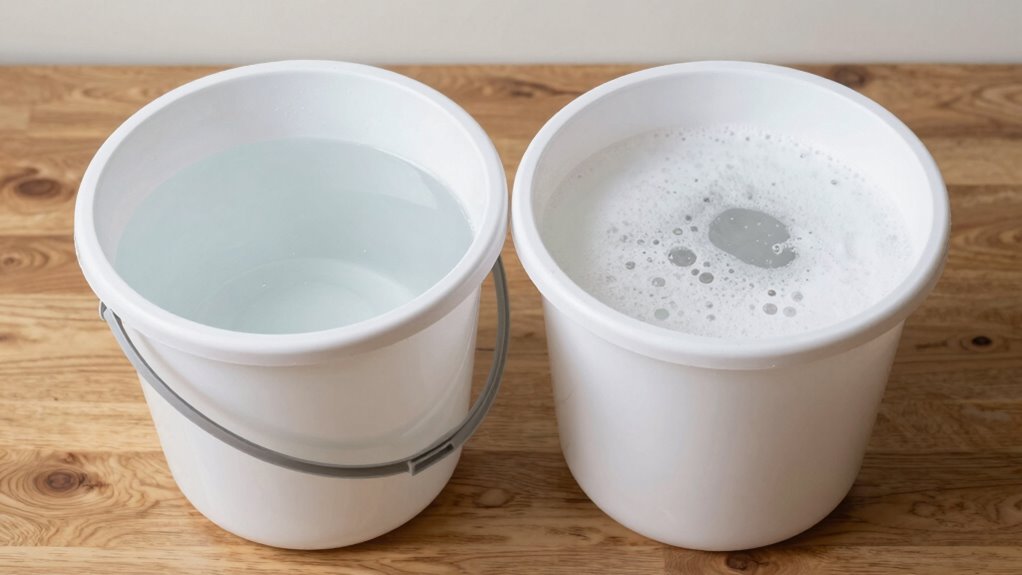

The two-bucket method works by keeping clean water separate from dirty water during cleaning tasks, which helps prevent recontamination and maintains hygiene. You use one bucket for rinsing or clean water and another for dirty tools or waste, making your process more efficient and less messy. This method is ideal for tasks demanding high cleanliness and reduces cross-contamination. Stay with us to discover how to implement it effectively in your routine.
Key Takeaways
- Separates clean water from dirty water, preventing cross-contamination during cleaning tasks.
- Enhances hygiene, efficiency, and workflow by organizing water and tools effectively.
- Ideal for frequent or large-scale cleaning, especially when minimizing dirt transfer is crucial.
- Requires regular maintenance, proper labeling, and water level management for optimal performance.
- Helps reduce recontamination, improve sanitation, and streamline cleaning processes across various surfaces.
What Is the Two-Bucket Method and How Does It Work?
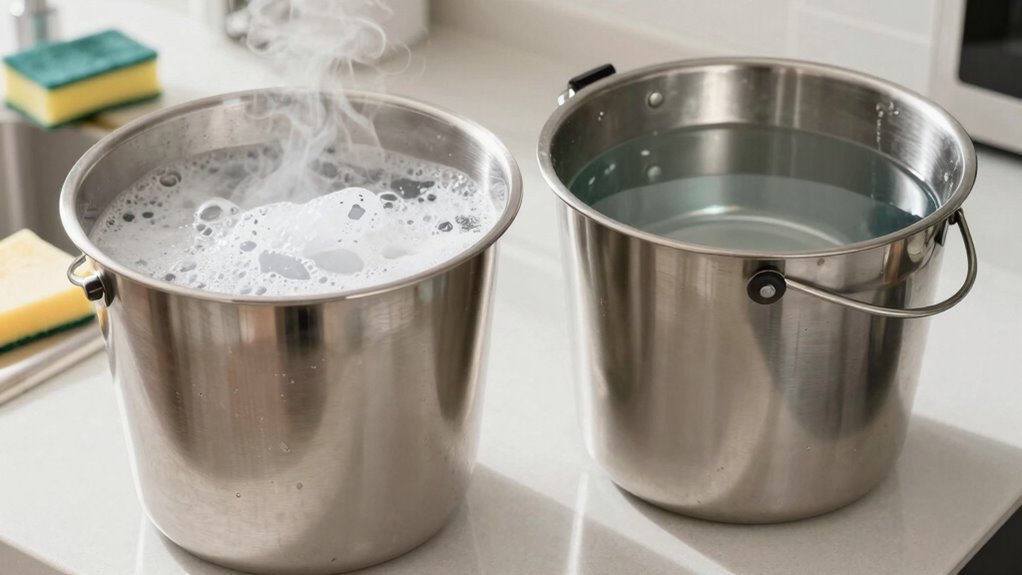
The Two-Bucket Method is a simple yet effective way to manage your cleaning or washing tasks efficiently. It relies on good bucket organization to streamline your work. You use one bucket for cleaning solution and another for rinsing your cloth or mop. This separation prevents dirt and grime from recontaminating your cleaning tools, saving you time and effort. When you dip your cloth into the cleaning bucket, you scrub away dirt, then rinse it in the second bucket before reapplying. This process keeps your cleaning solution cleaner longer and boosts your cleaning efficiency. By staying organized with two buckets, you avoid constantly changing solutions, making your cleaning faster and more effective. It’s a straightforward method that keeps your workspace tidy and your tasks under control. Additionally, proper water management ensures your cleaning process remains efficient and environmentally friendly. Using the correct technique can further enhance your cleaning results by maintaining optimal water and solution levels throughout your task. Implementing the two-bucket system also helps reduce water consumption and waste, supporting sustainable practices. Proper bucket arrangement can make the entire process even smoother, ensuring you always have the right supplies at hand and minimizing cleanup time.
Why Does the Two-Bucket Technique Help Keep Things Cleaner?
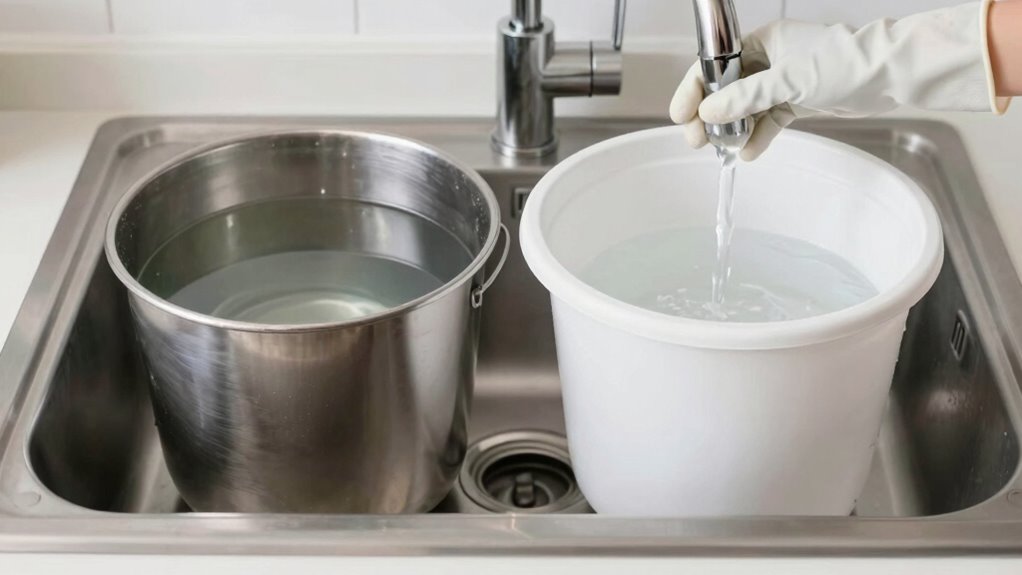
Using two separate buckets guarantees your cleaning process stays more hygienic by preventing dirt and grime from recontaminating your tools. This approach relies on effective bucket segregation, where one bucket holds clean water and the other contains dirty water. By immersing your tools in the clean water first, you minimize the chance of spreading contaminants. When you need to rinse, you switch to the dirty water bucket, then return to the clean water, avoiding cross-contamination. This method considerably enhances contamination control, ensuring bacteria and dirt don’t transfer back onto surfaces or your tools. Keeping the cleaning process compartmentalized helps maintain a higher standard of hygiene, reducing the risk of spreading germs and ensuring a more sanitary environment. Incorporating hygienic practices like this is especially important in environments where cleanliness is critical. Additionally, understanding and applying effective sanitation techniques can further improve your overall cleaning efficacy. Properly using zodiac traits to recognize personal tendencies can also help in maintaining consistent and thorough cleaning routines. Recognizing the importance of training and awareness can assist in reinforcing these practices among staff to uphold hygiene standards, especially when considering routine maintenance that supports ongoing cleanliness.
When Should You Use the Two-Bucket Method?
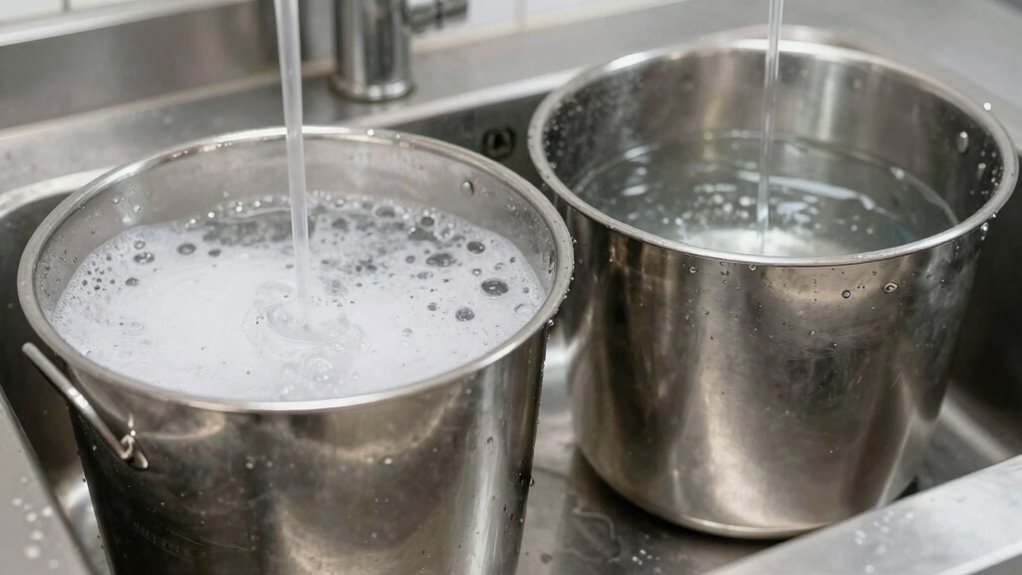
Wondering when to apply the two-bucket method? You should consider it when handling tasks that involve frequent cleaning or material transfer, especially if you need efficient storage solutions. This method is ideal when you want to minimize cross-contamination or mess. It’s also useful when ergonomic design matters, as it reduces unnecessary bending or reaching, making your workflow smoother and safer. Use the two-bucket system in situations where maintaining separate areas or tools prevents dirt spread or cross-contact. It’s perfect for cleaning, gardening, or any task requiring organized, clean handling of materials. If your work involves multiple steps or contamination risks, adopting this method helps keep your workspace tidy and your efforts effective. Additionally, incorporating Support Breakfast options can provide energy and focus during chores or work sessions. Understanding cross-contamination prevention principles can further enhance the effectiveness of this technique. Being aware of market trends can also help you time your tasks better and avoid unexpected disruptions. Regular maintenance of equipment, such as ensuring proper filtration and pump protection, can also improve your overall efficiency and results. Proper net worth management strategies can ensure your tools and resources are well-maintained and ready for use.
How to Implement the Two-Bucket System Step by Step

To implement the two-bucket system effectively, start by gathering your supplies: two sturdy, identical buckets, along with cleaning tools or materials suited to your task. Proper bucket selection is key to efficient water management; choose durable, leak-proof containers that are easy to carry. Before beginning, fill one bucket with clean water for rinsing or initial cleaning, and keep the other empty for soapy water or waste. During the process, switch buckets quickly to prevent cross-contamination. You can also label or color-code the buckets for better water management. Keep your workspace organized, and make sure both buckets are stable and easy to transport. Additionally, understanding auditory processing can help tailor your cleaning approach to improve efficiency and reduce noise-related distractions. For example, controlling noise levels during cleaning tasks can enhance concentration and overall effectiveness. Being mindful of water conservation practices further helps reduce waste and promotes sustainable cleaning habits. Incorporating water-efficient techniques ensures that you use resources wisely and minimize environmental impact. Also, monitoring your water usage can help you identify ways to optimize your cleaning routine for better resource management. This step-by-step approach helps streamline your task, reduces water waste, and guarantees cleaner, more effective results.
Common Mistakes With the Two-Bucket Method and How to Avoid Them
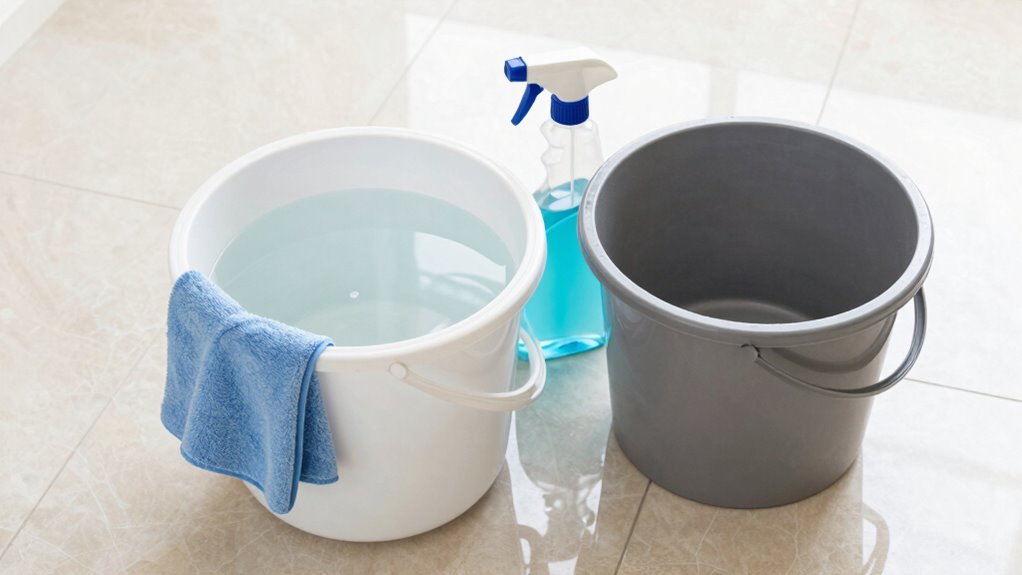
One common mistake is confusing which bucket is which, leading to errors in water transfer. You might also ignore water levels, causing uneven watering or waste. Additionally, forgetting regular maintenance can reduce efficiency and cause damage over time; staying attentive helps prevent these issues. Being aware of correct usage techniques ensures optimal performance and longevity of the method. Proper water management practices are essential to keep the system functioning smoothly and to avoid common pitfalls. To avoid these pitfalls, it’s helpful to understand the proper setup of each bucket and monitor water levels frequently. Recognizing the importance of AI ethics can also inform responsible usage and maintenance of automated systems.
Confusing Buckets Properly
Misunderstanding how to properly distinguish and manage the two buckets can lead to common mistakes that undermine the effectiveness of the Two-Bucket Method. If you confuse the clean water bucket with the dirty water one, your bucket organization suffers, and cleaning efficiency drops. To avoid this, guarantee each bucket is clearly labeled or color-coded. Keep the clean water bucket separate from the dirty water to prevent cross-contamination. Also, regularly check that the buckets are used consistently for their intended purpose. Failure to do so can result in wasted time and effort, making your cleaning less effective. Proper bucket organization is key to maximizing the method’s benefits and maintaining a smooth, efficient cleaning process. Additionally, understanding the importance of proper water management can help you optimize your cleaning routine and prevent common pitfalls. Being aware of spatial organization can further improve your overall efficiency and prevent mix-ups during cleaning tasks.
Neglecting Water Levels
Have you ever overlooked the importance of water levels in your buckets? If the water level drops too low, it can hinder contamination prevention because the cleaning solution isn’t properly rinsed or maintained. Conversely, overfilling can cause spillage and waste. Maintaining the correct water level ensures that each bucket functions effectively, providing a consistent cleaning process and reducing cross-contamination risks. Always check and refill your buckets as needed, especially between tasks. Ignoring water levels can lead to ineffective cleaning and compromise hygiene standards. Proper water management keeps the process efficient and prevents contamination from residual debris or dirty water. Stay attentive to water levels, and you’ll maximize the effectiveness of your two-bucket system.
Overlooking Maintenance Needs
Neglecting maintenance needs is a common mistake that can compromise the effectiveness of your two-bucket system. If you don’t regularly check and clean your buckets, dirt and debris can build up, reducing their efficiency. This can lead to contamination of your cleaning supplies or damage to your garden tools. Failing to sustain your system also means you might overlook replacing worn-out sponges or cleaning supplies, which hampers cleaning performance. To avoid this, make it a habit to:
- Clean and rinse buckets after each use to prevent mold and grime buildup
- Inspect and replace worn sponges or brushes regularly
- Keep your garden tools organized and clean with fresh supplies
Proper maintenance ensures your two-bucket method stays effective and prolongs its lifespan.
Is the Two-Bucket Cleaning Method Right for Your Tasks?
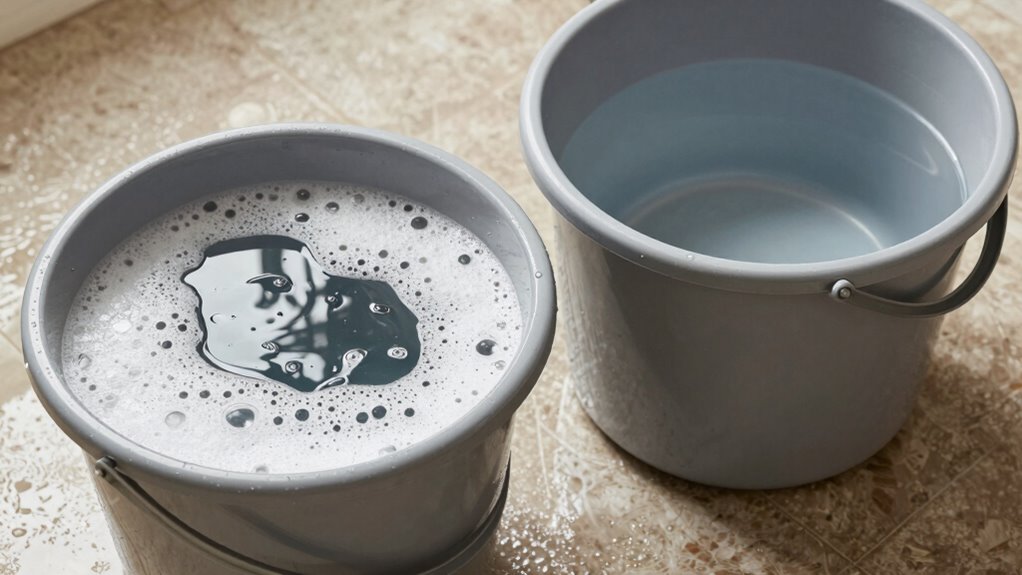
The two-bucket method works well for large cleaning projects, helping you stay organized and efficient. It’s also excellent for delicate surfaces, reducing the risk of damage with controlled rinsing. If you handle multiple tasks in one session, this approach can save you time and keep your workspace tidy.
Suitable for Large Jobs
When tackling large cleaning jobs, the two-bucket method can be highly effective, allowing you to manage your supplies efficiently and maintain cleanliness throughout the task. Proper bucket selection is key—choose sturdy, large buckets to hold enough water and reduce the need for frequent refills. This method also improves water management, helping you avoid cross-contamination by rinsing your mop regularly in the clean water bucket. For big jobs, the two-bucket approach minimizes downtime and keeps your workspace organized. You can focus on cleaning instead of constantly managing dirty water. It’s especially useful when dealing with extensive surfaces or multiple rooms, saving you time and effort while ensuring a thorough, hygienic clean.
Ideal for Delicate Surfaces
If you’re cleaning delicate surfaces, the two-bucket method can be a gentle, effective approach—if used correctly. It helps prevent dirt and grime from scratching or damaging fragile materials like glass, softwood, or painted surfaces. By using one bucket for soapy water and another for rinsing, you reduce the risk of reapplying dirt that could scratch or mar sensitive surfaces. This method minimizes friction and over-cleaning, making it suitable for materials that require extra care. You can maintain a gentle touch and control the amount of pressure you apply. Overall, if your goal is to clean fragile materials without causing harm, the two-bucket approach offers a safer, more controlled way to do so.
Efficient for Multiple Tasks
Using the two-bucket method isn’t just gentle on delicate surfaces—it also boosts efficiency when tackling multiple cleaning tasks. By separating clean and dirty water, you prevent cross-contamination and save time switching supplies. This approach works especially well if you have a variety of cleaning supplies and need quick access to different tools without constant refilling. It streamlines your workflow, making it easier to move from one task to another smoothly. Plus, it encourages better storage solutions, keeping your cleaning supplies organized and ready to use. Whether you’re cleaning floors, countertops, or appliances, the two-bucket method adapts to many tasks, reducing downtime and improving overall productivity.
- Simplifies switching between cleaning supplies
- Keeps storage solutions organized
- Saves time by minimizing repeated refills
Frequently Asked Questions
Can the Two-Bucket Method Be Used for Outdoor Cleaning Projects?
Yes, you can definitely use the two-bucket method for outdoor cleaning projects like garden maintenance and outdoor washing. It helps you keep clean water separate from dirty water, making your work more efficient and hygienic. When washing outdoor surfaces, use one bucket for cleaning solutions and another for rinsing. This way, you minimize dirt transfer, save water, and achieve better results in your outdoor cleaning efforts.
What Types of Cleaning Tasks Benefit Most From This Technique?
You’ll find the two-bucket method boosts your mopping efficiency and stain removal, especially on large or heavily soiled surfaces. It’s perfect for tasks like tile floors, grout lines, or stubborn stains on concrete. By separating clean water from dirty, you prevent spreading dirt around, making your cleaning more effective. This technique guarantees your work stays thorough and efficient, saving you time and effort during extensive or tough cleaning jobs.
How Often Should I Replace or Clean the Buckets Used?
You should clean your buckets regularly as part of your bucket maintenance routine, ideally after each use or at least weekly, depending on your cleaning schedule. Replace them if they show cracks, significant wear, or lingering odors that cleaning can’t remove. Consistent cleaning and occasional replacement ensure the method stays effective, preventing bacteria buildup, and maintaining hygiene for your tasks. This keeps your cleaning process safe and efficient.
Is the Two-Bucket Method Suitable for Heavy-Duty Cleaning?
Absolutely, the two-bucket method is your superhero for heavy-duty cleaning and industrial use! It’s designed to handle the toughest messes, keeping dirty water separate from clean rinse water. This way, you don’t spread dirt around, making it perfect for demanding jobs. Just make certain your buckets are sturdy and your mop wrings out thoroughly—then watch this method work wonders, no matter how tough the grime!
Are There Alternative Methods Similar to the Two-Bucket System?
Yes, there are alternative techniques and comparable systems to the two-bucket method. You might consider using a single bucket with a wringer, a spray-and-wipe approach, or microfiber cloths that trap dirt better. These methods can be more efficient depending on your cleaning needs. While they differ slightly, they all aim to minimize cross-contamination and improve cleaning effectiveness, much like the two-bucket system does.
Conclusion
Using the two-bucket method can cut your cleaning time in half and reduce mess. Did you know that a study found that this technique can decrease cross-contamination by up to 80%? By following the steps and avoiding common mistakes, you’ll keep your space cleaner and more efficient. Whether you’re tackling small spills or deep cleaning, this simple system makes a big difference. Give it a try and see the results for yourself!