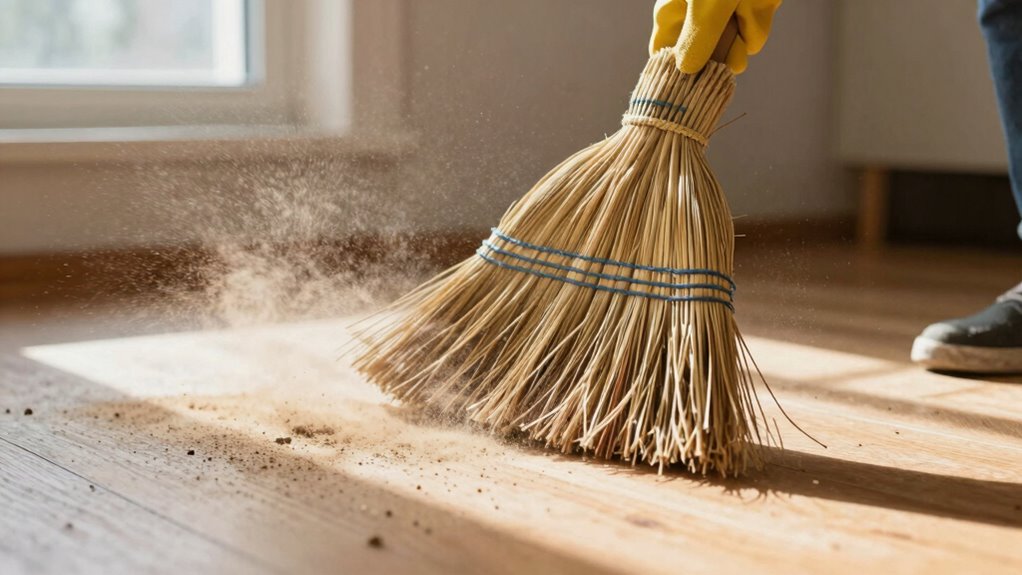
When you sweep, your movements create air currents that lift tiny dust particles into the air, making the space look dustier. Instead of trapping dust, traditional brooms push it around, and fine particles settle on surfaces or get inhaled. Using dry sweeping methods also disrupts airflow and spreads dust more. To improve, switch to vacuuming with HEPA filters or damp cloths. Keep exploring for effective tips to keep your indoor air healthier.
Key Takeaways
- Sweeping lifts fine dust particles into the air, increasing airborne dust levels and worsening indoor air quality.
- Air currents created by sweeping disrupt dust settling, causing dust to circulate rather than be removed.
- Traditional brooms push dust around, failing to trap small particles and allowing them to re-enter the air.
- Dry sweeping often redistributes dust, making surfaces appear cleaner but leaving more airborne particles.
- Using vacuums with HEPA filters or damp cleaning methods effectively traps dust and reduces re-circulation.
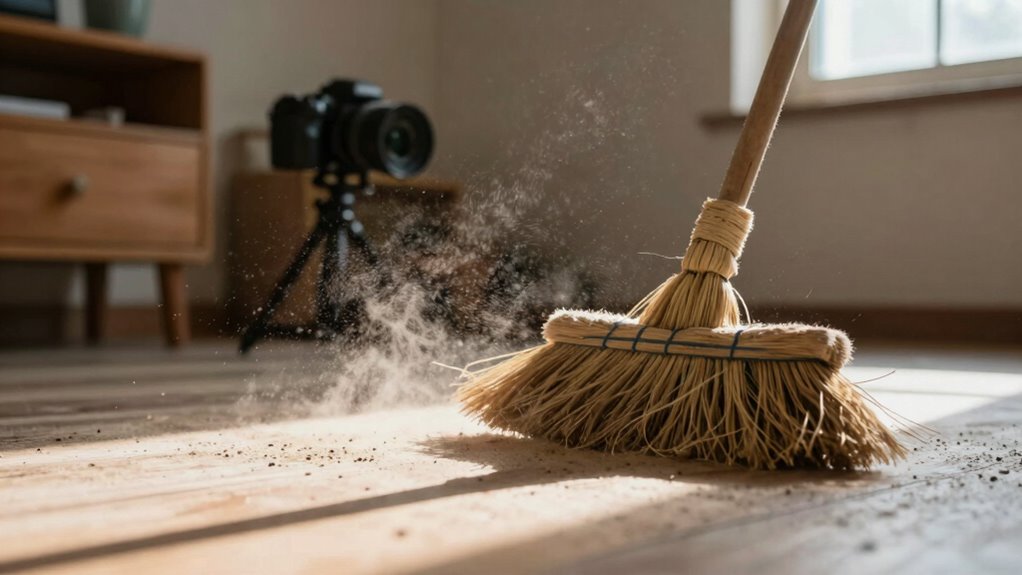
Have you ever wondered why sweeping sometimes seems to make your dust problem worse? It’s frustrating to spend time cleaning only to find dust settling back down shortly afterward. The truth is, when you sweep, you’re often stirring up dust particles rather than removing them. Dust particle size plays a key role here. Tiny particles, especially those less than 10 micrometers, are lightweight and easily become airborne. When you sweep, these fine particles are lifted from the floor or surface, creating a cloud of dust that floats around instead of settling where you want it. This airborne dust can then settle on furniture, other surfaces, or even be inhaled, making your environment dustier and less healthy.
Sweeping stirs up tiny, lightweight dust particles, making your space dustier and less healthy.
Another factor to contemplate is airflow disruption. Sweeping disturbs the natural airflow around your space. Instead of gently guiding dust toward a vacuum or dustpan, the movement of your broom causes air currents that suspend dust particles in the air. This airflow disruption prevents dust from settling quickly and allows fine particles to remain airborne longer. As a result, you may think you’ve cleaned up, but in reality, you’re just redistributing dust throughout your room. The airborne particles linger, making it harder to achieve a truly clean space.
The problem is compounded when you use traditional sweeping methods without proper tools. A stiff broom bristle can push dust around rather than trapping it. Without a vacuum or a dustpan with a rubber edge, dust particles are more likely to escape back into the air. Because smaller dust particles are more easily disturbed, they’re the main culprits in creating a dusty environment after sweeping. This is why many cleaning experts recommend avoiding dry sweeping in favor of vacuuming, which can better contain and remove fine dust particles, preventing airflow disruption and minimizing dust re-circulation.
To reduce this problem, switch to a vacuum cleaner with a good filtration system, such as HEPA filters, which trap the smallest particles. When sweeping is unavoidable, use a damp cloth or mop instead of a dry broom. This method minimizes dust particle disturbance, prevents airflow disruption, and helps trap dust particles rather than dispersing them. Additionally, choosing air purifiers with HEPA filters can significantly improve indoor air quality by capturing airborne dust particles that are stirred up during cleaning. By understanding how dust particle size and airflow disruption influence dust circulation, you can adopt smarter cleaning habits. Instead of making your dust problem worse, these strategies help you keep your space cleaner, healthier, and dust-free for longer.
Frequently Asked Questions
Can Vacuuming Be More Effective Than Sweeping for Dust Removal?
Vacuuming is generally more effective than sweeping for dust removal because it traps dust mites and allergens, providing better allergy relief. When you vacuum with a HEPA filter, you pull up dust and tiny particles from carpets and upholstery, preventing them from becoming airborne again. Sweeping stirs up dust, making allergies worse. So, switch to vacuuming regularly to keep your home cleaner and breathe easier.
What Are the Best Alternative Cleaning Methods to Sweeping?
You should switch to using microfiber cloths and air purifiers for cleaner results. Studies show microfiber cloths trap 99% of dust particles, preventing them from becoming airborne. Using a damp microfiber cloth gently lifts dust from surfaces, while air purifiers filter airborne allergens and dust mites. This combo reduces dust spread more effectively than sweeping, keeping your home cleaner and healthier with less effort.
How Often Should I Replace My Dusting Tools?
You should replace your dusting tools every 3 to 6 months to maintain effective cleaning. Regular replacements help prevent dust accumulation on the tools themselves, ensuring they pick up dust efficiently. Incorporate this into your cleaning schedules to keep your home dust-free. Worn-out tools can spread dust instead of removing it, so timely replacements are essential for a healthier environment and better overall cleanliness.
Does Using a Damp Cloth Help Reduce Dust Better?
Using a damp microfiber cloth is like wielding a magic wand against dust—dust trapping becomes effortless! Instead of just spreading dust around, it lifts and locks it in, preventing those pesky particles from flying back into the air. With a damp microfiber cloth, you cut down on airborne dust and make cleaning more effective. So, yes, a damp cloth is your secret weapon for a cleaner, dust-free home!
Are There Specific Products That Trap Dust More Effectively?
Yes, there are specific products that trap dust more effectively. Dust collector products like HEPA-filter vacuums and microfiber cloths are excellent at capturing dust and allergens. You should also consider allergen traps, such as air purifiers with HEPA filters, to reduce airborne dust. These tools help prevent dust from settling back onto surfaces, making your cleaning more efficient and improving indoor air quality.
Conclusion
So, next time you think sweeping is the hero, remember it’s actually turning your home into a dust tornado! Instead of creating a perpetual dust storm, switch to vacuuming with a good filter or damp mopping. Otherwise, you’re basically inviting a never-ending dust party that never ends. Your lungs will thank you, your furniture will thank you, and your nose will thank you. Don’t let dust win—fight back smarter, not harder!