TL;DR

Get cleaning gear delivered free with Prime
- Fast, free delivery on millions of items
- Prime Video, Amazon Music and more included
- Member-only deals all year
A Hunker report describes a social-media DIY trend in which people turn broken or secondhand dishes into mosaic patio tables. The process involves arranging and attaching dish fragments, then filling the gaps with grout; the table must support the added weight, and sharp pieces require careful handling.
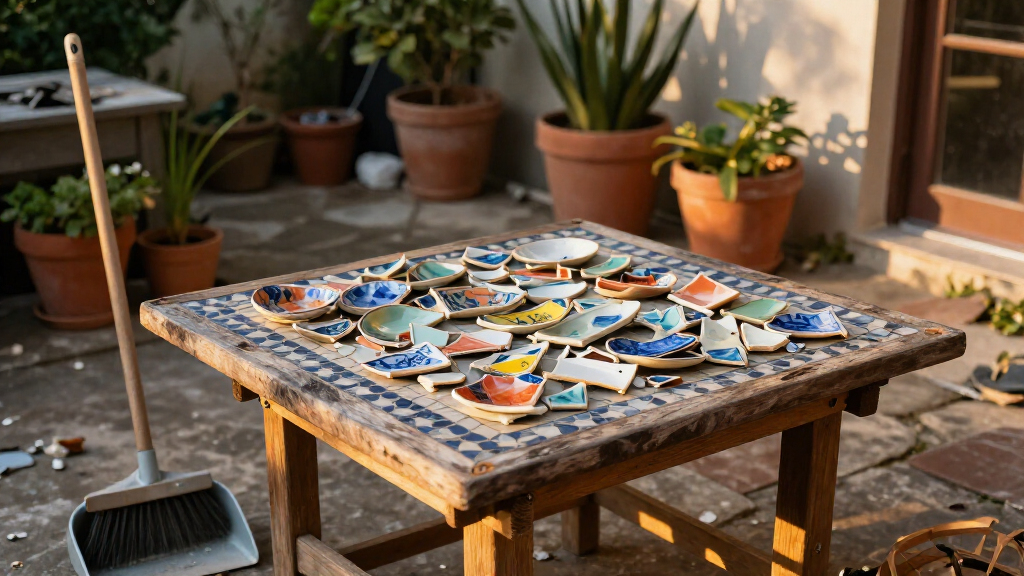
DIY creators are turning broken plates and other dishware into mosaic patio tables, a project highlighted in a Hunker report that combines discarded ceramics with an outdoor furniture refresh. The method involves arranging dish fragments on a sturdy tabletop, attaching them with mortar and filling the gaps with grout, though the finished surface can take several days to complete.
The basic process is to collect dishes, break them into pieces, arrange a pattern, attach the pieces to the table and grout the spaces between them. The report recommends plates and platters because they provide more usable fragments, and dishes of similar thickness can help keep the finished surface from becoming uneven. Makers can use intact design details, color groupings or irregular shards to create different looks.
The table base needs to be sturdy: ceramic pieces and grout add weight. Hunker says wood, plastic, cement and metal tables may be suitable if they are strong enough and designed for outdoor use. It advises against glass tables because they are more fragile. For bonding, the report says some creators use heavy-duty adhesives, but recommends cement-based thin-set mortar for an outdoor table. Grout fills the joints and makes the surface usable.
Breaking dishes creates sharp edges and shards. Hunker describes wrapping a dish in a towel or pillowcase before striking it with a hammer and advises wearing gloves. A tile nipper can be used to shape pieces more precisely. The report says makers should follow the mortar and grout instructions and allow time for the materials to set; the project can take several days. It cites videos by Our Little Nest and AtHomewithAshley as demonstrations of the process.
A Second Use for Broken Ceramics
The project offers a way to reuse damaged or unwanted dishware while changing the appearance of an existing patio table. Rather than treating every cracked plate as waste, makers can incorporate fragments into a functional surface, including pieces with sentimental or decorative value. The report presents this as a DIY idea, not as a tested environmental or cost-saving solution, and provides no figures on how much material it diverts from disposal.
Practical limits matter as much as design. A table that cannot bear the additional weight may be unsuitable, and sharp edges, weather exposure and setting time all affect whether the result works outdoors. The choice of base and appropriate mortar and grout can determine whether the project is safe and durable enough for everyday use.
As an affiliate, we earn on qualifying purchases.
From Plates to Tabletop Patterns
Hunker reports that the mosaic idea is circulating on social media and points to several different approaches. In one video, creator AtHomewithAshley uses vintage china, cutting around floral patterns and scenes to preserve them as medallions across a tabletop. Another creator, maddieveller, uses irregular pieces for a more abstract arrangement. Creator curlywavypatty sorts pieces by color to make a tomato design.
Those examples show how the same basic method can produce distinct results, but they do not establish that every design or material will hold up equally well outdoors. Hunker also names bird baths and garden stepping stones as alternative projects for people who cannot use a patio table. The report does not give a tested schedule for completing a particular table or long-term performance data.
“For an outdoor patio table, cement-based, thin-set mortar is a better choice.”
— Hunker report
cement-based thin-set mortar for outdoor use
As an affiliate, we earn on qualifying purchases.
As an affiliate, we earn on qualifying purchases.
Durability Depends on the Materials
The report does not establish how long a finished table will last under particular weather conditions, how often it needs maintenance or whether all listed tabletop materials are suitable for every mosaic. It also does not provide a load limit for a table, a specific mortar or grout product, or a universal curing schedule. Those details depend on the table and the product instructions.
The cited creator videos offer examples of designs and methods, but the source material does not report independent testing or confirm that each approach performs the same over time. Readers should check that their table is structurally sound and use materials intended for the project and outdoor conditions.
As an affiliate, we earn on qualifying purchases.
Plan the Table Before Breaking Plates
For anyone considering the project, the next steps are to choose a table that can support the added weight, gather enough dishes of similar thickness and sketch a layout before breaking anything. Hunker advises wrapping dishes during the breaking step, using gloves and following the directions for mortar and grout. Makers using a tile nipper for shaped pieces should handle both the tool and ceramic fragments carefully.
The project then depends on the materials setting as directed, which means the tabletop may not be ready for use immediately. The report identifies no scheduled follow-up or formal product testing; its practical next milestone for a DIYer is completing the layout and allowing the mortar and grout to cure according to their manufacturers’ instructions.
As an affiliate, we earn on qualifying purchases.
Key Questions
How do you make a patio table from broken dishes?
Arrange ceramic fragments on a suitable tabletop, attach them with mortar, then fill the gaps with grout. Follow the products’ instructions and allow the materials to set before using the table.
What kind of table can support a dish mosaic?
Hunker lists wood, plastic, cement and metal tables as possible options if they are sturdy enough for the added weight and suitable for outdoor use. It advises against glass tables because they are more fragile.
How can you reduce the risk of cuts while breaking dishes?
The report recommends wrapping a dish in a towel or pillowcase before striking it and wearing gloves. Broken ceramics can have sharp edges, so handle fragments carefully and keep them contained.
How long does the project take?
Hunker says the work can take several days because the mortar and grout need time to set. The exact timing depends on the products used and their instructions.
Can the broken dishes be used for another garden project?
Yes. Hunker also suggests mosaics for bird baths and garden stepping stones as alternatives for people who cannot use a patio table.
Source: rss
Halloween Picks
halloween
As an affiliate, we earn on qualifying purchases.