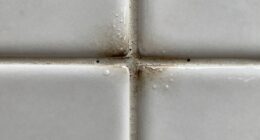
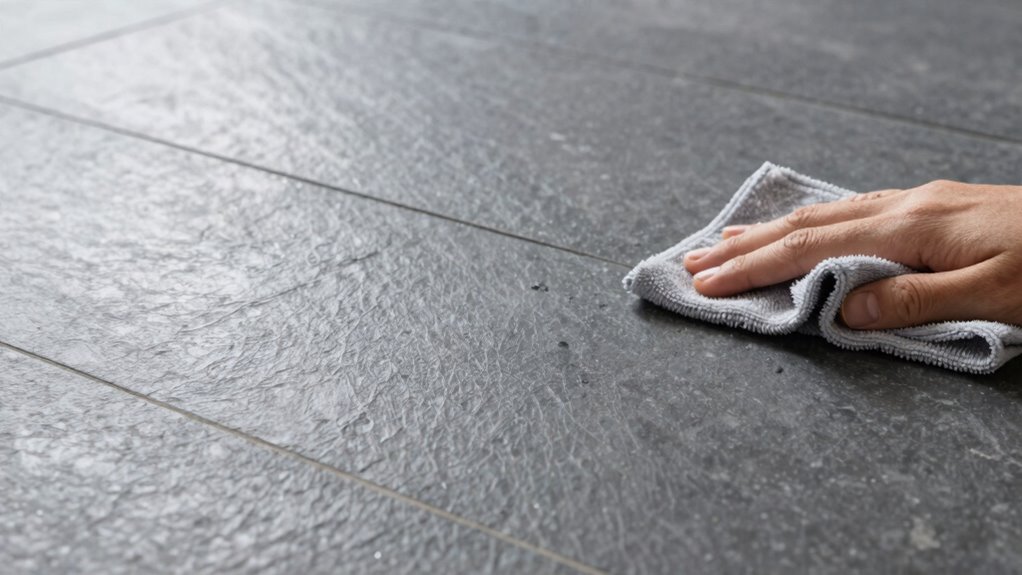

To clean slate floors without creating a patchy look, start by thoroughly sweeping or vacuuming to remove loose dirt and debris. Use a pH-neutral cleaner designed for natural stone and apply it with a soft mop or cloth in thin, even coats. Avoid harsh chemicals or excess water, which can cause discoloration. For stubborn spots, create a baking soda paste and gently target the stain. For more tips on maintaining your floor’s natural beauty, keep exploring further.
Key Takeaways
- Use a pH-neutral cleaner specifically designed for natural stone to clean without dulling or patching the surface.
- Apply cleaning solutions in thin, even layers with a soft cloth or mop to prevent streaks and uneven coloration.
- Rinse thoroughly and dry completely to avoid water spots or residue that can cause patchiness.
- Avoid harsh chemicals or acidic cleaners that may damage or discolor the slate.
- Regularly inspect and re-seal dull or uneven areas to maintain a uniform, natural appearance.
Slate floors add natural beauty and durability to any space, but keeping them clean requires proper care. If you want to maintain their rich, variegated look without ending up with patchy spots, understanding sealing techniques and stain removal is essential. Sealing your slate helps protect it from stains and moisture, but choosing the right method and products can make all the difference in achieving a uniform finish. Before sealing, ensure your floor is thoroughly cleaned, as dirt or debris trapped beneath the sealant can cause unevenness. Use a pH-neutral cleaner specifically designed for natural stone to gently lift dirt without damaging the surface. Once the slate is clean and dried completely, you can proceed with sealing. Applying a high-quality, penetrating sealer in thin, even coats prevents streaks and patchiness. Follow the manufacturer’s instructions carefully, and use a soft brush or roller to distribute the sealer uniformly. Multiple thin coats are better than one thick layer, as they help achieve a consistent appearance and enhance durability.
When it comes to stain removal, act quickly to prevent permanent damage. Slate is porous, so stains from wine, coffee, or oil can seep in if not treated promptly. To remove stains effectively, start with a soft cloth or sponge soaked in warm water and a mild detergent. For stubborn stains, create a paste with baking soda and water, applying it gently to the affected area and letting it sit for a few minutes before rinsing. Avoid harsh chemicals or acidic cleaners, which can etch or discolor the stone. For more persistent stains, a poultice made from a commercial stone stain remover can be effective; just follow the product instructions carefully. After stain removal, rinse the area thoroughly and dry it completely to prevent water spots or streaks.
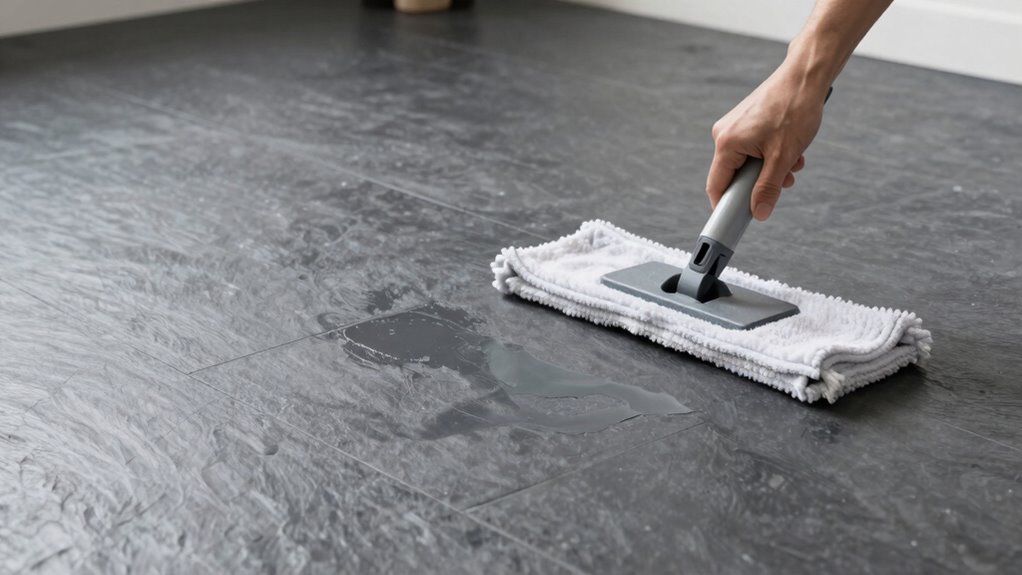
Regular maintenance also helps keep your slate floors looking even and beautiful over time. Sweep or vacuum regularly to remove dust and debris that can scratch the surface. When mopping, use a damp mop with a pH-neutral cleaner, avoiding excess water which can penetrate the stone and cause discoloration. If you notice any dull patches or uneven coloration, consider resealing those areas with a matching product to restore uniformity. Always test cleaning solutions and sealers on a small, inconspicuous area first to ensure they won’t cause damage or discoloration. With consistent care, including proper sealing techniques and prompt stain removal, your slate floors will retain their natural beauty and remain free of unsightly patches.
Frequently Asked Questions
Can I Use Vinegar to Clean Slate Floors Safely?
Yes, you can use vinegar to clean slate floors safely, but do so cautiously. Vinegar is an acidic cleaner, so it’s best to dilute it with water to prevent damage. Avoid using it frequently, as overuse can erode the stone. After cleaning, consider sealing techniques to protect your slate and maintain its appearance. Always test a small area first to confirm it doesn’t cause any discoloration or harm.
How Often Should I Reseal My Slate Floors?
Think of your slate floors as a fine, aging wine; they need proper care to stay vibrant. You should reseal your slate floors every 1-3 years, depending on foot traffic and wear. Follow a consistent sealing schedule and maintenance tips, like cleaning spills promptly and avoiding harsh chemicals. Regular resealing keeps your floors protected, preserving their natural beauty and extending their lifespan, so you enjoy their charm for years.
Are There DIY Methods to Remove Stains From Slate?
Yes, you can remove stains from natural stone like slate using DIY methods. Mix a paste of baking soda and water, apply it to the stain, and let it sit for a few hours. Gently scrub with a soft brush, then rinse. Regular sealant maintenance helps prevent future stains. Just be cautious not to use harsh chemicals that could damage the natural stone’s surface or strip the sealant.
What’s the Best Way to Prevent Discoloration?
To prevent discoloration, you should regularly clean your slate floors with a gentle, pH-neutral cleaner and avoid harsh chemicals. Applying a high-quality sealant enhances durability and protects against stains, keeping your floors looking their best longer. Maintain a consistent cleaning frequency—at least once a week—and reapply the sealant every 1-2 years. This routine helps preserve the natural beauty of your slate while preventing patchiness and discoloration.
Can I Use Steam Cleaners on Slate Floors?
You can use steam cleaners on slate floors, but make certain the device has adjustable settings and a low pH balance to prevent damage. Keep the cleaning frequency moderate—overdoing it can harm the surface. Always test a small area first, and avoid excessive heat or moisture. Using a steam cleaner cautiously helps remove dirt without making your slate look patchy or dull, maintaining its natural beauty.
Conclusion
Remember, keeping your slate floors pristine is like tending a garden—you must nurture and care for them consistently. By avoiding harsh chemicals and gentle cleaning, you preserve their natural beauty, much like an artist preserves the integrity of their masterpiece. When you treat your slate floors with patience and respect, they’ll continue to shine brightly, reminding you that true beauty lies in careful, thoughtful maintenance—an enduring reflection of your dedication.