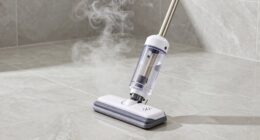
To fix streaks on your laminate floor, immediately dry the surface with a clean microfiber cloth or towel after cleaning. Work in small sections to remove any remaining dampness, ensuring even airflow. Use fans or open windows to boost ventilation and speed up drying. Proper drying prevents residual moisture and residue buildup that causes streaks. Keep in mind, precise techniques make all the difference—continue exploring for expert tips to achieve a flawless finish.
Key Takeaways
- Immediately dry the laminate floor with a microfiber cloth or dry mop after cleaning to prevent streaks.
- Work in small sections to ensure thorough drying and avoid residual moisture that causes streaks.
- Use fans or open windows to improve airflow and speed up the drying process.
- Avoid using excessive water or overly damp mops during cleaning to minimize streak formation.
- Regularly inspect and dry any remaining damp spots to maintain a streak-free, glossy finish.
Why Do Laminate Floors Get Streaks After Cleaning?

Laminate floors often develop streaks after cleaning because improper cleaning techniques or products can leave behind residue. When you use too much cleaning solution or those with harsh chemicals, they can create a cloudy film that disrupts the polished sheen and surface smoothness of your floors. This residue prevents the floor from reflecting light properly, making streaks more noticeable. Additionally, using a dirty or damp mop can spread dirt and leftover cleaning agents unevenly, worsening the streaking issue. The goal is to clean without leaving behind buildup that dulls the finish. Proper cleaning techniques and the right products help prevent streaks and maintain the floor’s natural shine and sleek surface. Using a quality microfiber cloth can also aid in achieving a streak-free finish and ensure even removal of cleaning residues. Regularly maintaining your cleaning tools is essential to avoid spreading dirt and residues that can cause streaks. Employing appropriate cleaning solutions designed specifically for laminate flooring can further reduce streaks and protect your floors from damage. To enhance the cleaning process, a drying trick such as buffing the floor with a clean, dry microfiber cloth can help remove any remaining streaks and restore the floor’s shine. When cleaning is done correctly, your laminate floor maintains its natural shine and sleek surface, giving you that smooth, polished look you desire.
How to Prevent Streaks by Properly Drying Your Laminate Floors

After cleaning your floors, proper drying is key to avoiding streaks and maintaining that sleek, polished look. To prevent streaks, establish a consistent cleaning schedule that minimizes excess moisture. Proper drying guarantees your laminate floors stay streak-free and shiny. Here are three tips:
Proper drying after cleaning keeps your floors streak-free and gleaming.
- Use a microfiber cloth or a dry mop to wipe the surface immediately after cleaning, removing any remaining moisture. Effective moisture removal is crucial to prevent water spots and streaks from forming.
- Avoid walking on the floor until it’s fully dry to prevent smudges and streaks.
- Incorporate regular floor polishing after drying to enhance shine and create a protective barrier against streaks.
- Ensuring proper maintenance and care can prolong the appearance and durability of your laminate flooring, including proper drying techniques that prevent moisture buildup and damage. Additionally, understanding free floating flooring installation can help you maintain a level and stable surface, reducing the likelihood of streaks caused by unevenness. Being aware of moisture management strategies is essential to keep your laminate floors looking their best over time.
How to Use the Drying Technique for a Streak-Free Finish

Achieving a streak-free finish begins with mastering the drying technique. After cleaning, allow the laminate floor to air dry or gently buff with a clean, dry microfiber cloth. This ensures the laminate sheen remains even, avoiding dull spots or streaks. To optimize results, incorporate a consistent cleaning schedule that prevents excess moisture buildup. When drying, work in small sections, using a soft, absorbent cloth to remove any remaining dampness. Avoid rushing the process, as incomplete drying can cause streaks and uneven gloss. Proper drying methods not only enhance the laminate’s shine but also help prevent long-term damage caused by trapped moisture. Remember, patience during this step makes all the difference in achieving a smooth, streak-free surface that looks polished and professional. Proper drying methods are essential for maintaining laminate floors and preventing damage, especially when understanding the importance of air drying techniques for optimal results. Incorporating drying techniques tailored specifically for laminate flooring can significantly improve the final appearance.
Common Mistakes That Lead to Streaks and How to Avoid Them
Using too much water when cleaning can leave streaks on your laminate floors, so be careful with your amount. Skipping proper drying allows moisture to settle and cause smudges, making streaks more likely. Additionally, harsh cleaners can damage the surface and leave residue that’s tough to remove cleanly. Being aware of digital safety and practicing cautious cleaning routines can help prevent unintended damage or streaks. For best results, choosing high-quality cleaning products designed for laminate floors and understanding solar panel technology can further ensure a streak-free finish and maintain the floor’s longevity. To avoid these issues, it’s also helpful to understand vetted cleaning techniques that are proven safe and effective for laminate surfaces. Also, incorporating proper drying methods ensures that moisture does not linger and cause streaks or damage.
Using Excessive Water
Applying too much water when cleaning your laminate floors is a common mistake that can cause streaks and damage. Excess water seeps into seams, leading to warping and staining. To avoid this, focus on proper cleaning techniques:
- Use a damp mop instead of soaking it, ensuring no puddles form.
- Regularly maintain your vacuum to remove dirt and debris that can scratch or stain the surface.
- Be mindful of furniture placement; lift rather than drag furniture to prevent water from seeping into gaps and causing streaks or damage.
- Choosing appropriate cleaning products designed specifically for laminate flooring can help prevent streaks and maintain the surface’s integrity.
- Additionally, understanding laminate floor materials can guide you in selecting the best cleaning methods and products to prolong the life of your flooring.
- Being aware of digital distractions and maintaining focused cleaning routines can help ensure proper care and avoid unintentional damage. Incorporating knowledge about wave and wind can also assist in understanding how environmental factors like humidity might affect your flooring over time.
Skipping Proper Drying
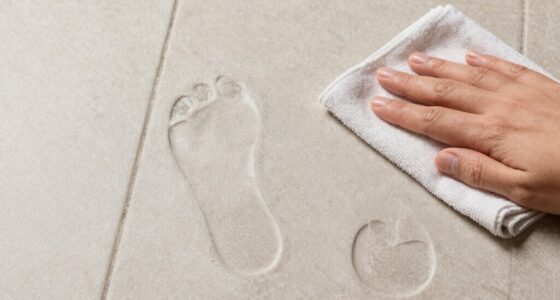
Skipping proper drying after cleaning is a common mistake that can leave streaks on your laminate floors. When you don’t thoroughly dry the surface, water spots and streaks can form, making your floor look dull. Be sure to remove excess moisture with a clean, dry microfiber cloth or towel. If you’ve moved furniture or placed area rugs, wait until the floor is completely dry before repositioning them. This prevents trapping moisture underneath, which can cause streaks or damage. Proper drying also helps to avoid residue buildup that can lead to streaks over time. Additionally, understanding flooring materials can help you choose the best drying method for your laminate floors. Taking these steps ensures a streak-free finish and maintains your laminate floors’ shine and longevity. Skipping this step can undo the cleaning effort and leave your floors looking less than spotless.
Using Harsh Cleaners
Have you ever noticed streaks on your laminate floors after cleaning? Using harsh cleaners can be a major culprit. These products often contain chemicals that leave residue, causing unsightly streaks and dullness. Instead, avoid vinegar solutions that are too concentrated, as they can damage the finish over time. Additionally, steer clear of steam cleaning, which can introduce excessive moisture and cause warping or streaks.
Here are some tips to prevent streaks:
- Use gentle, laminate-specific cleaners instead of harsh chemicals.
- Dilute vinegar solutions properly if you choose to use vinegar for cleaning.
- Limit steam cleaning to avoid excess moisture and potential damage.
Essential Tools and Materials for Drying Laminate Floors Without Streaks
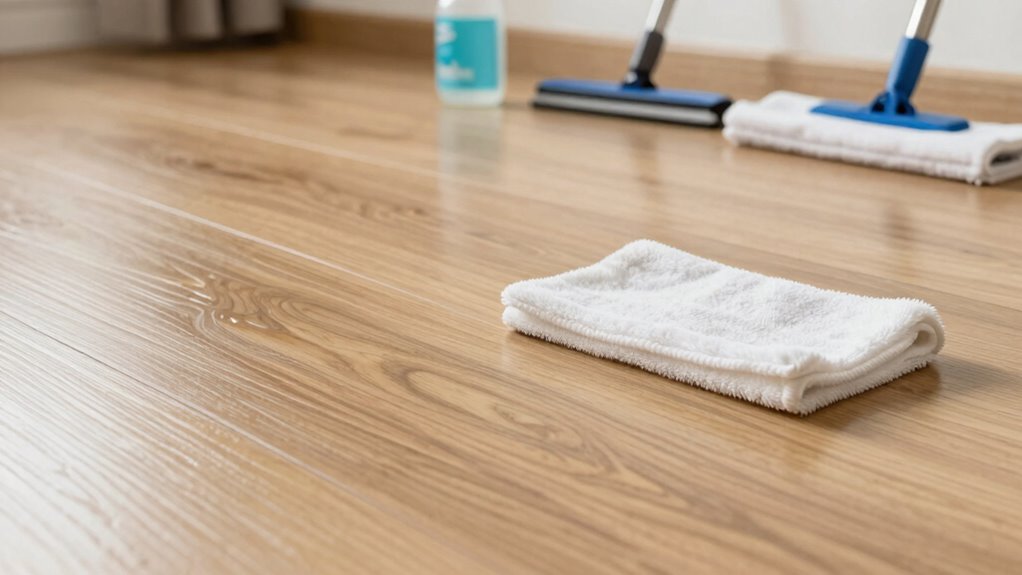
To dry your laminate floors without streaks, you’ll need some essential tools and materials. Absorbent cleaning cloths help remove excess moisture smoothly, while gentle drying solutions prevent residue buildup. Proper ventilation techniques also speed up drying and reduce streaking, making your floors look flawless.
Absorbent Cleaning Cloths
A high-quality absorbent cleaning cloth is essential for drying laminate floors without leaving streaks. It helps you soak up excess water quickly, reducing the risk of streaks or damage. Using microfiber mops can be especially effective, as they are gentle yet highly absorbent. After mopping, you can promote air drying by gently patting the surface with your cloth to remove remaining moisture. Here are some key tools to contemplate:
- Soft microfiber cloths that won’t scratch or leave lint.
- Absorbent terry cloth towels for quick drying.
- Microfiber mops for larger surface areas and efficient moisture removal.
These tools make it easier to achieve a streak-free finish and prevent water spots, ensuring your laminate floors stay pristine.
Gentle Drying Solutions
When drying laminate floors, choosing gentle tools and materials is essential to prevent streaks and damage. Using soft microfiber cloths or dust mops helps guarantee you don’t scratch or mar the surface. Avoid rough or abrasive cleaning tools that can harm the laminate’s finish—this is a common cleaning myth that can lead to costly repairs. Instead, focus on gentle drying solutions that promote laminate care, like lightly patting the floor dry or using a damp cloth followed by a dry one. Steer clear of excessive moisture, which can cause swelling or warping. Properly selected tools and materials make a significant difference in achieving streak-free results while preserving your laminate’s beauty and longevity.
Proper Ventilation Techniques
Ever wondered how proper ventilation can improve your laminate floor drying process? Effective air circulation is key to preventing streaks and speeding up drying. By controlling humidity levels, you reduce the risk of moisture buildup that can cause damage. To maximize ventilation, consider these essential tools and techniques:
- Use fans to increase airflow across the floor surface.
- Open windows and doors to promote natural air circulation.
- Employ dehumidifiers to maintain ideal humidity levels.
These methods work together to ensure even drying without streaks. Proper ventilation helps remove excess moisture, preventing uneven drying and potential warping. Remember, consistent air circulation and humidity control are vital for achieving a streak-free, beautifully dried laminate floor.
Tips for Maintaining a Flawless, Streak-Free Laminate Floor
To keep your laminate floors looking flawless and streak-free, regular cleaning with the right techniques is essential. Use a damp microfiber mop to avoid excess moisture, which can cause streaks. When cleaning, focus on color matching your furniture to prevent mismatched patches and ensure a uniform look. Protect your furniture by placing pads underneath legs to prevent scratches and marks that can lead to uneven streaks. Here’s a quick guide:
| Tip | Benefit |
|---|---|
| Use a microfiber mop | Reduces streaks and streak-free finish |
| Avoid excessive water | Prevents damage and streak formation |
| Regular dusting | Keeps dirt particles from causing streaks |
| Use furniture pads | Protects floors from scratches |
| Consistent cleaning | Maintains smooth, flawless surface |
Following these tips helps maintain a beautiful, streak-free laminate floor effortlessly.
Troubleshooting Persistent Streaks: When to Seek Professional Help
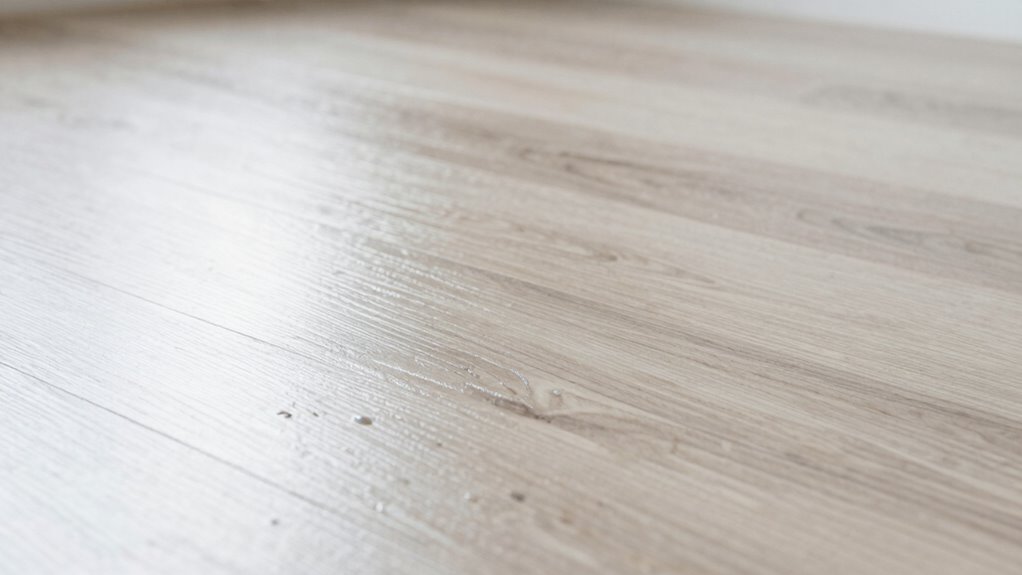
Persistent streaks that won’t disappear despite regular cleaning may indicate underlying issues beyond routine maintenance. If your laminate floor shows stubborn streaks, it’s essential to identify the streak causes before seeking professional assistance.
Consider these signs:
- The streaks persist despite proper cleaning and drying, suggesting damage or wear.
- You notice discoloration or warping around streaked areas, indicating moisture issues.
- Routine cleaning doesn’t resolve the streaks, and they seem to worsen over time.
In such cases, troubleshooting on your own may not be enough. Professional assistance helps diagnose whether the streak causes stem from subfloor problems, sealant failure, or other structural issues. When these signs appear, consulting flooring experts ensures proper repair and long-term durability.
Frequently Asked Questions
Can Using Too Much Water Cause Laminate Floor Streaks?
Yes, using too much water can cause laminate floor streaks. Excess water from cleaning solutions or wet mops seeps into the seams, leaving streaks and damage. To prevent this, use a damp, not soaked, cloth or mop and make certain of proper drying afterward. This prevents water from pooling and minimizes streaks, keeping your laminate floors looking their best. Proper cleaning technique is key to avoiding streaks and damage.
How Long Should I Wait Before Walking on a Cleaned Laminate Floor?
Think of your laminate floor as a delicate painting that needs time to dry. You should wait at least 2-3 hours after cleaning for proper floor drying and moisture prevention. Rushing to walk on it too soon risks smudging the finish or causing streaks. Giving it ample time guarantees the surface is fully dry, protecting your floor’s beauty and longevity. Patience now preserves your floor’s pristine appearance later.
Are There Specific Cleaning Products That Reduce Streaks?
You should choose cleaning solutions specifically designed for laminate floors to reduce streaks. Look for products labeled as streak-free or streak prevention, as they help leave a smooth, shiny surface. Always follow the manufacturer’s instructions, use a damp mop rather than soaking the floor, and avoid harsh chemicals. This approach guarantees your laminate floors stay streak-free and look their best, even after cleaning.
What Are the Best Drying Tools for Laminate Floors?
Drying your laminate floors is like giving them a gentle pat dry. You should use microfiber cloths for their softness and absorbency, and vacuum attachments to remove dust beforehand. These tools work together to absorb excess moisture quickly, preventing streaks. Make sure to dry in a gentle, sweeping motion, avoiding excess water. Using microfiber cloths and vacuum attachments guarantees your floors dry evenly and streak-free.
How Often Should I Reapply the Drying Technique for Maintenance?
You should reapply the drying technique as part of your regular maintenance schedule, ideally once a week or after any spill or excess moisture. This consistent approach helps prevent streaks and keeps your floors looking their best. Regular maintenance not only prevents streaks but also reduces the risk of stains and damage, ensuring your laminate floors stay clean, shiny, and stain-free longer.
Conclusion
Don’t let streaks ruin your beautiful laminate floors. With the right drying technique, you can achieve a flawless, streak-free finish every time. It might seem like a small detail, but your effort makes a big difference in maintaining that pristine look. Trust me, a quick, proper dry will save you time and frustration later. Your floors deserve your care—so don’t give up. Keep practicing, and you’ll enjoy spotless, gleaming laminate floors for years to come.