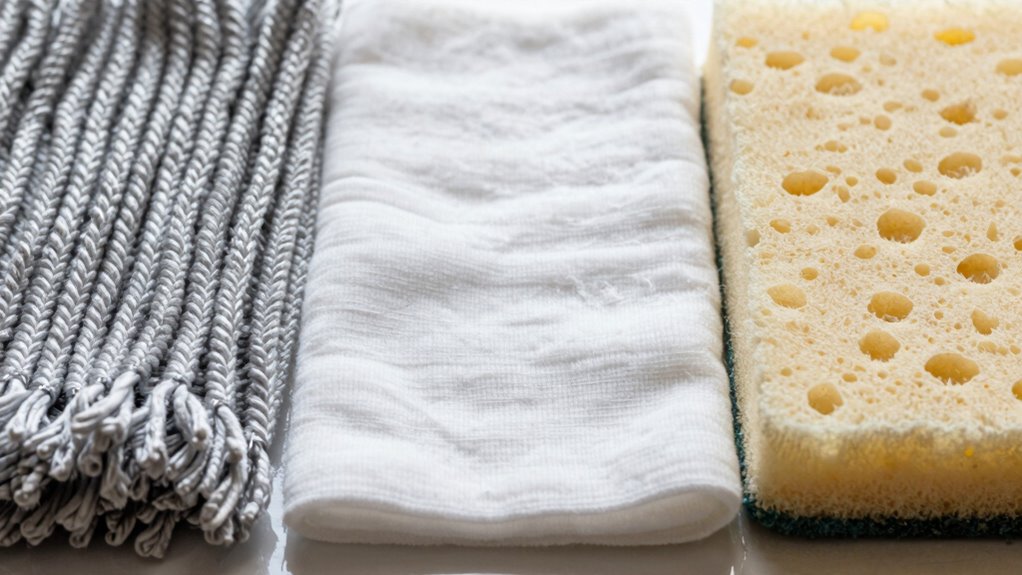

When choosing mop pads, microfiber offers the best durability, high cleaning efficiency, and quick drying, making it cost-effective long-term, but it’s not biodegradable. Cotton pads are eco-friendly, biodegradable, and gentler, though they wear out faster and may need frequent replacement. Sponges are cheap initially but degrade quickly and can harbor bacteria. To find the right option for your needs and discover key pros and cons, keep exploring the details below.
Key Takeaways
- Microfiber mop pads are highly durable, withstand many washes, and offer superior dirt and dust pickup compared to cotton and sponge pads.
- Cotton pads are biodegradable and eco-friendly but tend to wear out faster, requiring more frequent replacements.
- Sponges, especially synthetic ones, degrade quickly and can harbor bacteria, making them less hygienic and less sustainable long-term.
- Microfiber’s synthetic fibers provide better cleaning efficiency, while cotton is easier to wash but less effective over time.
- Long-term cost-effectiveness favors microfiber due to its durability, whereas sponge pads are cheaper upfront but need frequent replacing.

Choosing the right mop pad materials is essential for effective and efficient cleaning. When evaluating options like microfiber, cotton, and sponge, it’s important to weigh not only how well they clean but also their durability and eco friendliness factors. These aspects directly impact how often you’ll need to replace pads, the environmental footprint of your cleaning routine, and the overall cost-effectiveness of your choice.
Microfiber mop pads are known for their durability comparison. They’re made from tiny synthetic fibers that can withstand numerous washings without losing their effectiveness. This means you get more use out of each pad, making them a reliable long-term option. Microfiber also tends to dry quickly, reducing mold and bacteria buildup, which adds to its longevity. When it comes to eco friendliness factors, microfiber is a bit of a mixed bag. On one hand, their durability means fewer replacements, which reduces waste. On the other hand, since they are synthetic, their production involves plastic and chemicals, and they’re not biodegradable. Proper washing helps extend their lifespan, but eventually, microfiber pads will need to be replaced, contributing to plastic waste if not recycled properly. Additionally, microfiber’s high cleaning efficiency makes it especially effective at trapping dirt and dust particles.
Microfiber pads are durable and long-lasting but involve plastic and chemical production, raising eco concerns.
Cotton mop pads offer a different set of advantages and considerations. They are biodegradable, making them more eco friendly than synthetic options in terms of disposal. Cotton is a natural fiber, so it breaks down more easily in the environment, especially if you opt for organic or sustainably sourced cotton. In terms of durability comparison, cotton pads may not last as long as microfiber, especially with frequent use or harsh cleaning agents. They tend to wear out faster and may fray or tear over time. However, cotton pads are often easier to wash and maintain, and they don’t produce microplastics when cleaned. Their eco friendliness factors are strong, particularly if you choose organic or recycled cotton, as they have a smaller environmental footprint during production and disposal.
Sponge mop pads are typically less durable than microfiber or cotton. They can degrade quickly with heavy use, especially when exposed to harsh chemicals or rough surfaces. Sponges tend to absorb water and dirt, which can lead to bacterial growth if not cleaned properly. From an eco friendliness perspective, sponges are often made from synthetic or natural rubber materials. Natural sponges are biodegradable and more environmentally friendly, but synthetic ones are not. They also generally need to be replaced more frequently, which adds to waste. While sponges can be economical upfront, their shorter lifespan and need for regular replacement make them less sustainable in the long run.
Frequently Asked Questions
How Do Mop Pad Materials Affect Cleaning Efficiency?
Your choice of mop pad material directly impacts cleaning efficiency. Microfiber excels in pad absorption and dirt pickup, capturing fine dust and grime quickly. Cotton offers decent absorption but may struggle with stubborn dirt. Sponge pads are good for wet cleaning but less effective on dry dust. By selecting the right material, you guarantee maximum dirt pickup and efficient cleaning, making your task easier and faster.
Are Microfiber Pads Environmentally Friendly?
Think of microfiber pads as tiny eco-warriors fighting for cleaner floors and a healthier planet. They’re generally more environmentally friendly than you might think, thanks to their durability and reusability, reducing waste. When considering environmental impact and sustainability considerations, microfiber’s quick-drying properties mean less water use and fewer detergent needs. While they’re not perfect, choosing high-quality microfiber pads helps you minimize your footprint, making your cleaning routine more eco-conscious.
Which Mop Pad Material Is Best for Delicate Surfaces?
For delicate surfaces, microfiber mop pads are your best choice. They provide gentle cleaning and are highly surface sensitive, reducing the risk of scratches or damage. You’ll appreciate how microfiber picks up dirt effectively while being soft enough for fragile materials like glass or polished wood. Cotton pads can be too abrasive, and sponges may leave scratches. Trust microfiber to protect your delicate surfaces while keeping them clean.
How Long Do Different Mop Pads Typically Last?
Think of mop pads as loyal companions—some last longer than others. Microfiber pads often endure around 100-200 washes, making them quite durable, while cotton and sponge pads may need replacement after 50-100 washes. Durability considerations influence your cost implications, as longer-lasting pads save money over time. If you want longevity and efficiency, investing in high-quality microfiber is smart, but keep in mind your cleaning frequency and budget.
Can Mop Pad Materials Impact Allergy Symptoms?
Yes, mop pad materials can impact allergy symptoms, especially if you’re sensitive to certain allergy triggers or material sensitivities. Microfiber, cotton, and sponge each have different properties that may cause reactions. For example, microfiber can trap dust and allergens, which might worsen symptoms for some. Cotton and sponge may be gentler but still harbor allergens if not cleaned properly. Choosing hypoallergenic, easy-to-clean materials helps reduce allergy symptoms.
Conclusion
So, after all this, you might think choosing the best mop pad material is a no-brainer. But isn’t it funny how microfiber, cotton, and sponge each have their quirks? You’d expect perfection from one, but end up with surprises from another. Turns out, the “best” depends on your cleaning style—who knew? So go ahead, pick your favorite. Just don’t be shocked if your spotless floor comes with a side of unexpected drama.