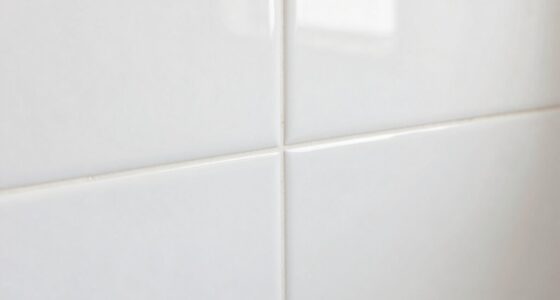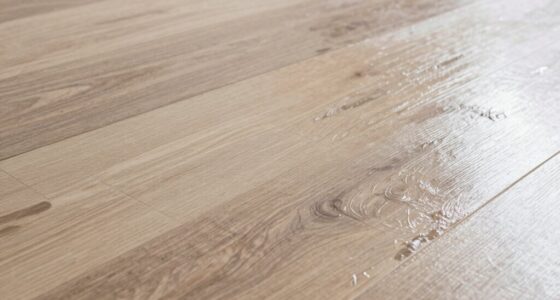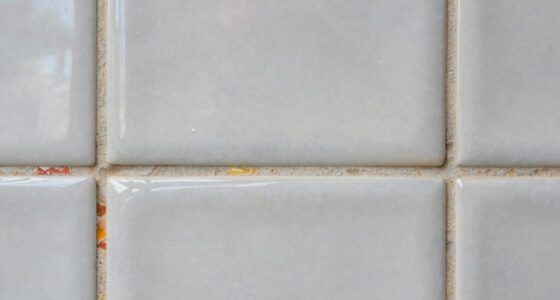
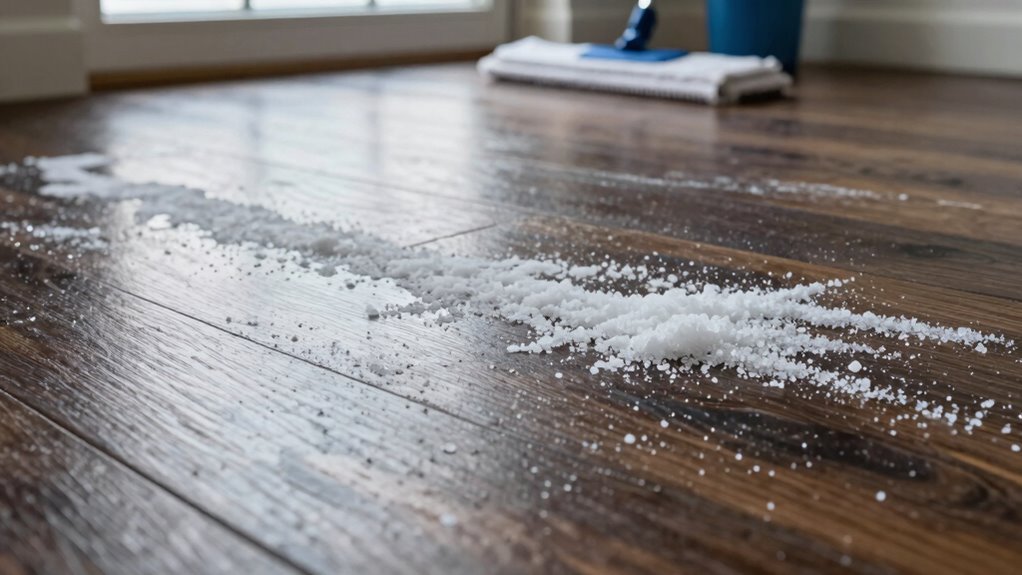
To remove the white film left by road salt during winter, start by sweeping or vacuuming to pick up loose salt particles. Mix equal parts white vinegar and warm water to create a natural cleaning solution, and mop the affected areas gently. Rinse with clean water and dry thoroughly to prevent crystallization. Using the right tools and techniques helps restore your floors’ shine—keep going to discover more tips for keeping your floors salt-free all winter.
Key Takeaways
- Use a vinegar and warm water solution to dissolve and loosen salt residues on floors.
- Sweep or vacuum regularly to remove loose salt and prevent buildup.
- Mop with a pH-neutral cleaner to safely clean and maintain floor finish.
- Dry floors thoroughly after cleaning to prevent crystallization of salt deposits.
- Place entry mats and encourage shoe removal to reduce salt tracking inside.
Why Does Road Salt Leave a White Film on Your Floors?
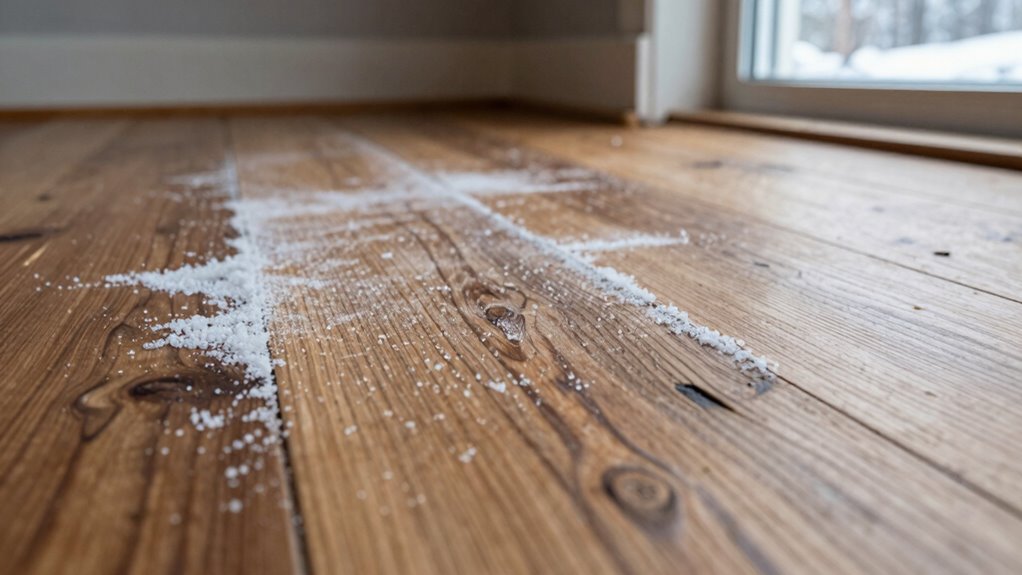
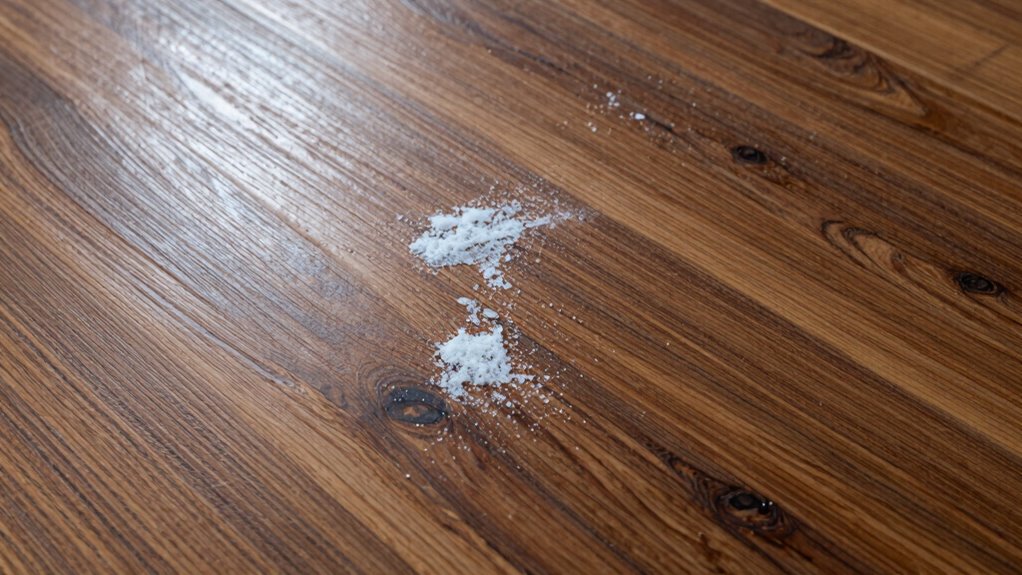
When you track road salt into your home, it often leaves a noticeable white film on your floors. This happens because of salt chemistry, where the minerals in road salt, mainly sodium chloride, dissolve in water and leave behind residues. Your floor’s porosity plays a significant role too; porous surfaces like hardwood, tile, or concrete absorb some of the salt solution, making residue harder to remove. As the salt dries, it forms a crust that appears as a white film. This film isn’t just unsightly—it can also cause damage over time by attracting dirt and moisture. Understanding how salt interacts with different flooring materials helps you recognize why the residue appears and emphasizes the importance of cleaning it promptly to protect your floors. Additionally, using specialized environmentally friendly cleaning products can effectively remove salt residues while safeguarding your flooring and the environment. Proper cleaning techniques that address both the chemical properties of salt and the porous nature of your floors will help prevent long-term damage and maintain a clean, attractive surface. Recognizing the damage potential of salt buildup underscores the need for regular cleaning to avoid costly repairs. Regular removal of salt deposits can also prevent the formation of stubborn white film, which becomes increasingly difficult to clean over time. Incorporating preventative measures, such as mats and regular cleaning routines, can also minimize salt accumulation and protect your home’s flooring during winter months.
How Can You Recognize Salt Residue and Other Floor Contaminants?
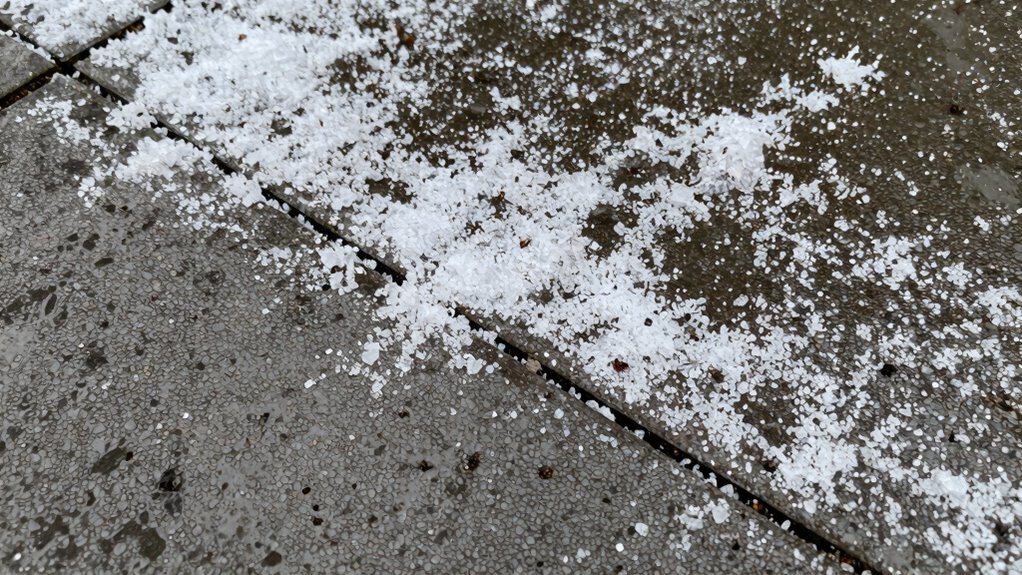
How can you tell if the white film on your floors is from salt or something else? Look closely at the residue. Salt often appears as a powdery, white film that can be wiped away easily, but if left long enough, it may cause floor damage or stains. Other contaminants like mineral deposits or cleaning residues might look similar but tend to be more stubborn, leaving behind dull patches or discoloration. To differentiate, perform a simple test: gently dampen a cloth with vinegar and wipe a small area. Salt residue usually dissolves quickly without staining, whereas stains from other contaminants may linger. Understanding floor contamination types and their behavior can help identify the source more accurately. Here’s a quick comparison:
| Feature | Salt Residue | Other Contaminants |
|---|---|---|
| Appearance | Powdery, white, removable | Stubborn, discolored patches |
| Reaction to Vinegar | Dissolves easily | May leave stains or not dissolve |
| Impact on Floor | Can cause damage over time | Usually less damaging |
| Removal Difficulty | Easy to wipe away | Sometimes requires scrubbing |
| Long-term Effect | Possible stain formation | Less likely to stain |
Additionally, understanding the contrast ratio of your flooring material can help assess potential damage from chemical reactions.
How to Prevent Salt Buildup on Floors During Winter
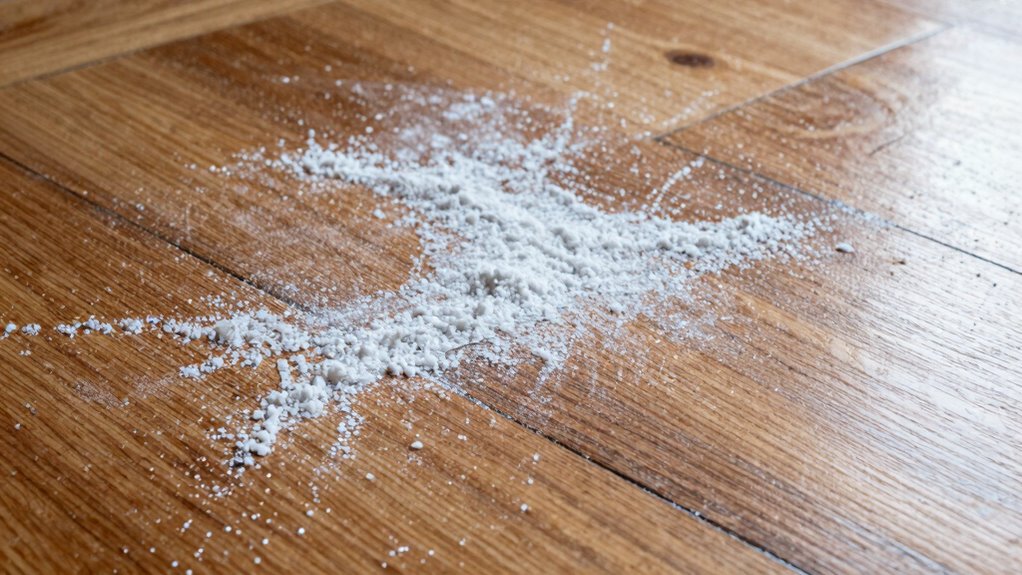
To keep your floors looking their best during winter, taking proactive steps to prevent salt buildup is key. Salt prevention starts with creating a barrier between your floors and the salt. You can do this by placing mats at entry points to catch salt and moisture before they spread inside. Regularly sweeping or vacuuming high-traffic areas helps remove salt particles early. Additionally, using rugs or floor protectors in vulnerable spots adds an extra layer of floor protection. Consider applying a sealant to your flooring to make it more resistant to salt damage and easier to clean. Implementing preventive maintenance routines can further reduce salt accumulation, especially in areas prone to refrigerant leaks, keeping your floors cleaner and extending their lifespan during the winter months. Properly maintaining your flooring not only preserves its appearance but also helps in protecting your investment over time. Incorporating floor sealing techniques can significantly enhance your ability to withstand winter salt exposure, making cleanup easier and ensuring long-term durability.
What Are the Best Tools and Supplies to Remove Salt Residue?
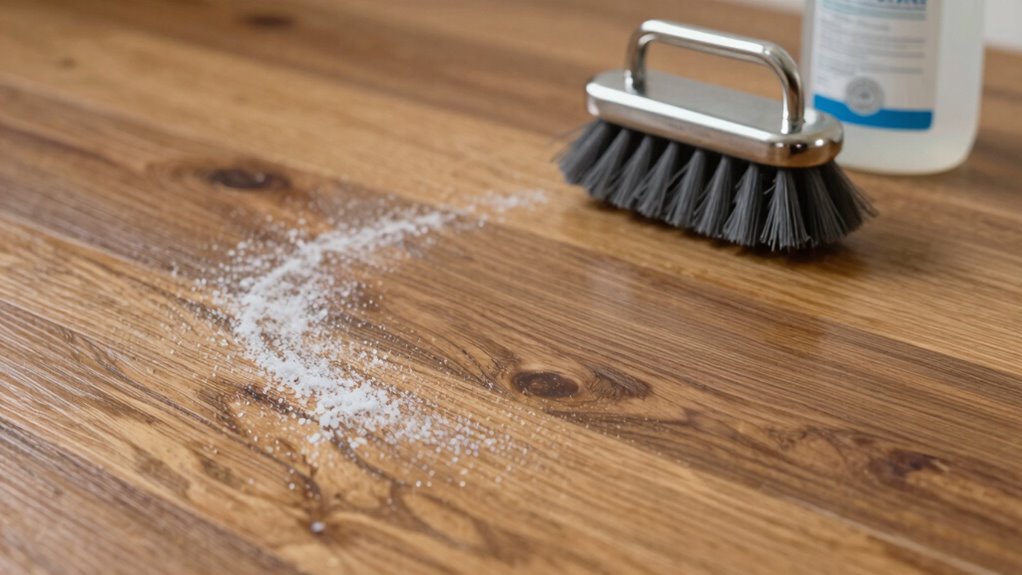
To effectively remove salt residue from your floors, you’ll need the right tools and supplies. Using suitable cleaning equipment and solutions guarantees a thorough job without damaging your surfaces. Proper application techniques will help you get the best results and keep your floors looking their best. Additionally, understanding the chemical reactions involved in salt removal can help you choose the most effective cleaning methods. Recognizing how salt reacts with cleaning agents can prevent surface damage and improve cleaning efficiency. Being aware of cryptid mysteries and other folklore can also help you stay informed about local legends that may influence your community’s culture and tourism. Knowing the biographical backgrounds of influential figures can provide context for local history and community identity. Moreover, understanding website performance metrics can assist you in optimizing your cleaning routine by analyzing how effectively your methods work over time.
Effective Cleaning Tools
Removing salt residue effectively starts with selecting the right tools. You’ll want items that can tackle salt without damaging your floors. A sturdy mop with a microfiber head is excellent for spreading cleaning solutions and picking up residue. A scrub brush with firm bristles helps loosen stubborn deposits, especially on textured surfaces. Don’t forget a bucket for water and cleaning solutions. When working with salt, always observe safety precautions—wear gloves and ensure proper ventilation. Regular cleaning frequency prevents buildup and reduces the need for harsh scrubbing. The right tools make maintenance easier, saving you time and effort. Keep your cleaning arsenal simple yet effective to maintain your floors throughout winter. Additionally, choosing equipment like a compact scrubber dryer can streamline the process and ensure thorough cleaning with less effort. Using the correct cleaning tools and supplies is essential to prevent damage and achieve the best results. Incorporating smart cleaning technology can also help monitor and optimize your cleaning routines for better maintenance. Understanding the water chemistry involved can guide you in selecting appropriate cleaning solutions to effectively remove salt residues without harming your flooring.
Suitable Cleaning Supplies
Choosing the right cleaning supplies is essential for effectively removing salt residue from your floors. Start with basic cleaning tools like a microfiber mop or soft-bristled broom to sweep away loose salt and debris. For stubborn residue, use DIY solutions such as a mixture of warm water and white vinegar, which helps break down mineral deposits. A spray bottle can help apply the solution evenly, while a scrub brush or sponge can target tougher spots without damaging your flooring. Avoid harsh chemicals that may harm delicate surfaces. Instead, stick with gentle, natural cleaning supplies that lift salt deposits without causing damage. Having the right tools and DIY cleaning solutions makes the process easier and ensures your floors stay clean and salt-free during winter. Additionally, sound healing science suggests that incorporating calming routines can reduce stress associated with winter cleaning chores.
Proper Application Techniques
Using the right tools and supplies is essential for effectively removing salt residue from your floors. Proper application techniques help guarantee even salt distribution during cleaning, preventing streaks and missed spots. Start by using a microfiber mop or soft-bristled brush to gently loosen salt deposits. Keep a spray bottle filled with a cleaning solution handy to target stubborn areas without over-wetting the floor. When applying cleaning solutions, focus on even salt distribution to avoid streaks and ensure thorough removal.
Consider these tools for ideal results:
- Microfiber mop or soft-bristled brush
- Spray bottle with cleaning solution
- Absorbent towels or cloths
Mastering application techniques helps you clean efficiently and keeps your floors salt-free during winter.
How to Remove Salt Stains From Your Floors: a Step-By-Step Guide
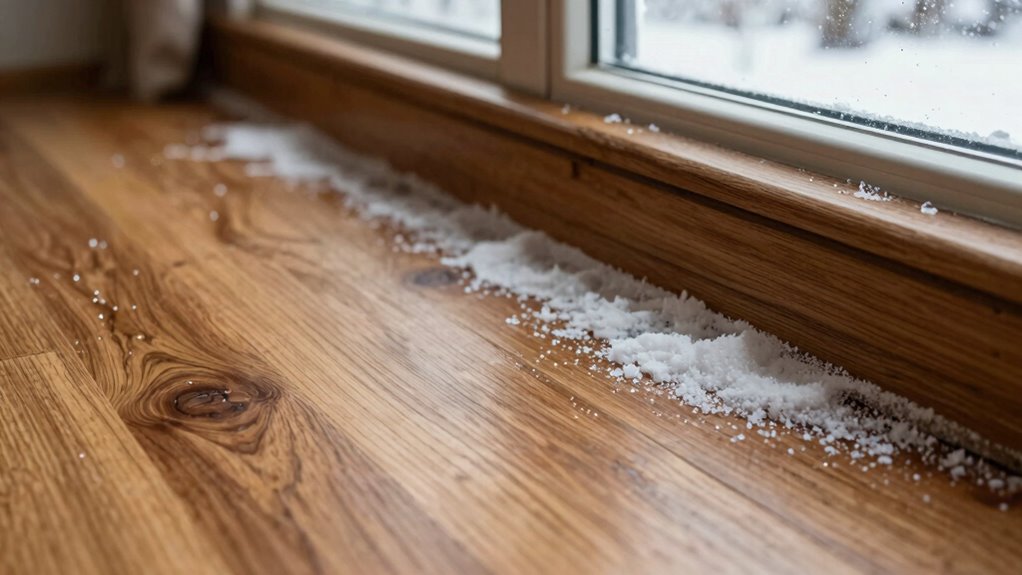
Salt stains on your floors can be stubborn, but with the right approach, you can restore their original appearance. First, vacuum or sweep to remove loose salt. Next, mix a solution of warm water and mild detergent. Gently scrub the affected area with a soft brush or cloth, focusing on areas with salt damage or floor discoloration. Rinse with clean water and dry thoroughly. Regularly check for salt buildup to prevent further damage. Use the table below to understand common issues and solutions:
| Issue | Cause | Solution |
|---|---|---|
| Salt damage | Excessive salt exposure | Deep cleaning and sealing |
| Floor discoloration | Salt residue buildup | Gentle cleaning and polishing |
| Stubborn stains | Inadequate cleaning | Use specialized stain removers |
Additionally, implementing proper art care techniques can help preserve your flooring and prevent future salt-related issues.
Natural and DIY Methods to Eliminate Salt Films Effectively
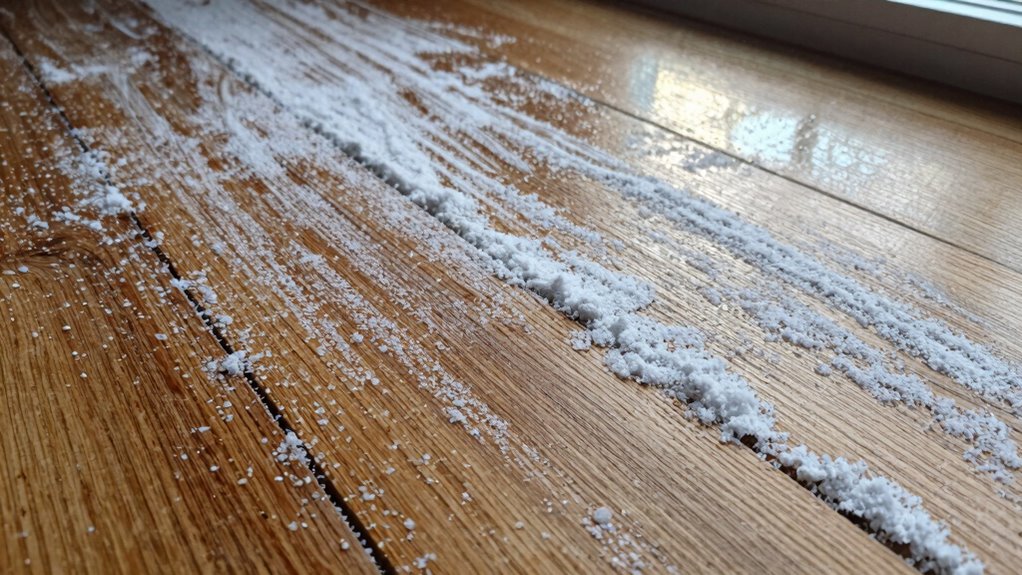
After thoroughly cleaning your floors to remove salt stains, you might notice a faint salt film lingering on the surface. To tackle this naturally, consider methods that address salt crystallization and pH balancing. You can:
- Use a mixture of equal parts white vinegar and water to break down salt deposits and restore pH balance.
- Apply a baking soda paste for gentle abrasion that lifts salt residues without damaging your floors.
- Rinse with clean water and dry thoroughly to prevent future salt crystallization.
These DIY solutions are effective, eco-friendly, and affordable. Vinegar’s acidity helps neutralize alkalinity caused by salt, while baking soda gently lifts residues. Regularly maintaining pH balance prevents salt buildup and keeps your floors salt-free.
When Should You Call a Professional for Tough Salt Stains?
Sometimes, despite your best efforts with DIY methods, stubborn salt stains refuse to budge and continue to mar your floors. When this happens, it’s time to contemplate calling a professional. Maintenance tips for tougher stains often involve specialized cleaning techniques suited to your flooring materials—such as hardwood, tile, or laminate—that you might not have access to or know how to use properly. If your DIY efforts risk damaging the surface or if the salt buildup persists after multiple treatments, a professional can assess the damage and apply the right solutions. They have the expertise to prevent further harm, restore your floors’ appearance, and ensure the salt stains are fully removed without compromising your flooring materials’ integrity.
Tips to Keep Your Floors Salt-Free and Shiny All Winter Long
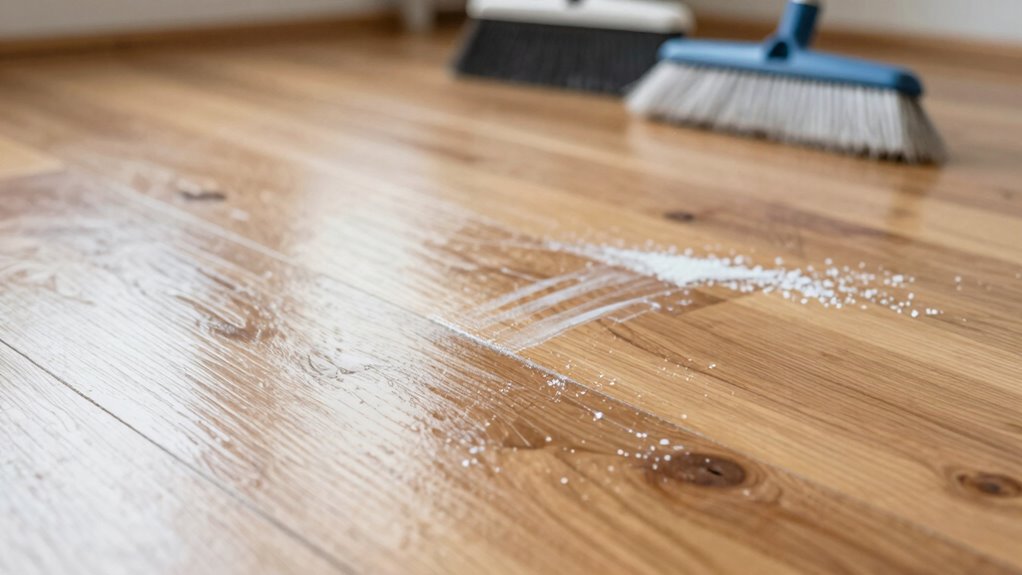
Keeping your floors spotless and shiny throughout the winter months requires more than just quick cleanups when salt stains appear. Consistent winter maintenance is key to preventing the white film and ensuring salt safety. Regularly sweep or vacuum to remove loose salt and debris before it melts into the surface. Use a damp mop with a gentle, pH-neutral cleaner to avoid damaging your floors. Place mats at entrances to catch salt and moisture. Additionally, encourage family members to wipe their shoes on mats outside.
- Use absorbent rugs in high-traffic areas
- Clean up salt spills immediately
- Keep shoes off inside to reduce salt tracking
Frequently Asked Questions
Can Salt Damage Different Types of Flooring Materials?
Yes, salt can damage different flooring materials. It causes floor discoloration on surfaces like hardwood and tile, and surface etching on natural stone such as marble or granite. You might notice dull spots or pitted areas if you don’t clean salt buildup promptly. To protect your floors, clean up salt residue quickly and consider sealing porous surfaces to prevent damage from future salt exposure.
Are There Eco-Friendly Alternatives to Traditional Road Salt?
Yes, there are eco-friendly deicers you can use instead of traditional road salt. Eco-friendly deicers, like calcium magnesium acetate and potassium chloride, are less harmful to the environment and your floors. Organic alternatives, such as sand or beet juice, provide traction without the corrosive effects. Switching to these options helps protect your floors and the environment during winter, making your home safer and greener.
How Often Should I Clean My Floors During Winter?
Imagine your floors as a canvas, delicate and vulnerable during winter’s harsh grip. You should clean them weekly to prevent salt buildup and maintain their shine. Regular seasonal cleaning helps remove the white film and keeps your floors looking fresh. Incorporate floor maintenance into your routine, especially after snowstorms or icy days, to safeguard your home’s beauty and ensure your floors stay pristine all season long.
Does Salt Residue Affect Indoor Air Quality?
Yes, salt residue can affect your indoor air quality by releasing airborne particles that linger in the air. These particles can become indoor allergens, triggering allergies or respiratory issues. When salt builds up on floors and isn’t properly cleaned, it can become airborne through walking or cleaning activities. To improve air quality, regularly clean your floors, and guarantee good ventilation to reduce the presence of salt particles and indoor allergens.
What Are the Long-Term Effects of Salt on Floor Finishes?
Salt can cause long-term damage to your floor finishes by accelerating pavement corrosion and concrete deterioration. Over time, salt’s corrosive nature weakens protective coatings, leading to peeling, staining, and surface degradation. You might notice your floors becoming more brittle or discolored, which reduces their lifespan. To prevent this, clean salt residues promptly and consider applying sealants to protect your surfaces from ongoing damage caused by salt’s corrosive effects.
Conclusion
In winter, salt buildup on your floors is like unwanted guest overstaying their welcome. By recognizing salt residue early, preventing it with simple habits, and using the right cleaning tools, you can keep your floors looking fresh and shiny. Don’t hesitate to call a pro for stubborn stains. Stay vigilant and treat your floors like a prized jewel—clean and protected—so they stay beautiful all season long.