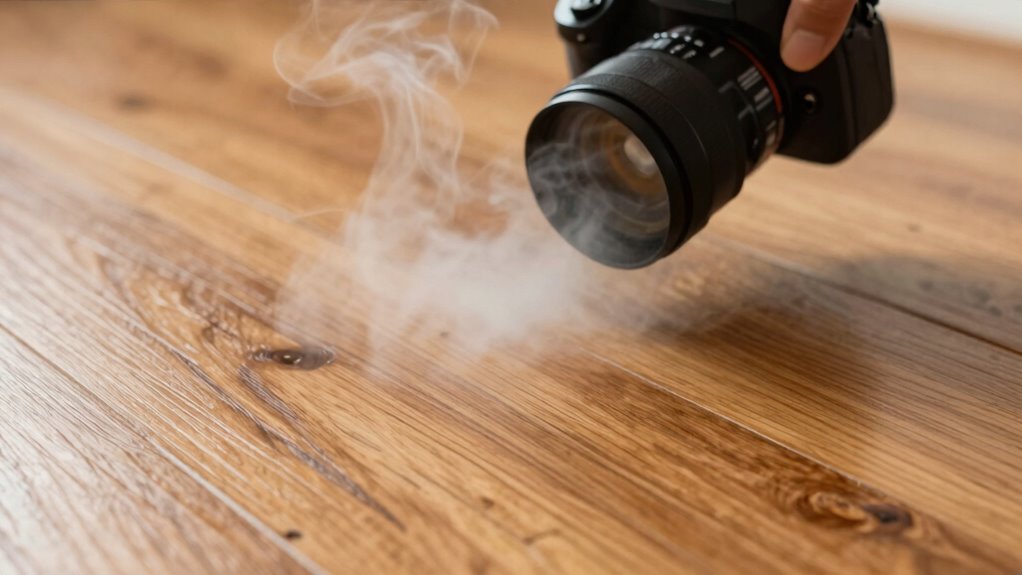
You should avoid steam cleaning hardwood floors because excessive moisture can cause irreversible damage, such as warping, cupping, and weakening the wood’s structure. The steam penetrates seams and cracks, leading to swelling and damage that aren’t always visible immediately. Using steam on hardwood is risky unless the manufacturer specifically approves it and proper precautions are taken. If you want to protect your floors, it’s best to contemplate safer cleaning methods—learn more about how to do this effectively.
Key Takeaways
- Excessive moisture from steam can cause hardwood to swell, warp, or cup over time.
- Steam penetration may weaken glue joints and damage the wood finish or surface layer.
- Using improper equipment or settings increases the risk of moisture-related damage.
- Steam cleaning can seep into seams and cracks, leading to buckling or warping of the flooring.
- Most manufacturers advise against steam cleaning as it can void warranties and compromise floor integrity.
Is Steam Cleaning Safe for Hardwood Floors?

Many homeowners wonder whether steam cleaning is safe for hardwood floors, especially since moisture can be a concern. While steam cleaning can be effective for mold prevention, it’s vital to consider how it impacts your floors. When used properly, steam can help remove stains and sanitize surfaces without harsh chemicals. However, excessive moisture can seep into seams and cracks, potentially causing warping or damage over time. To guarantee safety, use a well-maintained steam cleaner with a low-moisture setting and avoid holding the device in one spot too long. This method can aid in stain removal and reduce mold growth, but it’s essential to follow manufacturer instructions and test a small area first. Proper technique minimizes risks and keeps your hardwood floors in good condition. Additionally, understanding the ventilation considerations can further prevent moisture buildup and potential damage. Incorporating smart home automation features like humidity sensors can help monitor and maintain optimal moisture levels during cleaning. Ensuring proper drying techniques after steaming is equally important to prevent residual moisture from damaging your floors over time. Using moisture meters can provide an extra layer of protection by helping you accurately assess when your floors are dry enough to resume normal use. For added protection, always consider the manufacturer recommendations specific to your flooring type to ensure longevity and safety.
How Can Steam Damage Hardwood Floors?
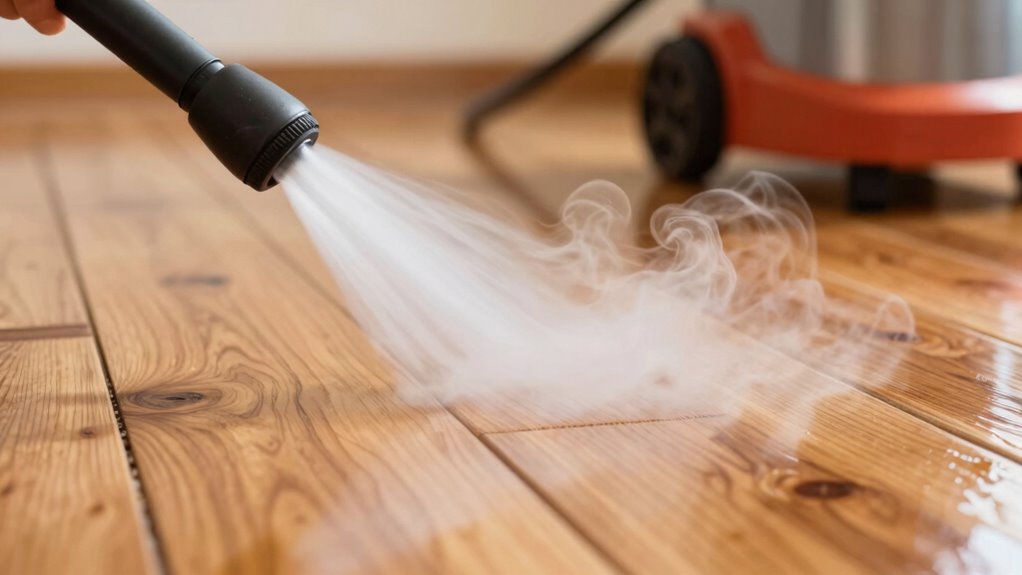
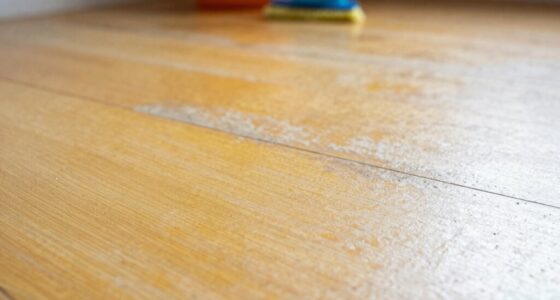
Steam can damage hardwood floors primarily because excessive moisture causes the wood to swell, warp, or cup over time. This highlights the steam cleaning hazards associated with using steam on wood surfaces. Hardwood’s moisture sensitivity makes it vulnerable to water infiltration, leading to irreversible damage. When steam penetrates the wood, it can weaken the glue joints and finish, resulting in peeling or lifting of the surface layer. Additionally, prolonged exposure to steam can cause the wood fibers to expand unevenly, creating warping or cupping. Even if the surface looks unaffected initially, the internal damage can compromise the floor’s structural integrity. Understanding these risks is key to avoiding costly repairs caused by improper cleaning methods that overlook hardwood’s moisture sensitivity. Proper cleaning techniques are essential to preserve the longevity of hardwood flooring. Being aware of the moisture sensitivity of hardwood floors helps you choose safer cleaning options and prevent damage, such as using dry cleaning methods that do not involve water or steam. Recognizing the importance of floor material properties can help you select appropriate cleaning practices that maintain the integrity of hardwood floors. Additionally, understanding proper maintenance practices ensures that you can keep your floors looking great without risking moisture-related damage.
What Are the Best Methods to Clean Hardwood Safely?
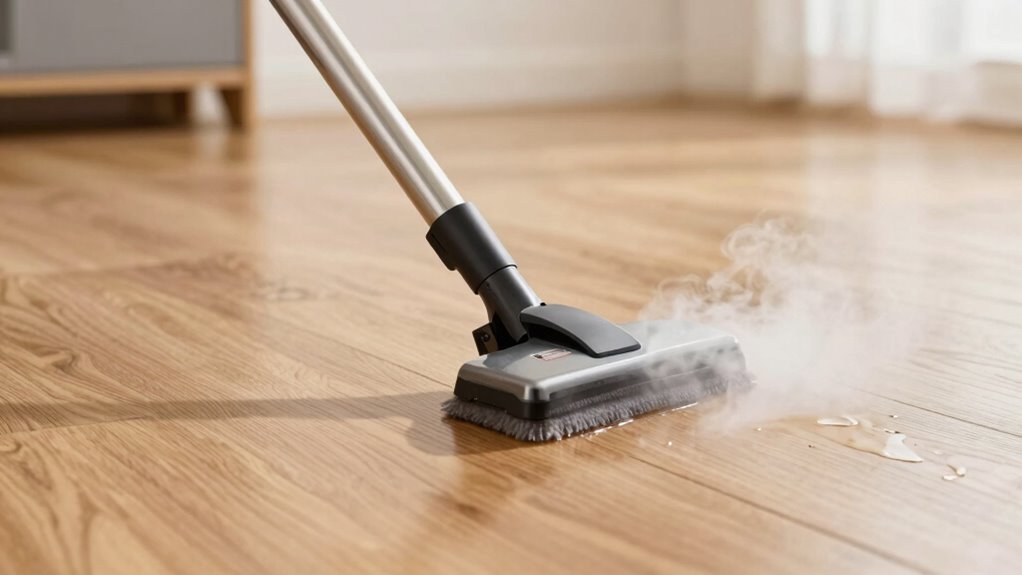
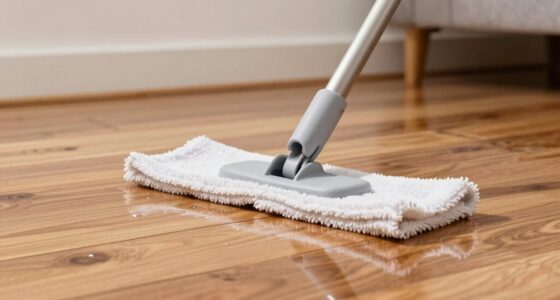
To clean hardwood floors safely, you should opt for methods that minimize moisture exposure and avoid harsh chemicals. Use a damp mop with a gentle cleaning solution or a mixture of water and a few drops of dish soap. Regular wood polishing helps maintain the floor’s finish and shine, providing a protective barrier against dirt and moisture. For deeper cleaning or restoration, consider a wax treatment, which adds a thin protective layer and enhances the wood’s appearance. Always avoid soaking the floor or using excessive water, as moisture can cause warping or damage. Instead, focus on quick, controlled cleaning techniques that preserve the wood’s integrity. Incorporating a proper cleaning routine can also help prolong the lifespan of your hardwood floors. Understanding the risks of moisture damage is crucial for maintaining the beauty and durability of your hardwood, and using the right cleaning methods ensures your floors stay in top condition without risking damage. Being aware of best cleaning practices helps prevent unintended harm and keeps your flooring looking its best. Additionally, regularly inspecting your floors for signs of moisture issues can help catch problems early and prevent costly repairs, ensuring your hardwood remains durable over time. Using appropriate cleaning supplies is essential to avoid chemicals that could harm the wood’s finish. These methods ensure your hardwood stays beautiful and durable without risking damage.
How to Maintain Your Hardwood Floors Without Damage

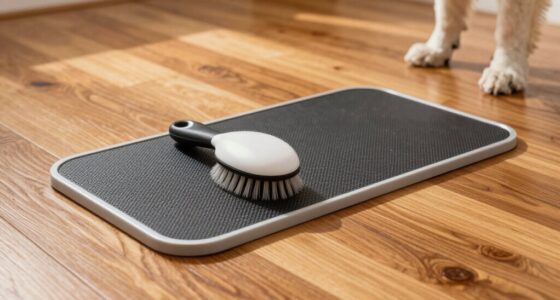
Keeping your hardwood floors looking their best requires consistent, gentle maintenance that prevents damage. Regularly clean with a damp mop to address moppable stains without oversaturating the wood. Use a soft cloth or microfiber mop to avoid scratching the surface. When wax buildup occurs, opt for a gentle wax removal method—such as a specialized wax remover or a mixture of warm water and a small amount of dish soap—rather than harsh chemicals. Avoid excessive moisture, which can cause warping or swelling. Never use abrasive cleaners or steel wool, as they can scratch the finish. Being aware of free floating flooring options can help you choose the right maintenance methods for your specific type of hardwood. Additionally, understanding reliable backup power options can ensure your home remains protected during outages, just as proper floor care safeguards your investment. To further protect your floors, consider implementing connected home fitness devices that monitor environmental conditions like humidity and temperature, which can impact wood integrity. Regularly checking your air quality can help identify indoor pollutants that might affect your floors’ condition. Also, maintaining proper humidity levels is crucial to prevent wood from expanding or contracting excessively. By maintaining a routine of light cleaning and careful wax removal, you’ll preserve your floors’ beauty and durability without risking damage from steam cleaning or harsh products.
What Are Safer Alternatives to Steam Cleaning?
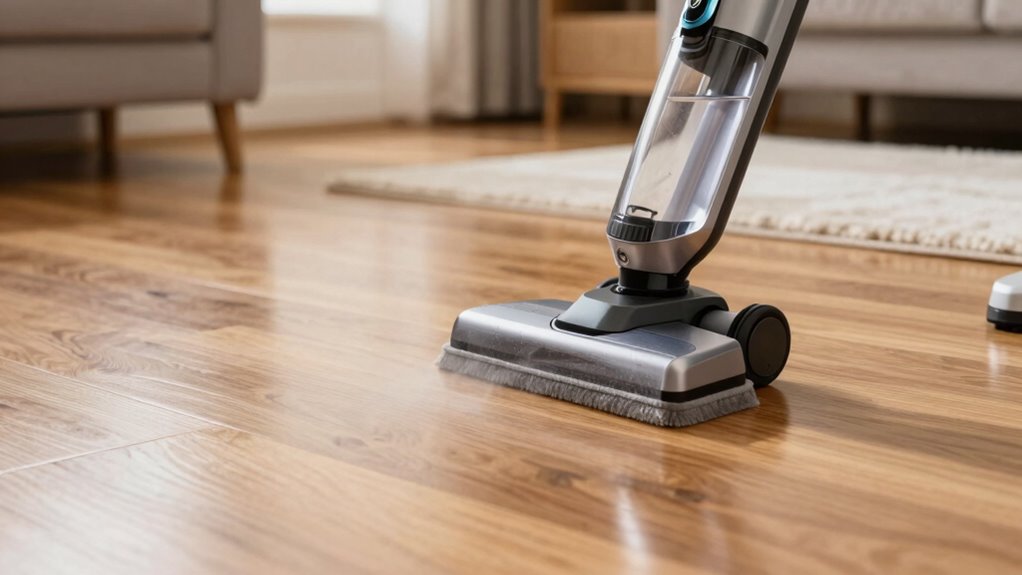
Are there safer ways to clean your hardwood floors without risking damage from steam? Absolutely. Eco-friendly cleaning methods are gentle yet effective for maintaining your floors. Use a microfiber mop dampened with a mixture of water and a small amount of natural wood floor cleaner or vinegar. Avoid harsh chemicals and excessive moisture, which can cause warping or swelling. For DIY hardwood care, regularly sweep or vacuum to remove dirt and debris that can scratch the surface. You can also make your own cleaning solutions using simple ingredients like lemon juice and water. These alternatives reduce the risk of water damage and keep your floors looking pristine. Incorporating gentle cleaning techniques aligned with the natural properties of hardwood helps preserve its finish and longevity. Additionally, understanding wood floor care can help you select the most suitable cleaning practices to extend the life of your floors and maintain their appearance. Proper precautions for steam cleaning can further protect your investment in hardwood flooring. Being aware of moisture control is essential to prevent potential damage from improper cleaning methods.
Frequently Asked Questions
Can Steam Cleaning Improve Hardwood Floor Longevity?
Steam cleaning can help with hardwood maintenance, but it doesn’t necessarily improve floor longevity. The risks of steam cleaning include moisture damage, warping, and gaps between planks, which can harm your hardwood over time. If you want to extend your floors’ lifespan, focus on regular sweeping, using proper cleaning products, and avoiding excessive water. Proper maintenance prevents damage without risking the adverse effects associated with steam cleaning risks.
Are There Specific Hardwood Types Resistant to Steam Damage?
Back in the day, you’d think all hardwoods could handle steam, but that’s not the case. Some types, like oak and maple, resist moisture absorption better and are more resistant to steam damage. Their dense wood grain helps prevent warping and swelling. However, always be cautious with steam cleaning, even on these woods, as excessive moisture can still cause issues over time. When in doubt, opt for dry cleaning methods.
How Often Should I Clean Hardwood Floors Safely?
You should clean your hardwood floors with mop alternatives like a damp microfiber cloth or a soft broom, and stick to a cleaning frequency of once a week to maintain their appearance. Avoid excessive moisture, especially with steam, to prevent damage. Regular, gentle cleaning helps preserve your floors’ finish and prevents dirt buildup. Adjust the frequency based on foot traffic, but generally, once a week keeps your hardwood looking its best.
What Signs Indicate Hardwood Damage From Cleaning Methods?
You’ll notice signs like mold growth or finish deterioration on your hardwood floors if cleaning methods cause damage. Mold may appear as dark spots or fuzzy patches, indicating excess moisture. Finish deterioration shows up as dullness, scratches, or peeling, revealing the wood underneath. These signs warn you to avoid harsh cleaning techniques, especially excessive steam or water, which can compromise your hardwood’s integrity and lead to costly repairs.
Are Professional Steam Cleaning Services Recommended for Hardwood?
Professional steam cleaning services aren’t usually recommended for hardwood, as many believe the steam myths that it’s safe. Steam can penetrate the wood and damage the finish or cause warping, especially if the hardwood isn’t properly sealed. If you want to keep your floors protected, make sure they’re well sealed first, then consider alternative cleaning methods. Always check with a flooring expert before opting for steam cleaning on hardwood surfaces.
Conclusion
While steam cleaning might seem like a quick fix, it’s risky for hardwood floors—over 60% of damage occurs from improper cleaning. Using gentle methods like a damp microfiber cloth or specialized cleaners helps protect your investment. Remember, hardwood floors can last decades when properly maintained. So, skip the steam and stick to safer cleaning habits; your floors will thank you for the extra care and longevity.