Trying an acid test on your natural stone floor is risky and can cause permanent damage. Acidic cleaners react with mineral content, leading to etching, dullness, and discoloration that are hard to fix. Instead of risking harm, learn safe ways to assess and care for your floors. If you want to protect your investment and keep your stone looking its best, keep exploring how proper maintenance and professional help can make a difference.
Key Takeaways
- Acid testing can cause irreversible surface etching and damage to natural stone floors.
- Using acidic substances like vinegar or lemon juice risks dulling and discoloring the stone permanently.
- Acid reactions weaken the mineral structure, leading to surface erosion and potential cracks over time.
- pH testing is safer for diagnosing damage, but direct acid testing should be avoided entirely.
- Professional assessment is recommended for any suspected damage instead of risking further harm with acid tests.
Why Acidic Cleaners Damage Natural Stone Floors

Since natural stone floors are composed of porous materials, acidic cleaners can cause immediate and long-term damage. The key factor is the pH level of the cleaner; acidic solutions have a low pH, typically below 7, which triggers harmful acid reactions with the stone’s mineral content. When you use an acidic cleaner, these acid reactions dissolve the calcium carbonate or similar minerals in the stone, leading to etching, dullness, and surface erosion. Over time, repeated exposure worsens this damage, compromising the floor’s appearance and integrity. Even mild acids like vinegar or lemon juice can harm natural stone if used improperly. Understanding the pH level of cleaning products helps you choose safe options that won’t trigger damaging acid reactions. Additionally, color accuracy in cleaning solutions is essential to prevent discoloration or surface damage to delicate stone surfaces, and selecting appropriate cleaning methods can further preserve the stone’s natural beauty. Recognizing the stone porosity also guides you to select suitable cleaning agents that won’t penetrate and damage the material. Proper knowledge of the porous nature of natural stone can help you avoid using harmful cleaning techniques that might compromise its structure.
Risks of Testing Your Stone Floor With Acid
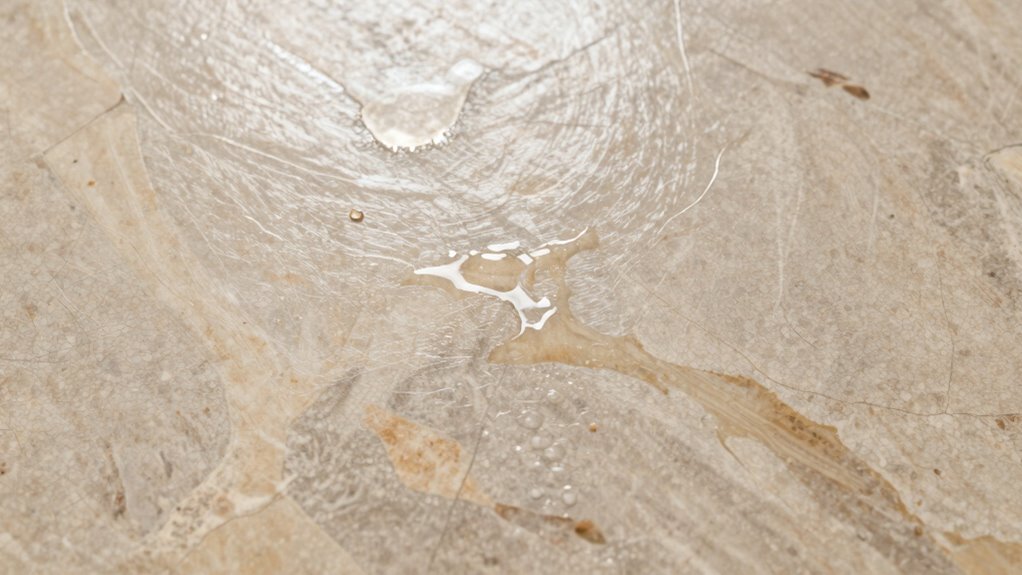
Testing your stone floor with acid may seem like a quick way to check its hardness or finish, but it poses significant risks. Using pH testing or acid cleaning methods can cause irreversible damage. Here are three dangers to contemplate:
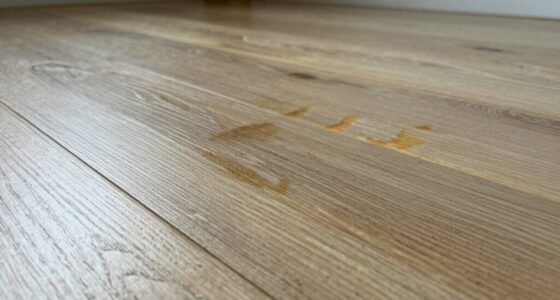
- Surface etching: Acid reacts with the stone’s surface, creating dull spots and loss of polish. This process can be difficult to reverse and may necessitate professional restoration. Surface damage can occur even with minor acid exposure, compromising the longevity of your flooring.
- Color change: Acid exposure can discolor natural stone, leading to uneven or blotchy appearances. Such discoloration is often permanent and affects the aesthetic value of your flooring.
- Structural damage: Prolonged or improper acid testing weakens the stone’s integrity, risking cracks or crumbling over time. Stone durability is a crucial factor to consider when maintaining your flooring.
Instead of risking these issues, trust professional assessments and gentle cleaning methods designed specifically for natural stone. Remember, the “acid test” isn’t a safe or reliable way to evaluate your floor’s condition. Using simple tools like BTU and CADR quick‑calculators can help assess your home’s comfort and safety without damaging your flooring.
How to Tell If Your Stone Floor Has Been Damaged by Acid
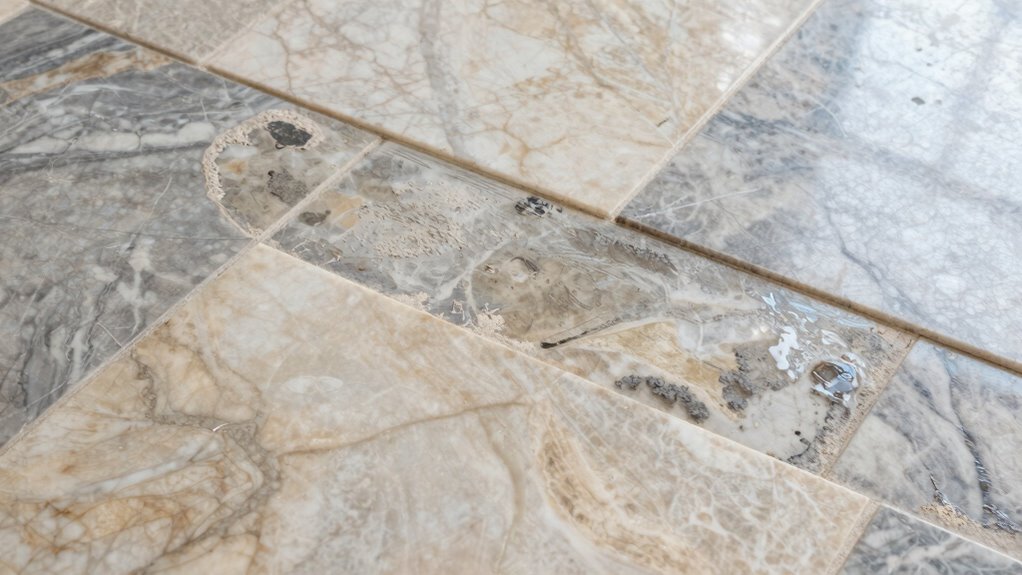
If your stone floor has been exposed to acid, there are clear signs you can look for to determine if damage has occurred. One effective method is pH testing, which measures the surface’s acidity. If the pH level is below 7, it indicates acid etching has taken place. Acid etching causes dull patches and a loss of shine, especially on polished surfaces like marble. You might notice a rough or etched appearance in certain areas, revealing the damage. These signs suggest that the acid has interacted with the stone’s mineral structure, compromising its finish. Regularly inspecting your floor for dull spots, discoloration, or surface etching helps identify damage early, preventing further deterioration and ensuring proper care.
Safe and Effective Ways to Maintain Your Natural Stone Floors
Maintaining the beauty and durability of your natural stone floors requires consistent, proper care. To keep them looking their best, follow these safe and effective methods:
- Perform DIY sealing regularly to protect against stains and moisture, ensuring the sealant is suitable for your stone type. Regular sealing helps maintain the integrity of the stone and prevents long-term damage. Additionally, understanding the proper sealing techniques ensures that the sealant penetrates effectively without causing surface issues. Incorporating sealant application methods can further improve the longevity of your sealing efforts. Recognizing the scientific skepticism surrounding some claims about sealing benefits can help you make informed decisions about maintenance products.
- Use gentle cleaning solutions and avoid acidic or abrasive cleaners that can damage the surface.
- Enhance shine with proper polishing techniques, which can be done periodically to restore luster without harming the stone.
- Always test cleaning methods in a small, inconspicuous area first to prevent unintended damage or discoloration testing techniques.
When to Call a Professional for Stone Floor Repairs
If your stone floors have severe damage or you’re unsure about how to repair them, it’s time to call a professional. Stains or cracks that keep spreading should also be addressed by an expert to prevent further issues. Don’t hesitate to seek help when the damage surpasses simple fixes. Recognizing dark psychology tactics can help you avoid manipulation or exploitation in these situations. Additionally, understanding the importance of proper maintenance can prevent minor issues from escalating into costly repairs. Implementing preventative care measures and seeking expert advice ensures your stone floors remain durable and attractive over time. Proper ventilation considerations can also play a role in maintaining the integrity of your stone surfaces by reducing moisture buildup and damage. Regular inspections and awareness of potential structural issues can further help in maintaining your flooring’s longevity.
When Damage Is Severe
Severe damage to your natural stone floors calls for professional intervention to prevent further deterioration. If you notice intense surface etching or widespread discoloration, it’s time to call in experts. Here are signs you shouldn’t attempt repairs yourself:
- Extensive surface etching caused by acidic reactions that have penetrated deep into the stone
- Cracks or chips that compromise the structural integrity of the flooring
- Significant color loss or dullness that regular cleaning can’t restore
- Damage that involves deep penetration of stains or etching, which requires specialized treatment beyond DIY methods. When damage is this severe, restorative techniques are often needed to fully recover your flooring’s appearance and durability. Consulting a professional restoration specialist ensures proper assessment and effective repair strategies tailored to your specific damage. Additionally, using proper cleaning methods can help prevent further harm and preserve your floors’ natural beauty over time.
Attempting DIY fixes on severe damage can worsen the problem, making repairs more costly. Professionals have specialized tools and expertise to assess the damage accurately and restore your floors safely, ensuring they stay beautiful and durable for years to come. Additionally, proper restoration techniques involve careful evaluation to avoid further harm and preserve the natural beauty of the stone.
Unsure of Repair Needs
Are you unsure whether your stone floors need professional repair? If you’ve attempted DIY repairs or aren’t confident in your surface assessment, it’s time to call in experts. Minor issues like small scratches or mild dullness might be fixable on your own, but larger or deeper problems require professional attention. When damage isn’t clear or seems extensive, a professional can accurately evaluate the surface condition. Relying solely on DIY repairs without proper assessment risks worsening the damage or causing additional harm. If you’re uncertain about the severity of the issue or how to proceed, don’t hesitate to contact a skilled stone floor specialist. They can perform a thorough surface assessment and recommend the most effective, long-lasting repair solutions. Additionally, understanding the best repair techniques can help ensure your stone floors maintain their durability and aesthetic appeal over time. Knowing the signs of damage can also guide you in deciding when professional intervention is necessary.
Stains or Cracks Appear
When stains or cracks appear on your stone floors, it’s a clear sign that professional intervention may be necessary. Ignoring these issues can lead to further damage. Consider these steps before attempting DIY repairs:
- Use pH testing to assess whether the stain or crack is caused by acid or alkaline substances, helping determine if DIY solutions are safe.
- If cracks are extensive or deep, avoid trying to fix them yourself, as improper repairs can worsen the damage.
- For stubborn stains or structural cracks, call a professional who specializes in stone restoration to ensure proper treatment and longevity.
Common Mistakes That Can Damage Your Natural Stone Floors
Using harsh chemicals or improper cleaning methods can quickly damage your natural stone floors. Many people don’t realize that certain cleaners can cause discoloration or erosion. To keep your floors looking their best, it’s essential to choose the right products and techniques.
Harsh Chemical Usage
Many homeowners make the mistake of using harsh chemicals when cleaning their natural stone floors, unaware that these substances can cause irreversible damage. Using improper cleaners can lead to issues like acid etching, which dulls the surface. To prevent this, consider these steps:
- Skip acidic or alkaline cleaners that aren’t formulated for stone, as they can disrupt pH balance.
- Perform pH testing on cleaning solutions to ensure they’re neutral (around 7), preventing surface damage.
- Avoid harsh chemicals like vinegar, lemon juice, or bleach, which can cause etching and permanent stains.
Inappropriate Cleaning Methods
Are you aware that some cleaning methods can unintentionally harm your natural stone floors? Using improper cleaning techniques, like acidic or alkaline products, can cause etching or discoloration. Before cleaning, perform pH testing to ensure your cleaner is neutral; anything outside a 7 pH can damage the stone. Avoid DIY repair kits or abrasive scrubbers, which can scratch or weaken the surface. Instead, stick to pH-balanced cleaners specifically formulated for natural stone. Regularly inspecting your floors and using gentle methods help maintain their beauty and durability. Remember, aggressive cleaning can lead to costly repairs or irreversible damage. Proper care and knowledge of appropriate cleaning methods are essential to preserve the natural elegance of your floors over time.
Frequently Asked Questions
Can Certain Household Items Harm Natural Stone Floors?
Yes, certain household acids can harm natural stone floors. When you use DIY cleaning with acidic household items like vinegar or lemon juice, you risk damaging the stone’s surface. Always avoid these household acids and opt for pH-neutral cleaners designed for natural stone. This helps protect your floors from etching, discoloration, and long-term damage, keeping them looking beautiful and well-maintained.
How Often Should I Professionally Inspect My Stone Flooring?
You should schedule a professional inspection of your stone flooring at least once a year. This maintenance schedule helps identify potential issues early, catching scratches, cracks, or stains before they worsen. Regular inspections, paired with proper cleaning, prolong your floors’ beauty and durability. By maintaining this inspection frequency, you guarantee your natural stone remains stunning and well-preserved, avoiding costly repairs and keeping your home looking its best.
Are There Natural Cleaning Alternatives Safe for Stone Floors?
Yes, you can use DIY cleaning methods that are safe for stone floors to avoid chemical risks. Mix gentle solutions like warm water with a few drops of mild dish soap or use a mixture of water and white vinegar in very diluted amounts, but avoid acidic cleaners. Regular sweeping and damp mopping keep your floors clean without damaging the natural stone, ensuring longevity and beauty.
What Signs Indicate My Stone Floor Needs Sealing?
Your stone floor’s like a book waiting to be read; signs of wear tell the story. If water no longer beads on the surface or absorbs quickly, it’s time for pH testing to confirm porosity. Look for dullness or stains that won’t come off. Regular sealing frequency depends on these signs; typically, reseal every 1-3 years keeps your floor resilient. Don’t wait until damage speaks loudest—stay proactive.
How Does Humidity Affect the Longevity of Natural Stone Floors?
Humidity impact can considerably affect your natural stone floors by increasing moisture levels, which may lead to moisture damage over time. When humidity rises, it causes the stone to absorb excess moisture, weakening its structure and promoting mold or mildew growth. To protect your floors, maintain proper ventilation and control indoor humidity levels. Doing so helps preserve their appearance and durability, extending their lifespan and preventing costly repairs.
Conclusion
Remember, your natural stone floors are like delicate works of art—beautiful but fragile. Avoid the tempting but risky acid test; instead, treat them with gentle care and respect. When in doubt, call in the pros before any damage strikes like lightning. With patience and proper maintenance, your floors will shine like a beacon—resilient, stunning, and timeless, standing strong against the tests of time and temptation.