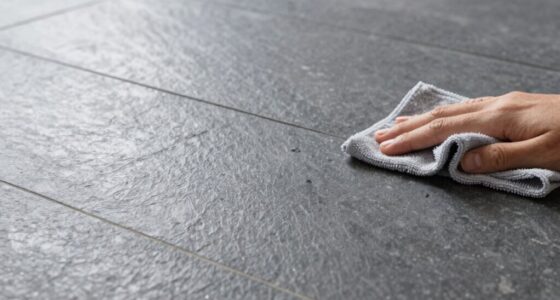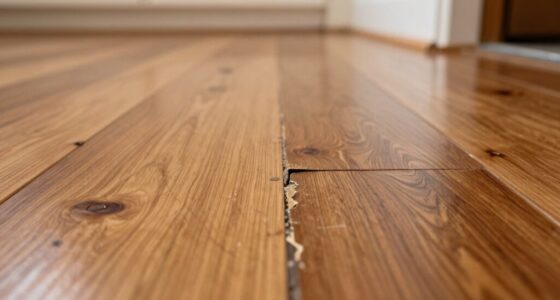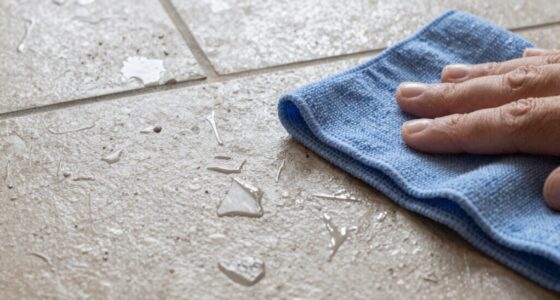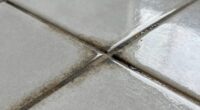
Using harsh or inappropriate cleaning products on your vinyl plank floors is a common mistake that leaves a hazy buildup and dull appearance. When you use too much soap, wax, or a chemical not designed for vinyl, residues form a cloudy film over the surface. This buildup attracts dirt and diminishes shine, making your floors look dull and lifeless. To avoid this, follow proper cleaning techniques—keep listening to discover more tips to keep your floors bright and clear.
Key Takeaways
- Using harsh chemicals or abrasive tools can damage vinyl floors, causing haze and dullness.
- Residue buildup from soap-based cleaners and minerals attracts dirt, leading to surface haze.
- Improper rinsing leaves behind films that obscure the floor’s natural shine and vibrancy.
- Overusing chemical cleaners accelerates surface wear and diminishes the floor’s reflective gloss.
- Proper, gentle cleaning with pH-neutral products and microfiber tools prevents haze and maintains shine.
The Biggest Mistake That Causes Hazy Films on Vinyl Floors

One of the most common mistakes that leads to hazy films on vinyl floors is using the wrong cleaning products. When you rely on harsh or incompatible cleaners, you risk creating a residue that dulls the polished surface. This residue builds up over time, obscuring the glossy finish that makes your floor look vibrant and new. Instead of enhancing your floor’s appearance, improper products leave behind a film that causes haze and reduces shine. To keep your vinyl plank floors looking their best, always choose gentle, pH-neutral cleaners designed specifically for vinyl. Proper cleaning preserves the glossy finish and maintains that sleek, polished surface you want to showcase. Additionally, incorporating connected cleaning technology can help ensure your floors are kept in optimal condition with minimal effort. Being aware of cleaning product compatibility is essential to prevent damage and maintain the long-term beauty of your vinyl floors, as using the wrong products can lead to residue buildup that diminishes the floor’s appearance. Regularly monitoring cleaning routines can also prevent the accumulation of residues that cause haziness.
How Using the Wrong Cleaning Products Dulls Your Vinyl Plank Floors
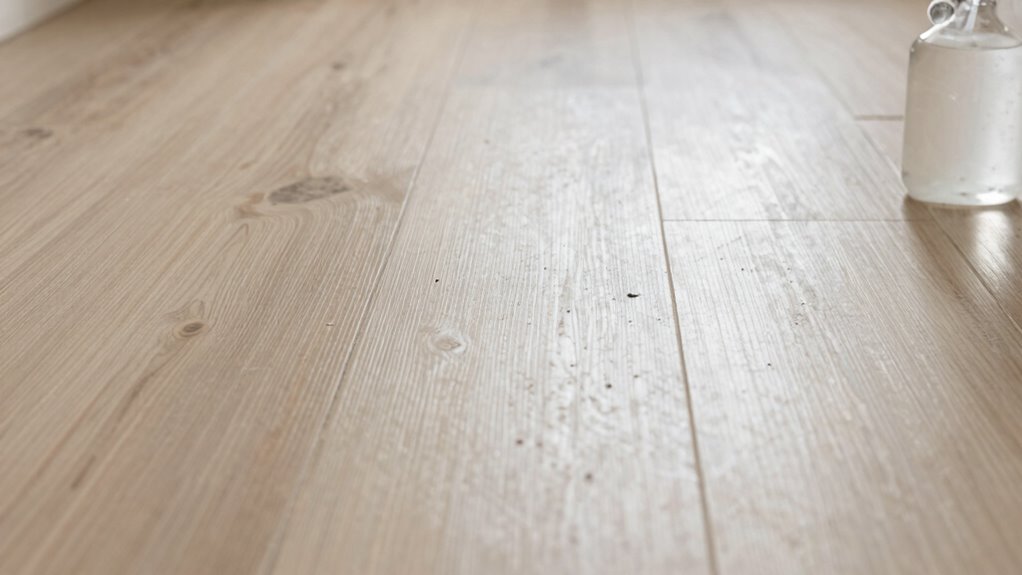
Using harsh chemicals can damage your vinyl floor’s finish, leaving it looking worn and dull. Residue from incorrect cleaners builds up over time, reducing the floor’s shine. Overusing certain products can also cause a dull, sticky film that’s hard to remove. To keep your floors looking their best, it’s important to select reliable cleaning methods that are safe and effective for vinyl plank flooring. Proper maintenance involves understanding vinyl floor care and avoiding products that can compromise the integrity of the material. Being aware of chemical sensitivities can help prevent unintentional damage caused by unsuitable cleaning agents. Regularly cleaning with gentle, pH-neutral cleaners ensures the longevity and appearance of your vinyl floors. Incorporating smart cleaning solutions can further optimize your maintenance routine and protect your investment.
Harsh Chemicals Damage Finish
Harsh chemicals can severely damage the finish of your vinyl plank floors, leaving them dull and discolored. These strong cleaning agents may seem effective at removing dirt, but they actually cause finish damage over time. Chemicals like bleach, ammonia, or abrasive cleaners break down the protective coating, exposing the underlying material to wear and tear. Once the finish is compromised, your floors lose their shine and become prone to scratches, stains, and further deterioration. Using the wrong products creates a dull appearance and shortens the lifespan of your flooring. To keep your vinyl planks looking their best, always opt for gentle, pH-neutral cleaners designed specifically for vinyl surfaces. Avoid harsh chemicals to preserve the finish and maintain their original luster.
Residue Causes Dullness
When cleaning your vinyl plank floors with the wrong products, residue can build up and cause a dull appearance. This buildup can obscure the flooring’s vibrant patterns and accelerate color fading over time. Using harsh or incompatible cleaners leaves behind a film that diminishes shine and depth. To avoid this, consider these factors:
- Residue from soap-based cleaners
- Leftover mineral deposits
- Sticky film from improper rinsing
- Waxy buildup from certain polishes
- Dust and dirt trapped in film layers
- Proper cleaning techniques are essential to maintain the floor’s pristine look and prevent residue accumulation. Regular use of appropriate cleaners ensures the removal of residues and preserves the flooring’s natural luster. Additionally, understanding cleaning product compatibility can help prevent future buildup and damage. Recognizing the importance of floor surface protection can further extend the lifespan and beauty of your vinyl flooring. Being aware of the residue buildup process can help you choose the right cleaning methods and products to avoid dullness. These residues trap dirt and reduce the natural luster of your floors. Over time, the surface looks cloudy and worn, masking the flooring pattern details. Regularly using appropriate cleaners prevents residue accumulation, keeping your vinyl plank floors looking fresh, vibrant, and true to their original design.
Overuse of Cleaners
Applying too much cleaner or relying on strong chemical products can quickly dull your vinyl plank floors. Many cleaning myths suggest heavy-duty solutions are necessary, but in reality, they often damage the surface over time. Using excessive cleaner can leave residues that attract dirt, leading to a cloudy appearance. Instead, stick to simple maintenance routines with gentle, pH-neutral cleaners. Here’s a quick comparison:
| Cleaner Type | Effect on Vinyl Floors | Best Use |
|---|---|---|
| Heavy chemical cleaners | Dulls and damages surface | Rarely needed, mostly harmful |
| Mild soap & water | Keeps floors shiny and clean | Regular maintenance routines |
| Disinfectants | Can cause buildup if overused | Use sparingly and as needed |
Choose wisely, avoid myths, and preserve your floors’ natural beauty. Understanding proper cleaning techniques is essential for maintaining the longevity and appearance of vinyl plank flooring.
Why Residue Builds Up and Makes Floors Look Dull
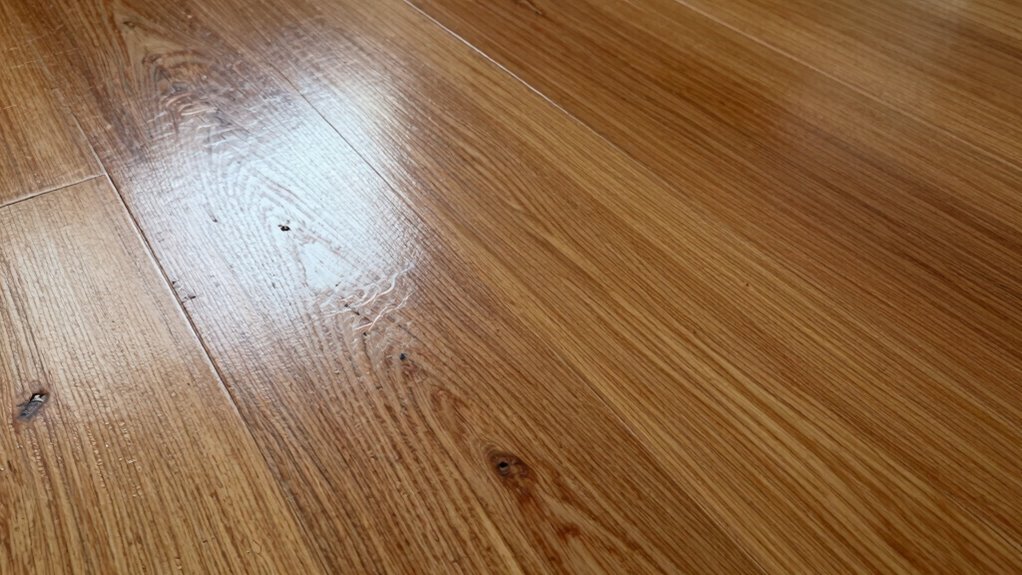
Residue often builds up on vinyl plank floors because many cleaners leave behind a thin film that attracts dirt and grime over time. This buildup dulls the surface, making your floors look lackluster despite regular cleaning. When you use improper cleaning DIY methods or harsh chemicals, you risk leaving residues that accumulate gradually. This not only hampers the floor’s shine but also complicates floor restoration efforts. To prevent this, focus on gentle, pH-neutral cleaners and proper rinsing. Be mindful of:
- Using excessive cleaning products
- Skipping thorough rinsing
- Relying on harsh chemicals
- Not removing old polish or wax
- Ignoring manufacturer cleaning guidelines
- Failing to understand the importance of proper cleaning techniques and residue prevention.
Understanding why residue builds up helps you maintain a glossy, vibrant appearance, avoiding dullness and prolonging your vinyl floors’ lifespan. Additionally, regular maintenance routines can help prevent buildup and keep your floors looking their best over time, especially when combined with proper cleaning methods to reduce residue formation.
Signs Your Vinyl Floors Are Hazy or Dull

If your vinyl floors start looking hazy or dull, it’s a clear sign something isn’t right. You might notice the surface appears faded or loses its shine, making the floor look less vibrant. Visible surface haze can also develop, indicating buildup or improper cleaning methods. Using harsh cleaning agents or abrasive tools can damage the surface and contribute to this haze, so selecting appropriate cleaning techniques is essential for maintaining a pristine appearance proper cleaning techniques. Additionally, choosing the right cleaning products can help prevent future haze and keep your floors looking fresh and well-maintained. Regular cleaning with suitable products and avoiding damage from incorrect tools are key to preserving the floor’s clarity and shine preventative maintenance. Incorporating gentle, vinyl-safe cleaning methods can further ensure the longevity and clarity of your floors over time, especially when combined with proper maintenance routines that support the floor’s durability.
Faded Surface Appearance
A hazy or dull appearance on your vinyl floors often signals that the surface is losing its shine. When the surface texture no longer reflects light with a vibrant glossy sheen, it indicates fading. You may notice the floors look less vibrant or seem muted, even after cleaning. This faded surface appearance can result from the buildup of residues or improper cleaning methods. To identify this issue, look for:
- Loss of reflective gloss
- Dull, matte finish
- Uneven surface texture
- Visible streaks or haze
- Reduced vibrancy in color
If these signs appear, it’s a clear indicator your vinyl floors need a different cleaning approach to restore their original luster and surface clarity.
Loss of Shine
Your vinyl floors lose their shine when they appear hazy or dull, making the surface look less vibrant and inviting. This loss of shine often results from improper cleaning or the buildup of residue. To restore their luster, use gentle polishing techniques that remove surface grime without damaging the finish. Applying a vinyl-specific polish can help enhance the floor’s shine, but avoid harsh abrasives that may cause further dullness. Additionally, UV protection treatments can help prevent future fading and haziness caused by sun exposure. Regularly reapplying these protective layers maintains the gloss and keeps your floors looking fresh. Remember, consistent maintenance with proper polishing techniques and UV protection is key to avoiding that dull, hazy appearance and preserving the beauty of your vinyl plank floors.
Visible Surface Haze
When vinyl floors develop a hazy or dull appearance, it becomes immediately noticeable that the surface isn’t as vibrant as it once was. This visible surface haze signals that your protective coating may be compromised. To address this, consider refining your polishing techniques to restore clarity. Also, focusing on dust prevention can prevent buildup that contributes to dullness. Look for signs like a cloudy film or lackluster finish, which indicate the need for a proper cleaning approach. Regularly removing dust and debris helps maintain a glossy look and reduces haze formation. Be mindful that improper cleaning methods, such as using harsh chemicals or abrasive tools, can worsen the problem. Staying vigilant with these steps ensures your vinyl floors stay clear, shiny, and visually appealing over time.
How to Clean Vinyl Floors Without Leaving a Film
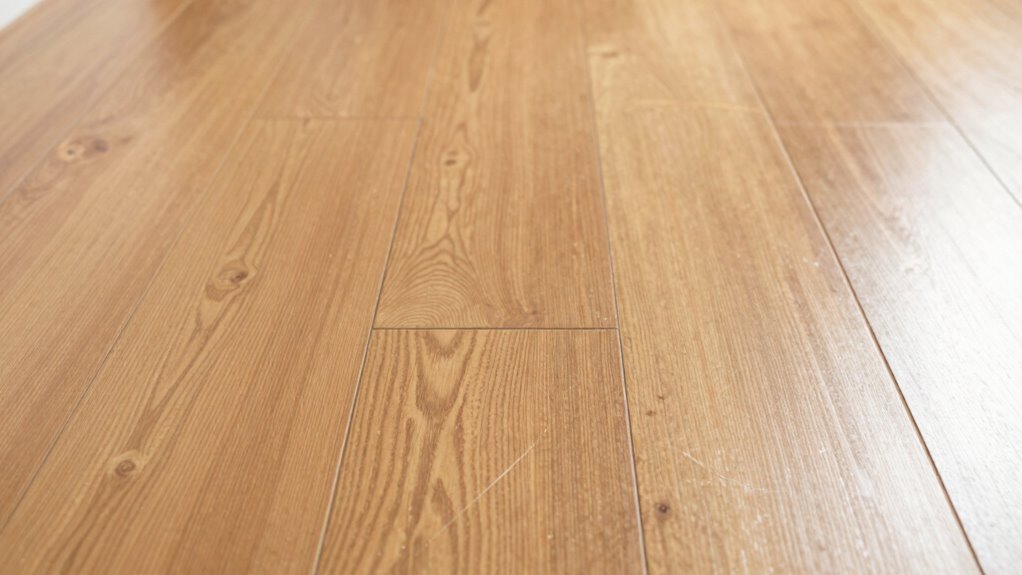
To clean vinyl floors without leaving a film, employing the correct cleaning technique and products is essential. Start with proper mop techniques: use a microfiber mop dampened—not soaked—to avoid excess water that can cause streaks. Move the mop in gentle, linear motions to prevent pushing dirt around. Regular cleaning frequency helps prevent buildup; mop at least once a week or more if needed, especially in high-traffic areas. Avoid harsh chemicals or ammonia-based cleaners, which can leave residues. Instead, opt for a diluted vinegar solution or a manufacturer-approved vinyl floor cleaner. Always rinse your mop frequently and change the water when it becomes dirty. These practices ensure your vinyl floors stay spotless and free of that unsightly film.
The Best Products and Tools for Safe Vinyl Floor Cleaning
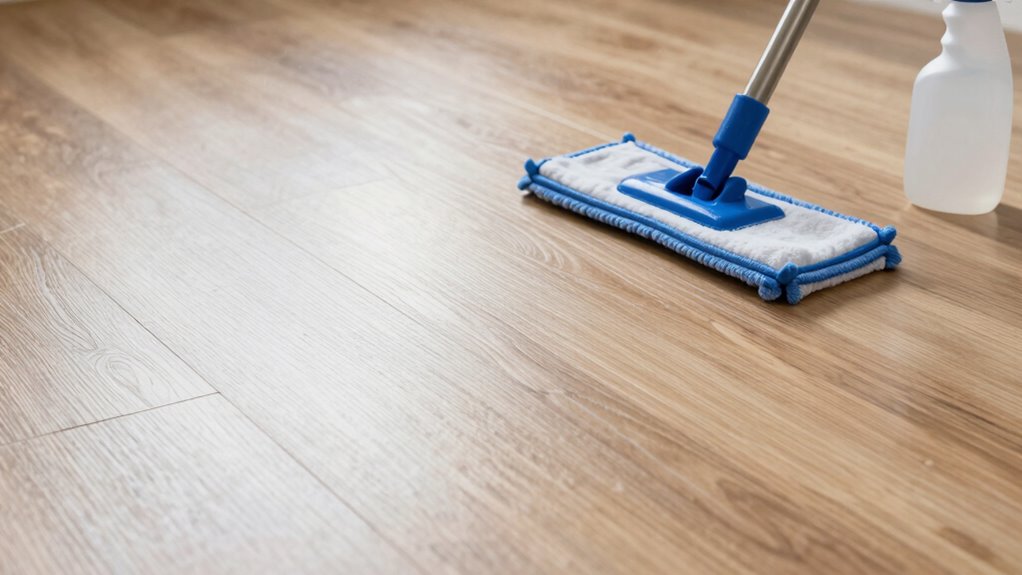
Choosing the right products and tools makes a significant difference in maintaining the beauty of your vinyl floors. For effective vinyl care and floor maintenance, select gentle, pH-neutral cleaners designed specifically for vinyl. Avoid harsh chemicals that can cause haze or damage. Essential tools include soft microfiber mops and non-abrasive scrub brushes to prevent scratching. Using proper products ensures you won’t leave residues that dull the surface. Consider these top items for safe vinyl care:
Choose gentle, pH-neutral cleaners and soft tools to keep your vinyl floors looking pristine.
- Microfiber mop and cloths
- pH-neutral vinyl floor cleaner
- Soft-bristled scrub brushes
- Spray bottles for even application
- Non-abrasive sponges
Investing in quality tools and products helps you preserve the appearance and longevity of your vinyl floors without risking damage or haze buildup.
Tips to Keep Your Vinyl Floors Bright and Clear
Keeping your vinyl floors bright and clear starts with regular, gentle cleaning that removes dirt and grime without dulling the surface. Consistent vinyl maintenance ensures your floors stay vibrant and maintain their flooring aesthetics. Use a soft mop or microfiber cloth combined with a pH-neutral cleaner designed for vinyl to prevent streaks and haziness. Avoid harsh chemicals or abrasive tools that can scratch or dull the finish. Quickly wipe up spills to prevent staining and buildup. Regular sweeping also helps prevent dirt from scratching the surface. Consider adding a light polish or vinyl-specific floor conditioner periodically to enhance shine and protect the finish. Keeping a routine focused on gentle cleaning preserves your floors’ appearance and extends their lifespan.
When to Deep Clean or Call a Professional for Persistent Haze
Persistent haze on your vinyl floors is a sign that regular cleaning isn’t enough, and it’s time to take more advanced steps. When simple mopping and surface cleaning no longer eliminate the haze, consider deep cleaning or seeking professional help. You should call a professional if:
Persistent haze indicates it’s time for deep cleaning or professional help.
- The haze persists despite thorough cleaning
- You notice stubborn residues or streaks
- The surface appears dull or cloudy
- You’re unsure about using harsh chemicals
- Routine maintenance isn’t restoring clarity
A professional can perform a deep cleaning that targets embedded dirt and residue, restoring your floors’ shine. They also have the expertise to recommend suitable cleaning products that won’t damage the vinyl. Recognizing when to escalate your cleaning routine ensures your floors stay beautiful and haze-free.
Frequently Asked Questions
Can Certain Types of Water Cause Haze on Vinyl Floors?
Yes, certain types of water can cause haze on vinyl floors. Hard water, which contains high mineral deposits, leaves behind a cloudy film when used for cleaning. Water quality matters—if you use mineral-rich water, it can leave mineral deposits on your floors, creating a hazy appearance. To avoid this, use distilled or softened water for cleaning, ensuring your vinyl floors stay clear and shiny.
How Often Should I Deep Clean My Vinyl Plank Floors?
Think of your vinyl plank floors as a garden that needs tending. You should deep clean them every 4-6 months to keep their shine vibrant. Use gentle cleaning solutions and follow deep cleaning tips like avoiding harsh chemicals and scrubbing lightly. Regular cleaning frequency prevents buildup and haze, ensuring your floors stay beautiful. With proper care, your floors will continue to sparkle like a well-tended garden in full bloom.
Are DIY Cleaning Solutions Safe for Vinyl Floors?
DIY cleaning solutions can be safe for vinyl floors if you choose the right ingredients and avoid harsh chemicals. Use mild soap, vinegar, or baking soda, and always dilute them properly. Check the label for chemical safety and test a small area first to prevent damage. This approach helps you maintain your vinyl floors without risking haze or discoloration, making your DIY cleaning both effective and safe.
What Are Common Mistakes That Damage Vinyl Flooring?
Did you know improper cleaning can damage vinyl floors, with 80% of damage caused by common mistakes? You should avoid harsh scrubbers and too much water. When mopping, use gentle techniques and a damp mop, not soaking wet. Always remove shoes before walking on the floor to prevent dirt and grit from scratching the surface. These simple steps protect your vinyl flooring from lasting damage.
How Do I Remove Stubborn Stains Without Causing Haze?
To remove stubborn stains without causing haze, use gentle cleaning techniques. Start by blotting the stain with a soft cloth and warm water mixed with a small amount of mild dish soap. Avoid harsh chemicals or abrasive scrubbers. For tougher stains, apply a mixture of baking soda and water, gently scrubbing with a soft brush. Rinse thoroughly and dry with a clean cloth to prevent residue that can cause haze.
Conclusion
To keep your vinyl floors sparkling like a diamond, avoid the common mistake of using the wrong cleaning products. Residue buildup can turn your floors into a dull, hazy mess that’s almost impossible to fix on your own. Stay vigilant with proper cleaning techniques, and don’t hesitate to call a professional if the haze refuses to lift. With the right care, your floors will shine brighter than the stars—guaranteed!