
TL;DR

Get cleaning gear delivered free with Prime
- Fast, free delivery on millions of items
- Prime Video, Amazon Music and more included
- Member-only deals all year
A Hunker report describes a DIY that wraps a plastic plant pot in straight, spring-free wooden clothespins secured with twine. The finished container can be used for countertop storage, though its suitability depends on the pot, materials and intended use.
A Hunker DIY report describes how to cover a plastic plant pot with straight wooden clothespins and twine, giving the container a picket-fence-style look for countertop storage. The project, attributed to Sandy of Whimsy Barn, offers a way to repurpose an old pot, but the report does not provide testing or claims about durability, food safety or performance.
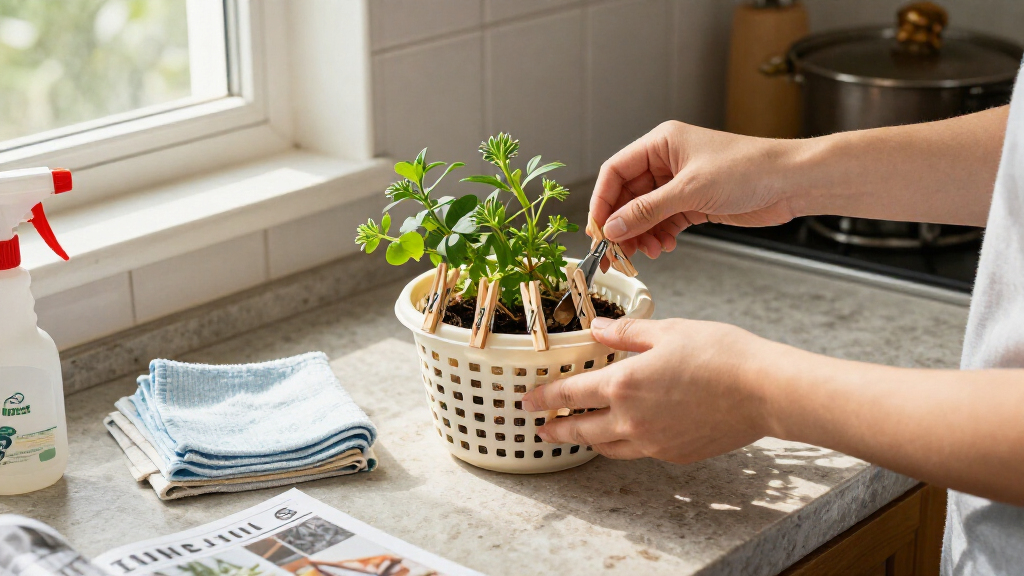
The method uses spring-free, straight clothespins, sometimes sold as peg-style or doll-style clips, rather than the familiar spring-loaded kind. A long piece of twine is threaded through a clothespin’s slit and knotted at the back. The twine is then wrapped around the next pin and the process is repeated, joining the clips into a row. A second strand, placed lower down, adds stability; another can be added near the pins’ tops.
Once the row is long enough to fit around a container, the report says to position the clothespins against the pot and tie the twine ends tightly. Painter’s tape can temporarily hold the row together while it is lifted and wrapped around the container. The pins should be about the same height as the pot so they cover its sides. Glue is optional if the pins shift, but Hunker cautions that hot glue can melt thin plastic.
The maker can leave the wood natural, stain or paint it, or add yarn, fabric scraps or twine for texture. The source cautions that any wrapping should leave the clothespin slits open, since those openings are used to connect the pins. Optional finishing touches include bows, faux flowers or twine spirals. The report identifies the finished item as decorative kitchen storage, without specifying which contents it can safely hold.
A Second Use for Plastic Pots
The idea pairs two inexpensive, readily available materials to give an otherwise plain plastic pot a different use. For readers looking to reuse a container rather than discard it, the project offers a simple decorative option that does not require woodworking or specialized equipment. The central construction step—threading and wrapping twine through the clothespins—also means the outer covering can be adjusted to fit the selected pot.
The practical value depends on the container and how it will be used. Hunker presents the result as countertop storage, not as a food-storage product or a water-tight vessel. A pot intended to hold kitchen items should be clean and suitable for those contents; the report does not establish that the clothespin covering makes a container food-safe, washable or stable under heavy loads. The hot-glue warning also matters: an attachment method that works on one pot may damage another.
Products Worth Considering

Bose Lifestyle Ultra Wireless Home Speaker, White Smoke

Blueair Blue Pure 211i Max Air Purifier for Large Rooms

Philips Hue Smart Light Starter Kit with Bridge and 4 White and Color A19 Bulbs
As an affiliate, we earn on qualifying purchases.
Choosing Clips and a Container
Traditional spring-free clothespins predate the spring-loaded clips common in many homes, according to the Hunker report. The project specifically depends on the older straight, slotted design, because twine passes through the slot. Readers who do not have this style can look for peg-style wooden clips at thrift shops or buy a new pack; the source gives Jianwei Round Wooden Clothespins as one example.
The report names thin twine as the other main supply, while allowing yarn or another string-like material as an alternative. It also suggests preparing the pot’s surface with spray paint or fabric before adding the clothespins. These are optional design choices, not requirements for the basic method. The original creator is identified as Sandy from Whimsy Barn; Hunker describes her approach as tying the clips together and around the container rather than relying solely on adhesive.
““Thin plastic could melt from the heat,” the report cautions about using hot glue.”
— Hunker
Durability and Storage Limits
The source does not say how long the twine-bound covering lasts, how well it holds up to frequent handling, or whether the design has been tested with different pot shapes and plastic types. It gives no dimensions, clothespin count, weight limit or instructions for making the finished container washable. It also does not specify whether the storage is meant for utensils, packets or other particular kitchen items.
The report’s glue caution is general: it says heat may damage thin plastic, but does not identify which plastics are more vulnerable or name an alternative adhesive tested for the project. Because the twine is the main fastening method, makers will need to judge the fit and tie the ends securely. The source does not claim that the decoration makes a pot suitable for food contact or for storing liquids.
Materials and Assembly Choices
There is no announced product release or scheduled follow-up; the reported development is a do-it-yourself idea. Readers who want to try it can first select a clean plastic pot and straight, slotted clothespins of comparable height, then check that enough clips will cover the pot’s circumference. They can assemble the row with twine, adding a second strand for support, and secure it around the container before deciding whether any extra glue is needed.
Finishing choices—staining, painting, fabric or decorative accents—can be made before installation, while leaving the clothespin slots clear. If using hot glue, follow the product’s safety directions and test cautiously, particularly with thin plastic. The result should be treated as decorative storage unless the container and materials are independently known to suit a more specific use.
Key Questions
Which clothespins does the project require?
It calls for straight, spring-free wooden clothespins with a slit for threading twine. Spring-loaded clips are not the style described.
How are the clothespins attached to the pot?
Thread twine through the pins to form a row, then wrap and tie the row around the container. Hunker says painter’s tape can help hold the clips while positioning them; glue is optional if they shift.
Can hot glue be used on a plastic pot?
The report says glue may help secure the decoration, but warns that hot glue can melt thin plastic. Use caution and do not assume every pot will tolerate the heat.
What can the finished pot store?
Hunker describes it as countertop storage but does not name specific contents or establish that it is food-safe, washable or suitable for liquids. Choose contents based on the original pot’s condition and intended use.
Source: hunker.com