
TL;DR

Get cleaning gear delivered free with Prime
- Fast, free delivery on millions of items
- Prime Video, Amazon Music and more included
- Member-only deals all year
A Hunker gardening report outlines how to turn unpainted, undecorated pumpkins into compost for garden soil. Cut them into pieces, remove seeds and mix them with dry carbon-rich materials; burying pieces 8 to 12 inches deep is another option.
A Hunker gardening report explains how households can compost old, unpainted pumpkins and use the resulting material to enrich garden soil. The advice is timely after Halloween, when carved pumpkins begin to soften, and offers an alternative to discarding them, provided decorative coatings and other non-compostable items are removed.
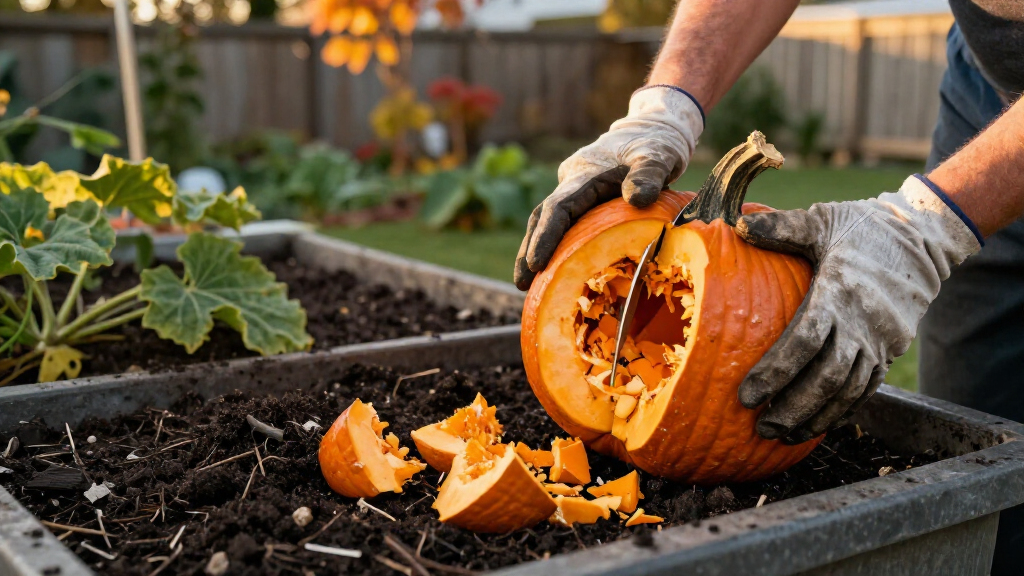
The report recommends cutting pumpkins into small pieces, removing seeds and taking off decorations, wax and other non-organic materials before adding the scraps to a compost pile. It cautions against composting painted pumpkins. Seeds can be saved for another purpose or removed to reduce the chance that they sprout in the pile.
Pumpkin scraps count as “green” compost material: they break down relatively quickly and contribute moisture and nitrogen. Hunker advises mixing them with “brown” materials such as dry leaves, wood chips or straw, which decompose more slowly and supply carbon. The source does not give a fixed ratio for balancing these materials.
For people without space in a compost bin, the report describes a direct-burial option: place pumpkin pieces about 8 to 12 inches deep in soil. It also says seeds can be planted roughly 100 days before Halloween for a homegrown pumpkin, though that timing is a general suggestion rather than a guarantee of a harvest.
Turning Seasonal Waste Into Soil
Composting gives a spent seasonal decoration another use and can keep organic material out of household trash. The report says pumpkins that end up in landfills may contribute to methane emissions when they do not decompose properly; it does not provide a specific estimate for the emissions avoided by composting one pumpkin.
For gardeners, the practical benefit is the eventual addition of organic matter to soil. Hunker says finished compost, or humus, can help soil retain water and nutrients and support organisms such as microorganisms and earthworms. It recommends incorporating finished compost into flower or vegetable beds before planting, rather than treating raw pumpkin pieces as ready-to-use fertilizer.
Products Worth Considering

Bose SoundLink Plus Portable Bluetooth Speaker, Wireless Outdoor Speaker, Up to 20 Hours Battery Life, Waterproof and Dustproof, Black

TCL 65-Inch T7 Series 4K QLED Smart Google TV, 144Hz (65T7)

Levoit Vital 200S-P Smart Air Purifier for Large Rooms up to 1875 ft²
As an affiliate, we earn on qualifying purchases.
From Halloween Decoration to Compost
The report presents pumpkin composting as a seasonal reuse option, not a new gardening product or a change in waste policy. Its core guidance follows common composting principles: combine nitrogen-rich, moist scraps with carbon-rich, drier material and allow the mixture to break down.
Hunker also describes possible garden uses once compost is ready, including preparing new beds and supporting plants such as leafy greens and flowering shrubs. The report does not give a decomposition schedule, a finished-compost test or crop-specific application rates, so gardeners should not read those suggestions as a promise of a particular yield.
“Pumpkins act as the “green” compost material.”
— Hunker report
What the Composting Advice Leaves Open
The report does not specify how long pumpkin scraps take to break down, how often a pile should be turned, or what green-to-brown ratio gardeners should use. Those details can depend on the compost setup and conditions, so the article’s instructions do not establish a single schedule for every garden.
It also gives no measured results for soil improvement or plant growth, and does not quantify the landfill emissions associated with pumpkins. The claim that compost can support soil and plants is presented as general gardening guidance, not as a guarantee of a larger harvest. Readers should keep painted pumpkins and decorative materials out of the compost described.
Preparing Pumpkin Scraps for Reuse
After a pumpkin softens, remove candles, decorations, wax and paint-coated sections; cut suitable pieces into manageable chunks and take out the seeds. Add the scraps to a compost pile with dry leaves, straw or wood chips, or use the report’s burial method by placing pieces 8 to 12 inches below the soil. If saving seeds, keep them separate from the compost and plan planting with local growing conditions in mind.
The next step is time: the scraps need to decompose before the resulting material is used as finished compost. Hunker does not state when that will be, so gardeners should wait until the material has broken down rather than assuming the pumpkin can be applied immediately.
Key Questions
Can I compost a painted pumpkin?
Hunker advises against composting painted pumpkins. Remove decorative coatings and non-organic materials before composting suitable pumpkin scraps.
Why mix pumpkin with dry leaves or straw?
Pumpkin is a moist, nitrogen-rich “green” material. Dry leaves, straw and wood chips supply carbon as “brown” materials, which the report recommends mixing into the pile.
Can I put pumpkin pieces straight into garden soil?
The report says pumpkin pieces can be buried about 8 to 12 inches deep as an alternative to a compost bin. It does not provide a breakdown timetable.
Should I remove pumpkin seeds before composting?
Yes. Hunker recommends removing seeds because they may sprout. You can save them separately if you want to plant them.
When can I use pumpkin compost in a garden?
The report suggests working finished compost into flower or vegetable beds before planting. It does not specify how long the composting process takes.
Source: hunker.com