
TL;DR

Get cleaning gear delivered free — and shop member deals
- Fast, free delivery on millions of items
- Access to Prime Big Deal Days deals on October 6–7
- Prime Video, Amazon Music and more included
October is not necessarily too late to aerate a lawn: the timing depends on the grass type and local frost conditions. The source report says cool-season grasses can often be aerated in early October before the first hard frost, while warm-season grasses are generally aerated in spring.
October is not automatically too late to aerate a lawn, according to a Hunker report, but whether it is a good time depends on the grass type and local weather. The report says cool-season lawns, including tall fescue and Kentucky bluegrass, can typically be aerated in fall before the first hard frost, while warm-season grasses such as Bermuda and zoysia are generally aerated in spring.
The timing advice is conditional, not a calendar rule that applies everywhere. Hunker says early October often fits the fall window in many parts of the country for cool-season grass, provided aeration happens before the first hard frost. The report does not give a specific frost date for each region, so homeowners need to judge timing against local conditions rather than assume October is suitable throughout the month.
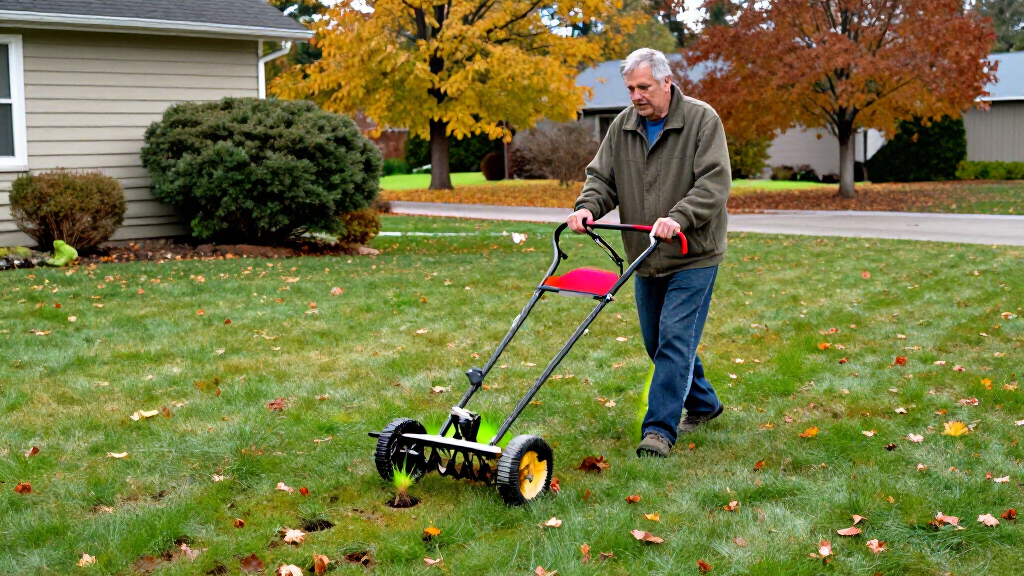
The article recommends core aeration, which removes small plugs of soil, grass and thatch. It cites North Dakota State Cooperative Extension guidance that core aeration is preferable to spike aeration. Spike tools make holes without removing soil, and the report cautions that this can increase compaction rather than relieve it. Core aeration is intended to help water, oxygen and nutrients reach the soil and roots.
Hunker says fall aeration can leave time for the lawn to begin recovering before winter, with further recovery in spring. It recommends overseeding after aeration, then watering, and describes spreading a thin layer of fine compost before aerating as an optional way to add organic material. Homeowners can rent equipment, do the work with suitable machinery or hire a lawn-care service.
Timing Depends on Grass and Frost
Choosing the right window matters because the advice changes with grass type. Aerating cool-season turf in fall can give it time to start healing before winter, according to the report. Applying that schedule to warm-season turf could mean working against the report’s recommendation to aerate those grasses in spring.
The first hard frost is a practical limit for the fall approach, but its timing varies by location and year. The source does not provide regional forecasts or a universal last date. That means the useful takeaway is not that October is always safe or always too late; homeowners need to identify their grass and check local conditions before scheduling the work.
Choosing the method also matters. Core aeration removes soil plugs, whereas spike aeration only punctures the ground. Because the source says spikes may worsen compaction, the distinction can affect whether the work addresses the problem it is intended to fix.
As an affiliate, we earn on qualifying purchases.
Core Aeration and Fall Recovery
The Hunker report frames aeration as one part of fall lawn care, with cool-season grasses as the main case for October work. Its examples are tall fescue and Kentucky bluegrass. Bermuda and zoysia are given as warm-season examples for which spring is the recommended timing.
In the report’s description, removing plugs of soil and thatch leaves temporary openings in the lawn. Aerating in fall allows some recovery before winter, followed by further healing in spring. The article also suggests overseeding so grass seed can reach the openings and recommends watering after the work. These are the report’s general recommendations; it does not specify seed varieties, application rates or watering schedules.
The report presents compost top-dressing as an optional addition, not a requirement. It suggests applying a thin, fine layer and working it into the lawn with a leaf rake before aeration. It also mentions mulched fall leaves as another source of plant material, but does not provide measurements or detailed instructions for either approach.
“Core aeration is best.”
— North Dakota State Cooperative Extension, as cited by Hunker
As an affiliate, we earn on qualifying purchases.
Local Frost Dates Shape the Window
The report does not specify when the first hard frost will occur in a particular area, nor does it establish a single final date for aeration. Its reference to early October as a good fit in most parts of the country is general guidance, not a guarantee for every region or season.
It also does not assess an individual lawn’s condition, identify every grass variety, or give detailed instructions for equipment settings, seed selection and watering. Homeowners who are unsure what grass they have or whether their lawn is suitable for fall treatment may need local extension or lawn-care advice. The source provides no new field measurements or region-specific findings; it is a seasonal guidance report.
As an affiliate, we earn on qualifying purchases.
Check Grass Type and Forecast
Before deciding, homeowners should identify whether the lawn is primarily cool-season or warm-season grass and check the local forecast for the first hard frost. For a cool-season lawn with enough time before frost, the report points to core aeration as the preferred method, followed by overseeding and watering. If the lawn is warm-season grass, the article recommends waiting until spring.
There is no specific later update or forecast in the source material. The next useful step is local rather than national: confirm grass type and seasonal timing for the property, and arrange equipment or a service only if conditions fit the recommended window.
As an affiliate, we earn on qualifying purchases.
Key Questions
Is October too late to aerate a lawn?
Not necessarily. Hunker says October can work for cool-season grasses if aeration takes place before the first hard frost. Local frost timing and grass type affect the decision.
Which grasses are suited to fall aeration?
The report names tall fescue and Kentucky bluegrass as cool-season grasses that are typically aerated in fall. It gives Bermuda and zoysia as warm-season grasses generally aerated in spring.
Is core or spike aeration recommended?
The report recommends core aeration, which removes plugs of soil, grass and thatch. It says spike aeration may increase compaction because it makes holes without removing soil.
What should be done after aerating?
Hunker recommends overseeding and watering after aeration. It also describes a thin compost top-dressing before aeration as an optional step, rather than a requirement.
Source: rss
Halloween Picks
halloween
As an affiliate, we earn on qualifying purchases.