
TL;DR

Get cleaning gear delivered free — and shop member deals
- Fast, free delivery on millions of items
- Access to Prime Big Deal Days deals on October 6–7
- Prime Video, Amazon Music and more included
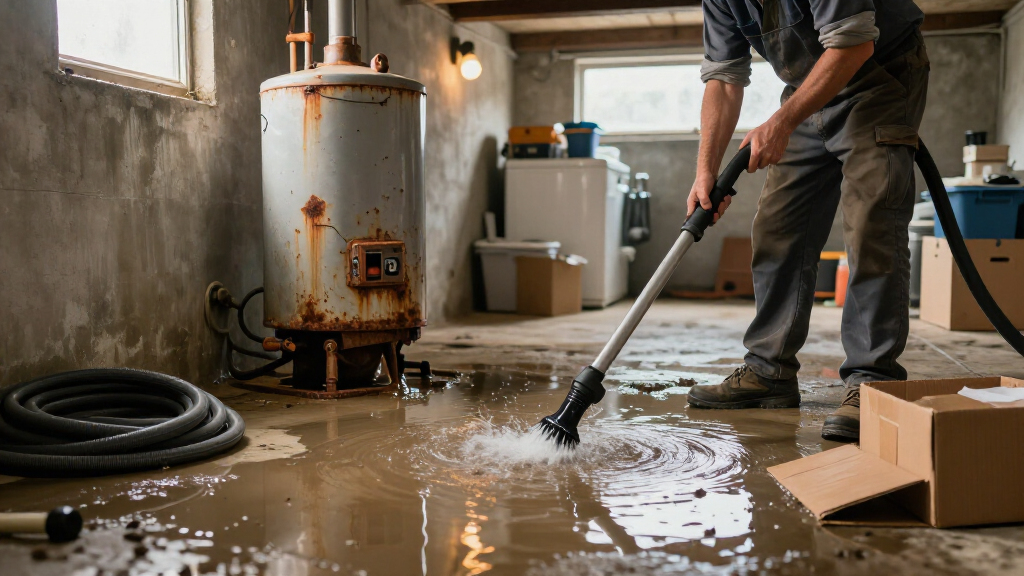
A Minnesota homeowner discovered that his 21-year-old water heater had rusted through and flooded much of his basement. The supply valve would not shut off, so he had to close the home’s main water supply; plumbers later said he should also have shut off the heater’s gas or electricity before handling it.
A 21-year-old water heater rusted through and flooded much of a Minnesota homeowner’s basement, according to a Family Handyman report. The homeowner, identified as Ethan, found the leak while investigating why there was no hot water; a faulty supply shutoff meant he ultimately had to turn off the house’s main water, and plumbers said he missed a key safety step by not first cutting power or gas to the heater.
Ethan said he closed the water heater’s supply valve and connected a hose to the tank’s drain before leaving to buy a replacement. When he returned, water was still coming out, indicating the valve had not stopped the supply. He then shut off the home’s main water line. According to the report, the next morning he installed a new heater and got help from his father-in-law moving the old unit, which weighed more than 120 pounds.
The report says plumbers consulted by Family Handyman were unsurprised by the tank’s failure: they put typical lifespans for gas and propane heaters at roughly 10 to 15 years, while Ethan’s was 21 years old. Plumber Travis Hargrave said supply valves on older heaters can fail when gaskets rot or buildup prevents a seal, and described that problem as common on heaters more than 10 years old. The source does not establish the precise cause of Ethan’s tank corrosion.
Plumbers said Ethan should have shut off the heater’s gas or electricity before touching it, to reduce fire or electrocution risk. The report also says the old unit continued leaking during removal. Ethan described the situation as fortunate in one respect: “If there’s a silver lining here, it’s that we were home when this happened,” he said.
A Failed Valve Can Worsen Flooding
The incident shows how a leak can continue after a homeowner believes the local shutoff is closed. Plumber Brendan Tonks told Family Handyman that shutting off the main supply was the correct response once Ethan found the valve was faulty, and warned that a delay can allow hundreds of gallons onto the floor. That figure is the plumber’s general warning, not a measured total for Ethan’s basement.
Water damage can extend beyond the cost of replacing a heater. The report says delayed leak repairs may lead to damage and mold remediation costing thousands to tens of thousands of dollars. Plumber Kolby Barnes recommended considering a leak-monitoring device with automatic shutoff as a way to respond to both sudden and slow leaks. The source does not say whether Ethan’s home sustained mold damage or provide a final repair bill.
The Heater Had Passed Its Typical Life
Family Handyman’s report places the failure in the context of an aging appliance: the consulted experts said gas and propane water heaters often last 10 to 15 years before corrosion takes hold. Ethan’s unit was 21 years old. The article also notes that cold climates can make heaters work harder, and Ethan lives in Minnesota; it does not quantify how much the climate contributed to this particular failure.
The home was a 1940s bungalow. Barnes noted that older homes may have gate valves for the main shutoff, which can also become difficult to close because of buildup. The report does not say that Ethan’s main valve failed; he was able to use it to stop the water. Its discussion of valve types is a caution about older plumbing, not a finding that his main shutoff was defective.
““If there’s a silver lining here, it’s that we were home when this happened.””
— Ethan, the homeowner, as quoted by Family Handyman
Damage and Repair Costs Were Not Reported
The source does not state when the incident occurred, how much water entered the basement, whether the home needed structural repairs or mold remediation, or what the total damage cost. It also does not identify the exact cause of the tank’s corrosion or say whether the replacement installation was inspected. The article gives general cost estimates for water heater work, but no final bill for Ethan’s case.
Inspect Aging Heaters and Shutoffs
The report’s practical next steps are to check aging heaters and their shutoff valves before a failure, and to consider replacing a corroded anode rod or a faulty valve. It gives general estimates of $20 to $50 for a DIY anode rod replacement and $150 to $600 for professional service; those are article estimates, not costs Ethan reported paying.
For an active leak, the article advises shutting off the home’s main water supply if the heater’s valve will not close, and cutting the heater’s gas or electricity before handling it. Replacing a water heater involves plumbing and potentially gas or electrical connections; homeowners who are uncertain should use a licensed professional and follow applicable safety and permit requirements. The report gives no further update on Ethan’s basement or the replacement unit.
Key Questions
How old was the water heater when it failed?
According to Family Handyman, it was 21 years old. The plumbers consulted for the report said gas and propane heaters typically last about 10 to 15 years.
Why did the water keep flowing after Ethan closed the heater valve?
The report says the supply valve was not closing. Plumber Travis Hargrave said worn gaskets or buildup can keep older valves from sealing; the exact cause in Ethan’s valve was not specified.
What should someone do if a water heater shutoff valve fails?
The report says to shut off the home’s main water supply. It also advises cutting the heater’s gas or electricity before handling it. Use a licensed professional if the work involves connections you cannot safely manage.
How much did Ethan’s basement repairs cost?
The article does not report a final repair bill or confirm whether the basement needed mold remediation. Its general estimates for replacing a whole heater were about $700 for DIY and $1,500 to $3,500 for professional work; these are not Ethan’s documented costs.
Source: rss
Fall Picks
fall essentials
As an affiliate, we earn on qualifying purchases.