

TL;DR

Get cleaning gear delivered free with Prime
- Fast, free delivery on millions of items
- Prime Video, Amazon Music and more included
- Member-only deals all year
A T&M Hardware video offers a color-based shortcut for sorting some weed killers, including products for lawns, brush and broad weed control. The colors are not standardized across brands, so shoppers should check the label for approved uses, target weeds and compatible grass types before buying.
A T&M Hardware employee’s video describes a color-based shortcut for sorting weed killers on store shelves, but the colors are not consistent across brands. A Family Handyman report says shoppers should use package color only as an initial clue and check the product label before choosing a formula, especially for lawn use, where the wrong product can damage grass or landscaping.
In the video, the employee associates orange packaging with products for crabgrass and other grassy weeds, yellow with poison ivy and tough brush, and green with weed killers intended for established lawns. The video describes blue packaging as indicating products that kill weeds and black packaging as indicating products that kill everything. These are presented as general shelf cues, not a universal classification.
The report cautions that packaging colors vary by brand, and products with similar-looking containers may have different uses. A single brand may also sell several formulas that target overlapping weeds. Temporary spray dyes are a separate matter: they mark where a product has been applied and do not identify what the herbicide controls.
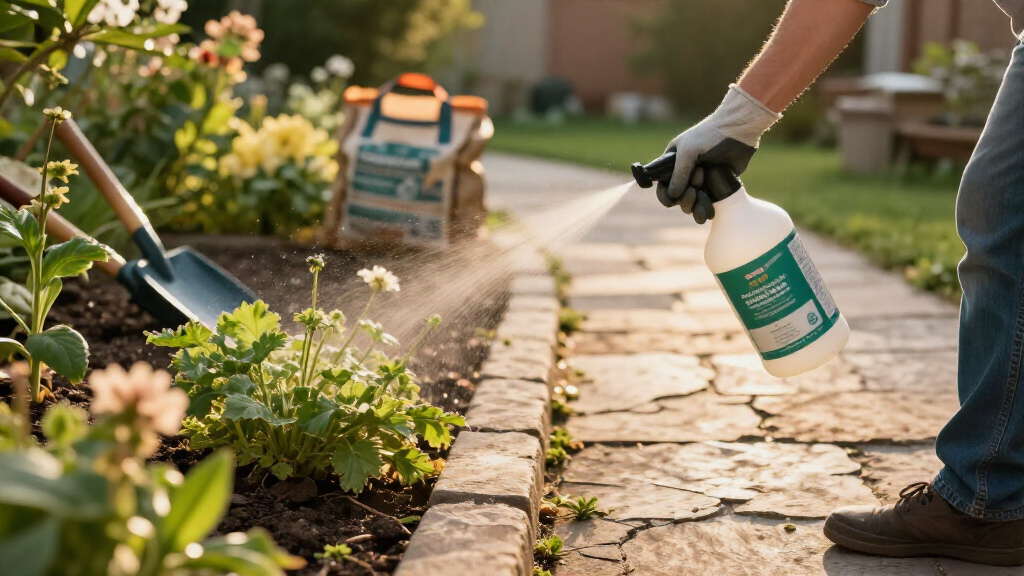
For lawn treatments, labels list the grass types a product can be used on, the weeds it targets and limits on where or when it may be applied. A product for a driveway, walkway or bare area may kill grass as well as weeds. Brush and poison ivy treatments can also harm desirable plants they contact, the report says.
A Wrong Formula Can Damage Lawns
The choice matters because weed killers do not all distinguish between unwanted plants and the vegetation a homeowner wants to keep. Buying a non-selective product for use near a lawn, or using a lawn treatment on an incompatible grass type, can cause damage beyond the targeted weeds. That can turn a quick purchase into a costly repair or replacement job.
The color shortcut may help shoppers scan a crowded shelf, but it cannot establish whether a product is suitable for a particular lawn or application site. Checking the approved uses and application directions before purchase gives shoppers information the package color alone cannot provide.
As an affiliate, we earn on qualifying purchases.
The Label Outranks Shelf Colors
The Family Handyman report draws on a social media video from T&M Hardware and information from the U.S. Environmental Protection Agency. The video offers a quick visual sorting method; the report places that tip alongside a warning that manufacturers do not follow one common color code.
The EPA says pesticide labels provide information needed to handle and use products safely and legally. According to the report’s summary of EPA guidance, directions include where and how a product may be used. For a weed killer, that makes the label’s listed use sites and application limits more authoritative than a broad color association.
“Pesticide product labels provide critical information about how to safely and legally handle and use pesticide products.”
— U.S. Environmental Protection Agency, as quoted in the Family Handyman report
As an affiliate, we earn on qualifying purchases.
The Color Guide Has Limits
The cited material does not establish that any color reliably identifies a product category across all manufacturers. It also does not provide a survey of brands or packaging practices, so the video’s color associations should be understood as a limited shopping shortcut, not a verified industry-wide standard.
The report does not identify a specific product or lawn situation for readers to use as a recommendation. Which treatment is appropriate depends on the target weed, grass type, application site and label directions. The available material also gives no date for the video or report, so its current reach and whether brands have changed packaging are unclear.
brush and poison ivy weed control spray
As an affiliate, we earn on qualifying purchases.
As an affiliate, we earn on qualifying purchases.
Check the Bottle Before Buying
Before putting a weed killer in the cart, shoppers should read the product label and confirm that it covers the weed they want to control, the surface or planting area where it will be used, and—if treating a lawn—their specific grass type. They should also review the label’s timing and application limits and take care to avoid contact with plants they want to keep.
The cited report does not announce a new rule, product change or follow-up from the hardware store. Its practical takeaway is that the label is the final check: package color may help narrow a search, but the product’s directions determine its listed uses and restrictions.
non-selective herbicide for driveways
As an affiliate, we earn on qualifying purchases.
As an affiliate, we earn on qualifying purchases.
Key Questions
Can package color tell me what a weed killer does?
It may offer a quick clue, as in the T&M Hardware video, but colors are not standardized across brands. Read the product label to confirm its intended use.
What should I check before using a weed killer on a lawn?
Check the label for the grass types it can treat, the weeds it controls, approved use sites and application limits. A product for bare areas may also kill grass.
Do spray dyes indicate which weeds a product kills?
No. The report says temporary spray dyes show where a product has been applied; they do not identify the herbicide’s purpose or target weeds.
Can a brush or poison ivy killer harm other plants?
It can. The report cautions that these products may harm desirable plants they touch, so check the label and avoid unintended contact.
Source: rss
Fall Picks
fall essentials
As an affiliate, we earn on qualifying purchases.