
To effectively clear flea dirt from your floors, vacuum thoroughly, focusing on corners, under furniture, and along baseboards to remove dirt, eggs, and fleas. Immediately dispose of the vacuum bag or contents to prevent fleas from escaping. Follow up with a thorough cleaning using a flea-specific insecticidal spray or powder, and make certain you treat your pets with veterinarian-recommended products to break the flea life cycle. Keep up with regular cleaning and treatments to maintain a flea-free home; more tips await you.

Get cleaning gear delivered free — and shop member deals
- Fast, free delivery on millions of items
- Access to Prime Big Deal Days deals on October 6–7
- Prime Video, Amazon Music and more included
Key Takeaways
- Vacuum thoroughly, especially in corners and under furniture, to remove flea dirt, eggs, larvae, and adult fleas.
- Dispose of vacuum contents immediately in a sealed bag to prevent flea escape.
- Use appropriate insecticidal sprays or powders on floors and carpets, following safety instructions.
- After cleaning, consider applying residual flea treatments or powders to prevent reinfestation.
- Maintain regular cleaning routines and pet treatments to eliminate existing fleas and prevent future infestations.
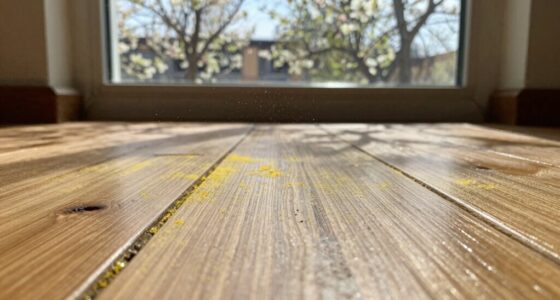
Flea dirt on floors is a common sign that your home may have a flea infestation. When you notice tiny black specks, it’s a clear indicator that fleas are present, and you need to act quickly to prevent the problem from worsening. Flea infestations aren’t just annoying; they can cause discomfort for your pets and pose health risks for everyone in the household. The first step is understanding that flea dirt is actually flea feces, which contains blood. Its presence on your floors suggests that fleas are feeding on your pets and leaving behind evidence of their activity. Ignoring this can lead to a full-blown infestation that’s tough to eliminate.
Flea dirt indicates fleas feeding on your pets and signals a potential infestation.
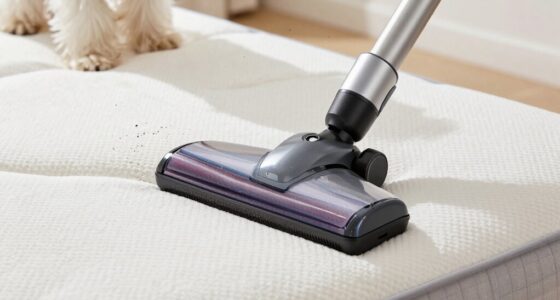
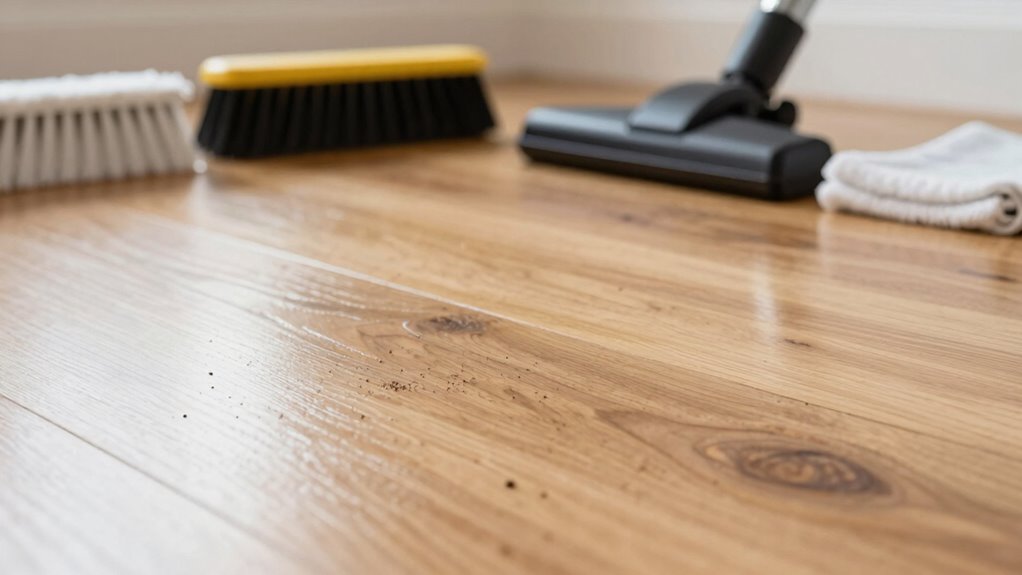
To start, you’ll want to thoroughly clean your floors. Vacuuming is essential because it helps remove flea dirt, eggs, larvae, and adult fleas hiding in carpets, rugs, and upholstery. Make sure to go over every inch, paying special attention to corners, under furniture, and along baseboards. After vacuuming, dispose of the vacuum bag or empty the canister immediately into an outside trash bin to prevent any remaining fleas from escaping back into your home. This step alone substantially reduces the flea population and makes subsequent treatments more effective. Additionally, focusing on proper cleaning techniques can maximize your efforts in controlling fleas.
Next, you need to treat your pets, as they’re often the primary hosts for fleas. Pet treatment is vital in breaking the flea life cycle. Use veterinarian-recommended flea control products, like topical treatments, oral medications, or flea collars. These products not only kill adult fleas but also prevent eggs from hatching. Regular pet treatment combined with your cleaning efforts will keep fleas from re-establishing themselves on your pets and spreading throughout your home.
After cleaning and pet treatment, consider applying a flea-killing spray or powder directly to your floors and carpets. Look for products designed specifically for indoor use and follow the instructions carefully. Some sprays also contain residual ingredients that continue to kill fleas for weeks after application. Be sure to keep pets and children away during and after application until the area dries and the chemicals are safe to be around. This layered approach—cleaning, pet treatment, and targeted insecticide—gives you a better chance of eradicating the flea infestation completely.
In addition to these steps, maintaining a regular cleaning schedule and ongoing pet treatment can prevent future infestations. Flea dirt on floors is a warning sign, but with prompt, thorough action, you can eliminate fleas effectively. Remember, controlling fleas requires patience and persistence, but staying vigilant will protect your home and your pets from ongoing discomfort and health issues.
As an affiliate, we earn on qualifying purchases.
Frequently Asked Questions
Can Flea Dirt Harm Humans or Pets?
Flea dirt itself isn’t highly toxic to humans or pets, but it can cause allergic reactions or irritation. If ingested or if flea dirt contains flea saliva, it might trigger pet allergy reactions or skin issues. While toxicity is rare, always clean thoroughly and monitor your pets and family for signs of irritation or allergic responses. Preventing flea infestations helps reduce risks associated with flea dirt exposure.
How Often Should I Check for Flea Dirt?
You should check for flea dirt weekly—because who doesn’t want tiny, dark specks lurking in their pet bedding or carpet vacuuming? Spotting flea dirt early means you catch fleas before they turn your home into a tiny pet zoo. Regular inspections, especially after outdoor adventures, keep you ahead of the game. So, grab a flashlight, inspect pet bedding, and vacuum carpets often—your home’s health depends on it!
Are Natural Cleaning Products Effective Against Flea Dirt?
Yes, natural cleaning products can be effective against flea dirt. DIY remedies using essential oils like lavender, peppermint, or eucalyptus help repel fleas and break down flea dirt. You should regularly vacuum and wipe surfaces with a mixture of water and a few drops of these oils. While natural solutions work, combining them with thorough cleaning guarantees you remove flea dirt and prevent future infestations effectively.
Does Flea Dirt Indicate an Active Flea Infestation?
Is finding flea dirt a sign of an active infestation? It can be, especially since flea dirt indicates the presence of adult fleas in their lifecycle. Flea dirt on floors and environmental signs like tiny black specks or eggs suggest you should check your pet and home thoroughly. Remember, fleas often hide in carpets, bedding, and furniture, so act quickly to break their lifecycle and prevent a full-blown infestation.
What Are the Long-Term Prevention Tips for Flea Dirt?
To prevent flea dirt long-term, you should understand the flea life cycle and target all stages. Regularly vacuum your home, especially carpets and pet bedding, to remove flea eggs and larvae. Use flea treatments on your pets and consider outdoor environment modifications like trimming grass and removing debris. These steps help disrupt the flea life cycle and make your home less inviting, reducing the chances of future infestations and flea dirt buildup.
flea insecticidal spray for floors
As an affiliate, we earn on qualifying purchases.
As an affiliate, we earn on qualifying purchases.
Conclusion
Now that you know how to spot and clean flea dirt effectively, you’re better equipped to protect your home. Did you know that flea infestations can multiply rapidly, with a single flea laying up to 50 eggs a day? Regular cleaning and prompt treatment can break the cycle before it gets out of control. Stay vigilant, keep your floors clean, and you’ll minimize the chances of a stubborn flea problem taking over your space.
As an affiliate, we earn on qualifying purchases.
As an affiliate, we earn on qualifying purchases.
Fall Picks
fall essentials
As an affiliate, we earn on qualifying purchases.