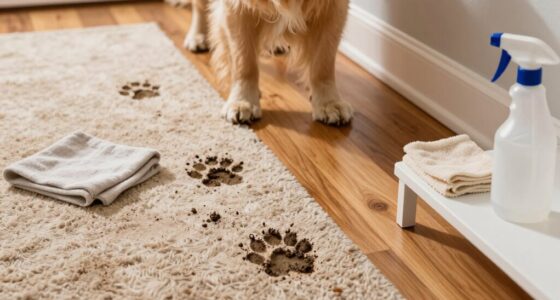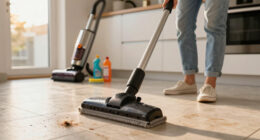
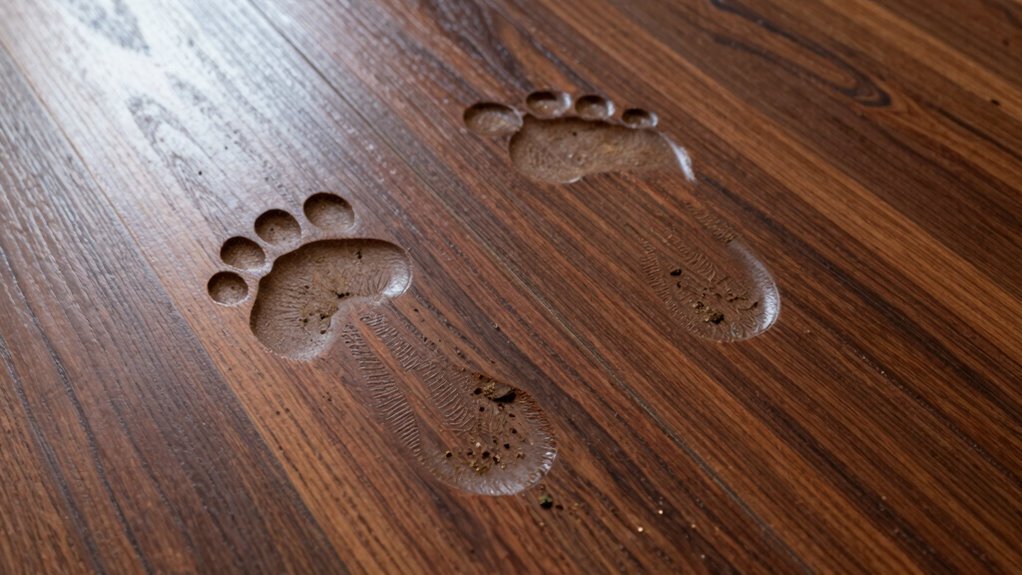

To clean paw prints on hard floors without grinding dirt deeper, start by removing loose debris from the surface. Use a damp microfiber cloth or a soft mop with a pet-safe cleaner to gently lift the prints, avoiding excess water that can spread dirt. Wipe in a clean, circular motion and rinse often. For stubborn spots, try gentle scrubbing with a soft brush. Keep paws clean with regular grooming and wipe after outdoor walks—that way, you’ll get even better results.
Key Takeaways
- Use a damp microfiber cloth with pet-safe cleaner to gently lift paw prints without spreading dirt.
- Avoid excessive water and harsh chemicals that can grind dirt further into the surface.
- Gently scrub stubborn paw prints with soft brushes, then rinse and dry thoroughly to prevent grinding.
- Regularly groom pets and wipe paws after outdoor walks to minimize dirt transfer and reduce stubborn prints.
- Consider professional cleaning if paw prints persist despite gentle, proper cleaning methods.
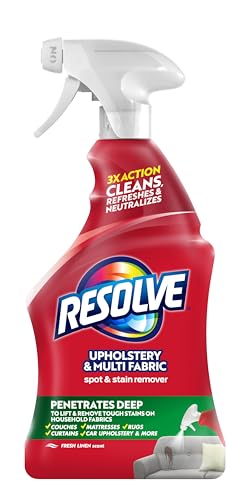
Resolve Carpet Cleaner, 22 fl oz Multi-Fabric Cleaner and Upholstery Stain Remover, Carpet Cleaner Spray
Directions: Product Usage: Resolve Upholstery Cleaner Is Safe To Use On Most Household Fabrics Such As Polyester, Nylon…
As an affiliate, we earn on qualifying purchases.
As an affiliate, we earn on qualifying purchases.
Why Do Paw Prints Stick to Hard Floors?
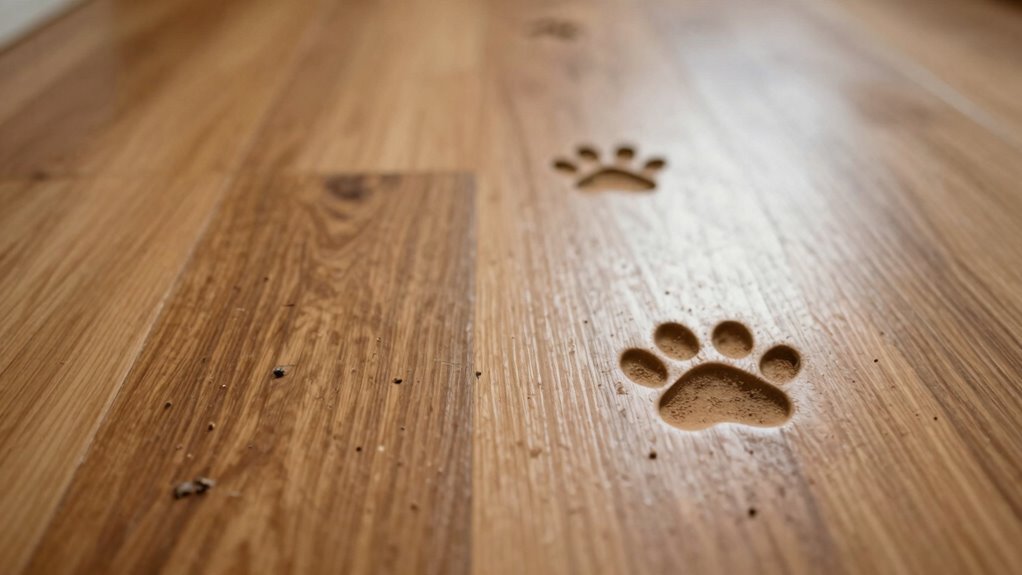
Paw prints tend to stick to hard floors because of the way moisture and oils from your pet’s paws interact with the surface. When your pet walks, natural oils and tiny amounts of moisture transfer onto the floor, creating a residual film. This film makes paw prints more noticeable and harder to wipe away. Understanding pet paw health is essential; healthy paws produce less excess oil and moisture, reducing stubborn prints. Floor material considerations also matter—smooth, non-porous surfaces like tile or sealed hardwood tend to show paw prints more clearly, while textured or matte finishes hide them better. Recognizing these factors helps you choose suitable flooring and maintain a cleaner look, minimizing the persistence of paw prints and supporting your pet’s paw health. Additionally, implementing effective cleaning routines can help prevent dirt from grinding into the floor and becoming more stubborn over time. Regularly inspecting your pet’s paws for excess oils or debris can also make a difference in reducing residual marks. Being aware of dirt and oil transfer can further inform your cleaning approach to keep floors looking their best, especially considering how floor surface characteristics influence the visibility of paw prints.

CleanSmart Daily Surface Cleaner and Pet-Safe Disinfectant, Kills 99.9% of Viruses, Bacteria, 23 ounce Bottle (Pack of 2)
KILLS 99.9% OF VIRUSES AND BACTERIA and leaves no harsh residue PACKAGING MAY VARY
As an affiliate, we earn on qualifying purchases.
As an affiliate, we earn on qualifying purchases.
How to Prepare Your Space for Cleaning Paw Prints
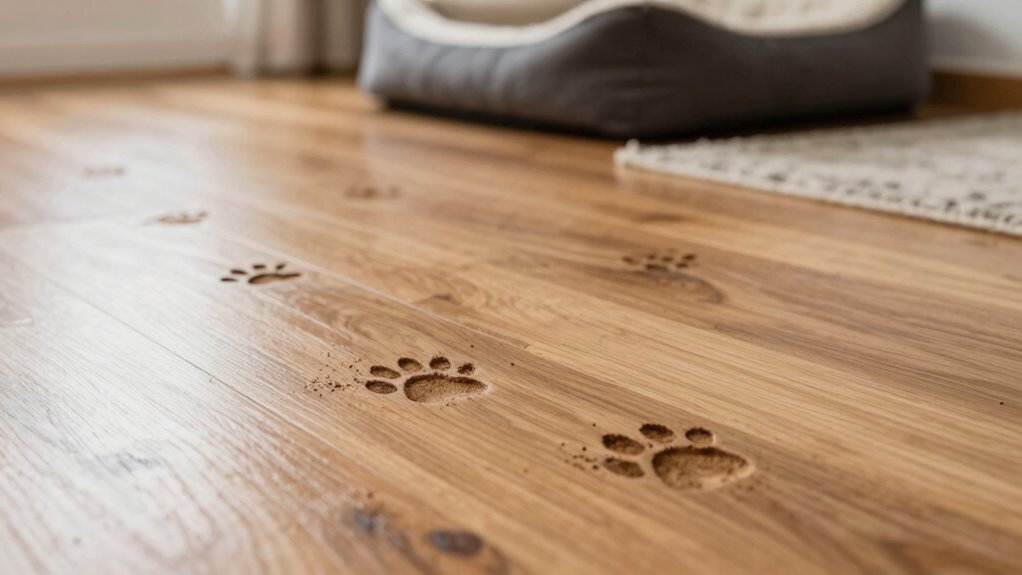
Start by clearing the area of any furniture or objects that might get in your way. Next, remove obstructions like rugs or cords to make cleaning easier. To prevent future paw print marks, consider using smart cleaning devices that can detect and respond to messes automatically. Additionally, selecting the right cleaning tools can significantly improve your cleaning efficiency and effectiveness. Using the appropriate cleaning techniques can also help prevent dirt from grinding into your floors. Incorporating proper ventilation can help dry surfaces faster and reduce odor buildup. Finally, gather all your cleaning supplies so you’re ready to tackle the paw prints quickly and efficiently. Incorporating proper cleaning tools, such as at-home cleaning devices, can help you achieve better results with less effort.
Clear the Area
Ever wonder how to make cleaning up paw prints quicker and easier? The first step is to clear the area. Remove any furniture, rugs, or objects that could obstruct your cleaning process. This gives you unobstructed access to all paw print stains and pet odor spots. Clearing the space prevents dirt from spreading further and ensures you can thoroughly clean every area. Plus, it minimizes the risk of slipping or knocking things over while working. If you have pets around, keep them in a different room temporarily to avoid new paw prints or accidents. Once the area is clear, you’ll have a clean, open space to focus on effectively removing paw print stains and pet odor, making the entire cleaning process faster and more efficient. Proper space preparation also helps in maintaining a safe environment during cleaning. Incorporating smart home automation can further streamline your cleaning routine by scheduling or controlling cleaning devices remotely. Additionally, using appropriate cleaning tools and techniques ensures that you remove dirt without grinding it further into the floor. Employing eco-friendly cleaning solutions can also help in making the process safer for your pets and the environment.
Remove Obstructions
Once you’ve cleared the area of furniture and objects, it’s time to remove any remaining obstructions that could hinder your cleaning. Pet hair tends to cling to rugs, corners, and edges, so use a brush or vacuum to gather it up. Muddy pawprints often leave debris or dirt that can spread further if not properly eliminated. Wiping down surfaces nearby to prevent dirt from spreading when you start cleaning the floor is essential. Remove loose objects like shoes or toys that could get in your way or dirty further during cleaning. Clearing these obstructions ensures you won’t miss spots and helps you work more efficiently. Taking a few extra minutes now will make the actual cleaning smoother and ensure your hard floors stay paw-print free. Incorporating effective cleaning techniques and proper preparation can also make a noticeable difference in achieving a thorough clean. Additionally, understanding environmental considerations can help you adopt more sustainable cleaning practices that protect your home and the environment.
Gather Cleaning Supplies
Gather all the cleaning supplies you’ll need before you begin. Start with cleaning sprays designed for hard floors, ensuring they’re suitable for your surface type. Look for pet safe solutions to protect your furry friend’s health while cleaning. Keep a microfiber cloth or soft mop handy for gentle wiping, and have paper towels or absorbent cloths nearby to quickly soak up any excess moisture. You might also want a small brush to loosen stubborn paw prints or dirt. Make sure your cleaning sprays are ready and within reach, so you don’t have to search during the process. Preparing your supplies in advance helps the cleaning go smoothly and efficiently, minimizing any disruptions and ensuring your floors stay spotless without risking your pet’s safety. Additionally, understanding your floor surface type ensures you choose the most effective and safe cleaning methods. Being aware of air quality considerations can further help you maintain a healthier environment while cleaning. Incorporating proper ventilation techniques during cleaning can also reduce airborne allergens and odors, contributing to better indoor air quality. Using appropriate cleaning tools can make the process even more effective and less time-consuming. To further enhance your cleaning routine, consider effective cleaning strategies that target pet-related messes more efficiently.

Microfiber Mops for Hardwood Floor Cleaning – BPAWA Flat Floor Mop with 4 Washable Pads for Laminate Wood Tile Vinyl Home Kitchen Bathroom – 59" Adjustable Handle
Microfiber Mops for Floor Cleaning: Flat floor mop with adjustable long handle, flexible lightweight but sturdy, great for…
As an affiliate, we earn on qualifying purchases.
As an affiliate, we earn on qualifying purchases.
Easy and Gentle Solutions to Remove Paw Prints Without Damage
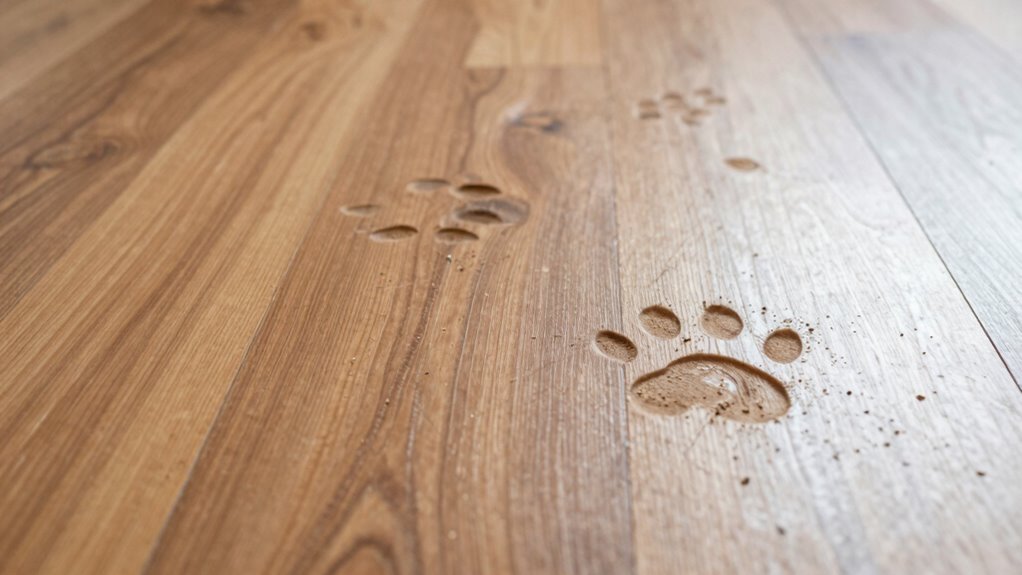
Removing paw prints from hard floors doesn’t have to be harsh or abrasive. Gentle solutions protect your pet’s paw health and prevent damage to your flooring material considerations. Start with a soft microfiber cloth dampened with warm water and a small amount of mild dish soap. Gently wipe the affected area, avoiding excessive scrubbing that could harm delicate surfaces or irritate paws. For stubborn stains, a mixture of equal parts water and white vinegar works well—just test it in a small, inconspicuous spot first. Avoid harsh chemicals or abrasive scrubbers that can scratch or degrade your flooring. Using natural, non-toxic cleaners ensures your pet’s paws stay healthy and the floor remains pristine without risking damage. Additionally, water park hotels often have accessible amenities that make cleaning and pet care more convenient during your stay. This approach keeps cleaning easy, safe, and effective.

Wet Ones for Pets Antibacterial Dog Paw Cleaner with Built-in Scrubber Brush, Tropical Splash Scent – Foaming Cleanser for Dog Paws – Paw Washer & Grooming Care, 5 Ounce
Convenient Built-in Brush Head – This dog paw washer features a scrubber for mess-free use. Squeeze to release…
As an affiliate, we earn on qualifying purchases.
As an affiliate, we earn on qualifying purchases.
Step-By-Step: Removing Paw Prints From Different Types of Hard Floors
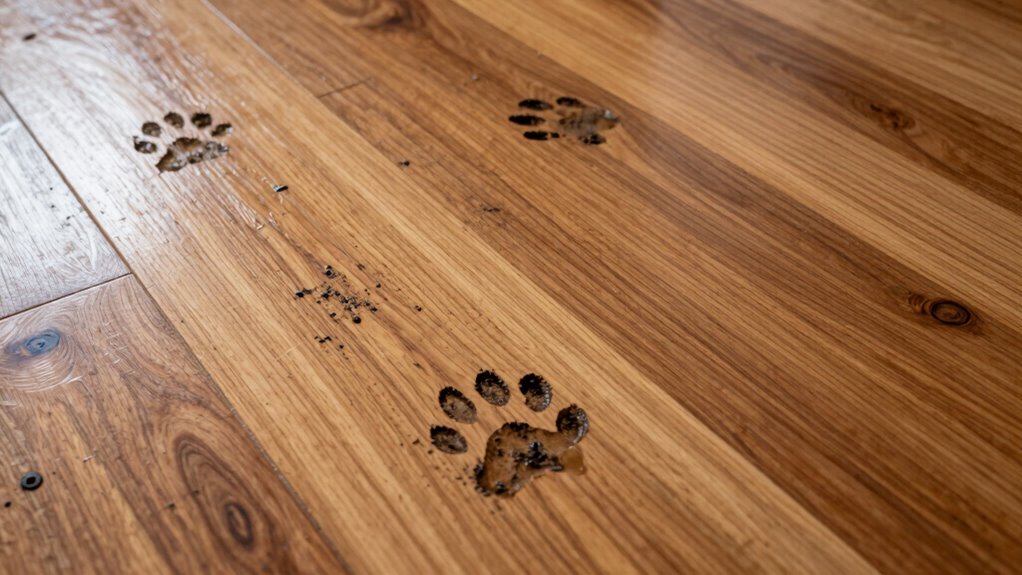
Different types of hard floors require tailored approaches to effectively remove paw prints without causing damage. For tile or vinyl, start by sweeping away pet hair and loose dirt, then use a damp microfiber cloth with a gentle cleaner to lift paw prints. For hardwood, avoid excess water; instead, wipe with a damp cloth and a wood-safe cleaner, ensuring you don’t damage the finish. Laminate floors also need gentle cleaning—use a damp cloth and a mild cleaner to prevent warping. To control odors, add a few drops of pet-safe essential oil to your cleaning solution. Regularly removing pet hair and paw prints not only keeps your floors looking clean but also reduces odor buildup, creating a fresher environment for both you and your pets.
Tips to Prevent Paw Prints and Keep Floors Clean
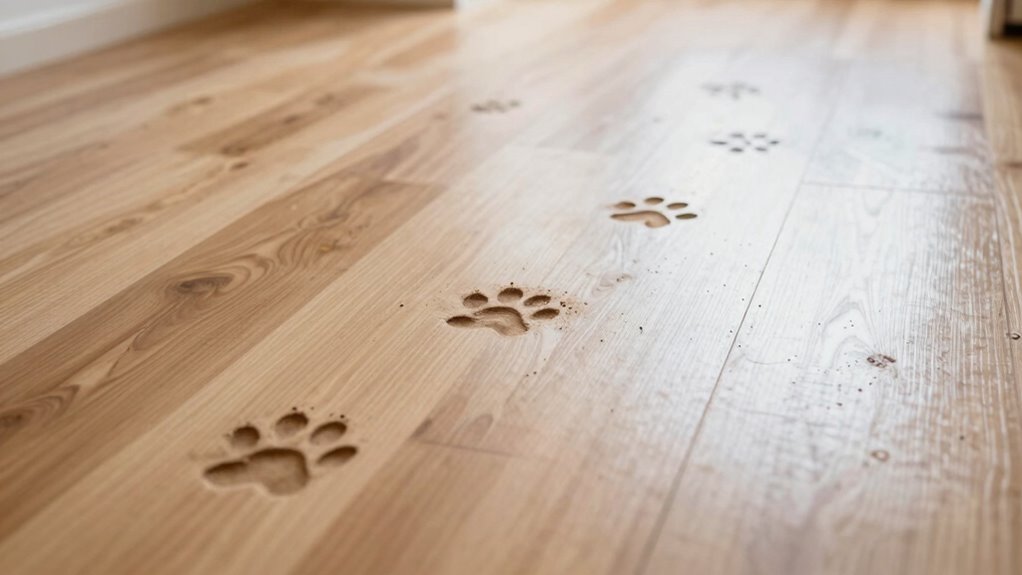
To keep your floors free of paw prints, start by establishing a regular cleaning routine that minimizes dirt tracking. Groom your pets regularly to reduce loose fur, dirt, and debris brought into the house. Well-groomed pets are less likely to carry excess dirt on their paws, helping keep floors cleaner longer. Additionally, consider floor sealing; sealing your hard floors creates a smooth, protective layer that resists dirt and stains. This makes cleaning easier and reduces the chances of paw prints setting in. Also, wipe your pet’s paws after outdoor walks with a damp cloth or paw wipes to remove mud and dirt before they walk inside. Consistent grooming and proper floor sealing are simple yet effective ways to prevent paw prints and maintain spotless, easy-to-clean floors.
Common Cleaning Mistakes That Could Make Paw Prints Worse
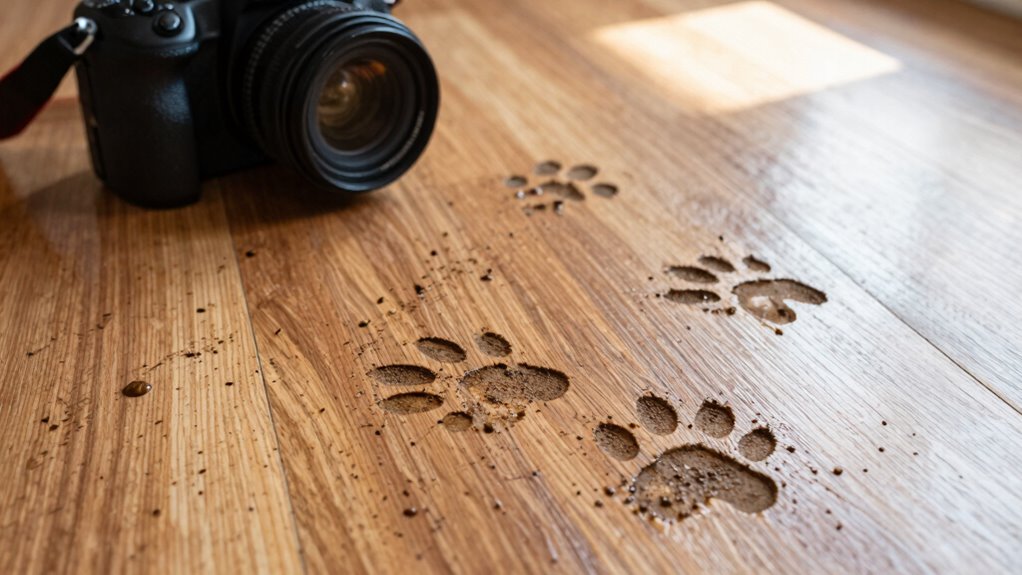
One common mistake that can make paw prints worse is using harsh or overly wet cleaning methods, which can spread dirt around rather than remove it. This often leads to more pet hair sticking to the floor and can worsen odors, making odor control difficult. To avoid this, steer clear of excessive water or strong chemicals that may damage your floors or trap dirt.
Be cautious of these pitfalls:
- Using abrasive scrubbers that scratch surfaces and trap dirt
- Over-wetting floors, causing paw prints to spread and become more noticeable
- Relying solely on harsh cleaners that can worsen pet hair buildup and odors
Instead, opt for gentle, effective cleaning techniques that lift dirt and pet hair without grinding dirt in or spreading paw prints further.
Best Tools and Products for Removing Paw Prints Effortlessly
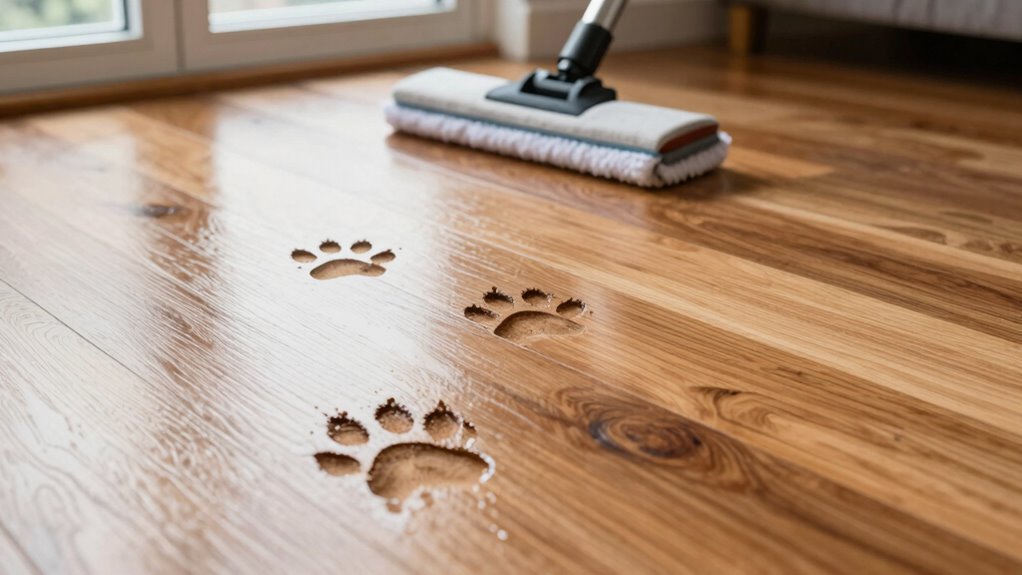
Using the right tools and products can make removing paw prints quick and hassle-free. A microfiber mop or soft scrub brush works well for lifting dirt without grinding it into the floor. For stubborn spots, a mixture of water and mild pet-safe cleaner effectively removes pet odor and fur shedding residue. Consider using enzymatic cleaners designed specifically for pet stains, as they neutralize odors and break down organic matter. A handheld vacuum with a brush attachment can also help pick up fur shedding debris without pushing dirt around. For added freshness, use pet odor neutralizers that eliminate smells at the source. These tools and products simplify cleaning, ensuring your floors stay spotless and fresh, even after your pet’s busy days.
What to Do When Paw Prints Won’t Come Off: Troubleshooting and When to Call a Pro
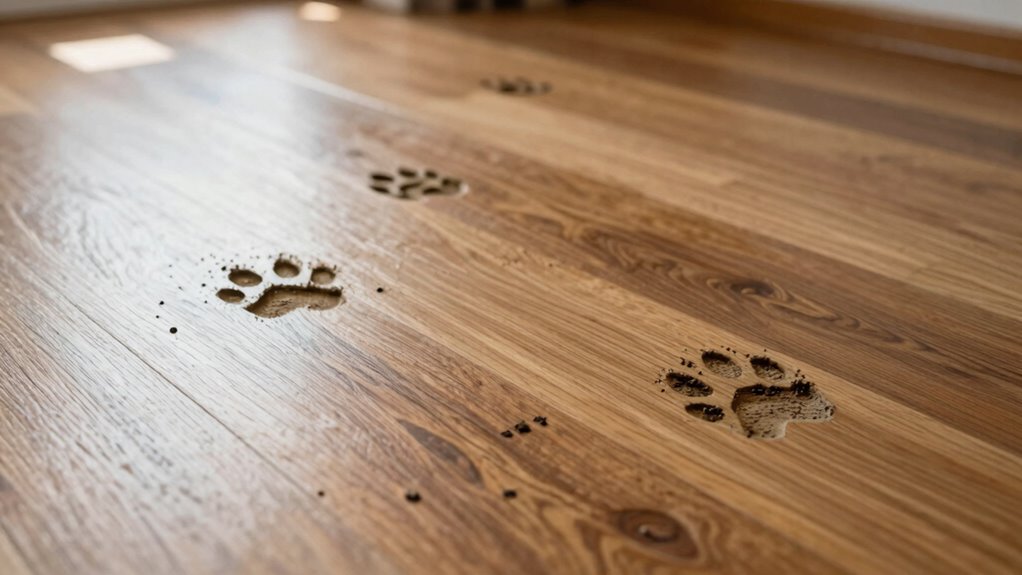
When paw prints stubbornly refuse to come off despite your best efforts, it’s time to troubleshoot the issue. First, evaluate if your cleaning products are pet friendly and suitable for stubborn stain removal. If that doesn’t work, try these steps:
If paw prints won’t come off, check your cleaning products and try gentle, pet-safe solutions before calling a professional.
- Use a mixture of warm water and gentle, pet-safe cleaner for deeper cleaning.
- Gently scrub with a soft-bristled brush to lift stubborn stains.
- Rinse thoroughly and dry with a clean cloth to prevent residue.
If these methods still don’t work, it’s wise to call a professional. They have specialized equipment and pet-friendly cleaning techniques to handle tough paw prints without damaging your floors. Knowing when to seek expert help ensures your floors stay clean, safe, and free of stubborn stains.
Frequently Asked Questions
Can Certain Floor Finishes Make Paw Prints More Noticeable?
Yes, certain floor finishes can make paw print visibility more noticeable. A high-gloss, shiny floor finish reflects more light, making paw prints stand out more clearly. On the other hand, matte or satin finishes tend to hide paw prints better because they diffuse light and reduce reflections. To keep your floors looking pristine, choose a finish that balances shine with durability, and clean regularly to prevent dirt from grinding into the surface.
Are Natural Cleaning Solutions Safe for Pets and Floors?
Yes, natural cleaning solutions are generally safe for pets and floors. They’re great for pet stain removal and promote eco-friendly cleaning, reducing harmful chemicals in your home. You can use vinegar, baking soda, or gentle essential oils to clean surfaces without risking your pet’s health. Always test a small area first, and make certain your solutions are pet-safe, so you can clean effectively without worry.
How Often Should I Clean Paw Prints to Prevent Buildup?
You should clean paw prints daily to prevent buildup and maintain hygiene. Regular cleaning helps with pet stain prevention and keeps your floors looking fresh. By addressing paw prints promptly, you reduce dirt and bacteria, protecting your pet’s health and your home’s cleanliness. Consistent hygiene maintenance guarantees that dirt doesn’t grind into your floors, making cleaning easier and keeping your space spotless and safe for everyone.
Do Different Dog Breeds Leave Differently Visible Paw Prints?
Yes, different dog breeds leave breed-specific paw impressions that vary in visibility. For instance, breeds with larger paws, like St. Bernards, leave more noticeable prints, while smaller breeds, such as Chihuahuas, leave subtler marks. Coat color influence also plays a role; darker paw prints are easier to see on light floors, and lighter paw prints stand out more on darker surfaces. Knowing this helps you clean effectively and monitor paw health.
Can Cleaning Methods Affect the Longevity of My Hard Flooring?
Cleaning methods do impact your hard flooring’s longevity. Using harsh chemicals can strip the floor finish, making it more prone to damage and dullness, while frequent, gentle cleaning helps preserve the finish, reducing paw print visibility and preventing scratches. Breed paw marks vary in prominence, but consistent cleaning maintains their appearance and protects your floor. So, choose the right cleaner and cleaning frequency to keep your floors looking great longer.
Conclusion
So, next time your furry friend leaves paw prints, celebrate their adorable mess—just don’t grind in the dirt! With gentle cleaning and the right tools, you can keep your floors spotless without turning it into a paw-print battlefield. Ironically, a little patience and care go a long way, proving that even stubborn paw prints can be conquered without turning your home into a cleaning disaster zone. Happy cleaning—your floors (and your pet) will thank you!