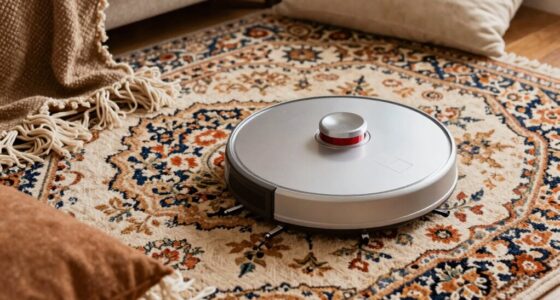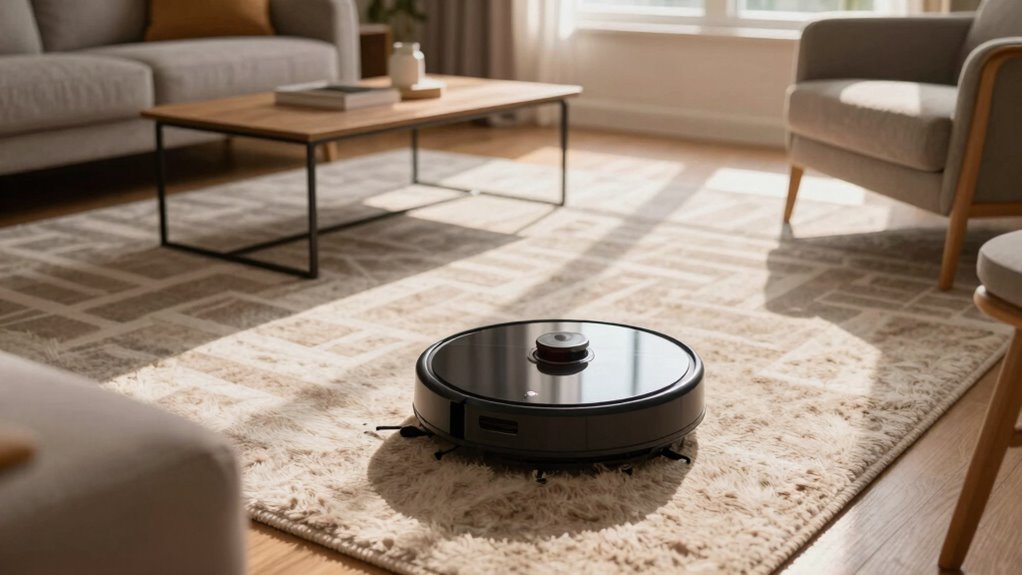
Robot vacuums can struggle after you rearrange furniture because they rely on pre-existing maps of your home. When you change the layout, those maps can quickly become outdated, causing the vacuum to bump into obstacles or miss areas altogether. It might even circle the same spots unnecessarily. To improve performance, it’s essential to keep the software updated and allow the vacuum to adapt to new environments. There’s more to discover about optimizing your vacuum’s navigation.

Get cleaning gear delivered free with Prime
- Fast, free delivery on millions of items
- Prime Video, Amazon Music and more included
- Member-only deals all year
Key Takeaways
- Robot vacuums rely on pre-mapped layouts, making them confused by new furniture arrangements.
- Changes in room configurations can lead to outdated navigation paths and inefficient cleaning.
- Sensors may struggle to detect obstacles in unfamiliar layouts, causing the vacuum to bump or get stuck.
- Advanced models can re-map spaces, while basic models may not adapt to changes effectively.
- Regular software updates can enhance navigation and improve adaptability to rearranged furniture.
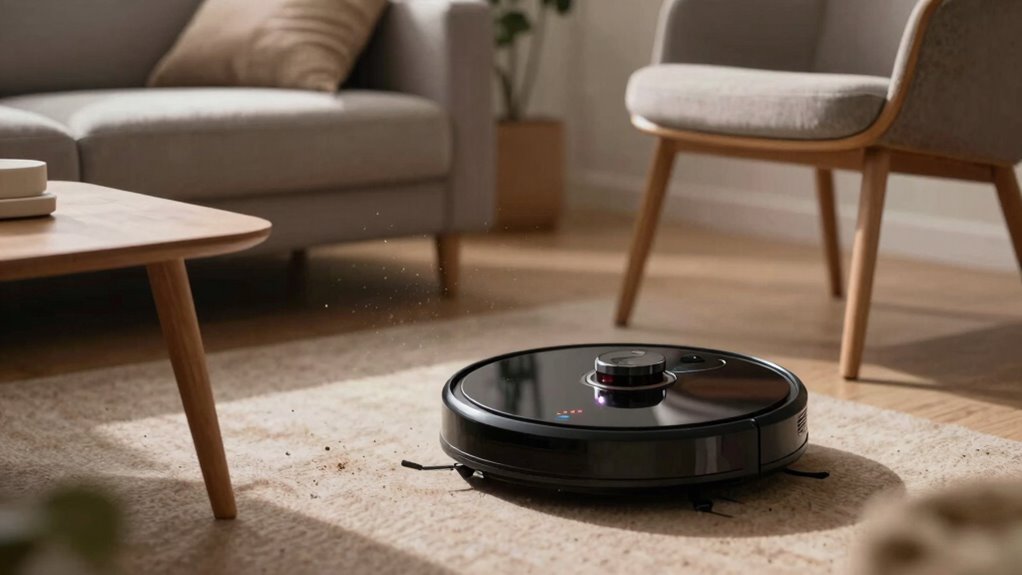
As you consider upgrading your cleaning routine, robot vacuums can revolutionize how you manage your home. They promise a hands-free cleaning experience and can greatly reduce the time you spend tidying up. However, if you rearrange your furniture, you might notice that your robot vacuum struggles more than usual. Understanding why this happens can help you get the most out of your robotic helper.
One of the primary reasons robot vacuums encounter difficulties after a furniture rearrangement is their sensor limitations. These sensors are designed to detect obstacles, but when you move furniture, they may not recognize the new layout immediately. Your vacuum relies on its sensors to navigate around your space, and if it can’t accurately detect the new furniture positions, it may bump into things or get stuck. sensor limitations can be particularly challenging in complex room layouts or with certain types of furniture. Additionally, sensor technology varies between models, affecting how well they adapt to changes.
Navigation challenges also come into play when you shift your furniture around. Many robot vacuums use algorithms to map out the layout of your home. When you change that layout, the vacuum’s existing map becomes outdated. It might try to follow its old path, leading to inefficient cleaning patterns. You could find it going in circles or missing entire areas of your floor because it doesn’t know where to go. Mapping accuracy is especially important for maintaining consistent cleaning coverage.
Mapping accuracy is essential for efficient cleaning. Some advanced models can re-map your space, but if yours isn’t equipped with this feature, it’s going to struggle. The vacuum needs a clear and accurate representation of the room to function effectively. When you move things around, the vacuum might end up confused, retracing its steps instead of exploring the new layout. Regularly updating the navigation system can help improve its ability to adapt to changes in your home’s layout. Ensuring your robot’s software is up-to-date can also enhance its adaptability and overall performance.
As an affiliate, we earn on qualifying purchases.
Frequently Asked Questions
Can Robot Vacuums Clean Stairs Effectively After Furniture Rearrangement?
Robot vacuums can’t clean stairs effectively, especially after you rearrange furniture. Their design focuses on flat surfaces, and they struggle with stair cleaning due to furniture obstacles. When you move things around, they might not recognize the new layout, causing them to miss steps or get stuck. To maintain a clean home, consider using a traditional vacuum for stairs while letting the robot handle your floors.
How Do Robot Vacuums Map a New Room Layout?
Robot vacuums tackle room mapping like an artist sketching a fresh canvas. They use sensors to sense the layout, maneuvering around obstacles with the grace of a dancer. However, when you shift furniture, layout challenges arise. The vacuum’s internal map may need a reboot as it recalibrates to the new arrangement. By fine-tuning its sensors and algorithms, it gradually learns your space, ensuring it glides smoothly through your ever-changing domain.
Are There Specific Brands Better for Furniture-Heavy Homes?
Yes, some brands excel in furniture-heavy homes. Look for models with advanced mapping technology and design features like obstacle detection and powerful suction. Brands like iRobot Roomba and Roborock are known for their cleaning efficiency, adapting quickly to furniture layouts. They navigate around obstacles effectively, ensuring thorough cleaning without getting stuck. By choosing the right robot vacuum, you’ll keep your home spotless, even with a complex arrangement of furniture.
What Maintenance Do Robot Vacuums Need After Frequent Furniture Changes?
After frequently moving furniture, your robot vacuum needs a little extra care. Start with checking for any debris caught in the brushes or wheels, since furniture obstacles can create more mess. Regularly clean the sensors and dustbin to keep it running smoothly. It’s also wise to update the mapping feature if your layout changes considerably. These maintenance tips will guarantee your vacuum keeps up with your home’s evolving landscape.
Can I Control My Robot Vacuum Remotely After Moving Furniture?
Yes, you can control your robot vacuum remotely after moving furniture. With remote access through your vacuum’s app, you can easily command it to clean your home, even if furniture obstacles have changed. Just make sure to update its map if necessary, so it knows the new layout. This way, it can navigate around any new furniture arrangements and keep your floors clean without missing a beat.
As an affiliate, we earn on qualifying purchases.
Conclusion
As you watch your robot vacuum navigate the newly arranged room, you can’t help but feel a twinge of anticipation. Will it master the maze you’ve created, or will it falter at every turn? The once-familiar path is now a puzzle, and you hold your breath, wondering if it’ll find its way or leave you to pick up the pieces. The tension builds as it tackles an unexpected obstacle—will it succeed, or will it leave you longing for the old layout?
As an affiliate, we earn on qualifying purchases.
advanced robot vacuum with mapping
As an affiliate, we earn on qualifying purchases.
As an affiliate, we earn on qualifying purchases.
Halloween Picks
halloween
As an affiliate, we earn on qualifying purchases.