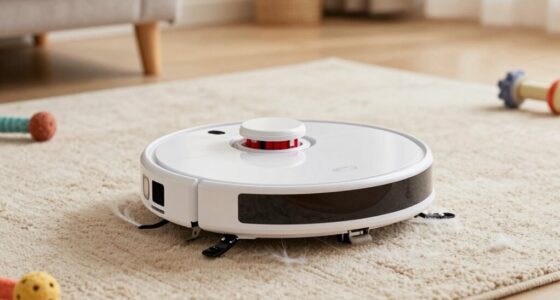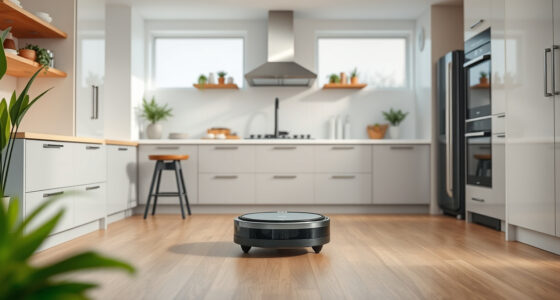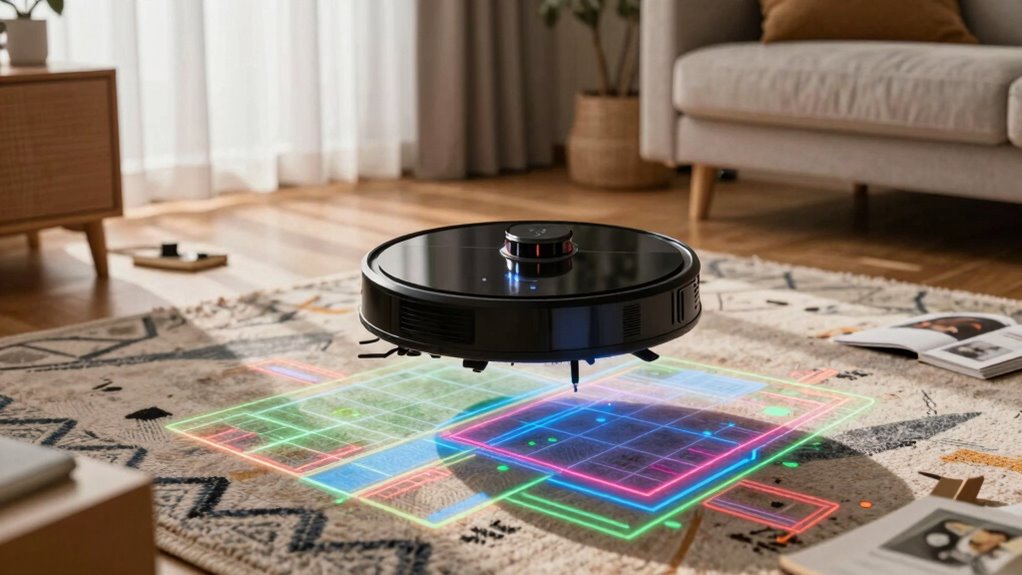

Robot vacuum mapping works by using sensors and cameras to create a digital layout of your home, helping it navigate and clean efficiently. However, errors happen when sensors struggle with reflective surfaces, clutter, or poor calibration. Environmental factors like low lighting or unexpected obstacles can also confuse the system. To improve accuracy, you can prepare your space and update firmware. Keep exploring to find out how to fix these issues and get better mapping results.

Get cleaning gear delivered free with Prime
- Fast, free delivery on millions of items
- Prime Video, Amazon Music and more included
- Member-only deals all year
Key Takeaways
- Sensor errors from poor calibration, dirt, or reflective surfaces can cause inaccurate room mapping.
- Clutter, cords, toys, or small objects may block sensors and confuse the robot’s layout.
- Inadequate lighting or complex room layouts can disrupt sensor detection and mapping precision.
- Firmware issues or outdated software can prevent the robot from adapting to environmental changes accurately.
- Proper home preparation, including decluttering and sensor cleaning, improves mapping accuracy and navigation.
robot vacuum sensor cleaning kit
As an affiliate, we earn on qualifying purchases.
As an affiliate, we earn on qualifying purchases.
How Does Robot Vacuum Mapping Work, and Why Does It Sometimes Fail?
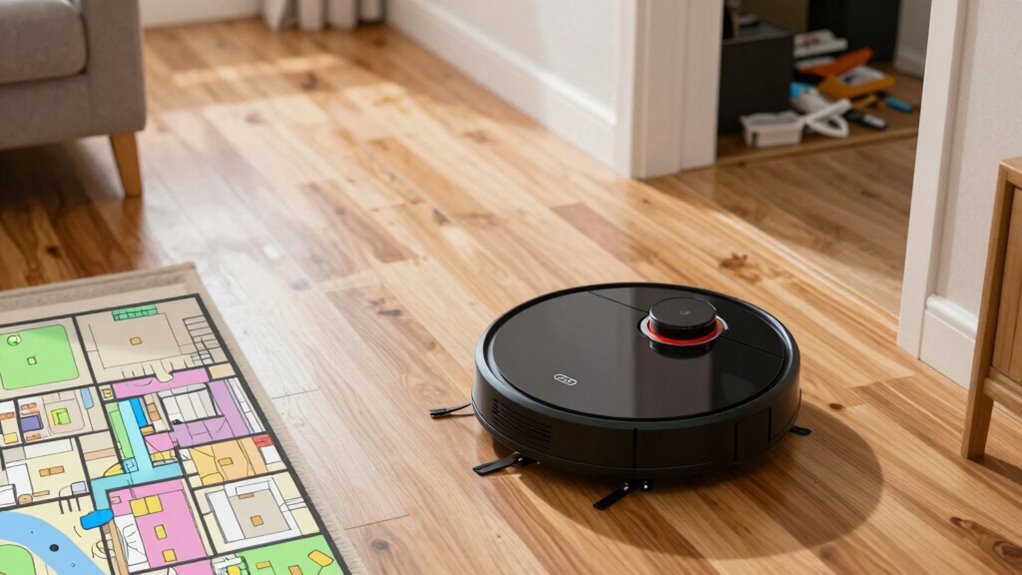
Robot vacuum mapping works by using sensors and cameras to create a digital layout of your home. These sensors detect obstacles, walls, and furniture, helping the vacuum navigate efficiently. However, sensor limitations can cause issues; for example, some sensors might struggle with reflective surfaces or transparent objects, leading to incomplete or inaccurate maps. Software glitches can also disrupt the mapping process, causing the robot to misinterpret data or restart mapping tasks unexpectedly. Additionally, rapid changes in lighting or clutter can confuse the sensors, resulting in errors. While these devices are designed to adapt, their accuracy depends on the quality of sensors and software stability. sensor limitations can sometimes cause mapping errors even in well-organized spaces. Moreover, self-learning algorithms are used to improve navigation over time, but they are not infallible and can be affected by environmental factors. Factors like environmental interference can further impact the robot’s ability to generate precise maps, especially in complex or cluttered environments. External factors like home layout and furniture placement can also influence mapping accuracy and consistency, and ongoing software updates aim to address these challenges but may introduce new issues.
robot vacuum mapping calibration tools
As an affiliate, we earn on qualifying purchases.
As an affiliate, we earn on qualifying purchases.
What Are the Most Common Reasons Your Robot Vacuum Maps Rooms Incorrectly?
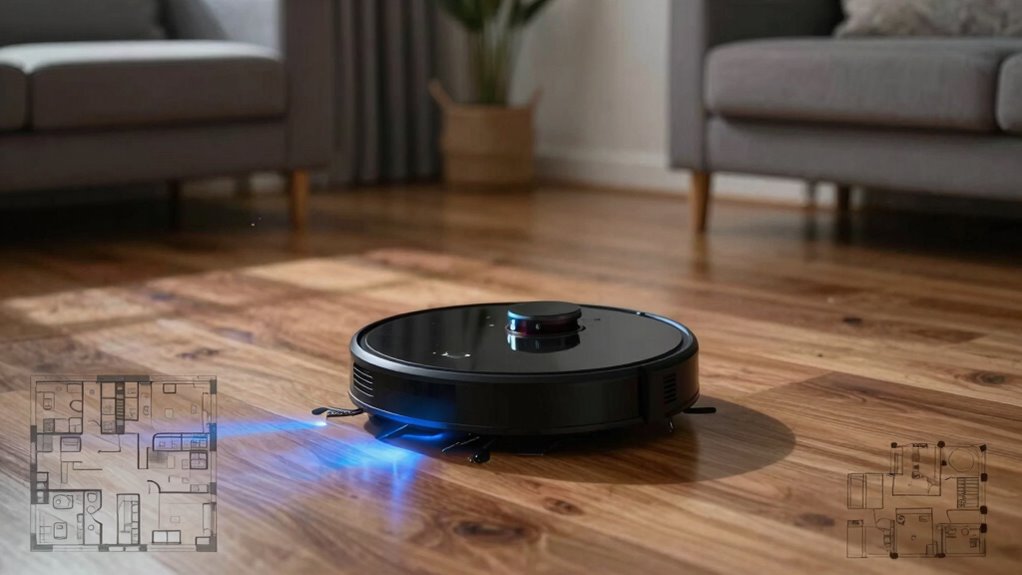
Incorrect room mapping often happens when sensors misinterpret the environment, leading to distorted or incomplete layouts. Sensor errors are common culprits, causing your robot to misread walls or obstacles. Clutter interference also plays a role, as objects like cords or toys can confuse the sensors. Here are the main reasons your maps go wrong:
Incorrect room mapping occurs when sensors misread the environment, causing distorted or incomplete layouts.
- Poor sensor calibration or dirt on sensors reduces accuracy.
- Clutter interference from loose items skews the robot’s perception.
- Low lighting or reflective surfaces disrupt sensor readings.
- Complex room layouts or unexpected obstacles can confuse the mapping process.
- Inadequate sensor technology can limit the robot’s ability to accurately interpret its environment. Additionally, sensor calibration issues can develop over time, further decreasing mapping precision. Regularly updating firmware and performing calibration checks can help maintain mapping accuracy and prevent errors. Ensuring your robot has advanced sensors can significantly improve its environment recognition capabilities. Proper maintenance of air purifier filters can also prevent dust accumulation that may affect sensor performance.
reflective surface sensor blocker for robot vacuum
As an affiliate, we earn on qualifying purchases.
As an affiliate, we earn on qualifying purchases.
How Can You Prepare Your Home to Get Better Robot Vacuum Maps?

To improve your robot vacuum’s mapping accuracy, start by decluttering your home before each cleaning session. Clear away excessive home clutter that can block sensors or create confusion during the mapping process. Proper furniture placement also plays a key role; confirm that large pieces aren’t blocking pathways or overlapping in ways that make it hard for the robot to navigate. Rearrange or move furniture temporarily if needed to give your robot a clear, open environment. Keep cords, toys, and small objects out of the way to prevent obstacles or misreads. The cleaner and more organized your space, the easier it is for your robot to generate accurate, thorough maps. This preparation minimizes errors and improves overall cleaning efficiency. Incorporating simple, room-by-room solutions can further streamline the process and ensure your entire home is optimized for robotic cleaning. Additionally, understanding how sensor placement affects the robot’s navigation can help you make targeted adjustments for better mapping results. Being aware of sensor calibration can also enhance the robot’s ability to create precise maps. Properly managing body jewelry measurements and materials can prevent interference with sensors or other components, ensuring smoother operation. To further enhance mapping performance, consider home layout and how open or obstructed spaces influence the robot’s ability to learn your environment.
robot vacuum clutter removal tools
As an affiliate, we earn on qualifying purchases.
As an affiliate, we earn on qualifying purchases.
How Do You Troubleshoot and Fix Robot Vacuum Mapping Errors?

When your robot vacuum starts experiencing mapping errors, the first step is to identify the root cause. Common issues include outdated software, misaligned sensors, or obstructions. To troubleshoot effectively:
- Check for and install any available software updates to improve mapping accuracy.
- Perform sensor calibration by gently cleaning the sensors with a soft cloth to ensure they detect surroundings correctly.
- Remove obstacles and ensure the floor is clear, so the vacuum can scan properly.
- Reset the device if persistent errors occur, then recalibrate sensors and update software again.
- Regularly review your robot vacuum’s mapping capabilities to understand its limitations and optimize its performance. Additionally, consulting the manufacturer’s user manual can provide device-specific troubleshooting tips.
- Consider the environmental factors such as lighting or reflective surfaces that can interfere with sensor detection and cause mapping errors.
- Staying informed about sensor technology updates can help you better understand and address potential issues as they arise. Being aware of sensor limitations can also help set realistic expectations for your device’s performance.
Addressing these areas helps resolve most mapping errors. Keeping your robot’s software current and sensors clean guarantees it can navigate and map accurately, reducing errors and improving cleaning efficiency.
What Features Help Your Robot Vacuum Navigate and Map More Accurately?
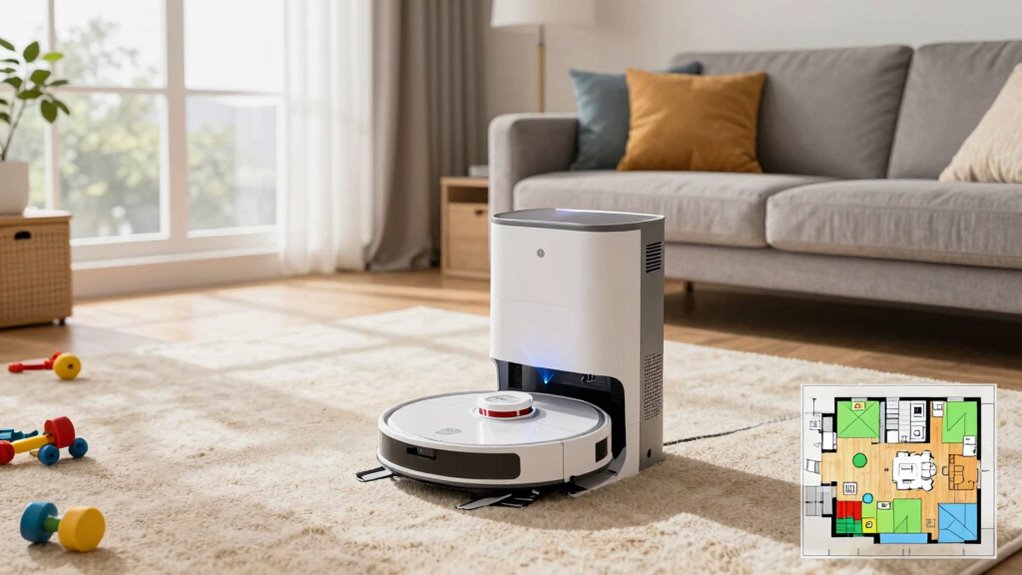
Modern robot vacuums are equipped with advanced features that markedly enhance their ability to navigate and create accurate maps of your home. Sensor placement is vital; well-positioned sensors help the robot detect walls, furniture, and boundaries more effectively. Obstacle detection technology allows your vacuum to identify and avoid objects in real-time, preventing collisions and missed spots. These sensors work together to improve mapping accuracy by providing detailed environmental data, ensuring the robot understands room layouts better. Additionally, some models use laser or camera-based systems for even more precise navigation. Proper sensor calibration also plays a crucial role, ensuring that the sensors function accurately over time. By optimizing sensor placement and obstacle detection, your robot vacuum can map your space more accurately, cover every area efficiently, and reduce mapping errors that cause your rooms to look wrong. The integration of advanced navigation systems further enhances these capabilities, allowing for smarter and more reliable cleaning routes. Regularly updating firmware can also help maintain navigation accuracy and adapt to changes in your home environment.
Frequently Asked Questions
Can Robot Vacuum Mapping Be Customized for Specific Rooms or Areas?
Yes, you can customize robot vacuum mapping for specific rooms or areas. Many models offer custom room zones, allowing you to designate particular spaces for focused cleaning. This feature enhances mapping personalization, so your vacuum efficiently targets high-traffic or messy areas. Simply use the app to draw or select zones, and your vacuum will follow your instructions, making cleaning more tailored and effective for your home.
How Does Lighting Affect the Accuracy of Robot Vacuum Mapping?
Imagine your robot vacuum maneuvering a dimly lit room, shadows dancing on the walls. Lighting conditions can trick its sensors, making mapping less accurate. Bright, consistent light helps sensors detect walls and obstacles better, while poor lighting reduces sensor sensitivity. You’ll notice the vacuum struggles to create precise maps in low light, leading to inaccuracies. To improve mapping, keep rooms well-lit, ensuring your robot’s sensors work at their best for flawless navigation.
Do Different Brands Have Compatible Mapping Systems?
Yes, different brands often have incompatible mapping systems due to varying brand compatibility and mapping standards. You’ll notice that some brands use proprietary technologies, making it difficult to transfer maps or use accessories across brands. When choosing a robot vacuum, check if the brand supports your preferred mapping standards or offers compatibility with other systems. This guarantees smoother integration and better overall mapping performance in your home.
Can Pets or Moving Objects Interfere With Mapping Accuracy?
Ever wonder if your pet’s playful antics or moving obstacles mess up your vacuum’s map? Pet interference and moving obstacles can definitely disrupt mapping accuracy, causing your robot to get confused or miss spots. When your pet zips around or furniture shifts, your vacuum struggles to create a reliable map. To improve results, clear the area before cleaning and secure pets away, ensuring smoother navigation and better cleaning coverage.
How Often Should I Reset or Update My Robot Vacuum’s Mapping Data?
You should update your robot vacuum’s mapping data every few months or whenever you notice navigation issues. The ideal mapping frequency depends on your home’s changes and update intervals recommended by the manufacturer. Regularly resetting or updating the maps ensures your vacuum navigates efficiently, especially after moving furniture or adding new items. Stay proactive to maintain accurate room layouts and prevent cleaning mishaps, adapting update intervals to your home’s activity level.
Conclusion
Understanding how your robot vacuum maps your home is like guiding a tiny explorer through a maze. When it struggles, it’s often because of unseen obstacles or setup quirks. By preparing your space and troubleshooting wisely, you help this explorer draw a clearer map. Think of it as clearing a path for a trailblazer—your cleaner can then navigate smoothly, covering every corner without getting lost or leaving surprises behind.
Halloween Picks
halloween
As an affiliate, we earn on qualifying purchases.