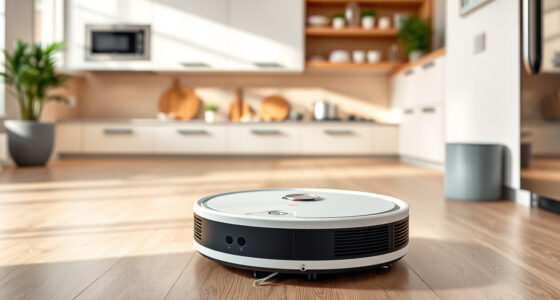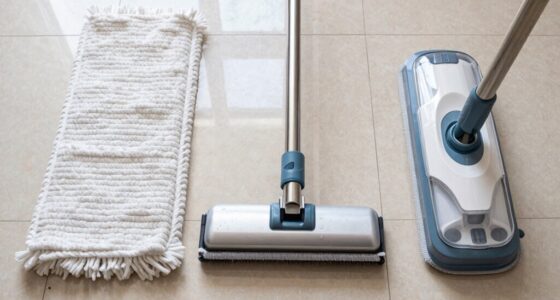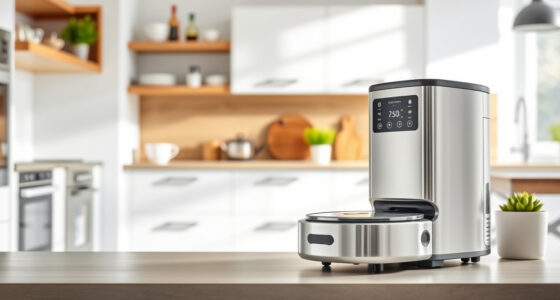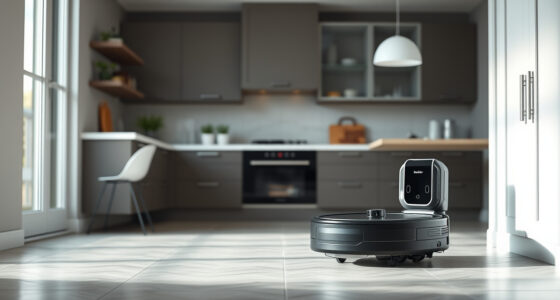
To prevent your robot from tracking wet messes, regularly check and maintain its water tank and control components, ensuring they’re clean and properly calibrated. Use the adjustable water flow settings to limit excessive dispensing, especially on sensitive floors like hardwood or laminate. Before cleaning, clear the area of any loose or wet items, and dry the floor thoroughly. Proper maintenance and careful setup will help you avoid tracked water, and there’s more you can do to optimize your robot’s performance.

Get cleaning gear delivered free with Prime
- Fast, free delivery on millions of items
- Prime Video, Amazon Music and more included
- Member-only deals all year
Key Takeaways
- Ensure the water tank is properly filled and calibrated to prevent excess water dispensing.
- Use adjustable water flow settings to control and limit water release during cleaning.
- Regularly clean sensors and brushes to improve wet spot detection accuracy.
- Verify floors are dry and free of moisture before starting the robot to prevent tracking wet areas.
- Disable or turn off the water feature when cleaning areas prone to water damage or unwanted tracking.
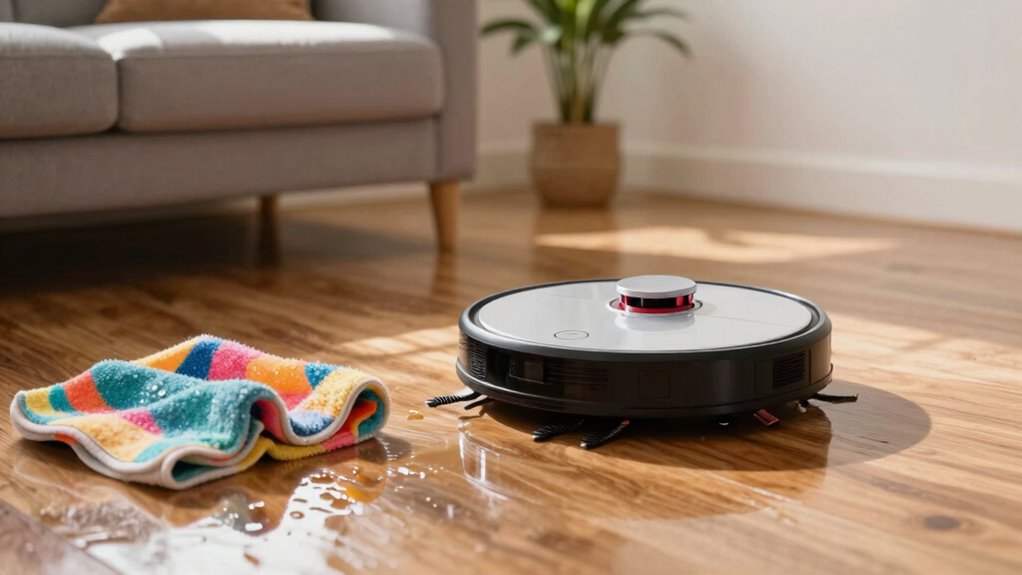
If your robot vacuum or mop keeps tracking wet messes across your house, it can quickly become frustrating and messy. You want your device to handle cleaning efficiently without spreading water or dirt everywhere. The key to stopping this issue lies in proper robot maintenance and adopting the right house cleaning techniques. First, check if your robot’s water tank or mop attachment is functioning correctly. Sometimes, a loose or malfunctioning water reservoir causes excess water to leak or dispense unevenly, leading to tracked messes. Make sure the water tank is securely attached and not cracked, and follow the manufacturer’s instructions for filling and cleaning it regularly. If your robot has adjustable water flow settings, dial them down to prevent too much water from being released during mopping.
Next, consider the importance of house cleaning techniques that can minimize wet messes. Before starting a cleaning cycle, pick up any loose items or wet objects that could interfere with your robot’s operation. This prevents the device from spreading liquid or debris further across your floors. Additionally, verify your floors are dry before starting the robot. If you recently mopped or spilled something, give the area ample time to dry completely. A damp floor combined with a wet mop can cause streaks and tracked water, especially if your robot has a large cleaning path. Regularly inspect and clean sensors and brushes, as clogged or dirty parts can impair the device’s ability to detect wet areas or avoid spreading liquid. Properly maintaining robot sensors ensures accurate detection of wet spots and prevents unnecessary spreading. Incorporating sensor calibration can further improve the robot’s ability to identify and avoid wet zones. Additionally, proper cleaning techniques can significantly reduce the chances of wet messes being tracked around. Maintaining the cleaning schedule recommended by the manufacturer can also help in preventing issues caused by dirt buildup or neglected maintenance.
Another vital aspect of robot maintenance involves checking the wheels and brushes. Dirty or sticky wheels can cause your robot to veer off course or leave water trails in unintended areas. Clean the wheels and brushes frequently, removing hair, dust, or debris that could hinder their movement. If your robot features a water control valve or sensor, verify that it’s functioning properly. Sometimes, calibration or firmware updates are necessary for perfect operation. Following manufacturer guidelines for scheduled maintenance not only prolongs your device’s lifespan but also ensures it performs as intended, reducing the chances of tracking wet messes.
Finally, be mindful of the surfaces your robot cleans. Some floors, like hardwood or laminate, are more susceptible to water damage and may require special cleaning techniques. Using a dry mop or a robot with a smart water control system can help prevent excess water from being dispensed. By paying close attention to robot maintenance and employing effective house cleaning techniques, you’ll keep your floors clean and dry, avoiding the inconvenience of tracked wet messes.
As an affiliate, we earn on qualifying purchases.
Frequently Asked Questions
Can Robot Sensors Be Calibrated to Improve Accuracy?
Yes, you can calibrate your robot’s sensors to improve tracking accuracy. Sensor calibration involves adjusting the sensors so they interpret data correctly, reducing errors like false detections or missed messes. Follow your robot’s manufacturer instructions to perform calibration, which often includes running a calibration routine or manually adjusting sensor settings. Regular calibration guarantees your robot maintains ideal tracking accuracy, especially when cleaning wet messes or maneuvering through tricky areas.
Are There DIY Methods to Modify Robot Tracking Systems?
Yes, you can modify robot tracking systems yourself. While complex hardware tweaks are tricky, adjusting sensor placement can make a difference—place sensors away from wet areas or obstacles. Software updates may also improve accuracy, so keep your robot’s firmware current. These DIY methods won’t overhaul the system but can help reduce false tracking, making your robot more efficient at avoiding wet messes and unnecessary tracking across your house.
How Does Robot Tracking Technology Differ Between Brands?
You’ll notice that robot tracking technology varies by brand, mainly due to differences in sensor placement and tracking algorithms. Some brands position sensors strategically for better surface detection, while others rely on advanced algorithms that adapt to your home’s layout. These variations impact how accurately your robot navigates and avoids wet messes. To improve performance, check a brand’s specific sensor setup and algorithm capabilities before making a choice.
What Safety Precautions Should I Take When Adjusting Robot Settings?
When adjusting your robot’s settings, prioritize safety by carefully modifying sensor sensitivity and calibration techniques. Always turn off the robot before making adjustments to prevent accidental activation. Wear protective gloves if handling sensitive components. Make sure your workspace is clear of hazards, and consult the manufacturer’s instructions for specific calibration procedures. Test the robot in a controlled environment afterward to confirm it functions correctly, minimizing risks and ensuring accurate tracking.
Can Waterproof Mats Prevent Tracking Without Affecting Robot Performance?
Sure, waterproof mats can prevent tracking, but they’re not magic carpets. They act as barriers, stopping wet messes from reaching sensors, but you’ll need to recalibrate sensors afterward to keep the robot’s performance intact. Think of waterproof mats as a stylish coat—helpful, but they won’t fix everything on their own. Proper sensor calibration ensures your robot recognizes dry floors, avoiding false alarms and unnecessary cleanups.
As an affiliate, we earn on qualifying purchases.
Conclusion
To keep your robot from tracking wet messes around the house, focus on quick cleanups, proper drainage, and using waterproof barriers. Imagine a family with a dog that often drips water after walks; by installing mats and drying paws promptly, they prevent messes from spreading. Small steps like these can save you from constant cleaning and frustration. With a little planning, your robot can stay on its designated path, leaving your floors spotless and dry.
As an affiliate, we earn on qualifying purchases.
As an affiliate, we earn on qualifying purchases.
Fall Picks
fall essentials
As an affiliate, we earn on qualifying purchases.